Senior Year Experience: Igniting Creativity and Innovation at Williams College

As senior year at Williams College nears its conclusion, students are offered a unique and exciting opportunity to leave their legacy through the Senior Year Experience (SYE). The Makerspace and Fabrication Lab are collaborating with the SYE to offer seniors opportunities to channel their creativity and bring their most ambitious ideas to life.
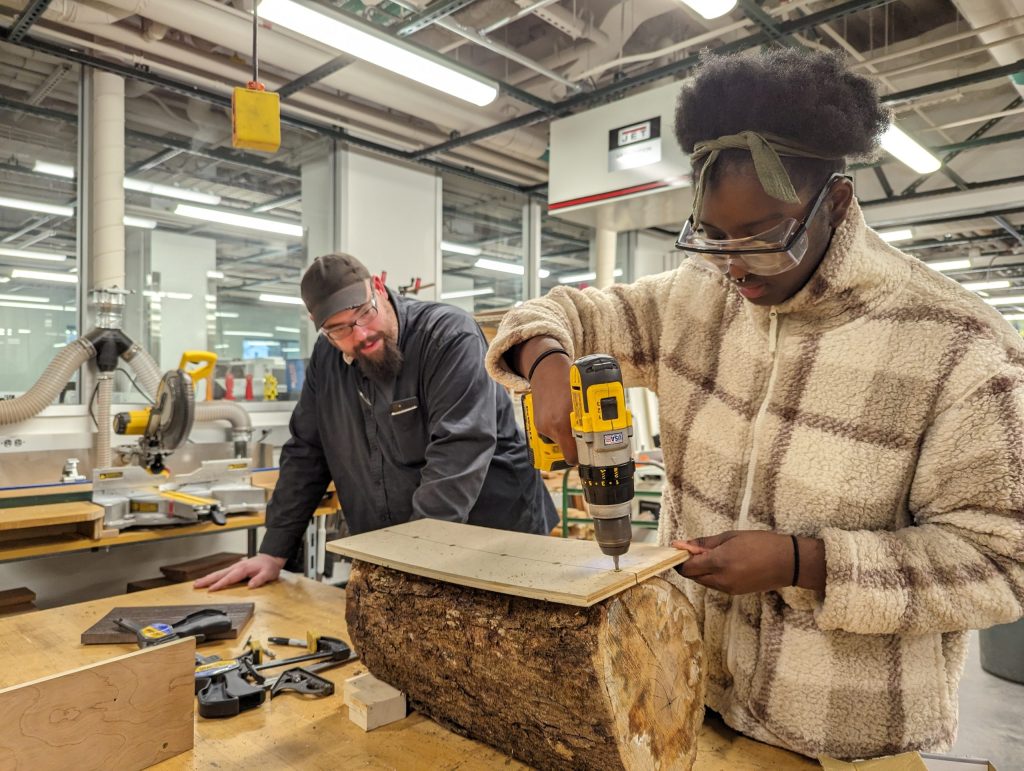
makerspaceWhether it’s working on a meaningful piece of art, designing an innovative product, or building something entirely out of the box, the SYE provides access to cutting-edge tools like 3D printers, laser cutters, woodworking equipment, and more. But it’s not just about the tools students are guided by experienced staff who are passionate about turning ideas into tangible results.

The SYE encourages seniors to think big, experiment boldly, and create something that truly reflects their passions and journey at Williams. It’s not just a project; it’s a chance to showcase innovation, dedication, and individuality as they prepare to step into the next chapter of their lives.

What is the Senior Year Experience?
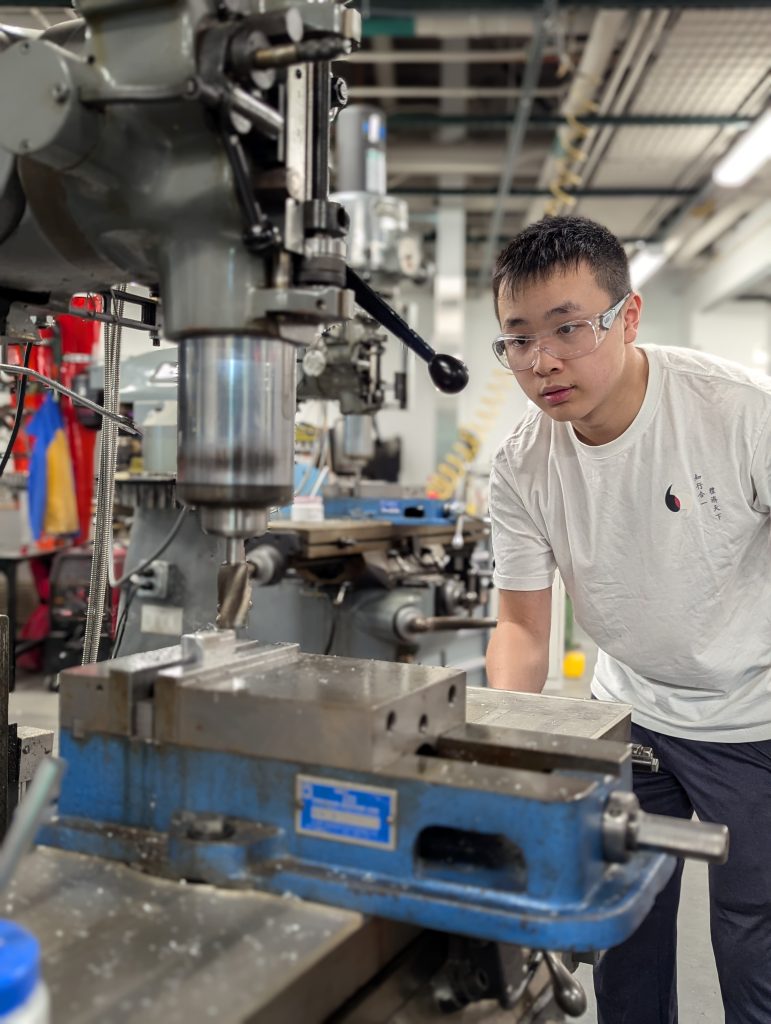
The Senior Year Experience (SYE) is an exciting opportunity for seniors to dive into extracurricular projects that reflect their passions and aspirations. Whether you’re envisioning a sustainable 3D printing solution, designing intricate textiles, or building innovative prototypes with Raspberry Pi, the SYE provides the perfect platform to bring your ideas to life. The possibilities are as vast as your imagination.

What sets this program apart is its access to an incredible network of resources, including the Makerspace, Fabrication Lab, and perhaps even parts of the interdisciplinary MakersWeb. These spaces foster collaboration and creativity, connecting students with over 20 unique workspaces across campus. It’s not just about the tools; it’s about the vibrant community of creators who inspire and support one another.

Students have the freedom to explore a wide range of mediums, such as:

  • 3D Printing and Scanning: Create intricate designs or explore sustainable printing solutions.
  • Laser Cutting and Engraving: Add precision and detail to your projects with state-of-the-art technology.
  • Photogrammetry and Mold Making: Transform objects into digital models or design complex molds.
  • Fiber Arts: Try your hand at quilting, sewing, crocheting, or even experimenting with mixed textiles.
  • Microprocessor Prototyping: Build interactive devices using Arduino or Raspberry Pi.
  • Woodworking and Cricut Cutting: Craft furniture, decor, or intricate designs with these versatile tools.

The Application Process: Turning Ideas into Reality

Getting started with the Senior Year Experience (SYE) is as straightforward as sharing your vision. The process is designed to be simple yet impactful, ensuring that every participant has the opportunity to fully explore their creativity. Here’s how it works:

1. Submit Your Idea

The journey begins with an email. Reach out to David Keiser-Clark, the Makerspace Program Manager, to pitch your project idea. Don’t worry if it’s still in the brainstorming stage. This is your chance to outline your vision, explain your goals, and share what excites you about your project. Whether it’s a sustainable solution, an artistic masterpiece, or a tech-driven innovation, the SYE is all about giving life to bold and unique ideas.

2. Collaborate and Create
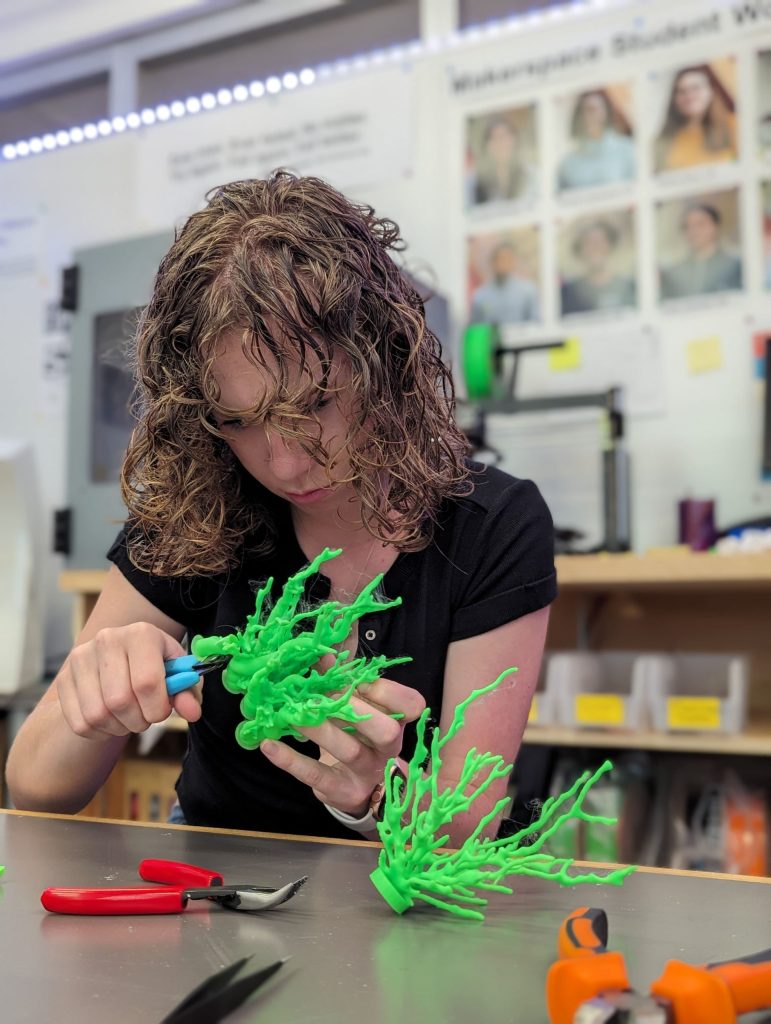
Once your project is accepted, you’ll dive into the creative process with the support of campus experts and access to state-of-the-art tools. From 3D printers and laser cutters to fiber arts tools and microprocessor kits, the Makerspace and Fabrication Lab have everything you need to bring your concept to life. You’ll also have the chance to collaborate with knowledgeable staff and fellow students, making the experience as enriching as it is productive.

3. Showcase Your Work

At the end of the semester, your project will take center stage. Whether it’s displayed at an exhibition or shared with the broader campus community, your work will inspire future innovation and creativity. Completing an SYE project isn’t just about the final product, it’s about the process, the lessons learned, and the mark you leave on the Williams community. You also will be offered an opportunity to amplify your work by writing a guest Makerspace blog post.

What You Need to Know

  • The SYE accepts up to five projects per semester on a first-come, first-served basis. This ensures each participant receives a personalized, focused experience.
  • Selected projects are matched with the expertise available on campus, ensuring the right guidance and resources are at your fingertips.

The application process is intentionally simple, giving you more time to focus on what really matters, creating something meaningful, innovative, and entirely your own. So, if you have an idea that’s been buzzing in your head, now’s the time to turn it into reality. The SYE is your platform; all you need to do is take the first step.

A Network of Campus Partners

The SYE thrives on collaboration, integrating support from campus partners like Alumni Engagement, Career S

ervices, the Zilkha Center, and more than a dozen others. These partnerships enhance the program’s impact, offering students a robust platform to refine their skills and showcase their achievements.

Leadership Behind the SYE

The Senior Year Experience (SYE) at Williams College was initiated under the leadership of Associate Dean Ray Grant, who serves as the Associate Dean for Senior Year Students and Director of Students in Transition. Dean Grant has been instrumental in shap

ing the SYE to provide seniors with meaningful opportunities to celebrate their achievements, explore new interests, and prepare for life after graduation. His dedication to student development ensures that the SYE remains a cornerstone of the senior experience at Williams. 

If the SYE had a superhero, it would be Dean Ray Grant: the guy who turned the “senior slump” into a launchpad for creativity and adventure. As the Associate Dean for Senior Year Students, he’s made sure the SYE isn’t just another check-the-box requirement but a once-in-a-lifetime chance to make your mark at Williams. His goal? Help every senior leave with stories, skills, and something awesome to show for their time here.

Why SYE Matters
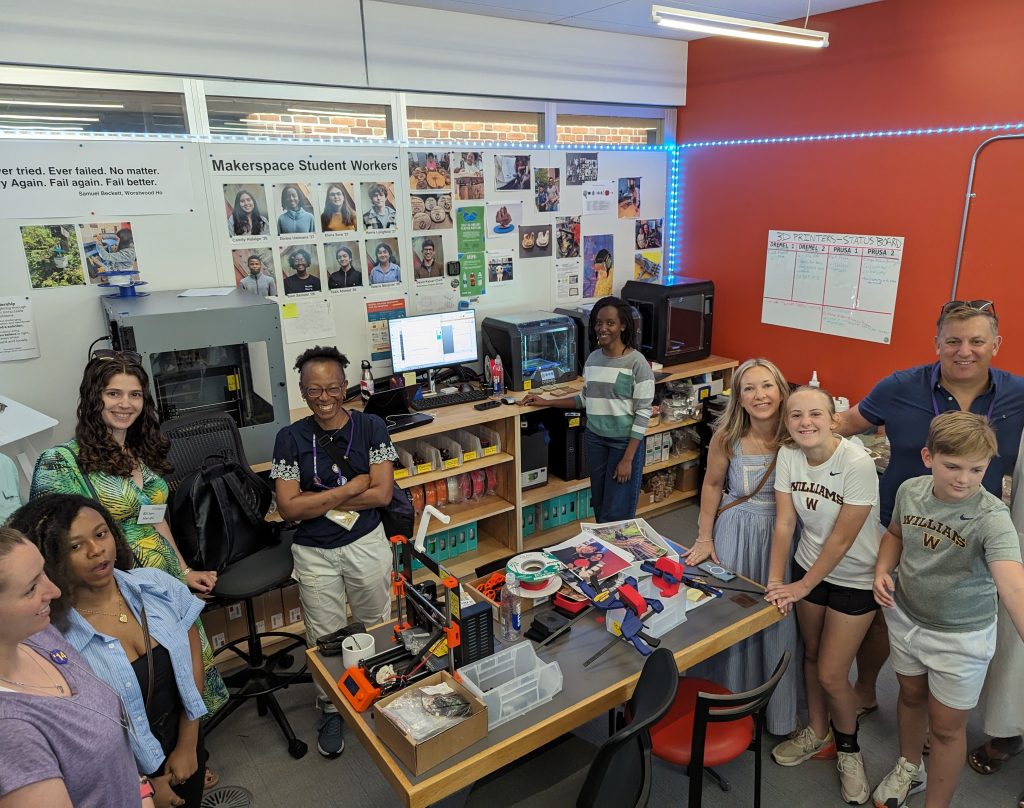
Beyond creating something tangible, the SYE is about professional growth and personal fulfillment. Imagine presenting a digital portfolio of your project to potential employers, highlighting skills in research, design, and execution. Platforms like Wakelet and Bulb, recommended by the SYE team, provide seamless ways to compile and share these experiences.

Inspiring Creations

The Makerspace has already facilitated awe-inspiring projects, such as:

  • High resolution 3D photogrammetry scans of million year old Bovid teeth from an archeological site in the Siwalik Hills, India
  • Extracurricular 3D-printed and painted board games like Catan
  • Sustainably harvested Hopkins Forest logs to laser-engraved garden signs for the Zilkha Center
  • Museum quality exhibition reproductions such as this Mayan Tenon (“monster” head)
  • Lincoln life masks brought to life with 3D modeling

These creations demonstrate the blend of creativity and innovation that the SYE nurtures.

Happy applying!

Stuffed Cats and Stubborn Needles: A Beginner Sewing Workshop

The promotional poster created by the communications team at the FabLab.

The promotional poster created by the communications team at the FabLab.

The goal of this workshop was to have participants (a total of 8 people attended) learn basic sewing and cutting skills through the process of making a small stuffed cat. We started out by picking colors for our felt and thread, and then I instructed students how to thread a needle and sew on eyes. This part seemed to be the most challenging for people who have never sewn before, as threading a needle can be frustrating, and figuring out how to properly sew buttons can be a bit tricky. But after this step, everyone seemed much more comfortable and required less induction on how to sew both sides of the felt together. 

Success: Everybody Made One

A photo of our participants hard at work.

A photo of our participants hard at work.

There was an option to attach a keychain to the stuffy, which some people chose.

Since attaching the keychain can be challenging, I took the lead, giving a detailed explanation of what I was doing. By the end of the workshops, all participants were able to make at least one stuffy, with a few making more than one. We’re hoping to do another sewing session soon, maybe expanding beyond cats to other animals or characters based on participant suggestions. I’m hoping next time we get returning participants who enjoyed the community-building aspect of the workshop. 

Finished Projects

A cat stuffy made by Franz-Hank.

A cat stuffy made by Franz-Hank.

A bat stuffy made by Alessandra.

A bat stuffy made by Alessandra.

A Piece of Fall on Your Desk: Making Wire Trees in the FabLab

A group of participants in the FabLab working on their wire trees.

A group of participants in the FabLab working on their wire trees.

It’s autumn in the Berkshires, and the hillsides have transformed into a living mosaic of yellow, orange, and red. Every bend in the road feels like a painting. It’s the kind of season that makes you slow down and breathe deeply, and that invites reflection and creativity alike. As the temperatures drop and daylight shortens, people naturally turn toward warm, tactile projects, something to do indoors while still feeling connected to the changing world outside.

Inside the FabLab at Williams, the tables were covered with coils of copper wire, bowls of fall-colored beads, and smooth palm-sized rocks gathered from nearby paths. Students filled the space, laughing, chatting, and ready for some creativity. More than a crafting session, it was a moment of community. Some students designed these fall wire tree centerpieces as gifts for friends or family, and others planned to display theirs on desks or windowsills, a reminder of the Berkshires’ fleeting colors. 

Examples of the completed wire trees.

Examples of the completed wire trees.

To get started, you need only a few simple tools: a ruler, a rock, a pair of wire cutters, hot glue, and of course, plenty of wire and beads. It’s helpful to measure and cut the wire strands ahead of time to about 5 inches per strand. 

The process of creating a fall wire tree centerpiece begins quite simply with the rock. The base grounds the wire tree. A flat, stable rock works best, especially since the finished tree can grow unexpectedly heavy once adorned with dozens of beads. The balance of weight and width matters: you want the stone to hold the span of the tree’s branches so that the sculpture stands upright.

Once the base is chosen, the creativity begins. You start from the ground up, forming the roots, then the trunk, and finally the branches. When it comes time to form the trunk, a bit of strength is required. You twist multiple boughs together, compressing them into a single sturdy column. It’s worth studying real tree forms or even looking at reference photos online to understand how trunks curve and how roots flare out. This reminder of how art is connected with ecology is part of an idea called biomimicry, the study of how nature’s solutions inspire sustainable human innovation (to read more, see the Biomimicry Institute here).

Once the trunk is done, it helps to focus on the primary branches, and then the smaller offshoots. After that comes the most time-consuming but perhaps most rewarding step: adding the foliage. Every bead must be threaded, secured, and adjusted, one at a time. Each leaf cluster begins by threading a bead onto a wire strand and looping it in place, twisting the ends together to secure it. It is meditative work. Some students in the FabLab played quiet music as they worked, and others chatted about classes or what they did on Mountain Day. 

Twisting the roots around the rock is the next step, and though it is not always visible in the final display, it’s vital to the sculpture’s integrity. After securing the tree to its base, students used a bit of hot glue to hold the tree down, then gave it one last round of adjustments.

Beyond its aesthetic beauty, this project embodies something larger. Crafting a fall wire tree centerpiece merges creativity with design thinking, transforming simple materials into a meaningful object through a process of iteration and visualization. As Susan Biali Haas reports in Psychology Today, research even shows that working with our hands strengthens spatial reasoning and fosters mindfulness (read more here). 

By the end of my workshop, the sun was dipping low behind the Berkshire hills, setting the horizon ablaze with pink and orange. The students packed up their tools, chatting about weekend plans, when they would see each other next, and ideas for future workshops I could hold. 

While real leaves will soon scatter and decay, the copper wire and fall-colored beads will continue to catch the light long after the snow begins to fall.

Fablab wire tree blog post

Honoring Heritage Through Craft

Divine Uwimana ‘27 sands the circular wood slices to prepare them for their laser engravings.

Divine Uwimana ‘27 sands the circular wood slices to prepare them for their laser engravings.

In spring 2025, the Williams College Makerspace partnered with the Stockbridge-Munsee Community to create truly meaningful engraved wooden appreciation gifts for museums that supported the repatriation of ancestors and sacred items. The gifts were presented at the Community’s reburial ceremony on April 24, 2025.

Each circular wood slice, roughly nine inches wide, is engraved with the Stockbridge-Munsee Tribal Seal and the words “Anushiik / Oneewe 2025”  meaning “thank you” in Munsee and Mohican. These tokens were designed to express gratitude, respect, and remembrance.

From Idea to Creation

Divine Uwimana ‘27 puts non-toxic wood oil on the appreciation to protect and enhance the grain.

Divine Uwimana ‘27 puts non-toxic wood oil on the appreciation to protect and enhance the grain.

Makerspace Program Manager, David Keiser-Clark, and Makerspace partner Divine Uwimana ’27 worked closely to bring the Community’s vision to life. Using existing wood slices from David’s collection, they carefully sanded and treated each one with natural oil to highlight the grain.

The engraving process balanced tradition and precision. The Tribal Seal, provided by the Community, was transferred into engraving software and etched using a laser or CNC machine. A small eyelet hook and twine were added to each piece so they could be easily displayed.

Challenges and Creative Solutions

Because each wood slice had natural variations in size and shape, the team adjusted engraving placements to keep the designs centered. Tight deadlines also meant careful scheduling from design approval in March to production and finishing in April.

The Final Pieces

The finished plaques feel both grounded and symbolic. The wood’s natural texture connects to the earth, while the engraved seal ties the pieces to heritage and identity. Together, they represent gratitude and shared stewardship between the Stockbridge-Munsee Community and museum partners.

Sustainability and Learning

This project emphasized sustainability, reusing wood, choosing natural oils, and minimizing waste. It also provided hands-on learning in digital design, engraving, and collaborative creation across cultural contexts.

A Gesture of Gratitude

The engraved wood appreciations are more than gifts; they are acts of respect. They honor the return of ancestors to their homeland and recognize the partnerships that made it possible, a reminder that craftsmanship can help carry forward stories of reconciliation, heritage, and care.

Special thanks to the Stockbridge-Munsee Community for their guidance and cultural leadership, and to the Williams College Makerspace and Science Shop for their support.

Finished engraved wood appreciations ready to be presented at the Community’s reburial ceremony.

Finished engraved wood appreciations ready to be presented at the Community’s reburial ceremony.

Folding Culture into Craft: 3D Pop-Up Cards at the FabLab

As part of International Education Week at Williams College, the FabLab hosted a 3D Pop-Up Gift Card Workshop, offering students a hands-on way to explore cultural expression through craft and design. Making pop-up cards is beginner-friendly and accessible, so the event welcomed participants of all skill levels. The focus? Create something personal: cards that reflected cultures, holidays, traditions, memories, or just artistic inspirations on paper.

One of the many amazing cards made during the workshop! This 3D pop-up gift card made by Carmen (photo taken by Carmen).

One of the many amazing cards made during the workshop! This 3D pop-up gift card made by Carmen (photo taken by Carmen).

The workshop setup was simple and inviting. Tables were covered in colorful pieces of paper, scissors, glue sticks, markers, and any materials for card making. Some students followed sample templates, while others sketched out their own ideas. There were Christmas trees and Diwali lamps, abstract patterns and handwritten poems. One student made a theater inspired card that showcased her favorite drama productions, while someone else made a card for a friend they missed back home. Another said, “This one’s for me, because self-love deserves representation.”

The process itself had its challenges and charm. Some folds took five tries. One student spent 15 minutes getting a single crease right, then yelled, “I DID IT!” loud enough to scare the glue sticks. Others discovered that lining up a pop-up platform just right takes a surprising amount of patience. But by the final hour, even the people who walked in saying “I’m not an art person” were holding up their cards like trophies.

And while it was all about creativity, the workshop naturally became a space for cultural exchange. As students worked, conversations unfolded about holidays celebrated differently across the world. Two students realized they celebrate the same holiday but with totally different traditions, and ended up swapping design ideas. Others shared music playlists or childhood stories while layering paper and ink.

Some cards were destined for family back home. Others were given to friends on campus, or tucked away as keepsakes. Whatever the purpose, each card became a small, folded expression of identity, memory, or experience. The FabLab provided the materials, but the room was filled with shared experience, laughter, and little victories.

In a fast-moving semester, this workshop reminded us to slow down and take the time to make something with our hands. It wasn’t just about making art; it was about creating space for connection, reflection, and a little fun. And when the last cards were folded and the scraps swept into the recycling bin, what remained was a room full of people who had built something: on paper and in a diverse community.

Participants creating their unique versions of 3D gift cards for their friends and family during the International Education Week (photo by Carmen).

Participants creating their unique versions of 3D gift cards for their friends and family during the International Education Week (photo by Carmen).

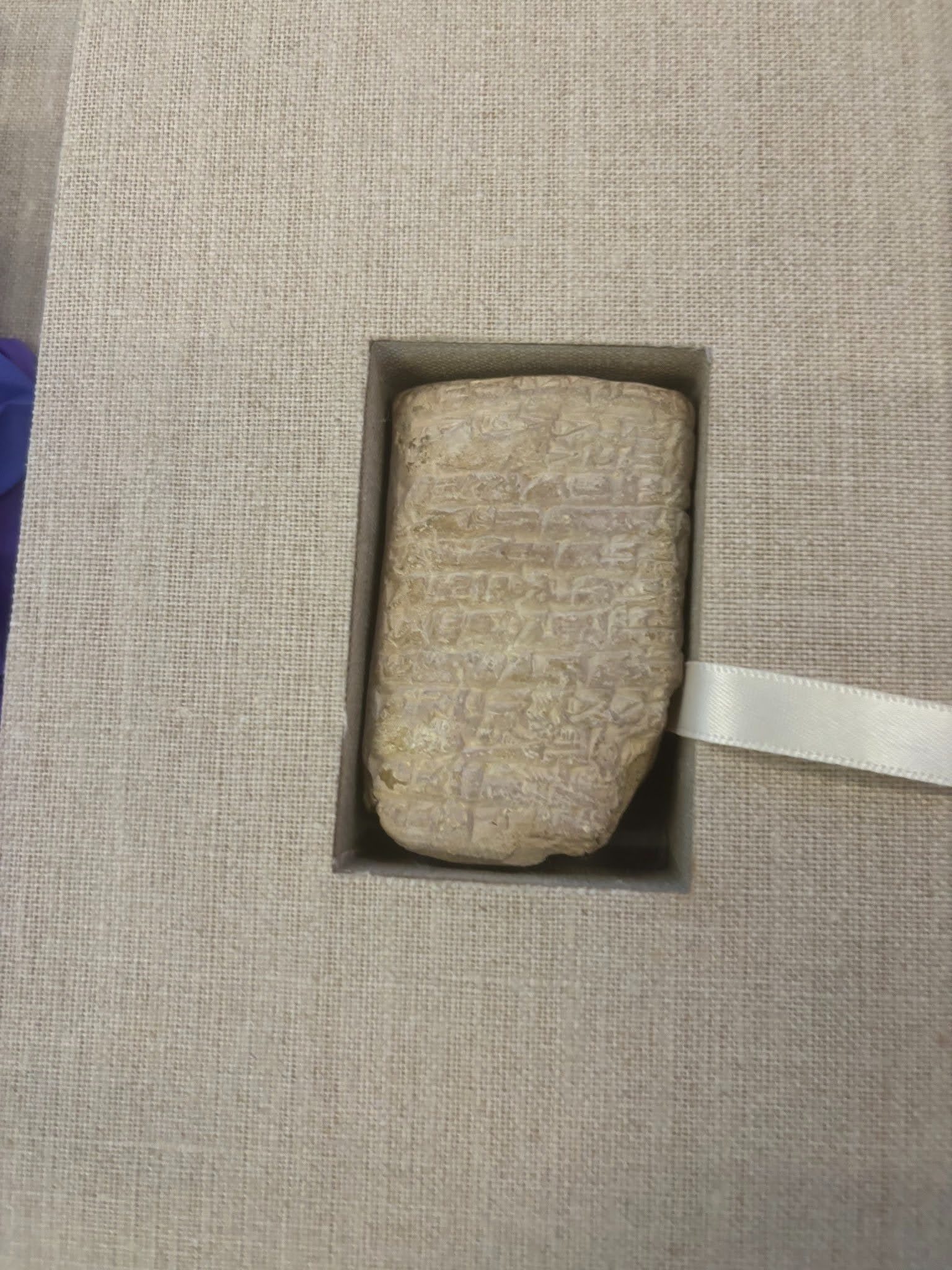
Preserving History: How I used 3D scanning to preserve an ancient cuneiform tablet

I have always been someone who is interested in different languages. My passion sparked when me and my family moved to the United States from Venezuela, and I needed to learn English fast to help my family navigate this country, since they had less time to learn English than I did. Although I didn’t have an English tutor to formally teach me English, I taught myself most of my English through reading, which made me develop a love for languages in written form. Now, at Williams, I am a prospective Chinese Language major because I fell in love with the language after taking CHIN 101! So when I was given the opportunity to work on a project that was so related to my interest in languages, I jumped on it immediately.

Cuneiform is regarded as the earliest known writing system. These words are written into clay and then baked into a sturdy, but fragile tablet. I was also really surprised to learn that cuneiform was used to write several languages. I had the pleasure to work with When we got to work, I was filled with excitement, but also some anxiety about the unknowns. Anne Peale, a librarian that works closely with the college’s special collections. She taught me that this particular cuneiform tablet was (insert interview details here). She plans to use the 3D printed tablet for educational purposes, because the characters in the tablet are very legible and hold information about a person’s taxes. Not only would 3D printing the cuneiform tablet allow several iterations of it to be used outside of the special collections library, it also allows us to make the tablet bigger, which makes the writing a lot easier to read. I was really excited about all of this, and it honestly made me want to learn how to read this type of cuneiform!

When we got to work, I was honestly really nervous. I didn’t know what to expect. This project required a way to record the tablet’s intricate wedges and patterns in a way that makes the writing completely legible, so we decided to use the unfamiliar Creality scanner to 3D scan the cuneiform, digitizing it into a file form. In my opinion, the Creality software was really intuitive. It was fairly easy to connect it to the computer, and to figure out how to correctly configure the scan. The most challenging part of this project was figuring out how to scan the tablet in a way that fully recorded the writing. We had some challenges with this, as the most detailed scanning mode included stickers that told the scanner its location, and since we couldn’t place the stickers on the cuneiform, we had to place them in its perimeter, something that became really hard to deal with when we began to turn the scanner sideways to get the sides of the tablet, since it could no longer recognize the stickers due to the angle change. Another challenge we had was that the tablet was really hard to place in a balanced way that didn’t topple over, so we ended up putting a small weighted cushion to hold it up.


Since we couldn’t place the tablet in a way that was possible for us to capture all four sides in one scan, we had to do a scan for each of all four sides. Each side of the tablet took about twenty minutes to complete, and the Creality scanner is really heavy! Anne and I had to take turns scanning, and we were both so sore! Creality records 3D items by scanning each and every point on the item, and this tablet was so intricate that it had over a million points for each side! The more we scanned, the fewer points that were recorded, so we had to go around the item a lot slower and with a lot more complex angles to make sure we recorded every character.

After two hours, all sides were scanned. Now, the only thing that was left was to find a way to merge the different scans into the composite model of the tablet. Although the Creality software comes with a scan merging option, this did not work on our scans, so blender was used to merge it.

After a month, the 3D scanned cuneiform was ready! It was a lot bigger than the tablet, and a lot less fragile, and best of all, we now had a file that could be used for printing as many of these tablets as we want! I was really excited because it was also my first time getting to see a 3D scanned object up close, as well as hold it.

One side of the tablet is clearer than the other, so we are going to reprint the file as a resin print, because the material may help to raise the clarity of the 3D print. 

Working on this project was a true journey of growth for me. The complexity of 3D scanning and the delicate nature of the cuneiform tablet made every step a learning experience. There were moments when I felt challenged, uncertain about the technical aspects or the best way to handle the fragile tablet. But with each hurdle, I gained more confidence, honed my problem-solving skills, and improved my ability to think creatively under pressure. I have always been really interested in languages, and this project sparked an interest in the digital humanities and language preservation.The potential of 3D scanning in the field of digital humanities is endless. From preserving endangered artifacts to making them accessible to scholars and students around the globe, this technology ensures that history is no longer bound by geography or fragility. I couldn’t help but think, what other treasures could we preserve this way?

Hyperbolic Paraboloid: The Ball that Wouldn’t Roll Away

A still photo from a video of a sweeping hyperbolic paraboloid with a ball resting right at its unstable center. Photo courtesy of Brough Morris.

A still photo from a video of a sweeping hyperbolic paraboloid with a ball resting right at its unstable center. Photo courtesy of Brough Morris.

At first glance, the shape looks like a saddle, a sweeping hyperbolic paraboloid with a ball resting right at its unstable center. Under normal conditions, gravity would quickly win, sending the ball rolling away. But the magic begins when the surface rotates. Suddenly, what was once unstable becomes stable: the ball lingers at the top, as though defying gravity. This simple but mesmerizing demonstration is more than a parlor trick. It’s a tangible, mechanical analogy for a Paul Trap, a device used in quantum mechanics experiments to confine ions and electrons with oscillating electric fields.

The idea to bring this demonstration to Williams College originated in conversations with Professor Fred Strauch, who saw its potential for enriching the department’s Quantum Mechanics (PY301) course. Project owner Brough Morris, Instructional Support Specialist for Physics and Astronomy, and Makerspace student worker Alice Sore ‘27 took on the task of designing a version that could withstand repeated classroom use. Their challenge was to improve on an earlier fiberglass prototype, which only managed to keep the ball stable for about five seconds before imperfections in the surface or misalignment caused it to fail.

This photo displays the hyperbolic paraboloid (connected to a base with rotational motor) that the Makerspace 3D printed. Unlike fiberglass models, this included smooth curves and precise geometry and no bumps. The Makerspace has the largest 3D-printer beds on campus.

This photo displays the hyperbolic paraboloid (connected to a base with rotational motor) that the Makerspace 3D printed. Unlike fiberglass models, this included smooth curves and precise geometry and no bumps. The Makerspace has the largest 3D-printer beds on campus.

A 3D-printed model offered a promising solution. Unlike fiberglass, which introduced bumps and inconsistencies, 3D printing could produce smoother curves and more precise geometry. Brough designed the surface to be as wide as possible while still fitting in the Makerspace printer’s build area, which was larger than any other printer available on campus. Multiple design iterations in CAD ensured that the final geometry struck the right balance, shallow enough to reduce instability, but still faithful to the physics of a Paul Trap. Rigidity was also essential: any flexing or vibration in the surface during rotation would send the ball off course. To get the balance right, Brough consulted with Jason Mativi, Senior Science Center Shop Engineer, about print density and material strength, ensuring the final model would be both stable and durable.

The fabrication process involved careful modeling of the hyperbolic paraboloid in CAD. Once the paraboloid was printed and mounted on a rotating base, the demonstration came to life. Smooth, precise, and stable, the 3D-printed saddle surpassed the earlier fiberglass attempt, holding the ball far longer (see video) and illustrating the physics concept in a way that is both intuitive and unforgettable.

A critical addition to this setup is the custom control box that Brough and Kevin Forkey, Lab Supervisor and Lecturer in Physics, built to regulate the motor speed. The experiment only works in a narrow frequency range, around 100 rpm. A little too fast or too slow and the ball will slowly drift away from the center before eventually flying off. At the correct speed, though, the ball doesn’t just sit precariously balanced, it truly stabilizes. If nudged slightly, it self-corrects and returns to the center. This visual proof of a dynamically stable equilibrium makes the analogy to the Paul Trap even more compelling.

Another photo of the hyperbolic paraboloid printed by the Makerspace.

Another photo of the hyperbolic paraboloid printed by the Makerspace.

The project draws inspiration from a similar setup at Harvard, but with a Williams Makerspace twist. The collaboration between Brough and Alice highlights how a mix of creativity, technical skill, and persistence can transform abstract concepts into hands-on learning tools. By June 2025, the hyperbolic paraboloid demonstration will be ready for classroom use, giving physics students a chance to see, not just imagine, how stability can emerge from instability. With the wires cleaned up and the motor properly mounted, the demonstration is now classroom-ready and will be used in Quantum Mechanics (PY301) starting June 2025.

What makes this project exciting is not only the final product but what it represents, the blending of mathematical surfaces, modern fabrication techniques, and physics pedagogy. In the classroom, the spinning saddle offers more than a visual spectacle. It anchors a difficult idea: the dynamic stabilization of particles in a Paul Trap in an experience that students can watch unfold before their eyes. It’s proof that sometimes, the best way to teach quantum mechanics is to let a ball roll across a 3D-printed saddle and show that, with the right motion, even instability can be tamed.

Life After Williams: Stitching Memories Workshop

Contents of upcycled mending kit includes a block printed "Strive for Zero Waste" by Leni Fried of the Old Stone Mill Center.

Contents of upcycled mending kit includes a block printed “Strive for Zero Waste” by Leni Fried of the Old Stone Mill Center.

As a Resident Director, one of my responsibilities is to plan and execute a Life After Williams (LAW) event. LAW events are designed to teach students practical skills that will be useful after we leave Williams, skills that we might not learn in the classroom. For my LAW event, I decided to partner with the FabLab to hold a mending and hemming workshop. Participants were invited to learn basic sewing skills and take home a mending kit, promoting both self-sufficiency and sustainability.

To plan this event, I reached out to David Keiser-Clark, Makerspace Program Manager, who was truly invaluable throughout the process. He connected with the Old Stone Mill Center, a zero-waste makerspace in nearby Adams, MA, and sourced mending kits for our workshop including upcycled materials such as antique sewing scissors, button thread, regular thread, denim scraps for patches, embroidery thread, cork, pins, safety pins, sewing needles, a few buttons, chalk, and a thimble. The Old Stone Mill assembled these materials into custom zippered pouches that they created from upholstery samples.

Students participating in the Life After Williams workshop created by the Residential Life Team

Students participating in the Life After Williams workshop created by the Residential Life Team

50 upcycled mending kits for this and future mending workshops, created by the Old Stone Mill Center in Adams, MA

50 upcycled mending kits for this and future mending workshops, created by the Old Stone Mill Center in Adams, MA

Students participating in the Life After Williams workshop created by the Residential Life Team

Students participating in the Life After Williams workshop created by the Residential Life Team

Final elements, such as fabric tape measures, in-house 3D printed sheaths (for the scissors), seam rippers, and industrial thread, were added to each kit the day before the event. Each kit was a unique work of art and clearly made with care. The event was held on the final day of Earth Month, and I’m grateful to the Zilkha Center for helping to publicize it.

Reflecting on the event itself, I would say it was a great success. I am grateful to Maile Ruiz ‘26, a FabLab student worker, for sharing her expertise as an instructor. Nine students attended, and two of them learned to sew for the first time. I personally mended one of my favorite scrunchies and helped a fellow senior fix the cuff of her sweater. As we all sat around the table, our conversation revolved around the emotional and environmental value of caring for clothing. The senior reflected that she had brought the sweater with her to study abroad and therefore it held memories for her. In repairing it, not only was she able to decrease clothing waste, she was also able to retain the physical reminder of her memories. It was gratifying to know that these kits might empower students to take more agency in maintaining their clothes and, by extension, in reducing waste.

(Thank you to Anderson Keiser-Clark for contributing his Fusion360 design for the scissors sheath. We 3D printed these in flexible TPU (50% infill) and they offer a perfect grip.)

PrusaXL 3D printing a batch of scissors guards

PrusaXL 3D printing a batch of scissors guards

Fusion360 design for the scissors sheath.

Fusion360 design for the scissors sheath.


Astral Sea: Weaving Memory, Migration, and Movement at Williams College

This year, Williams College collaborates with the Clark Art Institute to become a vital site for the next chapter of Astral Sea, an ongoing series by multidisciplinary artist Tsedaye Makonnen. Known for blending performance, sculpture, and textile arts, Makonnen’s work explores the intertwined themes of resilience, memory, and migration. Her residency at Williams extends this exploration through a series of collaborative workshops, performances, and community engagements that invite both participation and reflection.

Kusika dancers shroud themselves in fabric for Makonnen’s performance. (Photo courtesy of Brad Wakoff.)

Kusika dancers shroud themselves in fabric for Makonnen’s performance. (Photo courtesy of Brad Wakoff.)

The Vision Behind Astral Sea

Tsedaye Makonnen unpacking and seeing the woven mylar demo for the first time.

Tsedaye Makonnen unpacking and seeing the woven mylar demo for the first time.

At its core, Astral Sea is about creating immersive, multi-sensory experiences that transcend traditional performance boundaries. The project weaves together live dance, sculptural installations, soundscapes, and reflective textiles, many of which are inspired by Makonnen’s light sculptures. These elements come together to embody themes of diasporic memory, spiritual resilience, and the cosmic connections between people and places.

In this iteration, produced by Williams College and presented at the Clark, Makonnen collaborates closely with Kusika, the college’s African dance and percussion ensemble, and a broader network of faculty, students, and staff across departments like WCMA, Theater, Dance, Makerspace, FabLab, Science Shop, and the Sculpture Studio. This partnership is supported by the Gaudino Fund and fosters a unique interdisciplinary environment where art, technology, and community engagement converge.

Materials as Storytellers

Staff and faculty examining Zea Barker's fabric for Tsedaye Makonnen’s Astral Sea series. From left to right: Kyle Yager, Samantha Pasapane, Tsedaye Makonnen, and Sandra Burton.

Staff and faculty examining Zea Barker’s fabric for Tsedaye Makonnen’s Astral Sea series. From left to right: Kyle Yager, Samantha Pasapane, Tsedaye Makonnen, and Sandra Burton.

A central feature of Astral Sea is its sculptural textiles—large, flowing fabrics adorned with shimmering materials that move and reflect light during performances. These are not just aesthetic choices; they are vessels for storytelling. Makonnen and her collaborators have been experimenting with a range of unconventional materials:

Blue fabrics and appliqué

Custom-made textiles in various sizes, embellished with symbols, mylar cut-outs, mirrored acrylic, and smelted aluminum disks. These components create a dynamic visual and acoustic experience as performers interact with the fabrics.

Upcycled aluminum: Samantha Pasapane of the Sculpture Studio worked with the team’s requests to forge and cast aluminum—from the Science Shop’s CNC shavings —into blocks. Samantha smelted the aluminum, cast it as a rectangular block, cut a slice with a metal bandsaw, and then polished that to a mirror reflective finish. This was one of many material experiments that the team conducted to determine what kinds of materials would function most effectively being sewn into the fabrics. There were even discussions of sourcing aluminum from cans collected at the U.S.-Mexico border, linking the material to Makonnen’s broader themes of displacement, asylum, and echoing global migration. Like a variety of materials tested, this particular process was not selected for adorning the final textiles.

Aluminum shavings from the Science Shop's CNC machines were repurposed and cast into aluminum blocks.

Aluminum shavings from the Science Shop’s CNC machines were repurposed and cast into aluminum blocks.

Samantha Pasapane of the Sculpture Studio experiments with forging aluminum from CNC shavings into blocks, and then polishing to a mirror reflective finish. Left: cutting a slice with the bandsaw; Middle: polishing with a drill mounted 3M abrasive pad; Right: the final slice is highly polished.

Samantha Pasapane of the Sculpture Studio experiments with forging aluminum from CNC shavings into blocks, and then polishing to a mirror reflective finish. Left: cutting a slice with the bandsaw; Middle: polishing with a drill mounted 3M abrasive pad; Right: the final slice is highly polished.

Mirrored acrylic and mylar

Laser-cut into symbolic shapes, these reflective elements catch light during performances, amplifying the visual impact and connecting to Makonnen’s signature light sculpture motifs.

Jason Mativi of the Science Shop uses the Epilog Laser Helix machine to cut mylar for decorating fabric.

Jason Mativi of the Science Shop uses the Epilog Laser Helix machine to cut mylar for decorating fabric.

Mirrored acrylic was also laser cut in the Science Shop on an Epilog Laser Helix machine.

Mirrored acrylic was also laser cut in the Science Shop on an Epilog Laser Helix machine.

Bells and sound elements

Some fabrics incorporate bells and metal disks, adding an auditory layer that enhances the sensory immersion of the piece.

Every material choice is intentional, contributing to a tapestry of textures, sounds, and reflections that mirror the complexity of human migration and spiritual continuity. The fabrication process itself is a collaborative effort, involving professionals like Zea Barker (Textile Fabricator) and numerous student volunteers, ensuring both technical precision and educational engagement.

The Process: Collaboration in Motion

The residency at Williams has been punctuated by a series of workshops designed to engage students and community members in the making of Astral Sea. These include:

Textile and Soft Sculpture Workshops

Participants learned about the materials and techniques used to create the sculptural fabrics, from cutting mylar symbols to sewing reflective appliqués.

Weaving reflective mylar into Tsedaye Makonnen's Astral Seas project. Left: Before weaving the mylar, the loom must be threaded to create a warp. Middle: Creating a demo weaving in the FabLab to demonstrate a variety of mylar widths and explore looser or tighter weaving of materials. Right: Final woven demo. Weaver: David Keiser-Clark.

Weaving reflective mylar into Tsedaye Makonnen’s Astral Seas project. Left: Before weaving the mylar, the loom must be threaded to create a warp. Middle: Creating a demo weaving in the FabLab to demonstrate a variety of mylar widths and explore looser or tighter weaving of materials. Right: Final woven demo. Weaver: David Keiser-Clark.

Movement Workshops

Led by Makonnen and Kusika director Sandra Burton, these sessions explored how performers embody and interact with the textiles, integrating dance, ritual, and improvisation.

Oral History Workshops

Led by Makonnen and WCMA Curator Roz Crews, these sessions explored storytelling as a critical component of the performance.

Technology Integration

The Makerspace, FabLab, Science Shop, Sculpture Studio, and Zea Barker explored innovative elements like muscle wires (shape-memory alloys), body-mounted fans to billow fabric, an air curtain, and even virtual reality body tracking tools to map movement and choreography. In addition, these teams tested a variety of materials that could connect with the billowy fabric including: varying weights and types of handle attachments; hand-woven mylar that could serve as a trim; 3D printed rainsticks to add sound. These experiments reflect a commitment to pushing the boundaries of performance through interdisciplinary exploration.

Iterating with a variety of fans to explore billowing effects for the dancer's fabric. From left to right: Kyle Yager, Tsedaye Makonnen, and Jason Mativi. Out of frame: David Keiser-Clark.

Iterating with a variety of fans to explore billowing effects for the dancer’s fabric. From left to right: Kyle Yager, Tsedaye Makonnen, and Jason Mativi. Out of frame: David Keiser-Clark.

Using powerful fans to create billowing effects. From left to right: Kyle Yager and Jason Mativi. Out of frame: Tsedaye Makonnen and David Keiser-Clark.

Using powerful fans to create billowing effects. From left to right: Kyle Yager and Jason Mativi. Out of frame: Tsedaye Makonnen and David Keiser-Clark.


Looking Ahead: Performance and Community

The culminating performances for this phase of Astral Sea are set for Fall 2025, including a major presentation at the Clark Art Institute. These events will activate the sculptural textiles through dance, light, and sound, transforming spaces into living canvases of migration, memory, and cosmic connection.

Through these efforts, Astral Sea is not just an artwork—it is a living, breathing collaboration between artist, institution, and community. It offers a platform for reflection on shared histories and futures, reminding audiences of the unseen threads that connect us across time, space, and culture.

A student rehearsal of Tsedaye Makonnen’s Astral Sea series.

A student rehearsal of Tsedaye Makonnen’s Astral Sea series.

More Information

Wood, Memory, and Heritage: The Making of Engraved Gifts for Repatriation

Before: red maple wood discs, sliced from a fallen tree in Hopkins Forest

Before: red maple wood discs, sliced from a fallen tree in Hopkins Forest

Last spring, I worked on a project in the Makerspace that involved creating engraved wood slices as gifts for a reburial ceremony. This event was the reburial of the ancestors of the Stockbridge-Munsee Community. The Makerspace collaborated with Bonney Hartley, the Historic Preservation Manager at the Stockbridge-Munsee Historic Preservation office, to work on these slices. They were intended as a token of appreciation to the museums that assisted during the repatriation process. The reburial held deep significance; it was not only about returning the ancestors to the earth, but also about restoring wholeness and dignity to a community that had long been separated from its history.

The event aimed to reunite the ancestors’ remains with the funerary objects originally intended to accompany them. Over time, many of these items had been separated, often displayed in museums as artworks or stored away in boxes and plastic bags. The process of carefully unpacking, organizing, and preparing the materials for reburial required significant effort. Under the Native American Graves Protection and Repatriation Act (NAGPRA), the team undertook considerable legal and logistical work to ensure the ancestors and their belongings could be returned. Before the repatriation, they were in 10 different museums or federal collections agencies across various collections.  After years of collaboration, the team successfully reunited and reburied them, working in partnership with organizations such as the National Park Service and the U.S. Fish and Wildlife Service.

Connection to Place and Heritage

This process was deeply grounding for Bonney and the community, reaffirming their connection to place and heritage. This process restored and further grounded a sense of identity and place in the world. To them, it was truly meaningful to rebury ancestors, reunite them with the objects they were intended to be buried with, and return them to the earth.  It was, to some extent, a way to repair the past, the harm of being separated from their final resting place. It was a profound act of healing and restoration.

The wood slices were not only to appreciate the museum, but also all the people who supported them during this process. It was also an opportunity to express gratitude to the numerous staff members and individuals who work at these museums and federal institutions that hold the collection, and to appreciate those who dedicate significant time and energy to collaborating with them. Even though the focus was on the ancestors, there were people in the scenes who made it happen through goodwill and hard work. To Bonney, this gift is akin to a traditional practice and a form of reciprocity, acknowledging the mutual relationship that exists between them.

Bonney said, “It was hugely meaningful to have a piece of our homelands…” emphasizing how sharing these wood slices extended the Tribe’s tradition of gift-giving and reciprocity. Through the wood slice, in collaboration with the Makerspace and Williams College, they helped offer this gift at the reburial ceremony, and to give one piece of our homeland here in this other location for the reburial. It helps to continue the tradition of gift-giving during such an emotional and spiritual moment, restoring some aspect of the Tribe’s history.

The process of creating these gifts involved a lot of reflected care and intention:

Sanding

We began by carefully making the surfaces even to prepare the wood for engraving.

Sanding: We began by carefully making the surfaces even to prepare the wood for engraving.

Sanding: We began by carefully making the surfaces even to prepare the wood for engraving.

Laser Engraving

The Tribal Seal was then laser-engraved into each slice, and all the details were captured.

Using the Epilog Laser Engravier

Using the Epilog Laser Engravier

Finishing with Natural Oil

A few coats of natural oil protected the wood in order to enhance its texture and grain.

Applying non-toxic Walrus wood oil finish

Applying non-toxic Walrus wood oil finish

Adding Hardware

Finally, hardware was attached so each slice could be hung on a wall.

Back: hardware was attached so each slice could be hung on a wall

Back: hardware was attached so each slice could be hung on a wall

Project completed!

Project completed!

Reflection

For me, making the wood slices was more than a creative task; it was an act of participation in collective healing. It reminded me that craftsmanship can carry history and serve as a bridge between institutions and Indigenous communities.. Through this experience, I gained a deeper understanding of the history of the Stockridge-Munsee Community and the cultural significance behind the reburial event. It was truly moving to witness the respect, collaboration, and care that went into every step of the repatriation process. It’s also remarkable how the Makerspace’s efforts can be part of such a significant event, bringing together creativity, heritage, and community in a powerful way. 

Resurrecting the Ancient: A 3D-Printed Chinese Oracle Bone Finds a New Home at Williams

When students in ASIA 325 / ARTH 325: The Arts of the Book in Asia walk into class, they are greeted by an object that feels both ancient and cutting-edge: a 3D-printed replica of a 3,000-year-old Chinese oracle bone. What they may not realize is the complex and fascinating journey that brought this piece into their classroom, a story of international collaboration, digital preservation, and creative craftsmanship.

The 3D-printed replica

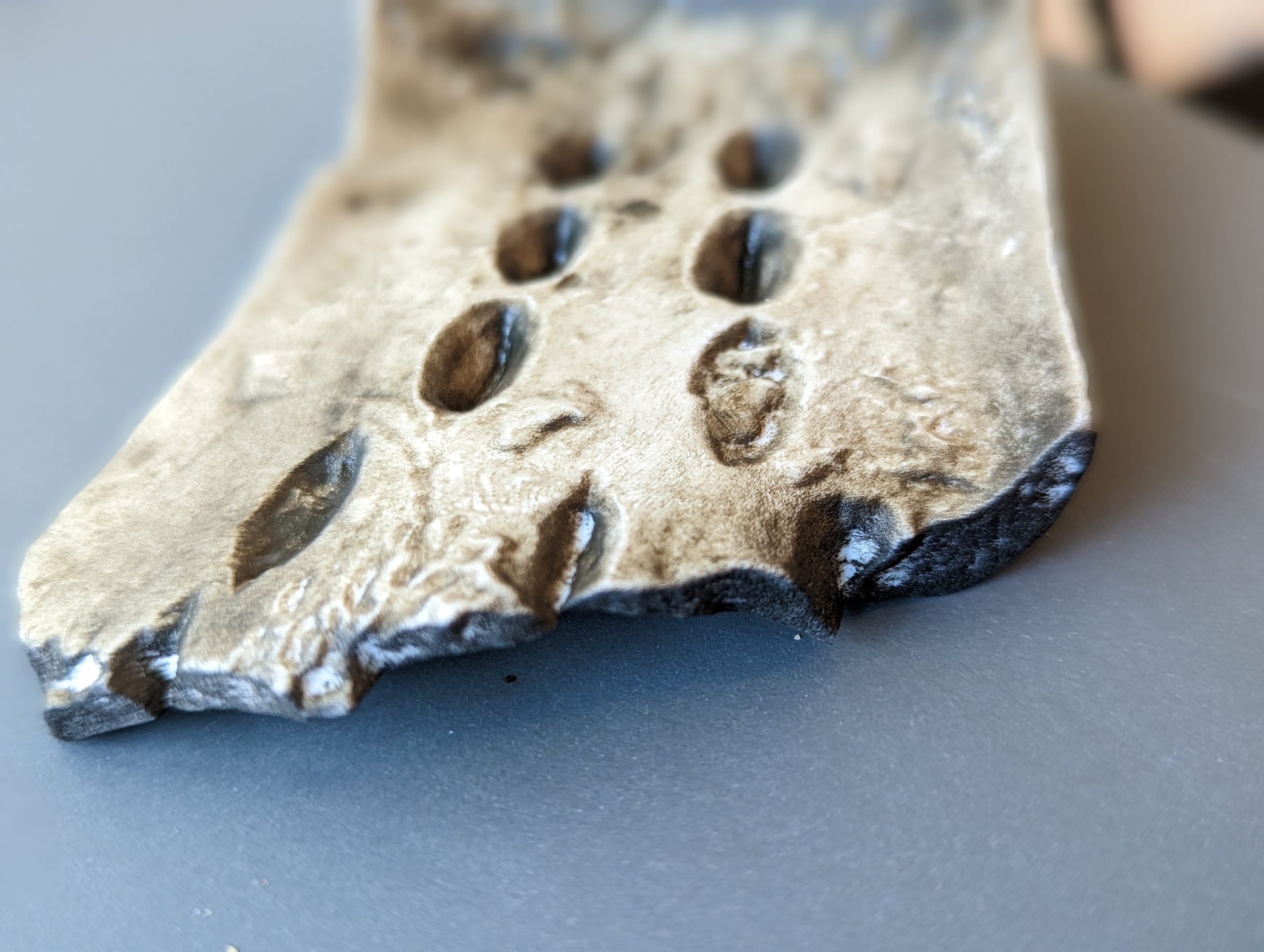
The 3D-printed replica.

From Oracle to Object

Using open-access scans from the Cambridge University Library, and with permission from Professor Dominic Powlesland, who co-holds copyright with Cambridge, the team downloaded and processed a high-resolution 3D model of Oracle Bone CUL.52.

“We don’t have any oracle bones on campus, and it wouldn’t be ethical to acquire one. But thanks to digital tools and Cambridge’s generosity, we can still bring one into students’ hands,” said Anne Peale.

3D print ready for resin.

3D print ready for resin.

The etchings after resin.

The etchings after resin.

From Data to Artifact

The project’s journey from digital file to physical artifact unfolded in several stages:

  • January 30, 2023: STL files arrived from Cambridge.
  • February 1: The first prototype was printed using FDM (fused deposition modeling).
  • February 7: A final resin print was scheduled, scaled to preserve the original details.
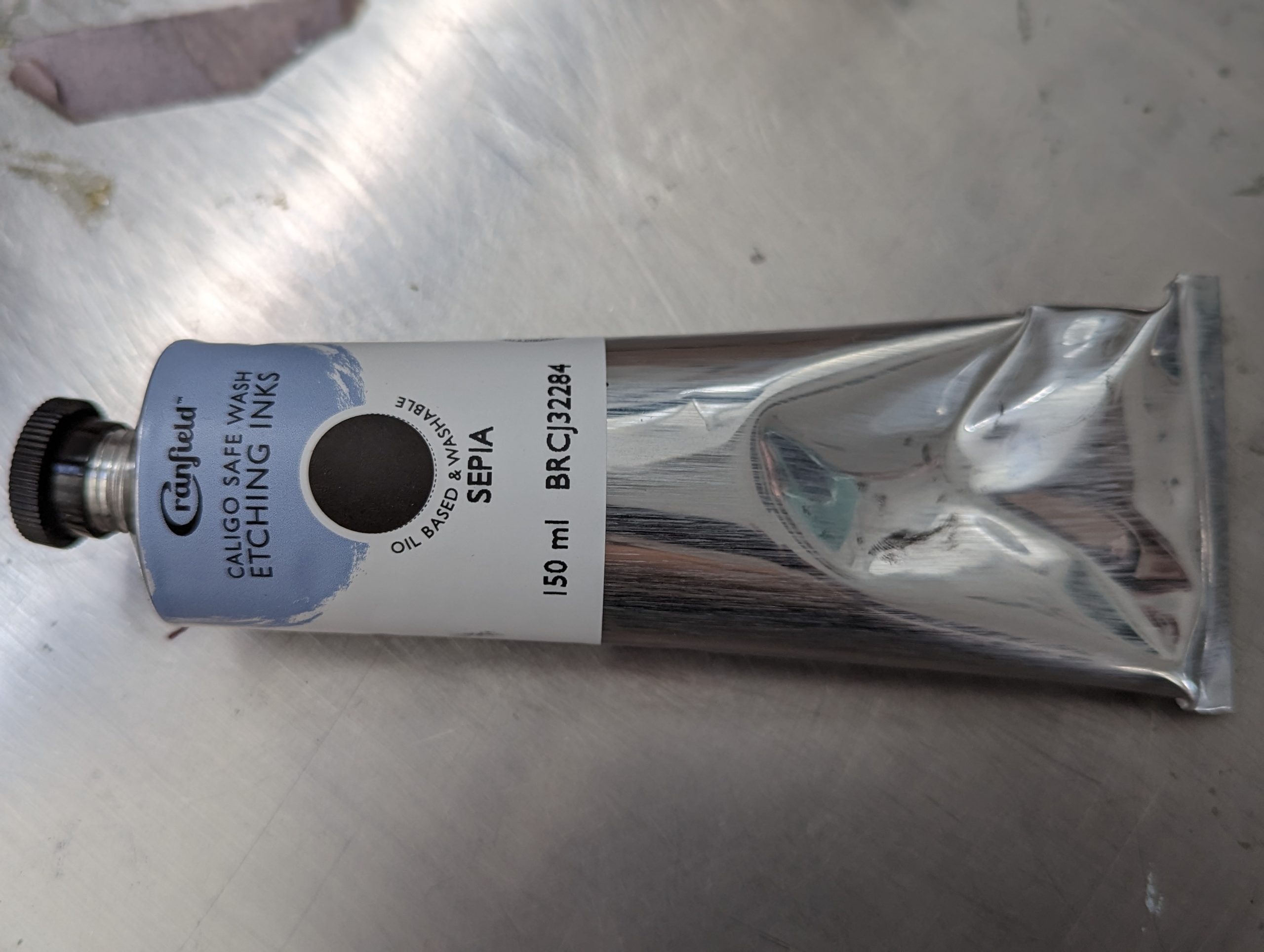
  • March 16: Print studio technician Javier Robelo applied etching ink, transforming the object’s surface from shiny resin to an aged, textured finish.

“To my eyes, the etching ink transformed the resin print into something that feels older and more authentic,” said David Keiser-Clark.

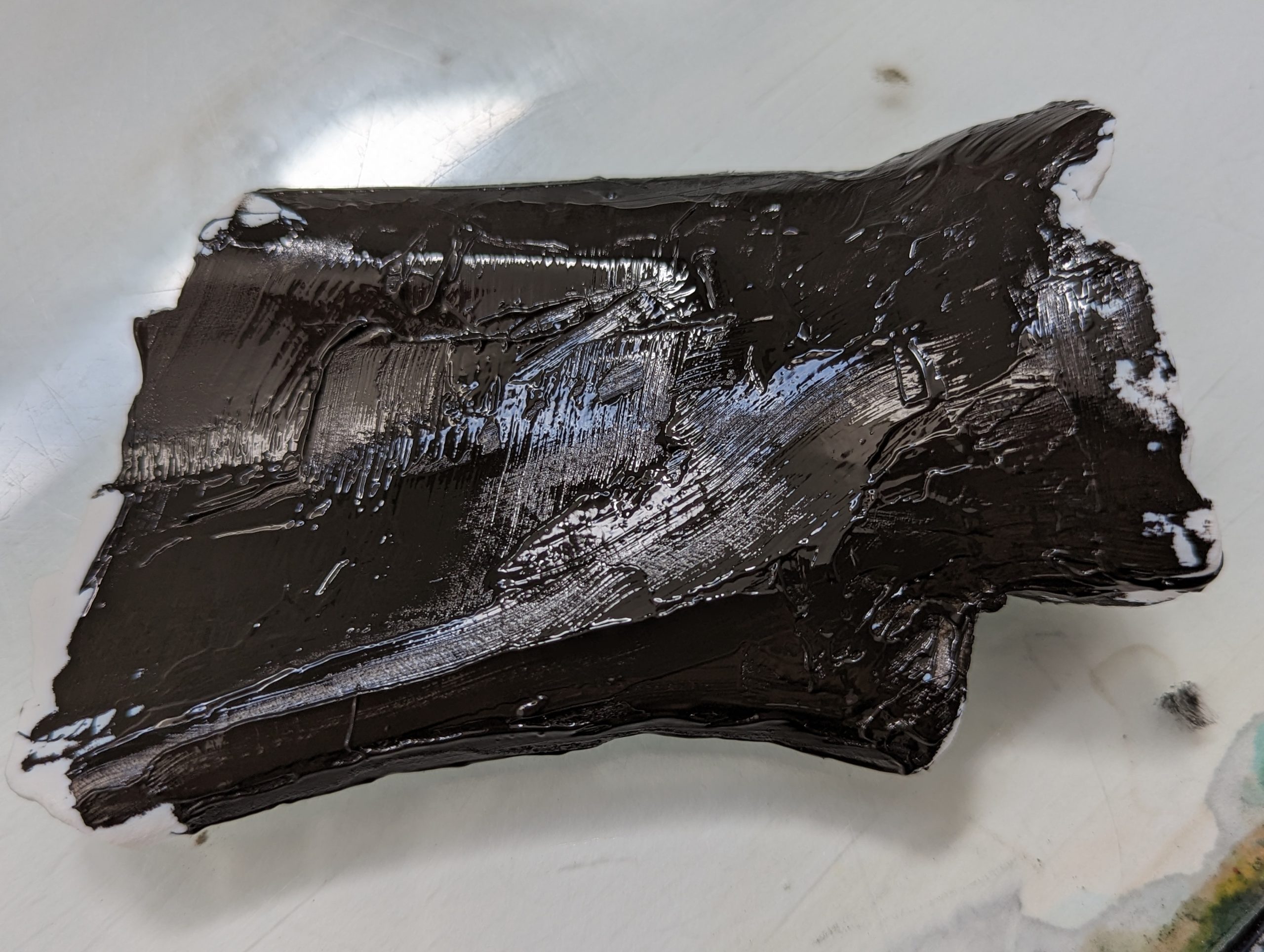
Ink covered 3D print.

Ink covered 3D print.

Ink resin used to age the 3D print.

Ink resin used to age the 3D print.

A Teaching Tool with Character

Javier Robelo (Print Studio Technician) added water soluble etching ink to the resin print, then wiped it off using tarlatan wiping fabric. This process allows only the ink within the crevices to remain and that greatly the enhances visible contrast of the 3,000 year old markings.

Javier Robelo (Print Studio Technician) added water soluble etching ink to the resin print, then wiped it off using tarlatan wiping fabric. This process allows only the ink within the crevices to remain and that greatly the enhances visible contrast of the 3,000 year old markings.

By late March, the project reached completion. Both Peale and Mumtaz were impressed by how the replica captured the visual depth and tactile quality of the original oracle bones.

“WOW, what a transformation! I can’t believe how much more visible the characters have become. May I share this with Dominic at Oxford?” wrote Peale in response to the final version.

“It is really looking like the real deal now! We would be delighted to teach with this,” added Mumtaz.

Acknowledging the Origins

This project would not have been possible without the digital preservation work of Cambridge University Library and Professor Dominic Powlesland. All future educational materials will include the following acknowledgment:

Oracle Bone, CUL.52. With thanks to Cambridge University Library and Professor Dominic Powlesland for making these scans available for research and teaching.

What’s Next

A second resin print, featuring the same inked detailing, will be produced as a gift for Professor Powlesland. The team is also exploring new materials and inking techniques to enhance texture and durability. The replica will continue to be a highlight of ARTH 325: The Arts of the Book in Asia, giving students a tangible connection to early Chinese history and script. Through this collaboration, ancient writing and modern technology meet in a way that deepens understanding and preserves cultural heritage.