Honoring Heritage Through Craft

Divine Uwimana ‘27 sands the circular wood slices to prepare them for their laser engravings.

Divine Uwimana ‘27 sands the circular wood slices to prepare them for their laser engravings.

In spring 2025, the Williams College Makerspace partnered with the Stockbridge-Munsee Community to create truly meaningful engraved wooden appreciation gifts for museums that supported the repatriation of ancestors and sacred items. The gifts were presented at the Community’s reburial ceremony on April 24, 2025.

Each circular wood slice, roughly nine inches wide, is engraved with the Stockbridge-Munsee Tribal Seal and the words “Anushiik / Oneewe 2025”  meaning “thank you” in Munsee and Mohican. These tokens were designed to express gratitude, respect, and remembrance.

From Idea to Creation

Divine Uwimana ‘27 puts non-toxic wood oil on the appreciation to protect and enhance the grain.

Divine Uwimana ‘27 puts non-toxic wood oil on the appreciation to protect and enhance the grain.

Makerspace Program Manager, David Keiser-Clark, and Makerspace partner Divine Uwimana ’27 worked closely to bring the Community’s vision to life. Using existing wood slices from David’s collection, they carefully sanded and treated each one with natural oil to highlight the grain.

The engraving process balanced tradition and precision. The Tribal Seal, provided by the Community, was transferred into engraving software and etched using a laser or CNC machine. A small eyelet hook and twine were added to each piece so they could be easily displayed.

Challenges and Creative Solutions

Because each wood slice had natural variations in size and shape, the team adjusted engraving placements to keep the designs centered. Tight deadlines also meant careful scheduling from design approval in March to production and finishing in April.

The Final Pieces

The finished plaques feel both grounded and symbolic. The wood’s natural texture connects to the earth, while the engraved seal ties the pieces to heritage and identity. Together, they represent gratitude and shared stewardship between the Stockbridge-Munsee Community and museum partners.

Sustainability and Learning

This project emphasized sustainability, reusing wood, choosing natural oils, and minimizing waste. It also provided hands-on learning in digital design, engraving, and collaborative creation across cultural contexts.

A Gesture of Gratitude

The engraved wood appreciations are more than gifts; they are acts of respect. They honor the return of ancestors to their homeland and recognize the partnerships that made it possible, a reminder that craftsmanship can help carry forward stories of reconciliation, heritage, and care.

Special thanks to the Stockbridge-Munsee Community for their guidance and cultural leadership, and to the Williams College Makerspace and Science Shop for their support.

Finished engraved wood appreciations ready to be presented at the Community’s reburial ceremony.
Finished engraved wood appreciations ready to be presented at the Community’s reburial ceremony.
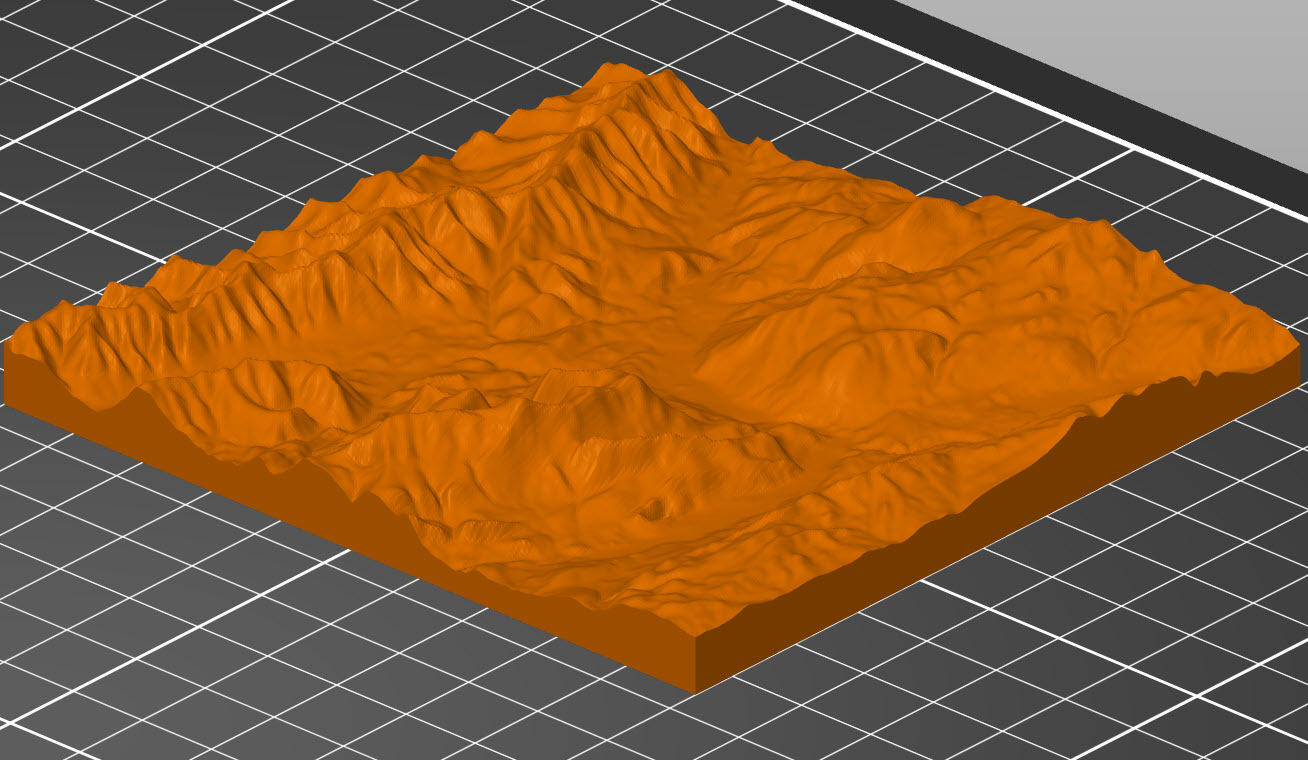
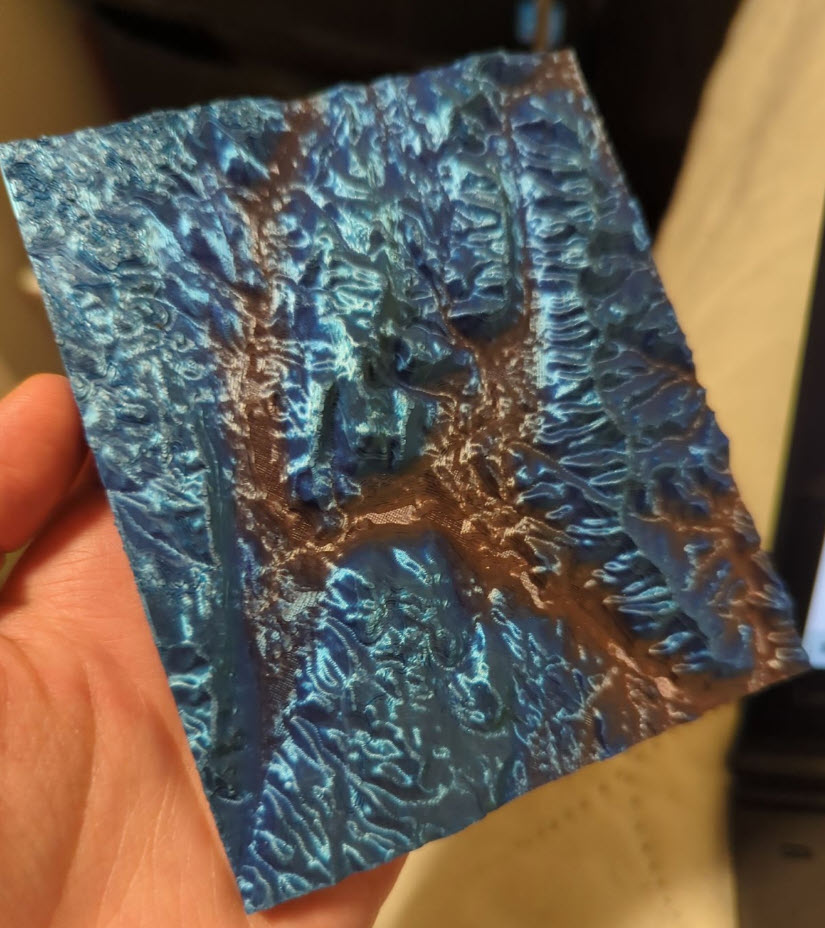
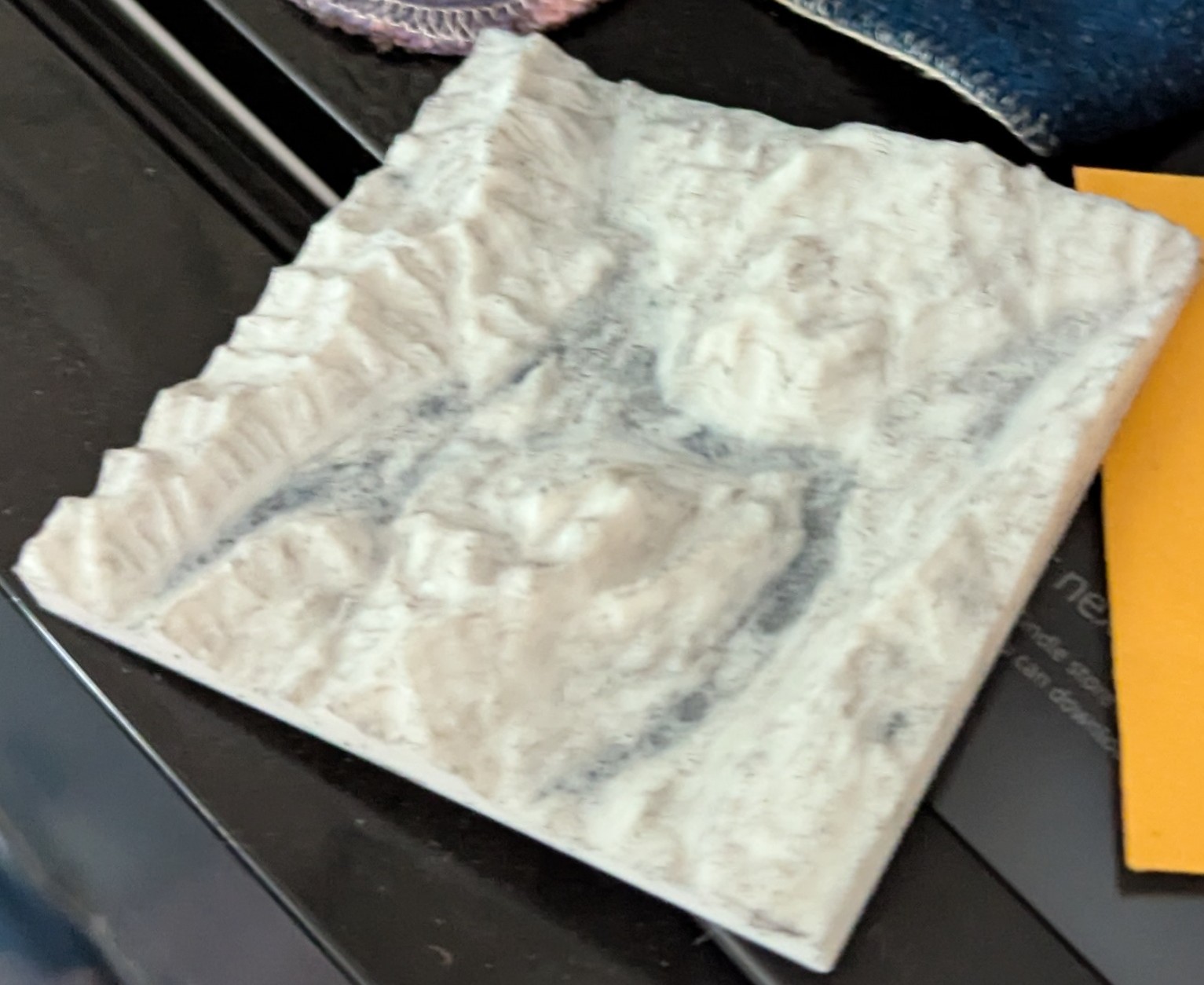
3D Printed Topographical Maps of Louisiana, Bhutan, and the Berkshires!

Arriving in the Berkshires

I arrived at Williams as a freshman never having visited the campus. Despite the admissions webpage’s best efforts to warn me, I was still shocked by the beauty of the mountains. Various trips to Pittsfield and Albany, mountain day hikes, and other excursions took me outside the main campus, but I couldn’t keep track of all the mountains, and I had little to no sense of the Berkshire geography. I put off looking closely at a map to orient myself because I kept thinking this would all be so much easier if I could just run my fingers over a topographical map of the area.

Creating Meaningful Gifts

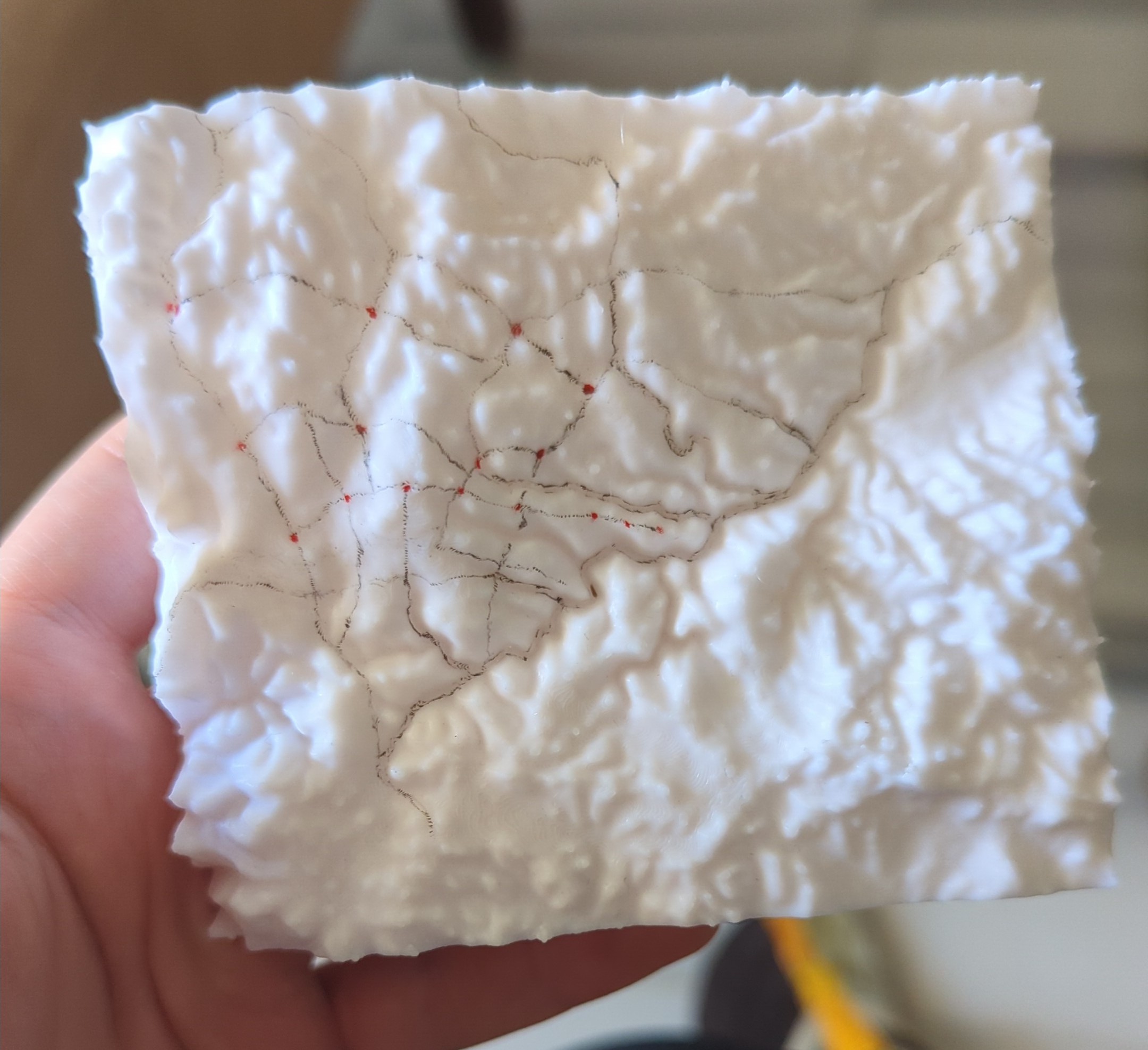
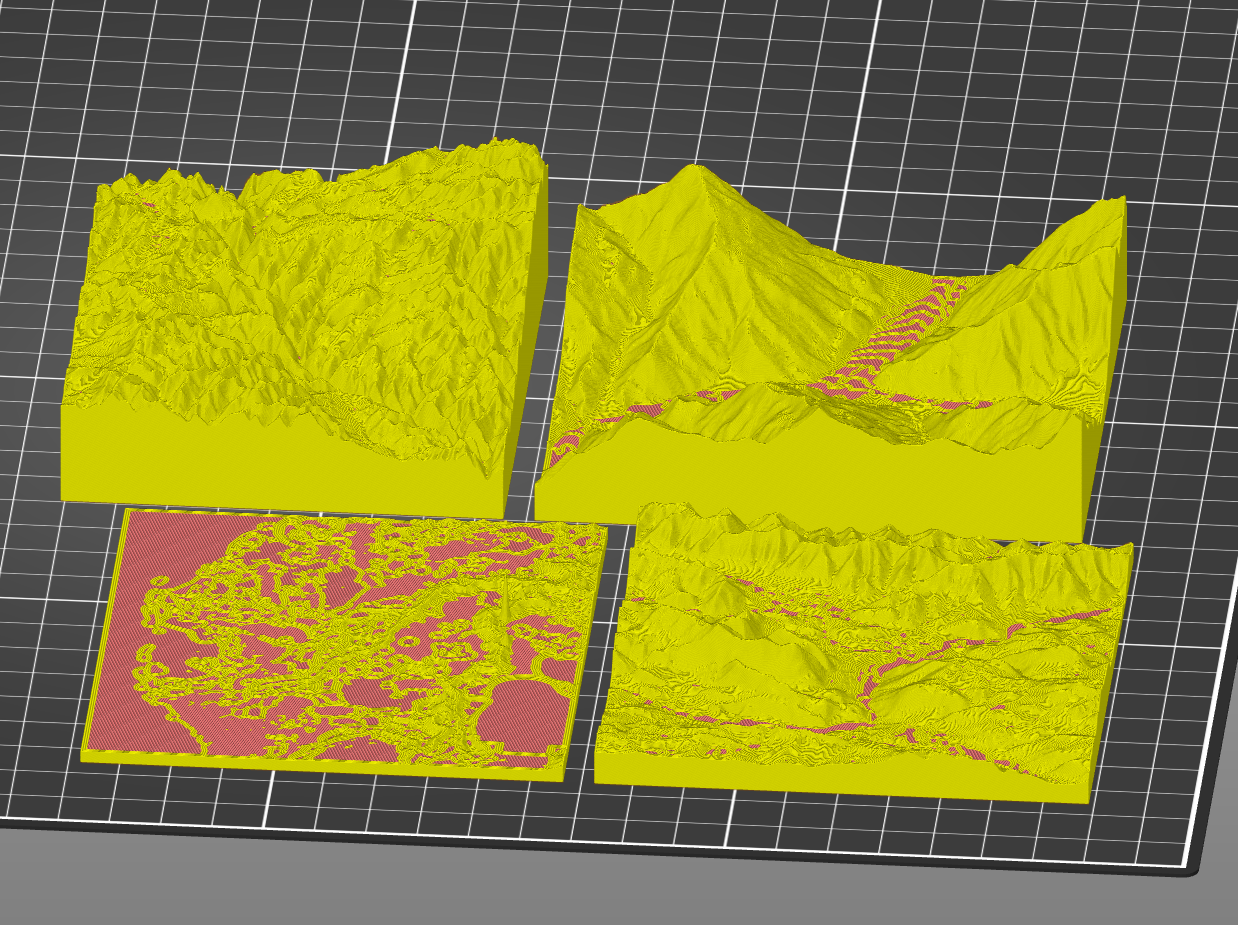
Last semester, I decided that a 3D printed map of Williams would make a nice gift for my friends who were graduating. And, with the help of the website https://touchterrain.geol.iastate.edu/ and David Keiser-Clark at the makerspace, I made it happen. It was actually pretty easy. Touchterrain let me trace out the area I wanted a map of and download the elevation data as an STL file, which I sent to David, who got it printed.

The Process

When I first came to the Makerspace with an STL file of the Williams College campus, my goal was simple: create something meaningful for my graduating friends. I wanted to give them a small, lasting reminder of the place where we had spent the past four years. That idea soon grew into a larger project, with maps of Williamstown for several friends and a special map of coastal Louisiana for someone whose thesis focused on flooding in that region.

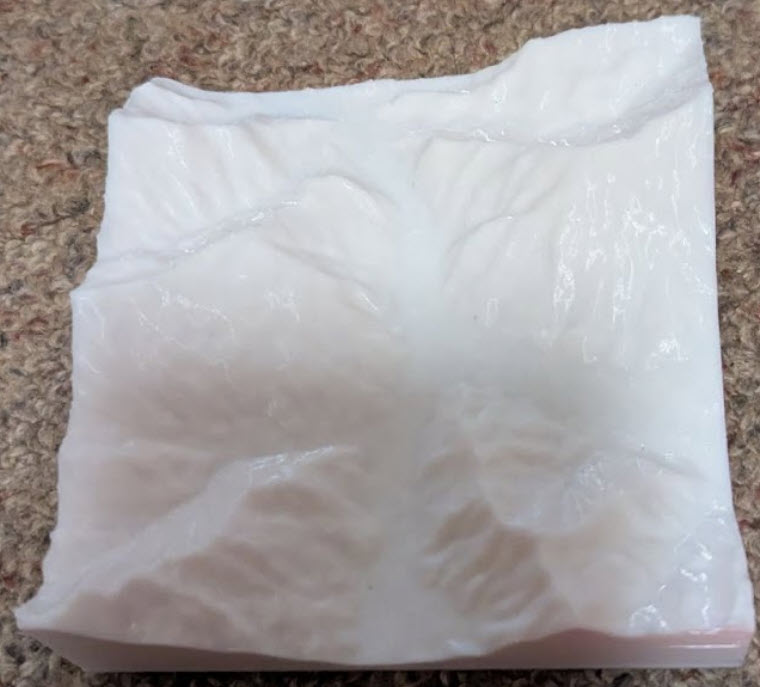
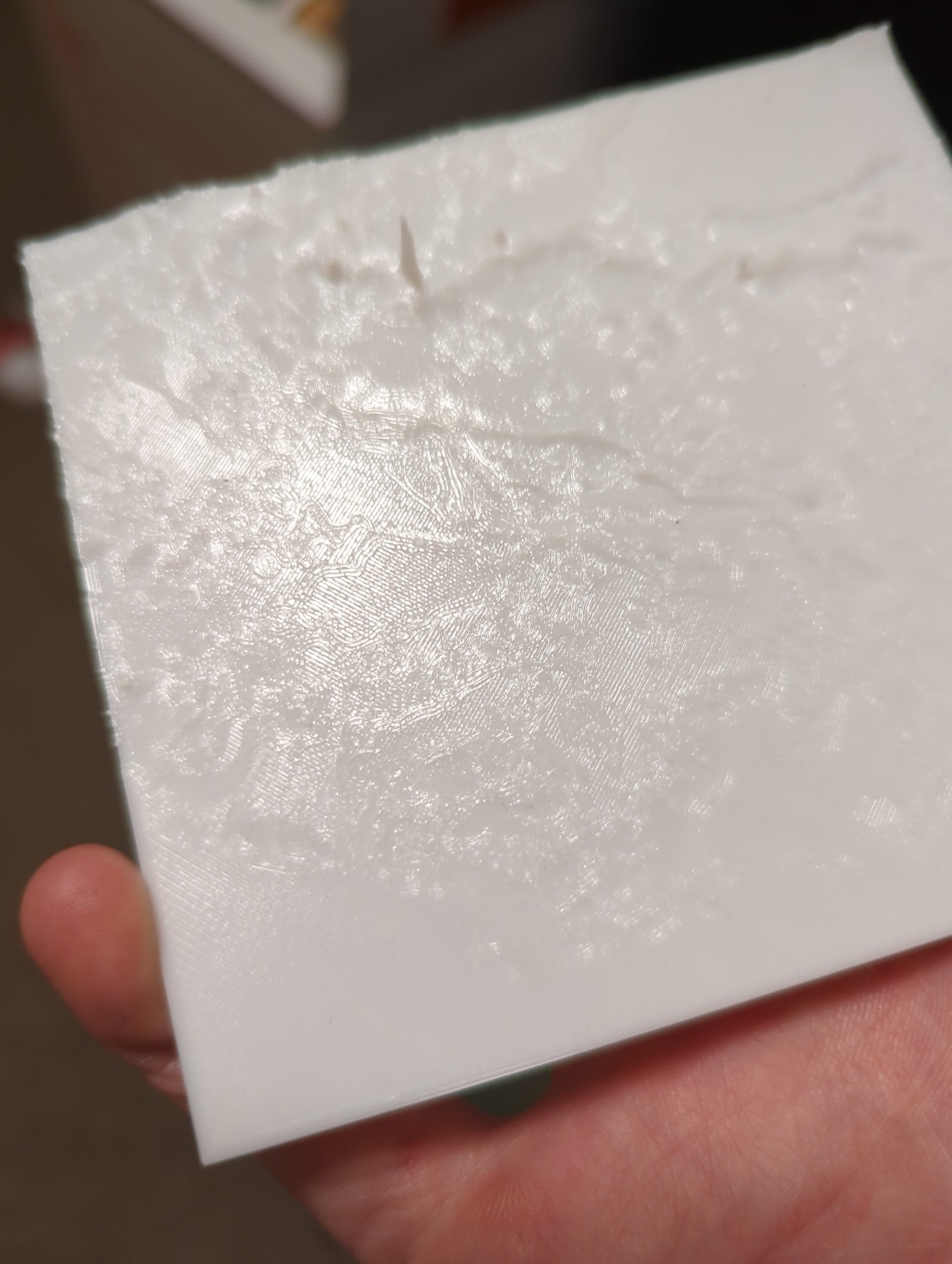
In addition to maps of Williamstown, we printed Paro, Bhutan for one of my friends who had studied abroad there and part of the Louisiana coastline (with the height scale exaggerated 500 times) for another friend who did his thesis on natural-technological disasters in that area and relied heavily on elevation maps.

The only map I kept for myself was a map of Amman, Jordan, where I studied abroad during my gap year. I returned there this summer thanks to funding from Williams’ Wohabe Fellowship, and one of the best parts of my trip was using my map to better understand the geography. By the end of my weeks there, I had a really solid grasp of the layout of the western side of the city and could place my memories from mysemester there in my mental understanding of the area.  

I’m really grateful to the Makerspace and David for helping me print these maps, and for anyone interested in 3D printing topographic maps at Williams, I’d recommend multi-colored filament so that the layers of the map change color with height and I’d warn that when painting a white print, some of the paint can find its way inside the plastic and get stuck there. (Also, for anyone looking for a good, online topographic map, I recently found the website https://en-gb.topographic-map.com/, which overlays color-coded elevation data onto Google Maps).

At the Makerspace, I experimented with materials and techniques. I tried different filament colors to see which would make the contours stand out best. For the Louisiana print, by exaggerating the elevation by 500 times, I brought out subtle topographical changes that are normally almost invisible. This choice created a striking visual effect and started conversations about how we interpret geographic data and how exaggeration can be used to reveal patterns that might otherwise go unnoticed.

Final Reflection

The final prints are more than just maps. They are pieces of memory, friendship, and curiosity. They invite touch and exploration. For me, they represent a way to connect academic learning, travel experiences, and personal relationships. For the friends who received them, they are a reminder of place and community at a moment of transition.

Wood, Memory, and Heritage: The Making of Engraved Gifts for Repatriation

Before: red maple wood discs, sliced from a fallen tree in Hopkins Forest

Before: red maple wood discs, sliced from a fallen tree in Hopkins Forest

Last spring, I worked on a project in the Makerspace that involved creating engraved wood slices as gifts for a reburial ceremony. This event was the reburial of the ancestors of the Stockbridge-Munsee Community. The Makerspace collaborated with Bonney Hartley, the Historic Preservation Manager at the Stockbridge-Munsee Historic Preservation office, to work on these slices. They were intended as a token of appreciation to the museums that assisted during the repatriation process. The reburial held deep significance; it was not only about returning the ancestors to the earth, but also about restoring wholeness and dignity to a community that had long been separated from its history.

The event aimed to reunite the ancestors’ remains with the funerary objects originally intended to accompany them. Over time, many of these items had been separated, often displayed in museums as artworks or stored away in boxes and plastic bags. The process of carefully unpacking, organizing, and preparing the materials for reburial required significant effort. Under the Native American Graves Protection and Repatriation Act (NAGPRA), the team undertook considerable legal and logistical work to ensure the ancestors and their belongings could be returned. Before the repatriation, they were in 10 different museums or federal collections agencies across various collections.  After years of collaboration, the team successfully reunited and reburied them, working in partnership with organizations such as the National Park Service and the U.S. Fish and Wildlife Service.

Connection to Place and Heritage

This process was deeply grounding for Bonney and the community, reaffirming their connection to place and heritage. This process restored and further grounded a sense of identity and place in the world. To them, it was truly meaningful to rebury ancestors, reunite them with the objects they were intended to be buried with, and return them to the earth.  It was, to some extent, a way to repair the past, the harm of being separated from their final resting place. It was a profound act of healing and restoration.

The wood slices were not only to appreciate the museum, but also all the people who supported them during this process. It was also an opportunity to express gratitude to the numerous staff members and individuals who work at these museums and federal institutions that hold the collection, and to appreciate those who dedicate significant time and energy to collaborating with them. Even though the focus was on the ancestors, there were people in the scenes who made it happen through goodwill and hard work. To Bonney, this gift is akin to a traditional practice and a form of reciprocity, acknowledging the mutual relationship that exists between them.

Bonney said, “It was hugely meaningful to have a piece of our homelands…” emphasizing how sharing these wood slices extended the Tribe’s tradition of gift-giving and reciprocity. Through the wood slice, in collaboration with the Makerspace and Williams College, they helped offer this gift at the reburial ceremony, and to give one piece of our homeland here in this other location for the reburial. It helps to continue the tradition of gift-giving during such an emotional and spiritual moment, restoring some aspect of the Tribe’s history.

The process of creating these gifts involved a lot of reflected care and intention:

Sanding

We began by carefully making the surfaces even to prepare the wood for engraving.

Sanding: We began by carefully making the surfaces even to prepare the wood for engraving.

Sanding: We began by carefully making the surfaces even to prepare the wood for engraving.

Laser Engraving

The Tribal Seal was then laser-engraved into each slice, and all the details were captured.

Using the Epilog Laser Engravier

Using the Epilog Laser Engravier

Finishing with Natural Oil

A few coats of natural oil protected the wood in order to enhance its texture and grain.

Applying non-toxic Walrus wood oil finish

Applying non-toxic Walrus wood oil finish

Adding Hardware

Finally, hardware was attached so each slice could be hung on a wall.

Back: hardware was attached so each slice could be hung on a wall

Back: hardware was attached so each slice could be hung on a wall

Project completed!

Project completed!

Reflection

For me, making the wood slices was more than a creative task; it was an act of participation in collective healing. It reminded me that craftsmanship can carry history and serve as a bridge between institutions and Indigenous communities.. Through this experience, I gained a deeper understanding of the history of the Stockridge-Munsee Community and the cultural significance behind the reburial event. It was truly moving to witness the respect, collaboration, and care that went into every step of the repatriation process. It’s also remarkable how the Makerspace’s efforts can be part of such a significant event, bringing together creativity, heritage, and community in a powerful way.