Life After Williams: Stitching Memories Workshop

Contents of upcycled mending kit includes a block printed "Strive for Zero Waste" by Leni Fried of the Old Stone Mill Center.

Contents of upcycled mending kit includes a block printed “Strive for Zero Waste” by Leni Fried of the Old Stone Mill Center.

As a Resident Director, one of my responsibilities is to plan and execute a Life After Williams (LAW) event. LAW events are designed to teach students practical skills that will be useful after we leave Williams, skills that we might not learn in the classroom. For my LAW event, I decided to partner with the FabLab to hold a mending and hemming workshop. Participants were invited to learn basic sewing skills and take home a mending kit, promoting both self-sufficiency and sustainability.

To plan this event, I reached out to David Keiser-Clark, Makerspace Program Manager, who was truly invaluable throughout the process. He connected with the Old Stone Mill Center, a zero-waste makerspace in nearby Adams, MA, and sourced mending kits for our workshop including upcycled materials such as antique sewing scissors, button thread, regular thread, denim scraps for patches, embroidery thread, cork, pins, safety pins, sewing needles, a few buttons, chalk, and a thimble. The Old Stone Mill assembled these materials into custom zippered pouches that they created from upholstery samples.

Students participating in the Life After Williams workshop created by the Residential Life Team

Students participating in the Life After Williams workshop created by the Residential Life Team

50 upcycled mending kits for this and future mending workshops, created by the Old Stone Mill Center in Adams, MA

50 upcycled mending kits for this and future mending workshops, created by the Old Stone Mill Center in Adams, MA

Students participating in the Life After Williams workshop created by the Residential Life Team

Students participating in the Life After Williams workshop created by the Residential Life Team

Final elements, such as fabric tape measures, in-house 3D printed sheaths (for the scissors), seam rippers, and industrial thread, were added to each kit the day before the event. Each kit was a unique work of art and clearly made with care. The event was held on the final day of Earth Month, and I’m grateful to the Zilkha Center for helping to publicize it.

Reflecting on the event itself, I would say it was a great success. I am grateful to Maile Ruiz ‘26, a FabLab student worker, for sharing her expertise as an instructor. Nine students attended, and two of them learned to sew for the first time. I personally mended one of my favorite scrunchies and helped a fellow senior fix the cuff of her sweater. As we all sat around the table, our conversation revolved around the emotional and environmental value of caring for clothing. The senior reflected that she had brought the sweater with her to study abroad and therefore it held memories for her. In repairing it, not only was she able to decrease clothing waste, she was also able to retain the physical reminder of her memories. It was gratifying to know that these kits might empower students to take more agency in maintaining their clothes and, by extension, in reducing waste.

(Thank you to Anderson Keiser-Clark for contributing his Fusion360 design for the scissors sheath. We 3D printed these in flexible TPU (50% infill) and they offer a perfect grip.)

PrusaXL 3D printing a batch of scissors guards

PrusaXL 3D printing a batch of scissors guards

Fusion360 design for the scissors sheath.

Fusion360 design for the scissors sheath.


Astral Sea: Weaving Memory, Migration, and Movement at Williams College

This year, Williams College collaborates with the Clark Art Institute to become a vital site for the next chapter of Astral Sea, an ongoing series by multidisciplinary artist Tsedaye Makonnen. Known for blending performance, sculpture, and textile arts, Makonnen’s work explores the intertwined themes of resilience, memory, and migration. Her residency at Williams extends this exploration through a series of collaborative workshops, performances, and community engagements that invite both participation and reflection.
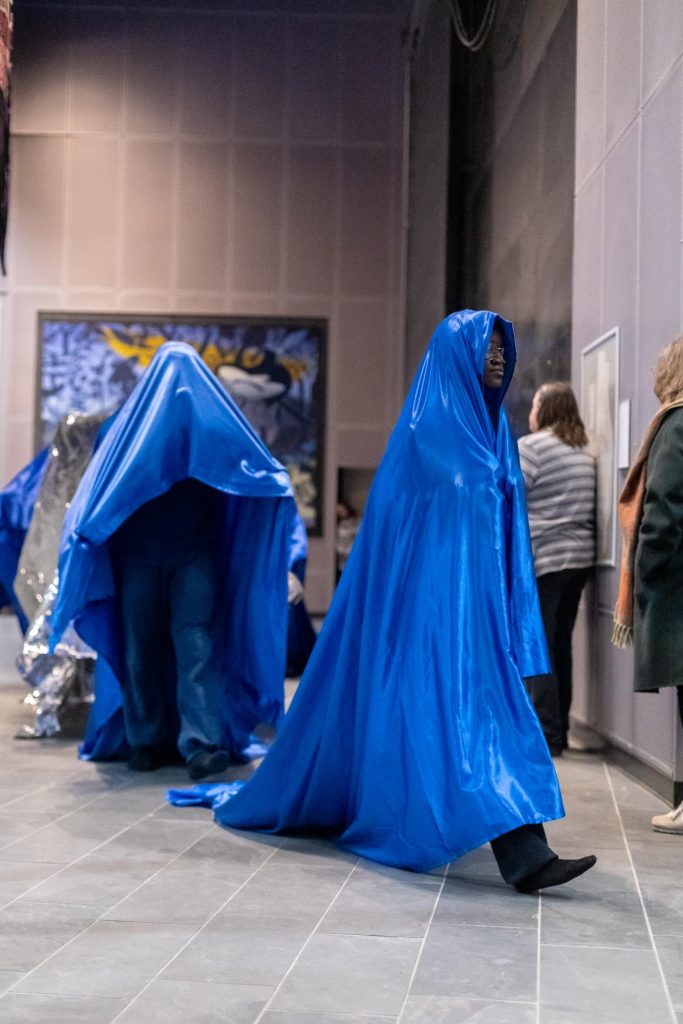
Kusika dancers shroud themselves in fabric for Makonnen’s performance. (Photo courtesy of Brad Wakoff.)

Kusika dancers shroud themselves in fabric for Makonnen’s performance. (Photo courtesy of Brad Wakoff.)

The Vision Behind Astral Sea
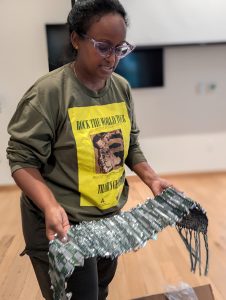
Tsedaye Makonnen unpacking and seeing the woven mylar demo for the first time.

Tsedaye Makonnen unpacking and seeing the woven mylar demo for the first time.

At its core, Astral Sea is about creating immersive, multi-sensory experiences that transcend traditional performance boundaries. The project weaves together live dance, sculptural installations, soundscapes, and reflective textiles, many of which are inspired by Makonnen’s light sculptures. These elements come together to embody themes of diasporic memory, spiritual resilience, and the cosmic connections between people and places.

In this iteration, produced by Williams College and presented at the Clark, Makonnen collaborates closely with Kusika, the college’s African dance and percussion ensemble, and a broader network of faculty, students, and staff across departments like WCMA, Theater, Dance, Makerspace, FabLab, Science Shop, and the Sculpture Studio. This partnership is supported by the Gaudino Fund and fosters a unique interdisciplinary environment where art, technology, and community engagement converge.

Materials as Storytellers
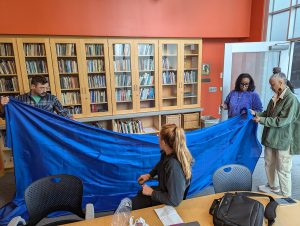
Staff and faculty examining Zea Barker's fabric for Tsedaye Makonnen’s Astral Sea series. From left to right: Kyle Yager, Samantha Pasapane, Tsedaye Makonnen, and Sandra Burton.

Staff and faculty examining Zea Barker’s fabric for Tsedaye Makonnen’s Astral Sea series. From left to right: Kyle Yager, Samantha Pasapane, Tsedaye Makonnen, and Sandra Burton.

A central feature of Astral Sea is its sculptural textiles—large, flowing fabrics adorned with shimmering materials that move and reflect light during performances. These are not just aesthetic choices; they are vessels for storytelling. Makonnen and her collaborators have been experimenting with a range of unconventional materials:

Blue fabrics and appliqué

Custom-made textiles in various sizes, embellished with symbols, mylar cut-outs, mirrored acrylic, and smelted aluminum disks. These components create a dynamic visual and acoustic experience as performers interact with the fabrics.

Upcycled aluminum: Samantha Pasapane of the Sculpture Studio worked with the team’s requests to forge and cast aluminum—from the Science Shop’s CNC shavings —into blocks. Samantha smelted the aluminum, cast it as a rectangular block, cut a slice with a metal bandsaw, and then polished that to a mirror reflective finish. This was one of many material experiments that the team conducted to determine what kinds of materials would function most effectively being sewn into the fabrics. There were even discussions of sourcing aluminum from cans collected at the U.S.-Mexico border, linking the material to Makonnen’s broader themes of displacement, asylum, and echoing global migration. Like a variety of materials tested, this particular process was not selected for adorning the final textiles.
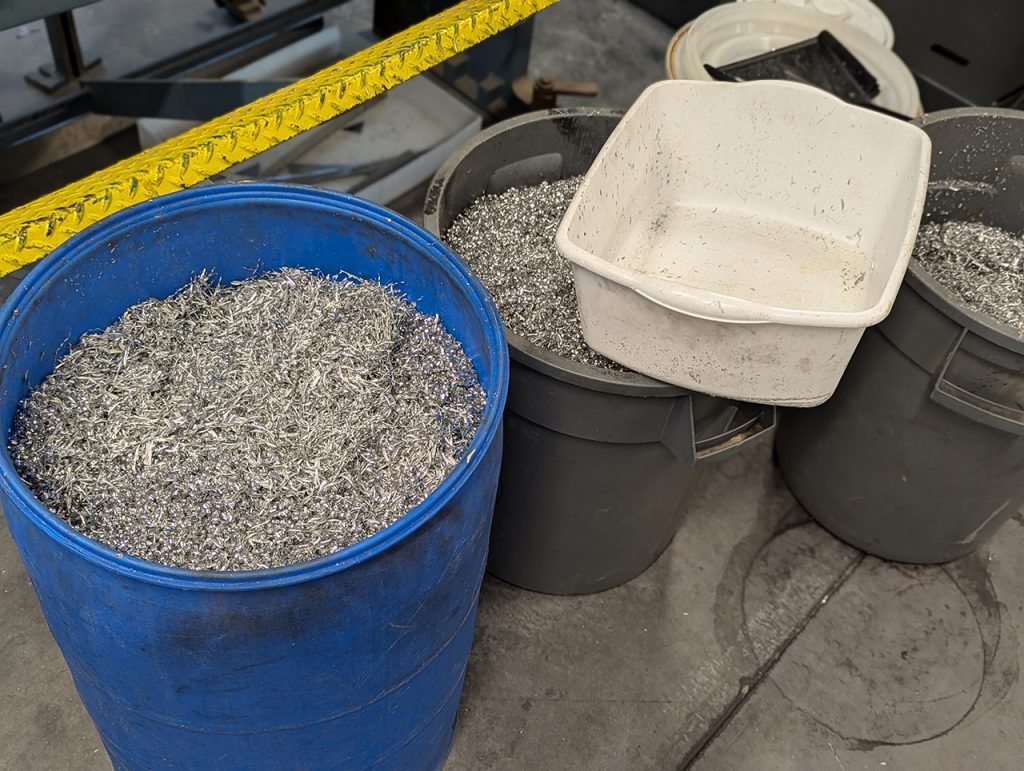
Aluminum shavings from the Science Shop's CNC machines were repurposed and cast into aluminum blocks.

Aluminum shavings from the Science Shop’s CNC machines were repurposed and cast into aluminum blocks.
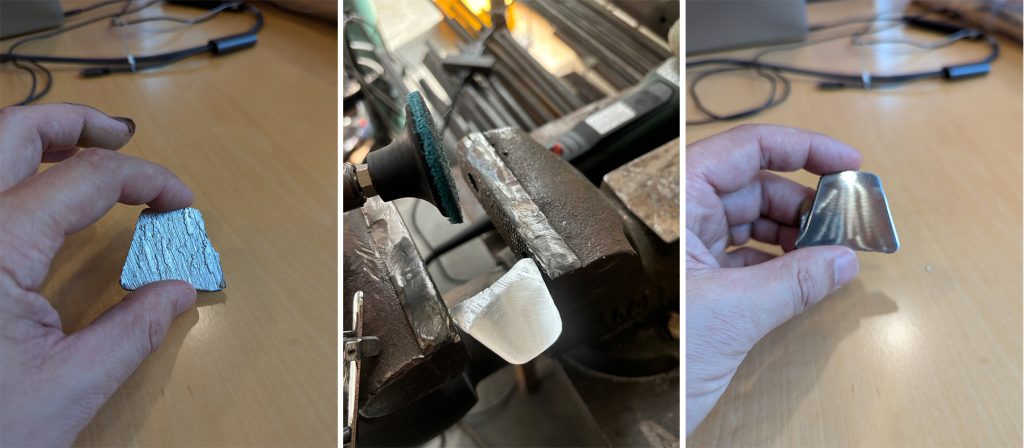
Samantha Pasapane of the Sculpture Studio experiments with forging aluminum from CNC shavings into blocks, and then polishing to a mirror reflective finish. Left: cutting a slice with the bandsaw; Middle: polishing with a drill mounted 3M abrasive pad; Right: the final slice is highly polished.

Samantha Pasapane of the Sculpture Studio experiments with forging aluminum from CNC shavings into blocks, and then polishing to a mirror reflective finish. Left: cutting a slice with the bandsaw; Middle: polishing with a drill mounted 3M abrasive pad; Right: the final slice is highly polished.

Mirrored acrylic and mylar

Laser-cut into symbolic shapes, these reflective elements catch light during performances, amplifying the visual impact and connecting to Makonnen’s signature light sculpture motifs.
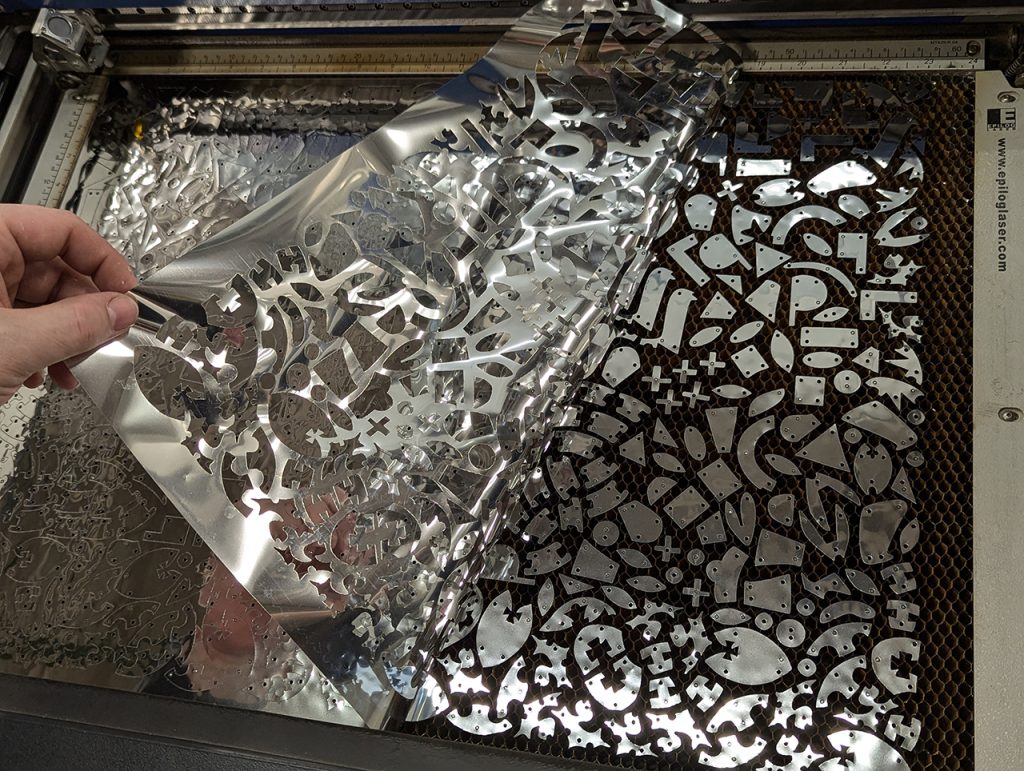
Jason Mativi of the Science Shop uses the Epilog Laser Helix machine to cut mylar for decorating fabric.
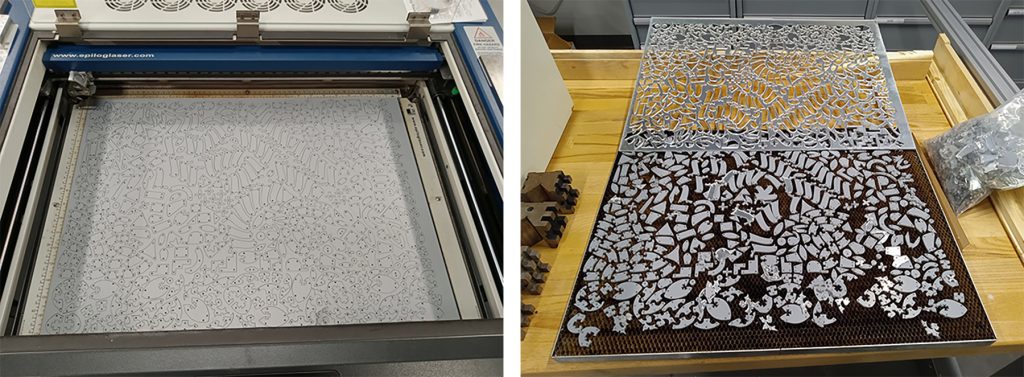
Jason Mativi of the Science Shop uses the Epilog Laser Helix machine to cut mylar for decorating fabric.

Mirrored acrylic was also laser cut in the Science Shop on an Epilog Laser Helix machine.

Mirrored acrylic was also laser cut in the Science Shop on an Epilog Laser Helix machine.

Bells and sound elements

Some fabrics incorporate bells and metal disks, adding an auditory layer that enhances the sensory immersion of the piece.

Every material choice is intentional, contributing to a tapestry of textures, sounds, and reflections that mirror the complexity of human migration and spiritual continuity. The fabrication process itself is a collaborative effort, involving professionals like Zea Barker (Textile Fabricator) and numerous student volunteers, ensuring both technical precision and educational engagement.

The Process: Collaboration in Motion

The residency at Williams has been punctuated by a series of workshops designed to engage students and community members in the making of Astral Sea. These include:

Textile and Soft Sculpture Workshops

Participants learned about the materials and techniques used to create the sculptural fabrics, from cutting mylar symbols to sewing reflective appliqués.
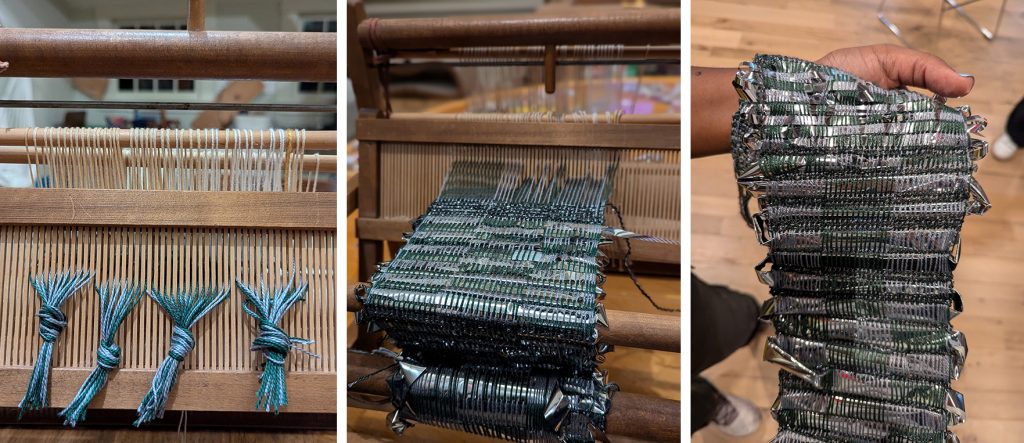
Weaving reflective mylar into Tsedaye Makonnen's Astral Seas project. Left: Before weaving the mylar, the loom must be threaded to create a warp. Middle: Creating a demo weaving in the FabLab to demonstrate a variety of mylar widths and explore looser or tighter weaving of materials. Right: Final woven demo. Weaver: David Keiser-Clark.

Weaving reflective mylar into Tsedaye Makonnen’s Astral Seas project. Left: Before weaving the mylar, the loom must be threaded to create a warp. Middle: Creating a demo weaving in the FabLab to demonstrate a variety of mylar widths and explore looser or tighter weaving of materials. Right: Final woven demo. Weaver: David Keiser-Clark.

Movement Workshops

Led by Makonnen and Kusika director Sandra Burton, these sessions explored how performers embody and interact with the textiles, integrating dance, ritual, and improvisation.

Oral History Workshops

Led by Makonnen and WCMA Curator Roz Crews, these sessions explored storytelling as a critical component of the performance.

Technology Integration

The Makerspace, FabLab, Science Shop, Sculpture Studio, and Zea Barker explored innovative elements like muscle wires (shape-memory alloys), body-mounted fans to billow fabric, an air curtain, and even virtual reality body tracking tools to map movement and choreography. In addition, these teams tested a variety of materials that could connect with the billowy fabric including: varying weights and types of handle attachments; hand-woven mylar that could serve as a trim; 3D printed rainsticks to add sound. These experiments reflect a commitment to pushing the boundaries of performance through interdisciplinary exploration.
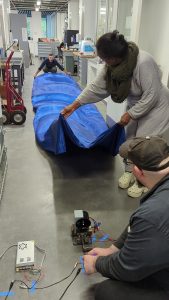
Iterating with a variety of fans to explore billowing effects for the dancer's fabric. From left to right: Kyle Yager, Tsedaye Makonnen, and Jason Mativi. Out of frame: David Keiser-Clark.
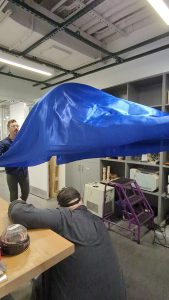
Iterating with a variety of fans to explore billowing effects for the dancer’s fabric. From left to right: Kyle Yager, Tsedaye Makonnen, and Jason Mativi. Out of frame: David Keiser-Clark.

Using powerful fans to create billowing effects. From left to right: Kyle Yager and Jason Mativi. Out of frame: Tsedaye Makonnen and David Keiser-Clark.

Using powerful fans to create billowing effects. From left to right: Kyle Yager and Jason Mativi. Out of frame: Tsedaye Makonnen and David Keiser-Clark.


Looking Ahead: Performance and Community

The culminating performances for this phase of Astral Sea are set for Fall 2025, including a major presentation at the Clark Art Institute. These events will activate the sculptural textiles through dance, light, and sound, transforming spaces into living canvases of migration, memory, and cosmic connection.

Through these efforts, Astral Sea is not just an artwork—it is a living, breathing collaboration between artist, institution, and community. It offers a platform for reflection on shared histories and futures, reminding audiences of the unseen threads that connect us across time, space, and culture.
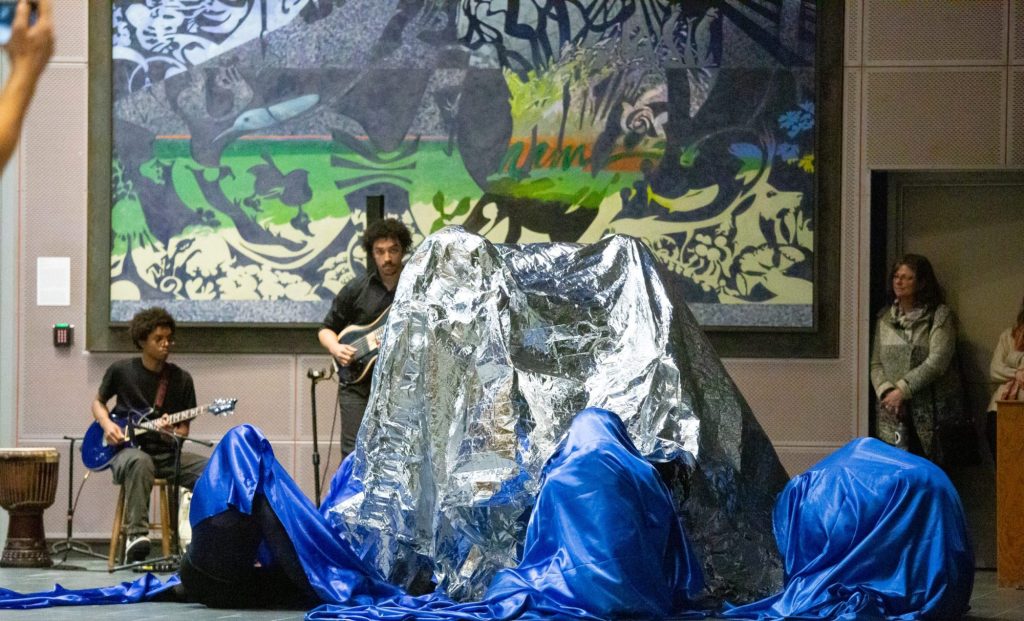
A student rehearsal of Tsedaye Makonnen’s Astral Sea series.

A student rehearsal of Tsedaye Makonnen’s Astral Sea series.

More Information

Alumni Reunion Weekend at the Makerspace

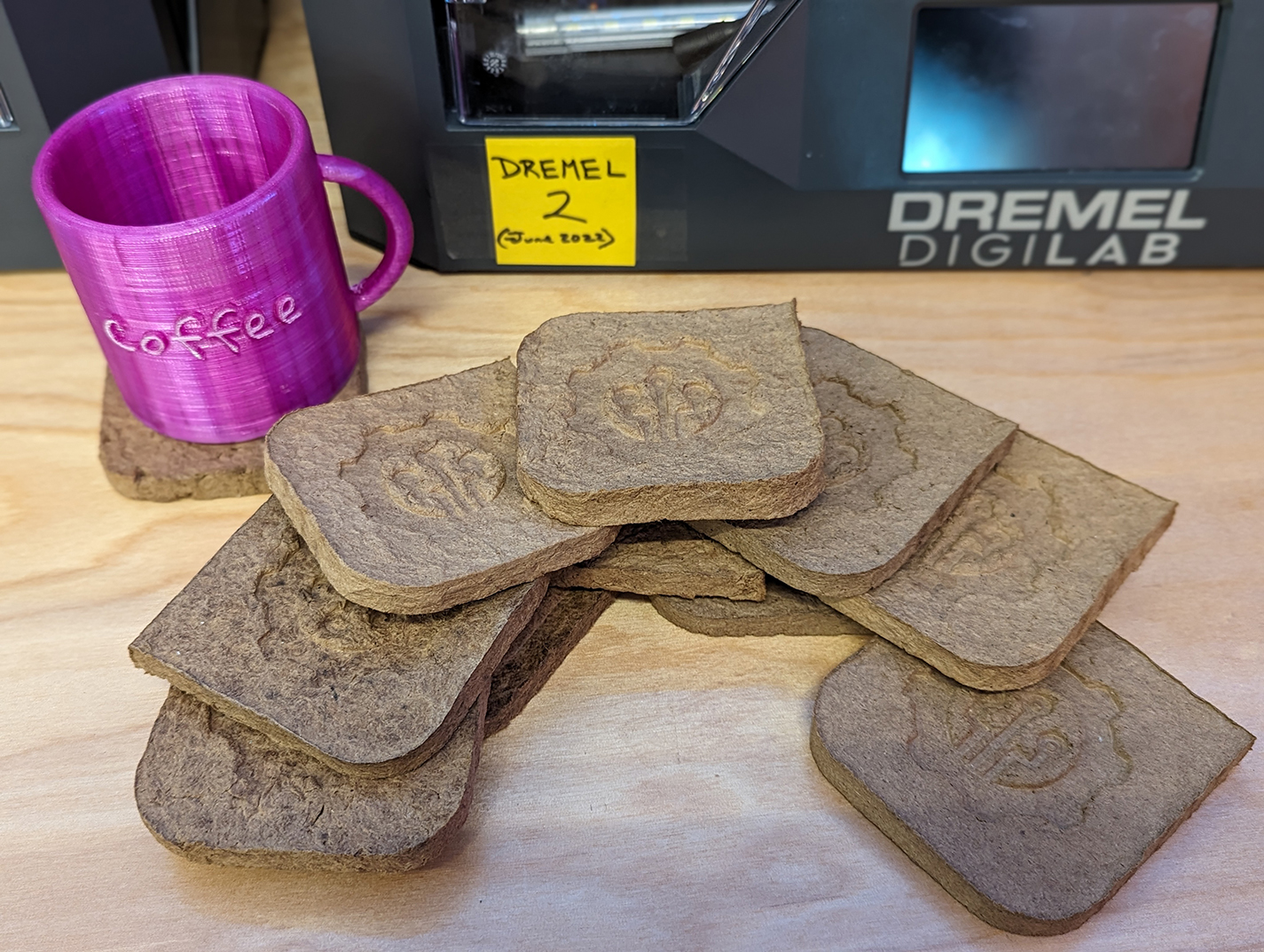
During the sunny and pleasant reunion weekend of June 7th and 8th, the Makerspace was bustling, offering tours and hands-on making experiences to over 200 Williams alums and their families. We prepared a hands-on project that would allow people to use 3D-printed molds to cast Makerspace-themed coasters, sourced from upcycled Amazon cardboard boxes. This fun experience allowed us to share and discuss an environmentally friendly DIY project that people could easily replicate at home. People can even create their own custom molds!

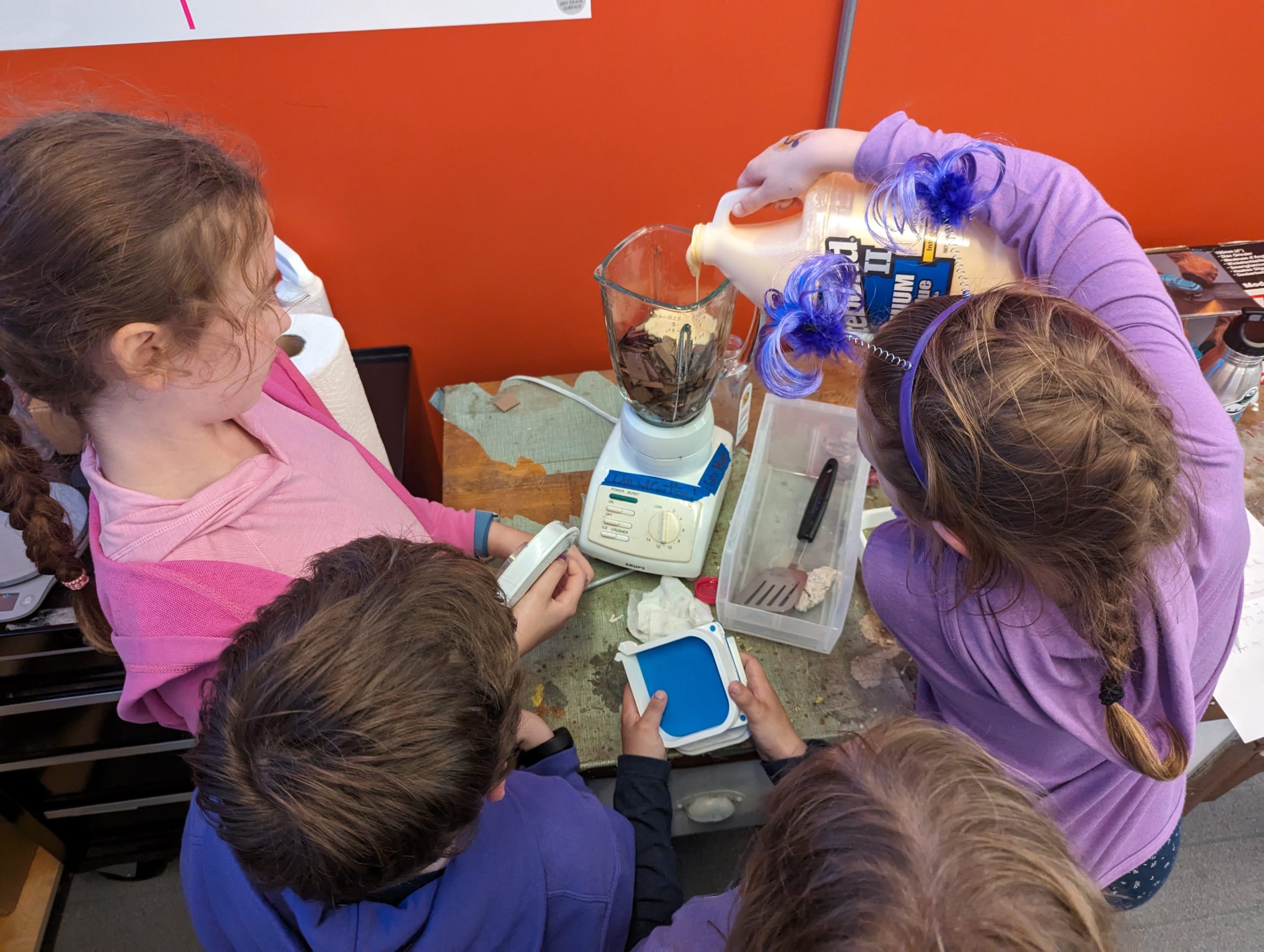
During the alumni reunion weekend, the kids seemed most excited to mix the ingredients, mold the pulp, and finally clamp the coasters. They also got to take home coasters that we had prepared (and dried!) ahead of time.

Alums in the Makerspace on June 7th, 2024

Alums in the Makerspace on June 7th, 2024

Recipe

  • Cardboard boxes (50g)
  • Water (170g)
  • PVA Glue (15g) (we used Titebond II woodworkers glue; Elmer’s white glue works, too)

Tools

Instructions

  • Cut the Amazon boxes into small pieces
  • Add into the blender: 50g of cardboard, 170g of water, and 15g of glue

    The kids were excited to mix the ingredients (cardboard, water, and glue)

    The kids were excited to mix the ingredients (cardboard, water, and glue)

  • Blend until it’s thick and looks like wet clay
  • Assemble the 3D-printed mold: we used and modified this Pulp-it model

    Kids took turns squeezing extra water from the pulp

    Kids took turns squeezing extra water from the pulp

  • Put the pulp in a cheese cloth and squeeze the excess water out
  • Fill the mold with the damp pulp
  • Press the pulp with your hands so that it is dense and evenly distributed in the mold

    And this is how you squeeze the clamps on the mold!

    And this is how you squeeze the clamps on the mold!

  • Attach the lid to the mold
  • Press the mold using a clamp
  • Let it dry for 24 hours
  • Carefully remove it from the mold and gently place it to dry in direct sunlight (or in front of a fan or heater vent) for about 6 hours
  • It should now be 100% dry and solid
  • Nice work!
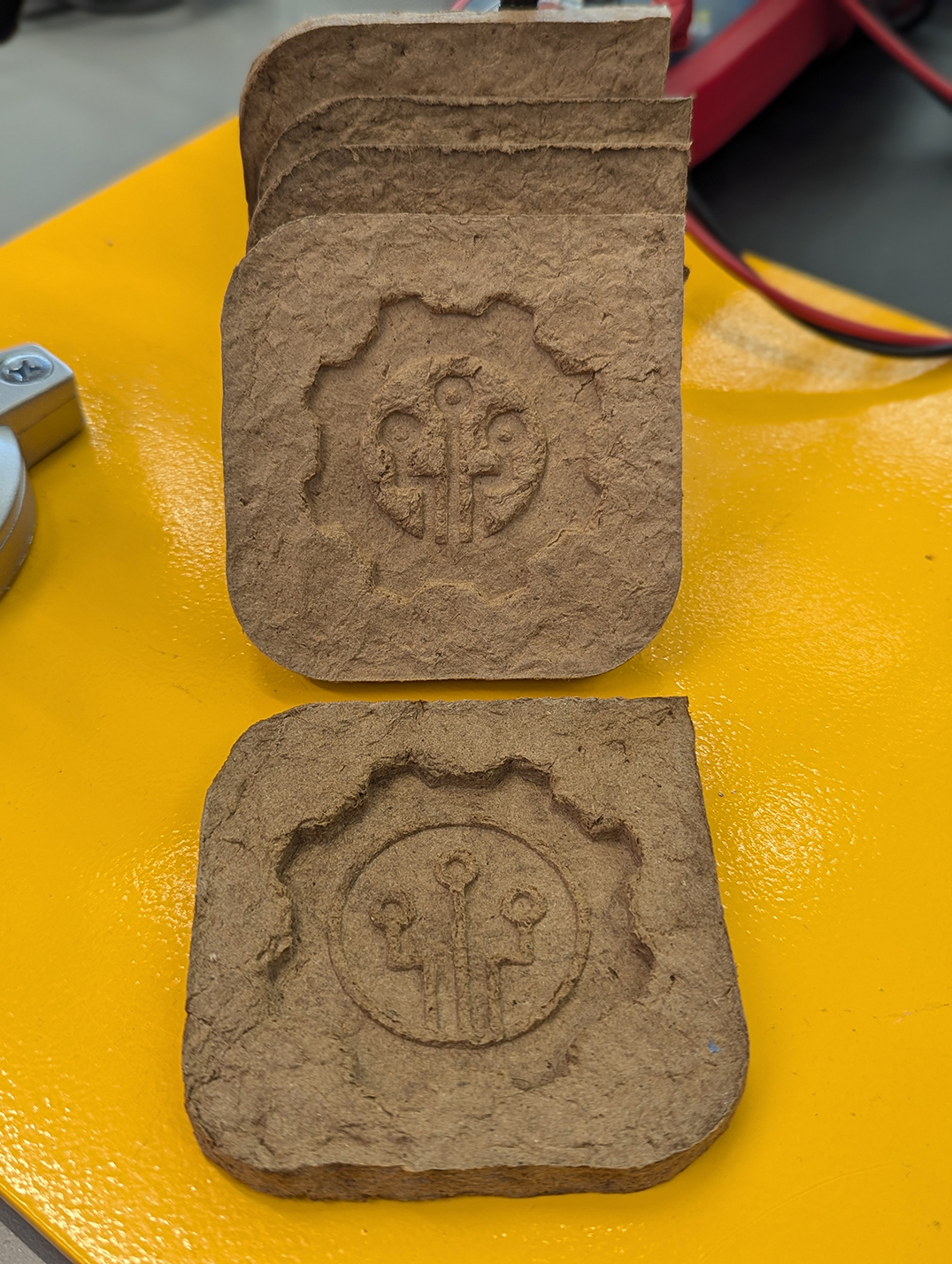
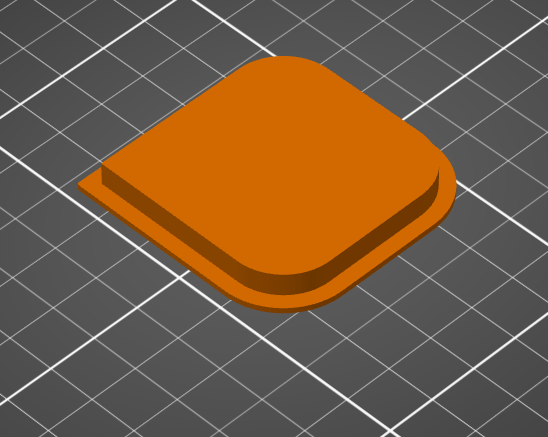
Fusion 360 software: We ended up iterating and tried inverting the extrusion of our design. Which version do you like better?

Fusion 360 software: We ended up iterating and tried inverting the extrusion of our design. Which version do you like better?

The kids had a blast making the coasters while learning about how upcycling minimizes waste in our environment. This activity demonstrated how individual action, no matter how small, may collectively impact positive change.

A pile of upcycled coasters made by our alumni's children (from scrap Amazon boxes)

A pile of upcycled coasters made by our alumni’s children (from scrap Amazon boxes)

According to the Environmental Protection Agency

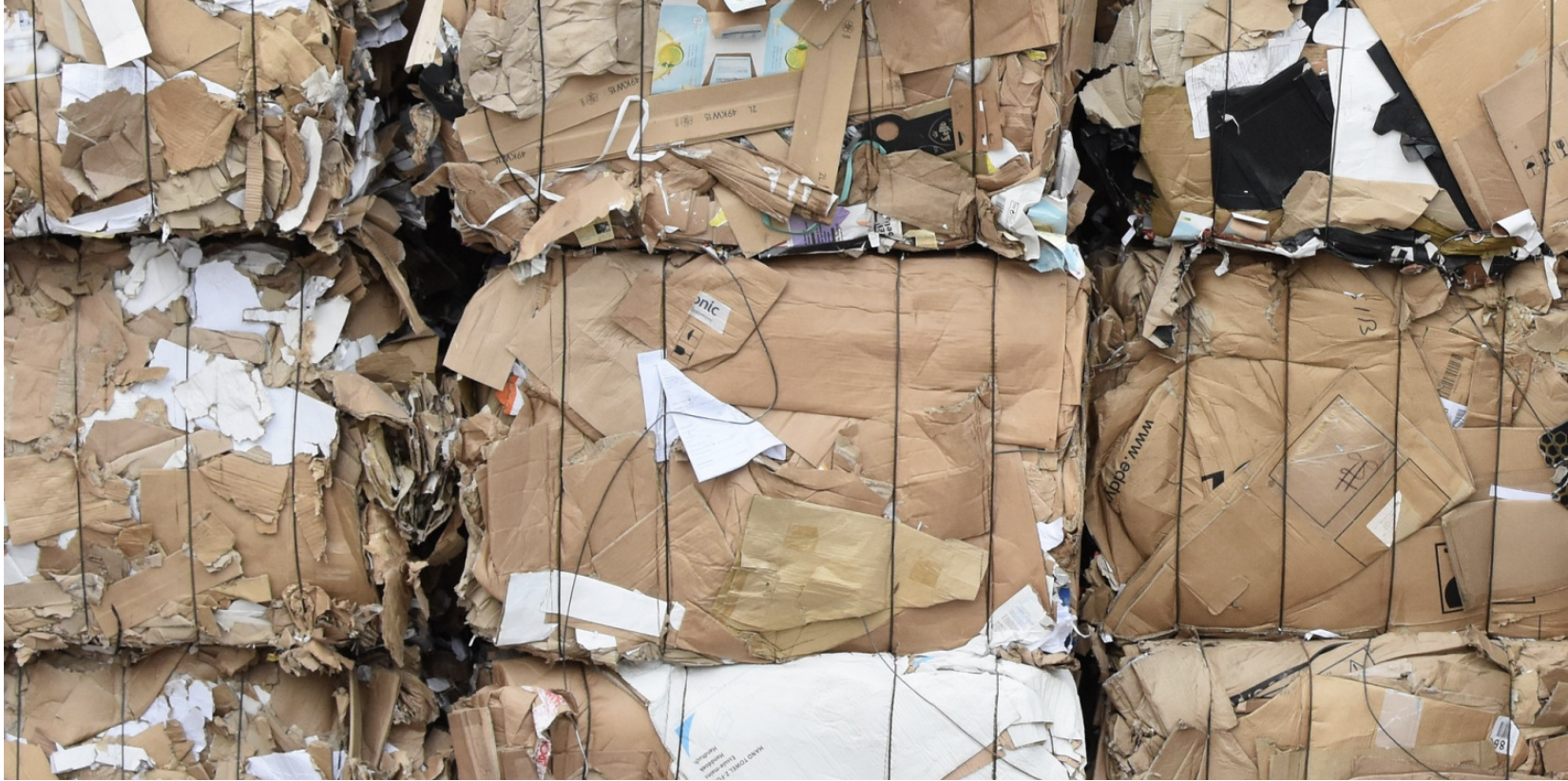
Packaging materials account for 28.1 percent of the total municipal solid waste (MSW), amounting to 82.2 million tons of generation in 2018. This amount poses a high environmental risk and requires systemic and individual actions to mitigate the risks.
A pile of Amazon boxes

A pile of Amazon boxes

We were inspired by this Pulp-it project, and then we modified their open-source parts by using Fusion 360 software to add the Makerspace logo onto the coaster. To do this, we added an image of the logo and then extruded (raised) it about 8mm. To minimize waste, we tested our prototype models by printing it at 15% of the actual size. 

Fusion 360 software: Before adding our logo

Fusion 360 software: Before adding our logo

Fusion 360 software: After adding our logo

Fusion 360 software: After adding our logo


Sustainable 3D Printing at Williams College (Part 2)

Polyformer Updates

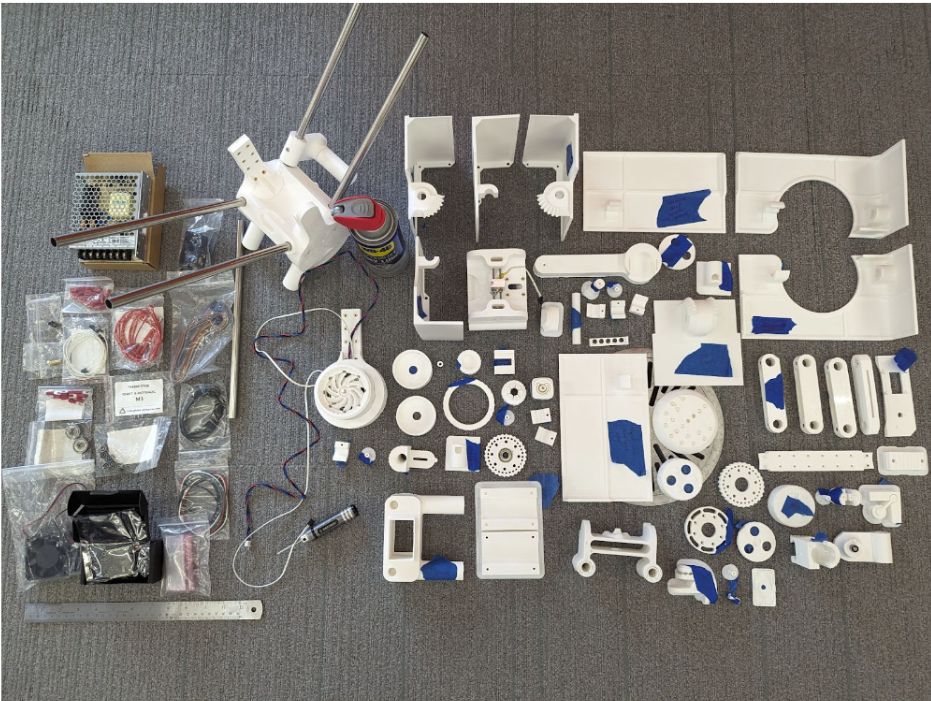
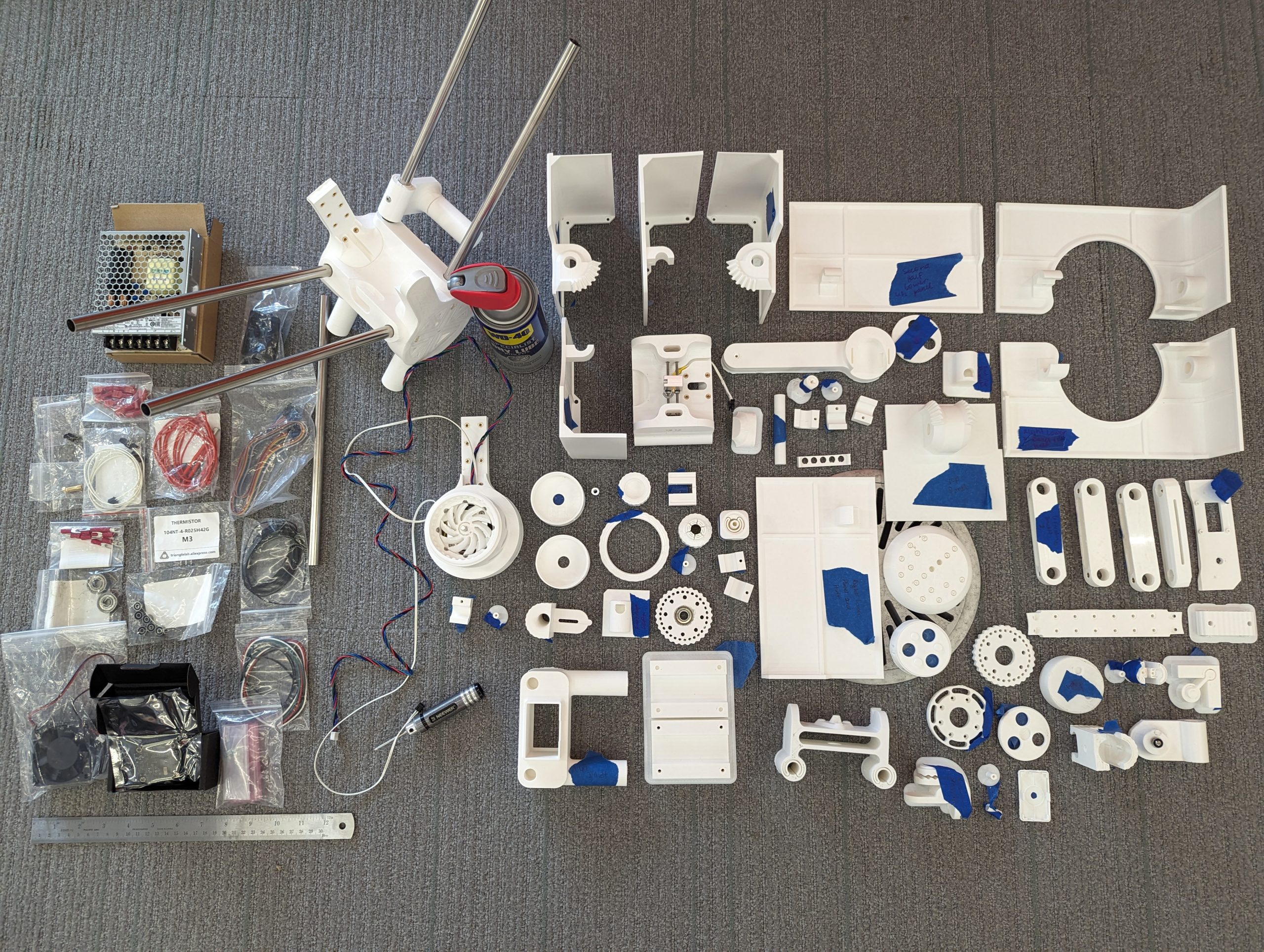
Polyformer 3D printed parts and electronics ready to be assembled.

Polyformer 3D printed parts and electronics ready to be assembled.

My name is Camily Hidalgo Goncalves, and I am a sophomore at Williams College majoring in Chemistry with a Neuroscience concentration. As a Makerspace student worker, I have recruited Milton Vento ’26, Tashrique Ahmed ’26 (both Computer Science students at Williams College and fellow Makerspace student workers), and Oscar Caino ’27, a student at Swarthmore College who is a prospective Engineering major, to assist me in assembling the Polyformer parts and electronics. We have completed several milestones, and made significant progress on the Polyformer project at Williams College. This innovative project aims to upcycle waste plastic bottles into locally-sourced 3D printer filament.

Assembly and Integration
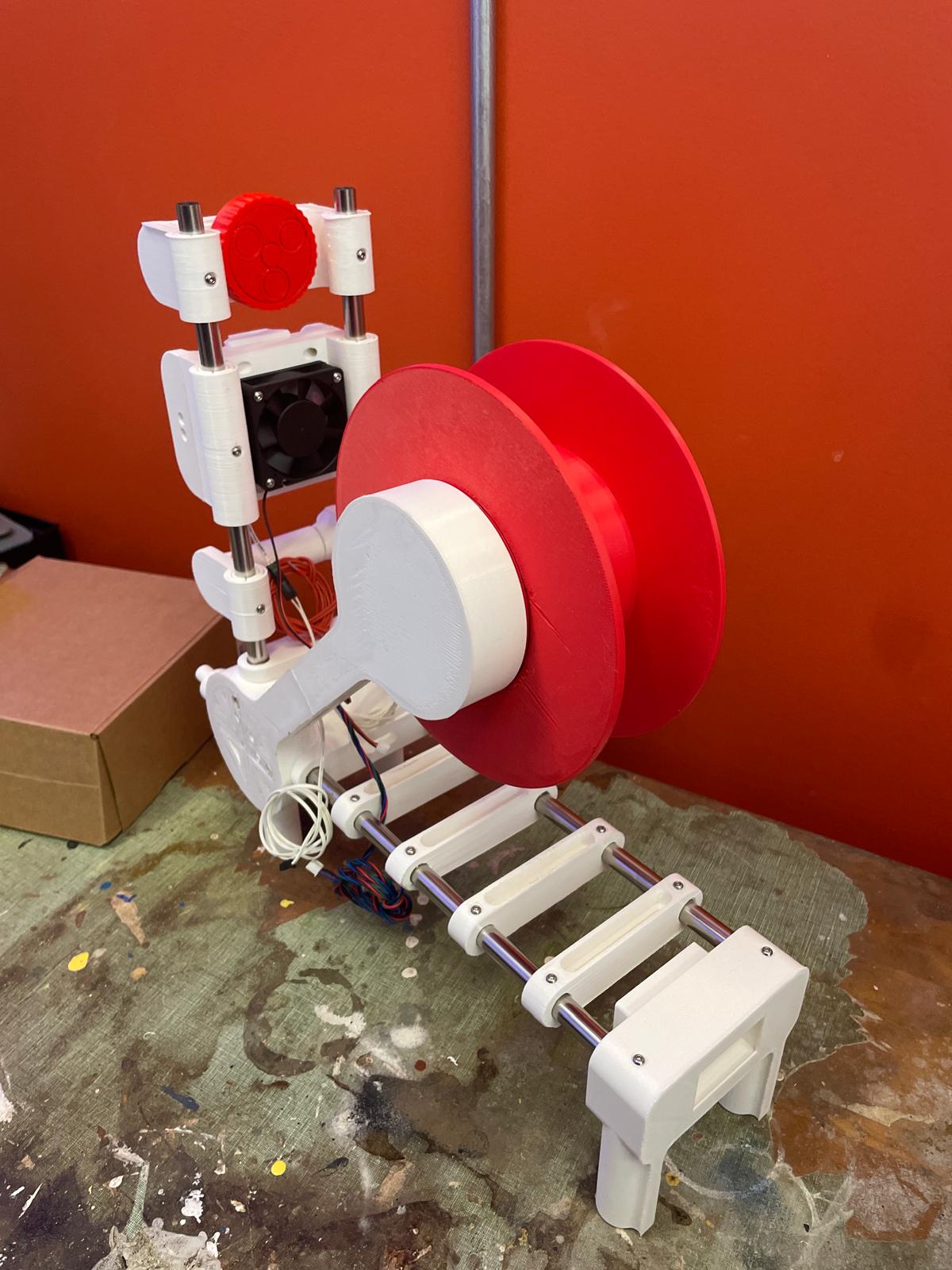
The assembled Polyformer

The assembled Polyformer

Milton, Oscar and I worked together to assemble the 78 individual 3D-printed parts required for the Polyformer. This intricate process demanded precision and teamwork. Following the assembly of the physical components, I assisted Tashrique with integrating the electronics. This included the installation of a circuit board, LCD screen, volcano heater block, stepper motor, and various sensors and wiring. These components are essential for the Polyformer to function effectively, converting plastic bottles into usable 3D printer filament. 
Collection and Processing of Plastic Bottles

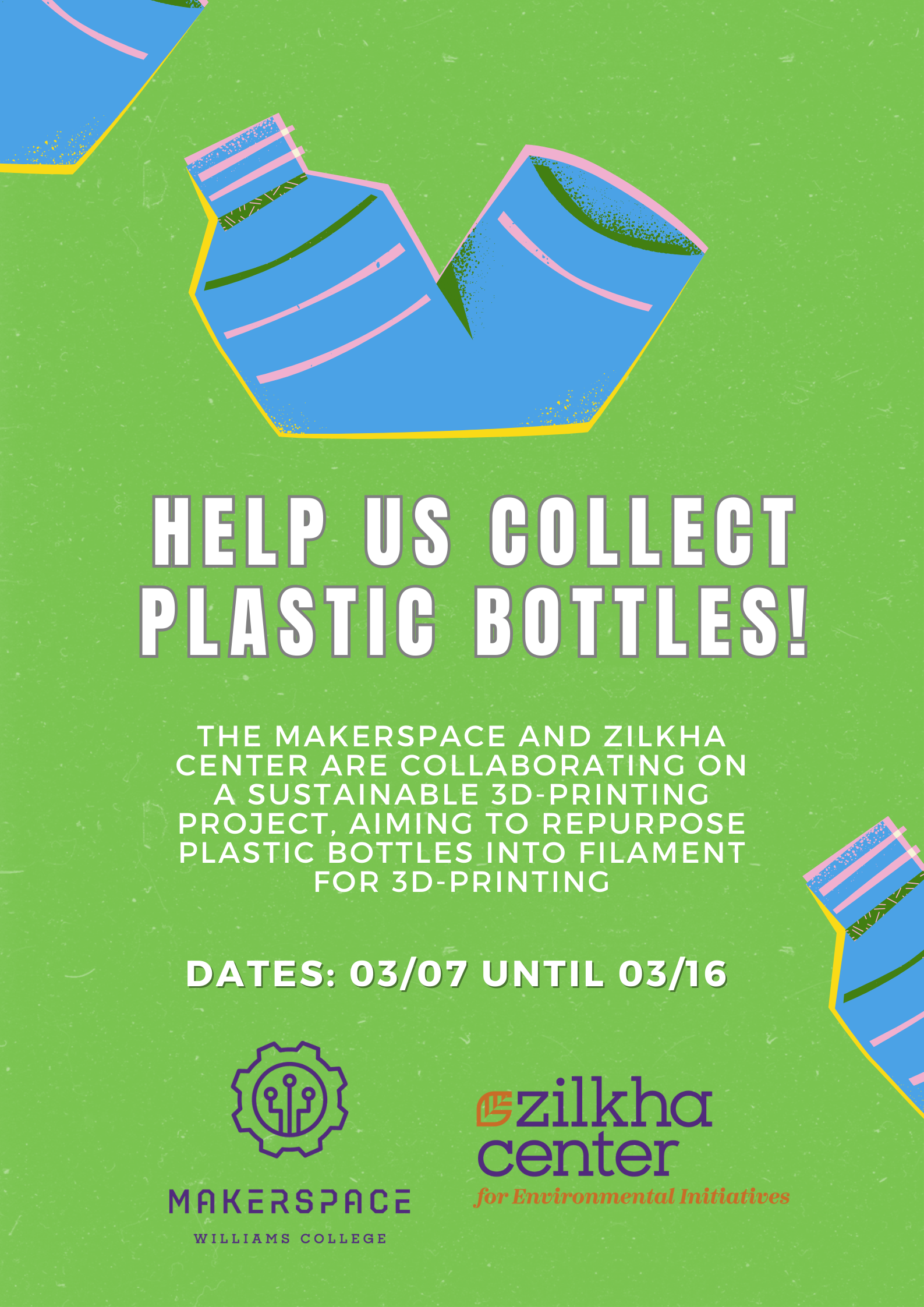
Plastic bottle collection poster.

Plastic bottle collection poster.

In preparation for testing, we collected approximately 75 plastic bottles. These bottles were contributed by the Williams College community, demonstrating a collective effort to reduce plastic waste. Elena Sore ‘27, a prospective Computer Science major and Makerspace student worker, and I worked on the initial step in the processing phase, which involved us cleaning the bottles and cutting them into long, consistent ribbons. These plastic ribbons will then be fed into the Polyformer, where they will be melted and extruded into filament.


Testing and Quality Assurance

Next fall semester we will begin rigorous testing to ensure that the Polyformer operates smoothly and produces high-quality filament that meets the required standards for 3D printing. Several tests will be conducted, including:

  1. Durability Testing: Assessing the strength and flexibility of the produced filament.
  2. Consistency Testing: Ensuring the filament has a uniform diameter, which is crucial for reliable 3D printing.
  3. Compatibility Testing: Verifying that the filament performs well with various 3D printers and printing conditions, while accommodating different material thicknesses from various brands of PET bottles.

Project Goals and Benefits

The Polyformer project aligns with Williams College’s sustainability goals and offers numerous benefits:

  • Waste Reduction: By upcycling plastic bottles, we reduce the amount of plastic waste that ends up in landfills or oceans.
  • Sustainability Education: The project serves as a hands-on educational tool, teaching students about the importance of repurposing and innovative ways to repurpose waste materials.
  • Local Impact: The filament produced will be used to create practical items such as plant pots and compost bins for the Zilkha Center for Environmental Initiatives, supporting local sustainability efforts.

Next Steps

We hope to create a sustainable cycle of converting plastic waste into useful products, while minimizing the environmental impact of plastic disposal. This project provides practical solutions to plastic waste,  and also serves as an educational tool, raising awareness about sustainability and encouraging innovative thinking in environmental conservation.

As we move forward, our next steps will be to refine the process and increase the efficiency of the Polyformer:

  1. Rigorous Testing: Thoroughly test the Polyformer to ensure it produces reliable and high-quality filament that meets 3D printing standards.
  2. Scaling Up: Increase the number of collected bottles and the quantity of filament produced.
  3. Educational Workshops: Host campus workshops to educate the broader community about the Polyformer and the importance of sustainable practices. We might seek to collaborate with the Williamstown Milne Library to host a workshop for local community members.
  4. Research and Development: Continue to improve the design and functionality of the Polyformer based on feedback and test results.

Acknowledgements

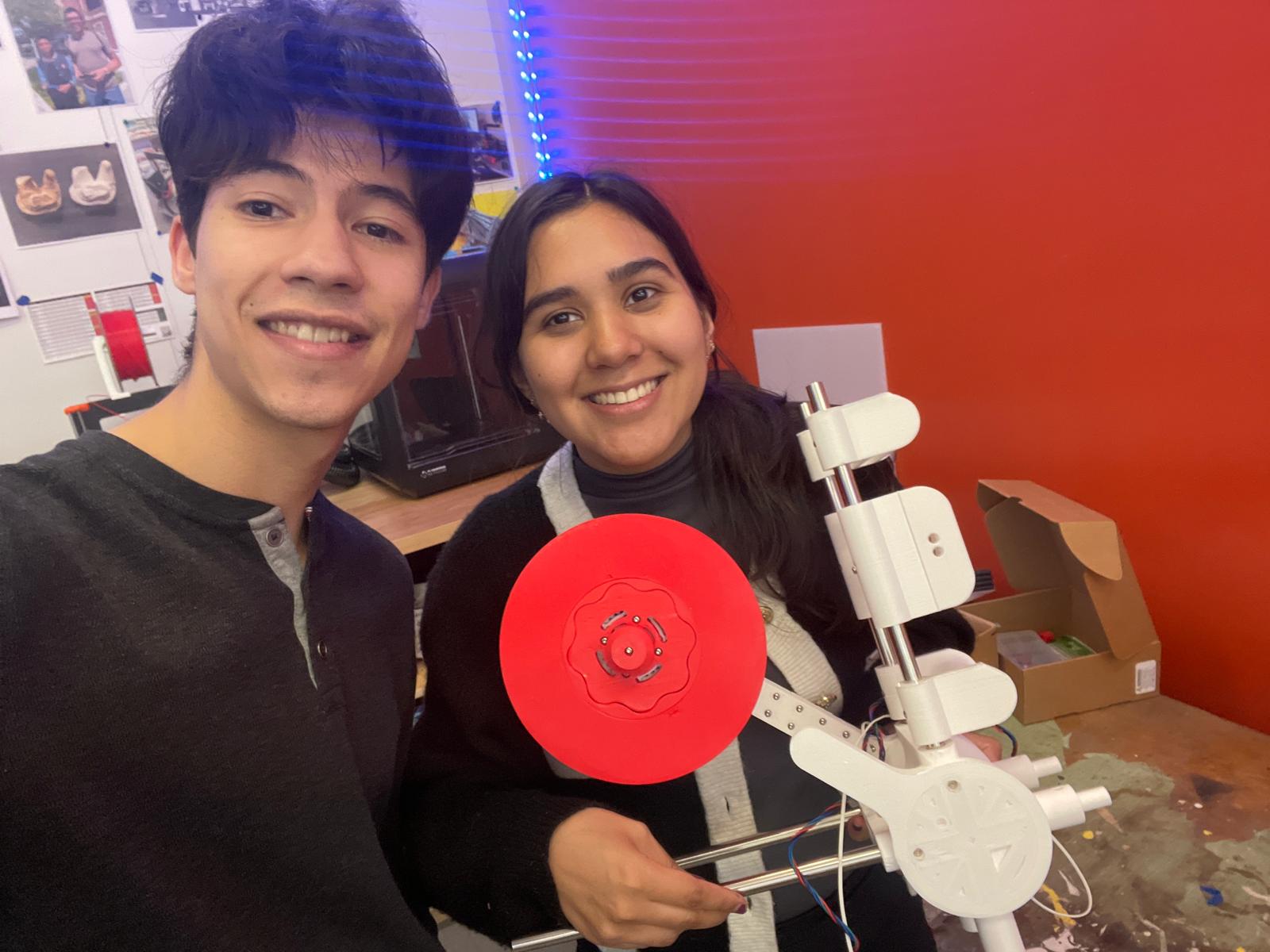
Assembling the Polyformer: Oscar Caino ‘27, a Swarthmore College student (left), and Camily Hidalgo Goncalves ‘26, a Williams College student (right).

Assembling the Polyformer: Oscar Caino ‘27, a Swarthmore College student (left), and Camily Hidalgo Goncalves ‘26, a Williams College student (right).

This project would not have been possible without the ongoing support and collaboration received. We are immensely grateful to our collaborators: David Keiser-Clark (Makerspace Program Manager), Milton Vento ‘26, Tashrique Ahmed ‘26 and Elena Sore ‘27 (Makerspace Student Workers), Yvette Belleau (Lead Custodian, Facilities), Christine Seibert (Sustainability Coordinator, Zilkha Center), Mike Evans (Deputy Director, Zilkha Center for Environmental Initiatives), and Oscar Caino ‘27 (Swarthmore College Student). Their expertise, guidance, and contributions have been invaluable to the progress of the Polyformer project.

Stay tuned for more updates as we continue to develop and test the Polyformer. Together, we can make a significant impact in reducing plastic waste and promoting sustainable practices at Williams College.

Sustainable 3D Printing at Williams College (Part 1)

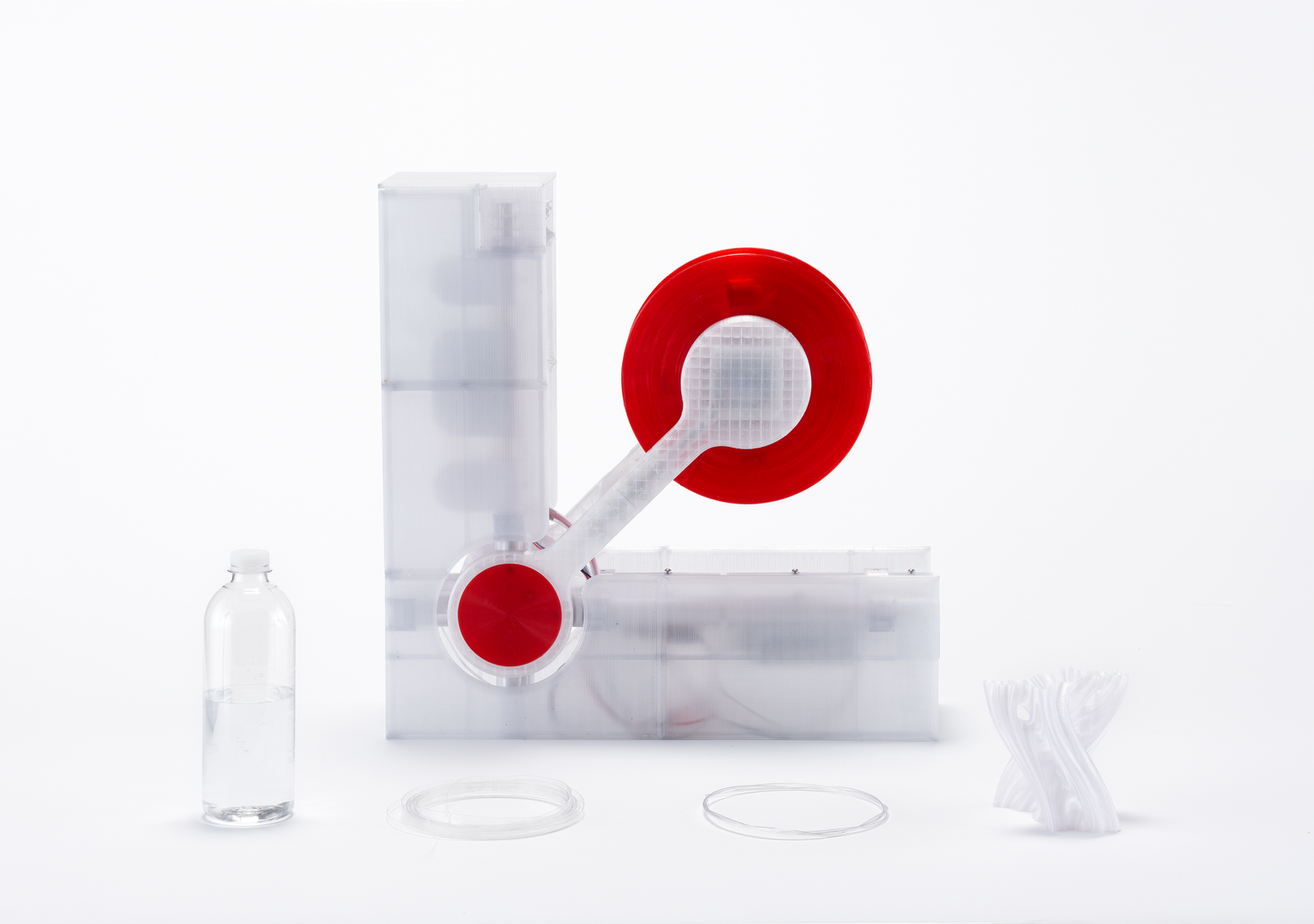
The Polyformer: upcycle bottle waste to 3D printer filament

The Polyformer: upcycle bottle waste to 3D printer filament

The massive amount of plastic bottles incinerated or dumped in landfills or oceans is a growing global concern. In the United States alone, despite recycling efforts, 22 billion plastic bottles are incorrectly disposed of each year. It is evident that our current recycling strategy has been falling short for the past 60 years, and it gives us false confidence to continue our plastic-dependent lifestyle. In response to this urgent problem, Williams College, through a collaboration between the Makerspace and Zilkha Center for Environmental Initiatives, has embarked on an innovative sustainable 3D-printing project that seeks to upcycle plastic bottles into 3D print filament.

Recycling Methods: Ineffectual at Best and Deceptive at Worst

The current state of plastic waste recycling presents significant challenges and limitations. Recent statistics highlight the large scale of this issue as well as the urgent need to seek innovative and improved solutions.  The United States, for example, generated approximately 40 million tons of plastic waste in 2021, of which only 5-6% (two million tons) were recycled, far below previous estimates. Moreover, between 2019 and 2020, there was a 5.7% global decrease in plastics recovered for recycling, resulting in a net decrease of 290 million pounds. These statistics indicate a concerning downward trend in plastic recycling efforts. 

The annual global production of approximately 400 million tons of plastic waste adds to the growing environmental crisis. Import bans by countries like China and Turkey have hindered recycling efforts, as the United States previously relied on outsourcing a significant portion of its plastic waste for recycling. The inherent challenges of plastic recycling, such as its degradation in quality with repeated recycling, make it less suitable for circular recycling processes. In the United States, the total bottle recycling rate has declined, with 2.5 million plastic bottles discarded every hour. Similarly, the global accumulation of plastic waste in oceans, estimated to be between 75 and 199 million tons, poses a severe threat to marine life and ecosystems, and the long degradation time of plastic bottles, which can take over 450 years, adds to the concern.

These statistics emphasize the pressing need to address the limitations of Polyethylene terephthalate (PET) plastic recycling. Relying solely on conventional recycling methods is inadequate to tackle the magnitude of the problem. Innovative approaches, such as upcycling, are crucial for effectively reducing plastic waste and minimizing our environmental impact. By finding alternative uses for plastic materials, we can break free from the limitations of circular recycling processes and make a significant change in helping eradicate the plastic waste crisis.

Myths, Pros, and Cons of Recycling and Upcycling

Recycling: Despite its benefits, the reality is that after being collected and aggregated, much of the recycled content is stored in unsafe locations until it overflows and is eventually landfilled or burned. Recent incidents, such as a recycling center fire in Richmond, Indiana, highlight the dangers, inefficiencies, and serious consequences of the current recycling system. 

In addition, when plastics are recycled, their potential recyclability is subsequently decreased. PET is classified as grade 1 plastic due to its high recycling potential. However, once it is recycled, it downgrades to the 7th grade, which is no longer recyclable. For this reason, at the Williams Makerspace, we decided to implement the strategy of upcycling that aims to repurpose PET plastic instead of recycling it to provide longer durability. 

Upcycling: Upcycling offers an alternative approach by diverting items from the waste stream and enabling their reuse. While upcycling may not restore plastic to its original grade, it provides a longer second life for the material before it becomes waste once again. Upcycling is the practice of transforming a disposable object into one of greater value. Therefore, upcycling contrasts the idea that an object has no value once disposed of or must be destroyed before reentering a new circle of production and value creation. 

The Polyformer Prototype and Its Value

The Polyformer is a sustainable 3D printing project that aims to convert PET plastic bottles into 3D printer filament. For the purposes of this project, the filament will initially be used to produce 3D-printed plant pots and compost bins for the Zilkha Center, effectively converting waste into items that can be utilized on a day-to-day basis. This process could reduce the purchase of virgin plastic objects (i.e., pots and bins), reducing carbon-related shipping emissions and reducing waste generated by single-use plastics. This project aims to explore the environmental impact of repurposing on-site waste into products needed on campus. Additionally, this project offers a prototype for developing locally-sourced 3D printer filament, which would reduce our dependence on purchasing virgin filament that is typically sourced from other countries, such as China, and bears a carbon footprint. The project’s goals include providing an educational opportunity for the students to engage in environmental activism by repurposing single-use plastic bottles into 3D filament and useful objects for the Williams College community. 

The Polyformer is an open-source project with over 4,000 Discord members. It is a prototype and has pain points, such as that the bottles require manual cleaning, individual manual placement onto the machine, and any impurities that can cause the filament to fail (break or clog) in the 3D printer. The Polyformer community is actively addressing these issues, and while solutions do not yet exist, this is an exciting project that offers an opportunity to disrupt the stream of plastic waste.

Project Goals and Alignment with Williams’ Strategic Objectives

The project’s goals align with the Williams College Zero Waste Action Plan, which builds upon the sustainability strategy in the college’s strategic plan, focusing on three of its goals. Firstly, it offers an educational opportunity for students to engage in environmental activism and learn about upcycling as a solution to plastic waste. Secondly, the project promotes sustainability by reducing waste and carbon emissions associated with single-use plastics. Thirdly, it reinforces Williams College’s commitment to local engagement and community impact by providing practical and sustainable solutions to address environmental challenges.

Building the Polyformer

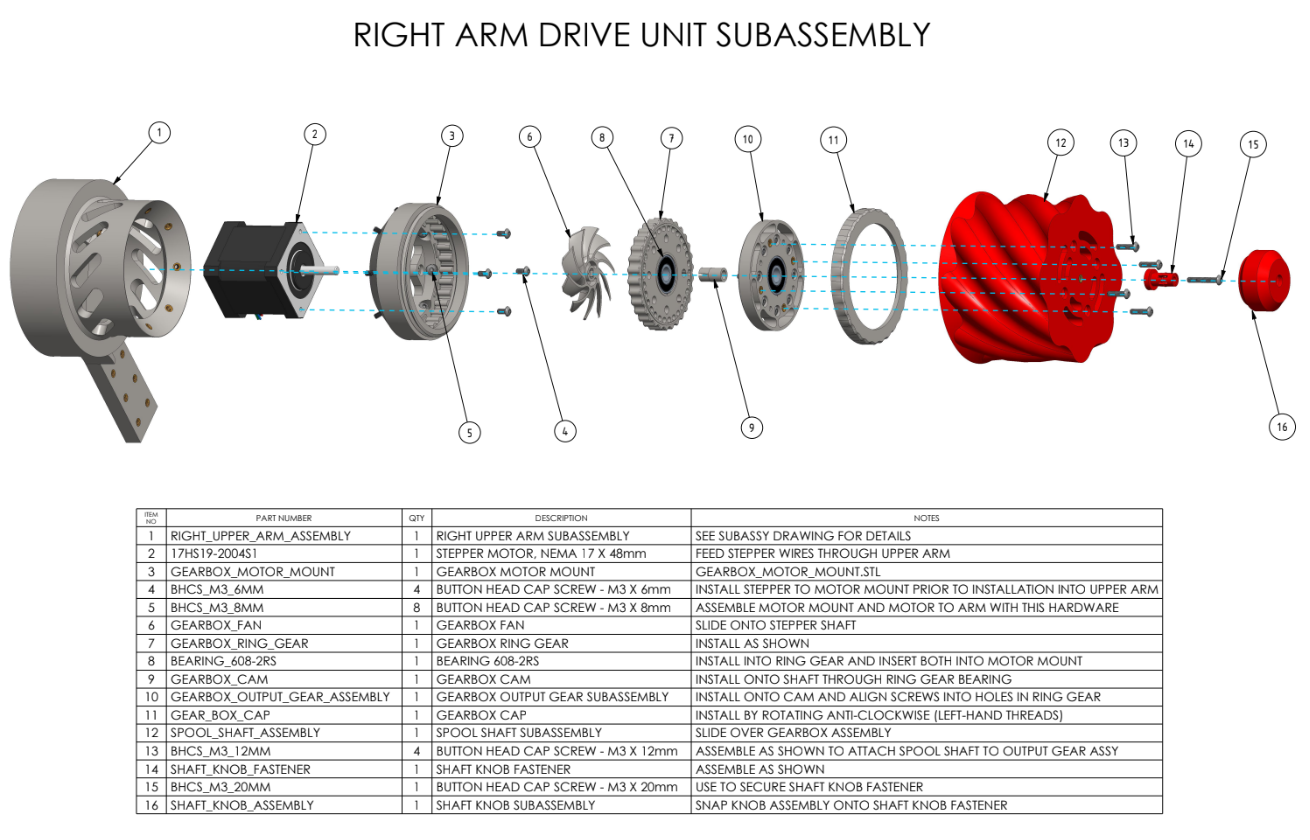
Polyformer: Parts View

Polyformer: Parts View

The Polyformer is a tool that will allow Makerspace student workers to manually automate cutting a water bottle into a long, consistent ribbon that feeds into a repurposed 3D printer hot end, converting it into a standard 1.75 mm filament. Building a Polyformer requires 3D printing 78 individual parts and then assembling those with a Bill of Materials (BOM) that can be sourced individually or purchased as a kit. This acquired kit includes a circuit board, LCD screen, a volcano heater block and 0.4 mm hot end, a stepper motor, stainless steel tubing, bearings, neodymium magnets, lots of wires, and a box of metal fasteners.

We have printed all 78 parts, and my fellow Makerspace student workers have been instrumental in helping to complete that process. The next stage, which I plan to begin this summer, is assembling and testing the Polyformer to transform the plastic bottles into 3D-printer filament.

Polyformer as a Disruptor

This project aims to disrupt our plastic-centric world in several ways. By repurposing plastic bottles into valuable filament, it challenges the notion that disposables have no value once discarded. Furthermore, it reduces dependence on external filament sources and contributes to a more self-sufficient and sustainable production cycle.

Polyformer: Next Steps

Polyformer assembly

Polyformer assembly

The project is currently in the prototyping phase, and this summer, I hope to begin assembling the Polyformer and, subsequently, testing it under a science lab hood. We will use a hood to vent the area because the process of melting PET/G ribbon, from the bottles, into filament releases antimony – a suspected carcinogen — and other volatile organic compounds (VOCs). When our Polyformer works as expected, students will

then volunteer to collect approximately 200 plastic bottles (a standard 1 kg roll of filament requires approximately 40 bottles) to manufacture sufficient filament to produce the four large plant pots and 22 compost bins. The pots and bins will be provided to Zilkha Center gardening interns and the Sustainable Living Community at the College, serving as practical examples of upcycling in action.

Conclusion

The sustainable 3D printing project at Williams College represents a powerful initiative to combat plastic waste through upcycling. By repurposing plastic bottles into valuable filament and creating sustainable products, the project aligns with Williams’ commitment to environmental stewardship and community engagement. Through innovative approaches like this, we can work towards a future with reduced plastic waste, increased sustainability, and a more conscious approach to consumption.

References

  1. USA Plastic Bottles Pollution: https://www.container-recycling.org/assets/pdfs/media/2006-5-WMW-DownDrain.pdf
  2. Plastic Pollution as a Global Issue: https://www.sciencedirect.com/science/article/pii/S0304389421018537 https://education.nationalgeographic.org/resource/one-bottle-time/
  3. The evolution and current situation of Plastic Pollution: https://www.sciencedirect.com/science/article/abs/pii/S0025326X22001114
  4. What is Upcycling?: https://www.researchgate.net/publication/303466628_Upcycling
  5. What is the Polyformer?: https://www.reiten.design/polyformer https://www.aliexpress.us/item/3256804888534268.html
  6. Recycling data: https://blog.nationalgeographic.org/2018/04/04/7-things-you-didnt-know-about-plastic-and-recycling/.
  7. Plastics Material Specific Data: https://www.epa.gov/facts-and-figures-about-materials-waste-and-recycling/plastics-material-specific-data
  8. Richmond, Indiana Recycling Plant Fire: https://www.nytimes.com/2023/04/12/us/richmond-indiana-recycling-plant-fire.html
  9. Williams College Strategic Plan and Zero Waste Action Plan: https://sustainability.williams.edu/waste/zero-waste-action-plan/ https://president.williams.edu/strategic-plan-2021/