
Senior Year Experience: Igniting Creativity and Innovation at Williams College

As senior year at Williams College nears its conclusion, students are offered a unique and exciting opportunity to leave their legacy through the Senior Year Experience (SYE). The Makerspace and Fabrication Lab are collaborating with the SYE to offer seniors opportunities to channel their creativity and bring their most ambitious ideas to life.
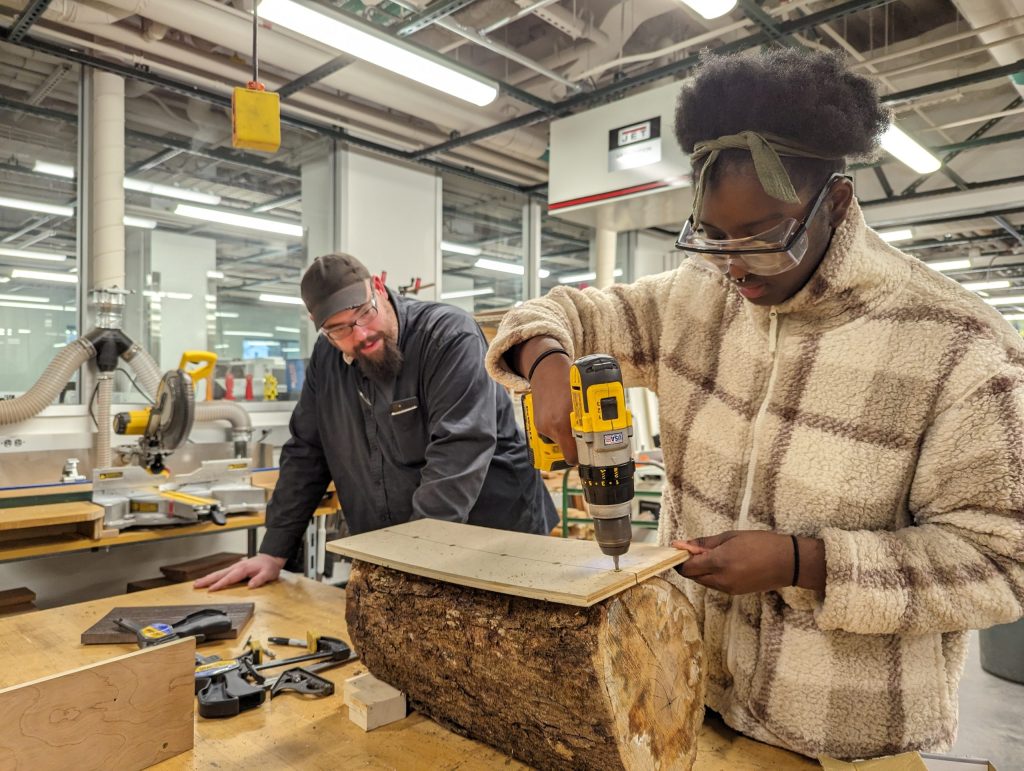
makerspaceWhether it’s working on a meaningful piece of art, designing an innovative product, or building something entirely out of the box, the SYE provides access to cutting-edge tools like 3D printers, laser cutters, woodworking equipment, and more. But it’s not just about the tools students are guided by experienced staff who are passionate about turning ideas into tangible results.

The SYE encourages seniors to think big, experiment boldly, and create something that truly reflects their passions and journey at Williams. It’s not just a project; it’s a chance to showcase innovation, dedication, and individuality as they prepare to step into the next chapter of their lives.

What is the Senior Year Experience?
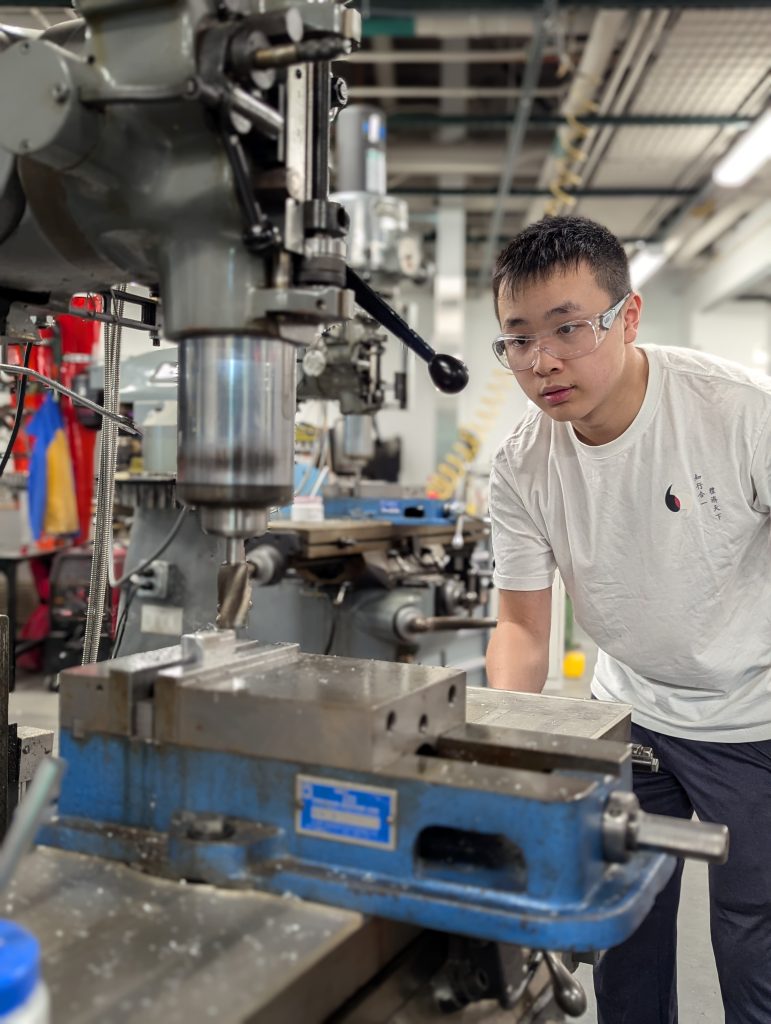
The Senior Year Experience (SYE) is an exciting opportunity for seniors to dive into extracurricular projects that reflect their passions and aspirations. Whether you’re envisioning a sustainable 3D printing solution, designing intricate textiles, or building innovative prototypes with Raspberry Pi, the SYE provides the perfect platform to bring your ideas to life. The possibilities are as vast as your imagination.

What sets this program apart is its access to an incredible network of resources, including the Makerspace, Fabrication Lab, and perhaps even parts of the interdisciplinary MakersWeb. These spaces foster collaboration and creativity, connecting students with over 20 unique workspaces across campus. It’s not just about the tools; it’s about the vibrant community of creators who inspire and support one another.

Students have the freedom to explore a wide range of mediums, such as:

  • 3D Printing and Scanning: Create intricate designs or explore sustainable printing solutions.
  • Laser Cutting and Engraving: Add precision and detail to your projects with state-of-the-art technology.
  • Photogrammetry and Mold Making: Transform objects into digital models or design complex molds.
  • Fiber Arts: Try your hand at quilting, sewing, crocheting, or even experimenting with mixed textiles.
  • Microprocessor Prototyping: Build interactive devices using Arduino or Raspberry Pi.
  • Woodworking and Cricut Cutting: Craft furniture, decor, or intricate designs with these versatile tools.

The Application Process: Turning Ideas into Reality

Getting started with the Senior Year Experience (SYE) is as straightforward as sharing your vision. The process is designed to be simple yet impactful, ensuring that every participant has the opportunity to fully explore their creativity. Here’s how it works:

1. Submit Your Idea

The journey begins with an email. Reach out to David Keiser-Clark, the Makerspace Program Manager, to pitch your project idea. Don’t worry if it’s still in the brainstorming stage. This is your chance to outline your vision, explain your goals, and share what excites you about your project. Whether it’s a sustainable solution, an artistic masterpiece, or a tech-driven innovation, the SYE is all about giving life to bold and unique ideas.

2. Collaborate and Create
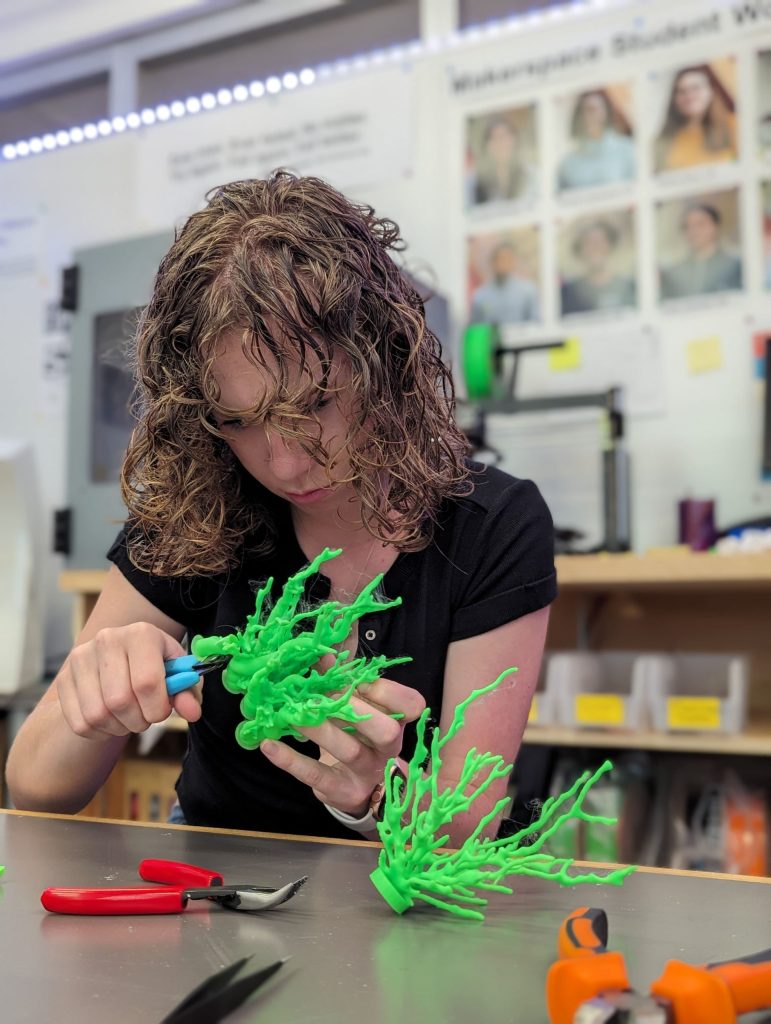
Once your project is accepted, you’ll dive into the creative process with the support of campus experts and access to state-of-the-art tools. From 3D printers and laser cutters to fiber arts tools and microprocessor kits, the Makerspace and Fabrication Lab have everything you need to bring your concept to life. You’ll also have the chance to collaborate with knowledgeable staff and fellow students, making the experience as enriching as it is productive.

3. Showcase Your Work

At the end of the semester, your project will take center stage. Whether it’s displayed at an exhibition or shared with the broader campus community, your work will inspire future innovation and creativity. Completing an SYE project isn’t just about the final product, it’s about the process, the lessons learned, and the mark you leave on the Williams community. You also will be offered an opportunity to amplify your work by writing a guest Makerspace blog post.

What You Need to Know

  • The SYE accepts up to five projects per semester on a first-come, first-served basis. This ensures each participant receives a personalized, focused experience.
  • Selected projects are matched with the expertise available on campus, ensuring the right guidance and resources are at your fingertips.

The application process is intentionally simple, giving you more time to focus on what really matters, creating something meaningful, innovative, and entirely your own. So, if you have an idea that’s been buzzing in your head, now’s the time to turn it into reality. The SYE is your platform; all you need to do is take the first step.

A Network of Campus Partners

The SYE thrives on collaboration, integrating support from campus partners like Alumni Engagement, Career S

ervices, the Zilkha Center, and more than a dozen others. These partnerships enhance the program’s impact, offering students a robust platform to refine their skills and showcase their achievements.

Leadership Behind the SYE

The Senior Year Experience (SYE) at Williams College was initiated under the leadership of Associate Dean Ray Grant, who serves as the Associate Dean for Senior Year Students and Director of Students in Transition. Dean Grant has been instrumental in shap

ing the SYE to provide seniors with meaningful opportunities to celebrate their achievements, explore new interests, and prepare for life after graduation. His dedication to student development ensures that the SYE remains a cornerstone of the senior experience at Williams. 

If the SYE had a superhero, it would be Dean Ray Grant: the guy who turned the “senior slump” into a launchpad for creativity and adventure. As the Associate Dean for Senior Year Students, he’s made sure the SYE isn’t just another check-the-box requirement but a once-in-a-lifetime chance to make your mark at Williams. His goal? Help every senior leave with stories, skills, and something awesome to show for their time here.

Why SYE Matters
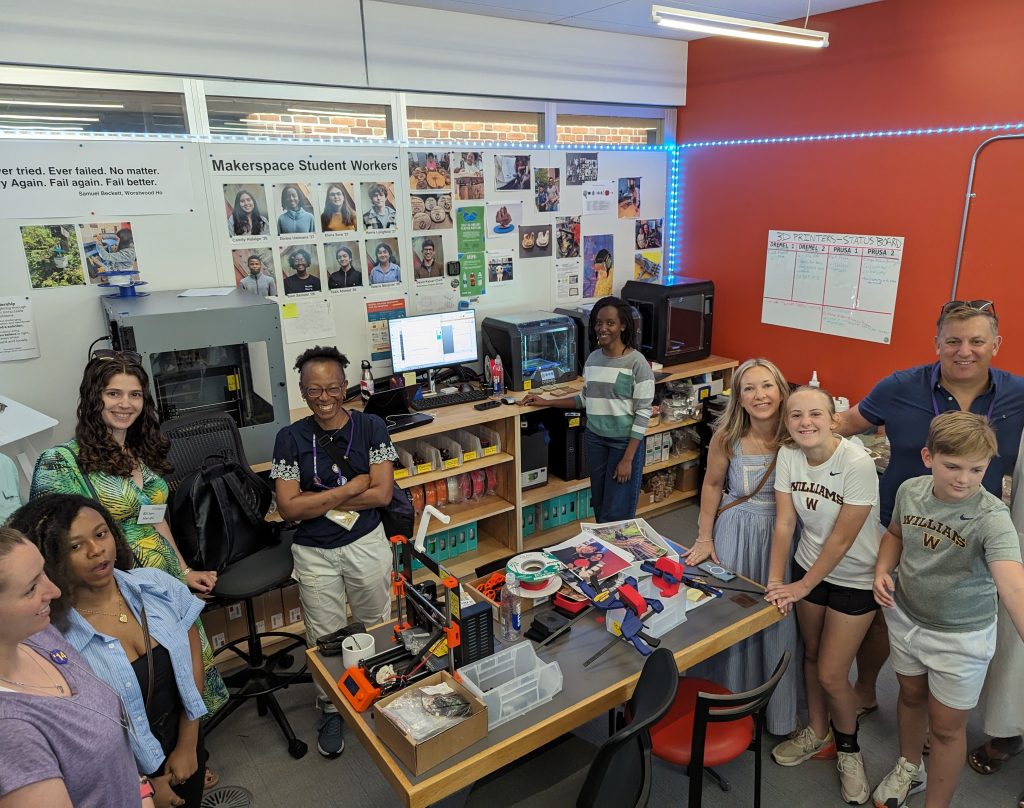
Beyond creating something tangible, the SYE is about professional growth and personal fulfillment. Imagine presenting a digital portfolio of your project to potential employers, highlighting skills in research, design, and execution. Platforms like Wakelet and Bulb, recommended by the SYE team, provide seamless ways to compile and share these experiences.

Inspiring Creations

The Makerspace has already facilitated awe-inspiring projects, such as:

  • High resolution 3D photogrammetry scans of million year old Bovid teeth from an archeological site in the Siwalik Hills, India
  • Extracurricular 3D-printed and painted board games like Catan
  • Sustainably harvested Hopkins Forest logs to laser-engraved garden signs for the Zilkha Center
  • Museum quality exhibition reproductions such as this Mayan Tenon (“monster” head)
  • Lincoln life masks brought to life with 3D modeling

These creations demonstrate the blend of creativity and innovation that the SYE nurtures.

Happy applying!

Honoring Heritage Through Craft

Divine Uwimana ‘27 sands the circular wood slices to prepare them for their laser engravings.

Divine Uwimana ‘27 sands the circular wood slices to prepare them for their laser engravings.

In spring 2025, the Williams College Makerspace partnered with the Stockbridge-Munsee Community to create truly meaningful engraved wooden appreciation gifts for museums that supported the repatriation of ancestors and sacred items. The gifts were presented at the Community’s reburial ceremony on April 24, 2025.

Each circular wood slice, roughly nine inches wide, is engraved with the Stockbridge-Munsee Tribal Seal and the words “Anushiik / Oneewe 2025”  meaning “thank you” in Munsee and Mohican. These tokens were designed to express gratitude, respect, and remembrance.

From Idea to Creation

Divine Uwimana ‘27 puts non-toxic wood oil on the appreciation to protect and enhance the grain.

Divine Uwimana ‘27 puts non-toxic wood oil on the appreciation to protect and enhance the grain.

Makerspace Program Manager, David Keiser-Clark, and Makerspace partner Divine Uwimana ’27 worked closely to bring the Community’s vision to life. Using existing wood slices from David’s collection, they carefully sanded and treated each one with natural oil to highlight the grain.

The engraving process balanced tradition and precision. The Tribal Seal, provided by the Community, was transferred into engraving software and etched using a laser or CNC machine. A small eyelet hook and twine were added to each piece so they could be easily displayed.

Challenges and Creative Solutions

Because each wood slice had natural variations in size and shape, the team adjusted engraving placements to keep the designs centered. Tight deadlines also meant careful scheduling from design approval in March to production and finishing in April.

The Final Pieces

The finished plaques feel both grounded and symbolic. The wood’s natural texture connects to the earth, while the engraved seal ties the pieces to heritage and identity. Together, they represent gratitude and shared stewardship between the Stockbridge-Munsee Community and museum partners.

Sustainability and Learning

This project emphasized sustainability, reusing wood, choosing natural oils, and minimizing waste. It also provided hands-on learning in digital design, engraving, and collaborative creation across cultural contexts.

A Gesture of Gratitude

The engraved wood appreciations are more than gifts; they are acts of respect. They honor the return of ancestors to their homeland and recognize the partnerships that made it possible, a reminder that craftsmanship can help carry forward stories of reconciliation, heritage, and care.

Special thanks to the Stockbridge-Munsee Community for their guidance and cultural leadership, and to the Williams College Makerspace and Science Shop for their support.

Finished engraved wood appreciations ready to be presented at the Community’s reburial ceremony.

Finished engraved wood appreciations ready to be presented at the Community’s reburial ceremony.

Folding Culture into Craft: 3D Pop-Up Cards at the FabLab

As part of International Education Week at Williams College, the FabLab hosted a 3D Pop-Up Gift Card Workshop, offering students a hands-on way to explore cultural expression through craft and design. Making pop-up cards is beginner-friendly and accessible, so the event welcomed participants of all skill levels. The focus? Create something personal: cards that reflected cultures, holidays, traditions, memories, or just artistic inspirations on paper.

One of the many amazing cards made during the workshop! This 3D pop-up gift card made by Carmen (photo taken by Carmen).

One of the many amazing cards made during the workshop! This 3D pop-up gift card made by Carmen (photo taken by Carmen).

The workshop setup was simple and inviting. Tables were covered in colorful pieces of paper, scissors, glue sticks, markers, and any materials for card making. Some students followed sample templates, while others sketched out their own ideas. There were Christmas trees and Diwali lamps, abstract patterns and handwritten poems. One student made a theater inspired card that showcased her favorite drama productions, while someone else made a card for a friend they missed back home. Another said, “This one’s for me, because self-love deserves representation.”

The process itself had its challenges and charm. Some folds took five tries. One student spent 15 minutes getting a single crease right, then yelled, “I DID IT!” loud enough to scare the glue sticks. Others discovered that lining up a pop-up platform just right takes a surprising amount of patience. But by the final hour, even the people who walked in saying “I’m not an art person” were holding up their cards like trophies.

And while it was all about creativity, the workshop naturally became a space for cultural exchange. As students worked, conversations unfolded about holidays celebrated differently across the world. Two students realized they celebrate the same holiday but with totally different traditions, and ended up swapping design ideas. Others shared music playlists or childhood stories while layering paper and ink.

Some cards were destined for family back home. Others were given to friends on campus, or tucked away as keepsakes. Whatever the purpose, each card became a small, folded expression of identity, memory, or experience. The FabLab provided the materials, but the room was filled with shared experience, laughter, and little victories.

In a fast-moving semester, this workshop reminded us to slow down and take the time to make something with our hands. It wasn’t just about making art; it was about creating space for connection, reflection, and a little fun. And when the last cards were folded and the scraps swept into the recycling bin, what remained was a room full of people who had built something: on paper and in a diverse community.

Participants creating their unique versions of 3D gift cards for their friends and family during the International Education Week (photo by Carmen).

Participants creating their unique versions of 3D gift cards for their friends and family during the International Education Week (photo by Carmen).

Studying Savannah Sparrows on Kent Island

The Williams lab studies Savannah sparrows (Passerculus sandwichensis), small migratory songbirds that live in grassy fields across North America (Cornell Lab). Savannah sparrows have been the subject of a long term study at Bowdoin College’s field research station on Kent Island in New Brunswick, Canada. 

The Kent Island research station. Cabins and the main building are photographed from the field designated for Savannah sparrow, herring gull (Larus argentatus), and tree swallow (Tachycineta bicolor) research. (Photo credit: Dan Mennill)

The Kent Island research station. Cabins and the main building are photographed from the field designated for Savannah sparrow, herring gull (Larus argentatus), and tree swallow (Tachycineta bicolor) research. (Photo credit: Dan Mennill)

The Kent Island research station. Cabins and the main building are photographed from the field designated for Savannah sparrow, herring gull (Larus argentatus), and tree swallow (Tachycineta bicolor) research. 

Savannah sparrows have been recorded on Kent Island since the 1960s and their songs have been recorded intensively since 1980 (Williams et al., 2018). Clara Dixon, who thoroughly recorded songs in 1980 and 1982, inspired a continued in-depth study of Savannah sparrows to this day because their songs are an excellent model for studying cultural evolution, the socially learned traits of populations change, and the bird song learning has parallels with the development of human speech (Williams et al., 2022). Male Savannah sparrows learn components of their songs from various tutors, including their biological father, social father, and both hatching and breeding-year neighbors. They then use these songs to attract mates and defend their territories.

Savannah sparrow on Kent Island. A key characteristic to help identify these birds are their distinctive yellow plumage above the eye, as shown in the photo. (Photo credit: Dan Mennill).

Savannah sparrow on Kent Island. A key characteristic to help identify these birds are their distinctive yellow plumage above the eye, as shown in the photo. (Photo credit: Dan Mennill).

Professor Heather Williams first went to Kent Island in 1973, her first year of college. She has maintained her connection to the island, and realized the potential to contribute to the Savannah sparrow research by studying a local population in Williamstown since 2005. Birds are systematically color-banded—given a unique three band color combination on their legs so that they can be identified with binoculars—and their songs are recorded. In addition to analyzing songs, observing birds’ responses to variations in note count and spacing in songs is valuable for understanding which factors drive changes in song traits over time. To study birds’ reactions, our lab conducts playback experiments, which entail placing a speaker in the middle of a bird’s territory, playing stimuli of songs with either variable note spacing or note type, and recording a bird’s response. 

Example song from N.YR.

Example song from N.YR.

Birds may sing an additional ‘chuck’ note in either an earlier or later interval, variable spacing between x notes, and other soft notes that fall between the introductory notes. Last summer, we investigated what drives the changes in the occurrence and number of chuck notes in songs, and how the spacing of x and other notes may influence a bird’s reproductive success.

Henry Alexander '27 and Prof. Heather Williams in the field on Grand Manan, New Brunswick, Canada. Both Williams and Alexander carry microphones used to record bird songs. (Photo credit: Hannah Cumming)

Henry Alexander ‘27 and Prof. Heather Williams in the field on Grand Manan, New Brunswick, Canada. Both Williams and Alexander carry microphones used to record bird songs. (Photo credit: Hannah Cumming)

Birds typically seek out the source of the song in a playback study. Placing a fake bird near a hidden speaker can enhance a playback because the bird directs its behavior towards the specific target. Taxidermy Savannah sparrows have been used in such experiments, but as Professor Williams warned us throughout the summer, they do not last long. The real birds aggressively attack and eventually destroy that type of model. 

We asked the Makerspace to 3D print a durable bird that we could repeatedly use in these playback experiments. The students brought a free 3D model of a Song Sparrow to Alice Sore ’27, a Makerspace student worker, since it was similar in appearance to the Savannah Sparrows we study. Using Blender, Alice modified the model by removing the legs, which would have been too fragile to print and nearly impossible for the bird to balance on. She replaced them with a simple base that could be hidden among leaves or grass in the field. After an initial failed print, Alice successfully produced two near-perfect models, which were then handed over to our lab for painting. A member of our lab, Hannah Cumming ’28, who is a prospective Biology and Studio Art double major, painted the models to match a Savannah Sparrow’s typical plumage. A member of our lab, Hannah Cumming, who is a prospective Biology and Studio Art double major, then painted the model to match a Savannah sparrow’s typical plumage. We gave our two painted models an imaginary three-band color combination as their name, choosing B.OG (Black band on the left leg, Orange band over Green band on the right) for one, and GO.B (Green band over Orange band on the left leg, Black band on the right) for the other. The names were inspired by the amazing peatland environments on Kent Island. 

3D printed Savannah sparrow model created by the Makerspace. Our lab painted this bird to use in our field experiments.

3D printed Savannah sparrow model created by the Makerspace. Our lab painted this bird to use in our field experiments.

B.OB, a Williamstown bird, demonstrates our color-banding system. He has Black over a US Fish and Wildlife Service aluminum band on his left leg, and Orange over Black on his right leg (from the perspective of the bird). (Photo credit: Hannah Cumming)

B.OB, a Williamstown bird, demonstrates our color-banding system. He has Black over a US Fish and Wildlife Service aluminum band on his left leg, and Orange over Black on his right leg (from the perspective of the bird).  (Photo credit: Hannah Cumming)


B.OG, like some of his living and wild counterparts, migrated to Canada with our lab this summer to spend time on Kent Island. We used the model bird in playback experiments to test female responses to song variations. We placed B.OG in the mown path in the middle of a territory and hid the speaker nearby in taller grass. We then conducted the playback experiment to see whether females would respond aggressively to the songs or with intrigue. Approaches without aggression by a female would indicate that certain song traits are “sexier,” meaning the trait improves a male’s reproductive fitness. An aggressive approach would indicate that female choice is not driving changes in this song trait.

Kate Swann (‘26, left) and Hannah Cumming (‘28, right) excitedly preparing to conduct playback experiments on Kent Island. (Photo credit: Ian Kyle)

Kate Swann (‘26, left) and Hannah Cumming (‘28, right) excitedly preparing to conduct playback experiments on Kent Island. (Photo credit: Ian Kyle)

Due to the timing of our experiment, females were feeding their nestlings and did not respond to the songs or birds. Due to the timing of our experiment, when females were actively feeding their nestlings, they did not respond to the songs or birds. This highlighted for us the importance of seasonal timing in behavioral experiments.

We later used GO.B to test male responses in Williamstown. We placed the 3D printed model on a stake in the meadow and played songs to stimulate birds’ responses. Subjects flew around the model and treated it the same as live birds also sitting on posts: the subject approached the bird (whether live or 3D printed), and when it did not fly away, the subject returned to its original post.

This project also taught us how interdisciplinary collaboration between biology and technology can open up new methods for fieldwork. Our lab is excited to continue using the model birds in future research projects! In the future, we hope to expand the use of these models to test additional song traits and to explore how responses vary across seasons and populations.

B.OG perched on a Kent Island tree. We used this 3D printed and painted model to test female responses to song variations on Kent Island. (Photo credit: Heather Williams)

B.OG perched on a Kent Island tree. We used this 3D printed and painted model to test female responses to song variations on Kent Island. (Photo credit: Heather Williams)

B.OG analyzing his fellow birds’ songs, shown in the background. (Photo credit: Henry Alexander)

B.OG analyzing his fellow birds’ songs, shown in the background. (Photo credit: Hen

Kate Swann presented her research at the Summer Science Research Poster Session on August 8, 2025

Kate Swann presented her research at the Summer Science Research Poster Session on August 8, 2025

Works Cited

Cornell Lab or Ornithology. (2025). Savannah sparrow in All about birds. Cornell University. https://www.allaboutbirds.org/guide/Savannah_Sparrow/overview

Williams, H. et al. (2018). The buzz segment of Savannah sparrow songs is a population marker. Journal of Ornithology 160, 217-227.

Williams, H. et al. (2022). Cumulative cultural evolution and mechanisms for cultural selection in wild bird songs. Nature Communications 13, 4001.

Wood, Memory, and Heritage: The Making of Engraved Gifts for Repatriation

Before: red maple wood discs, sliced from a fallen tree in Hopkins Forest

Before: red maple wood discs, sliced from a fallen tree in Hopkins Forest

Last spring, I worked on a project in the Makerspace that involved creating engraved wood slices as gifts for a reburial ceremony. This event was the reburial of the ancestors of the Stockbridge-Munsee Community. The Makerspace collaborated with Bonney Hartley, the Historic Preservation Manager at the Stockbridge-Munsee Historic Preservation office, to work on these slices. They were intended as a token of appreciation to the museums that assisted during the repatriation process. The reburial held deep significance; it was not only about returning the ancestors to the earth, but also about restoring wholeness and dignity to a community that had long been separated from its history.

The event aimed to reunite the ancestors’ remains with the funerary objects originally intended to accompany them. Over time, many of these items had been separated, often displayed in museums as artworks or stored away in boxes and plastic bags. The process of carefully unpacking, organizing, and preparing the materials for reburial required significant effort. Under the Native American Graves Protection and Repatriation Act (NAGPRA), the team undertook considerable legal and logistical work to ensure the ancestors and their belongings could be returned. Before the repatriation, they were in 10 different museums or federal collections agencies across various collections.  After years of collaboration, the team successfully reunited and reburied them, working in partnership with organizations such as the National Park Service and the U.S. Fish and Wildlife Service.

Connection to Place and Heritage

This process was deeply grounding for Bonney and the community, reaffirming their connection to place and heritage. This process restored and further grounded a sense of identity and place in the world. To them, it was truly meaningful to rebury ancestors, reunite them with the objects they were intended to be buried with, and return them to the earth.  It was, to some extent, a way to repair the past, the harm of being separated from their final resting place. It was a profound act of healing and restoration.

The wood slices were not only to appreciate the museum, but also all the people who supported them during this process. It was also an opportunity to express gratitude to the numerous staff members and individuals who work at these museums and federal institutions that hold the collection, and to appreciate those who dedicate significant time and energy to collaborating with them. Even though the focus was on the ancestors, there were people in the scenes who made it happen through goodwill and hard work. To Bonney, this gift is akin to a traditional practice and a form of reciprocity, acknowledging the mutual relationship that exists between them.

Bonney said, “It was hugely meaningful to have a piece of our homelands…” emphasizing how sharing these wood slices extended the Tribe’s tradition of gift-giving and reciprocity. Through the wood slice, in collaboration with the Makerspace and Williams College, they helped offer this gift at the reburial ceremony, and to give one piece of our homeland here in this other location for the reburial. It helps to continue the tradition of gift-giving during such an emotional and spiritual moment, restoring some aspect of the Tribe’s history.

The process of creating these gifts involved a lot of reflected care and intention:

Sanding

We began by carefully making the surfaces even to prepare the wood for engraving.

Sanding: We began by carefully making the surfaces even to prepare the wood for engraving.

Sanding: We began by carefully making the surfaces even to prepare the wood for engraving.

Laser Engraving

The Tribal Seal was then laser-engraved into each slice, and all the details were captured.

Using the Epilog Laser Engravier

Using the Epilog Laser Engravier

Finishing with Natural Oil

A few coats of natural oil protected the wood in order to enhance its texture and grain.

Applying non-toxic Walrus wood oil finish

Applying non-toxic Walrus wood oil finish

Adding Hardware

Finally, hardware was attached so each slice could be hung on a wall.

Back: hardware was attached so each slice could be hung on a wall

Back: hardware was attached so each slice could be hung on a wall

Project completed!

Project completed!

Reflection

For me, making the wood slices was more than a creative task; it was an act of participation in collective healing. It reminded me that craftsmanship can carry history and serve as a bridge between institutions and Indigenous communities.. Through this experience, I gained a deeper understanding of the history of the Stockridge-Munsee Community and the cultural significance behind the reburial event. It was truly moving to witness the respect, collaboration, and care that went into every step of the repatriation process. It’s also remarkable how the Makerspace’s efforts can be part of such a significant event, bringing together creativity, heritage, and community in a powerful way.