
Senior Year Experience: Igniting Creativity and Innovation at Williams College

As senior year at Williams College nears its conclusion, students are offered a unique and exciting opportunity to leave their legacy through the Senior Year Experience (SYE). The Makerspace and Fabrication Lab are collaborating with the SYE to offer seniors opportunities to channel their creativity and bring their most ambitious ideas to life.
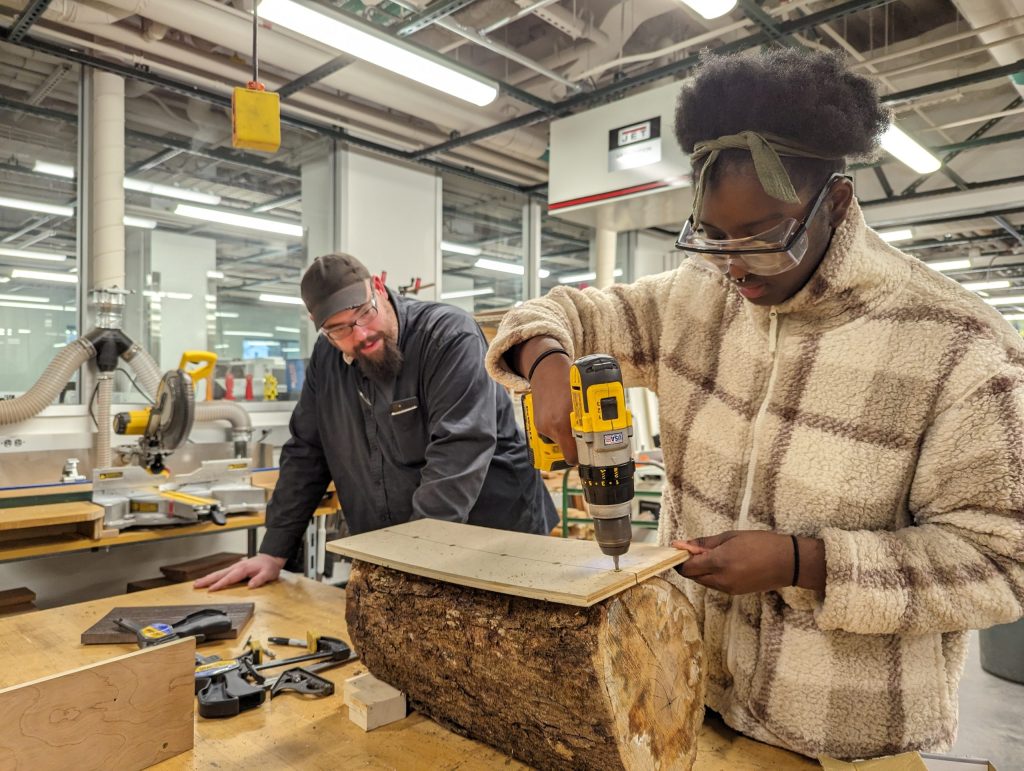
makerspaceWhether it’s working on a meaningful piece of art, designing an innovative product, or building something entirely out of the box, the SYE provides access to cutting-edge tools like 3D printers, laser cutters, woodworking equipment, and more. But it’s not just about the tools students are guided by experienced staff who are passionate about turning ideas into tangible results.

The SYE encourages seniors to think big, experiment boldly, and create something that truly reflects their passions and journey at Williams. It’s not just a project; it’s a chance to showcase innovation, dedication, and individuality as they prepare to step into the next chapter of their lives.

What is the Senior Year Experience?
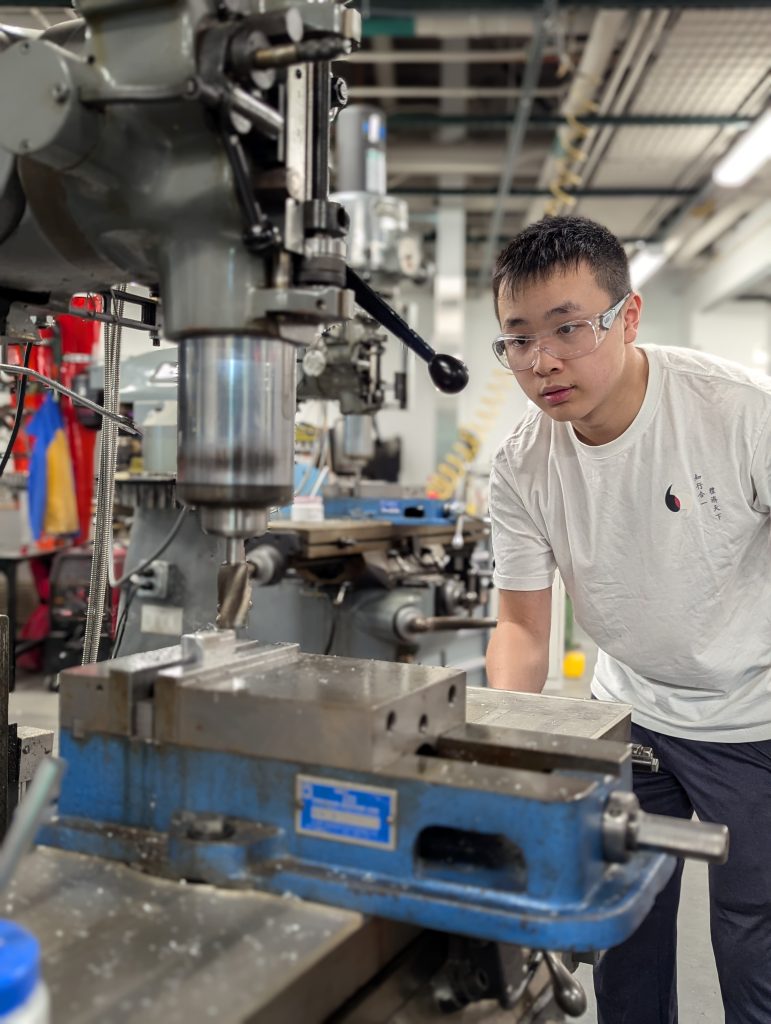
The Senior Year Experience (SYE) is an exciting opportunity for seniors to dive into extracurricular projects that reflect their passions and aspirations. Whether you’re envisioning a sustainable 3D printing solution, designing intricate textiles, or building innovative prototypes with Raspberry Pi, the SYE provides the perfect platform to bring your ideas to life. The possibilities are as vast as your imagination.

What sets this program apart is its access to an incredible network of resources, including the Makerspace, Fabrication Lab, and perhaps even parts of the interdisciplinary MakersWeb. These spaces foster collaboration and creativity, connecting students with over 20 unique workspaces across campus. It’s not just about the tools; it’s about the vibrant community of creators who inspire and support one another.

Students have the freedom to explore a wide range of mediums, such as:

  • 3D Printing and Scanning: Create intricate designs or explore sustainable printing solutions.
  • Laser Cutting and Engraving: Add precision and detail to your projects with state-of-the-art technology.
  • Photogrammetry and Mold Making: Transform objects into digital models or design complex molds.
  • Fiber Arts: Try your hand at quilting, sewing, crocheting, or even experimenting with mixed textiles.
  • Microprocessor Prototyping: Build interactive devices using Arduino or Raspberry Pi.
  • Woodworking and Cricut Cutting: Craft furniture, decor, or intricate designs with these versatile tools.

The Application Process: Turning Ideas into Reality

Getting started with the Senior Year Experience (SYE) is as straightforward as sharing your vision. The process is designed to be simple yet impactful, ensuring that every participant has the opportunity to fully explore their creativity. Here’s how it works:

1. Submit Your Idea

The journey begins with an email. Reach out to David Keiser-Clark, the Makerspace Program Manager, to pitch your project idea. Don’t worry if it’s still in the brainstorming stage. This is your chance to outline your vision, explain your goals, and share what excites you about your project. Whether it’s a sustainable solution, an artistic masterpiece, or a tech-driven innovation, the SYE is all about giving life to bold and unique ideas.

2. Collaborate and Create
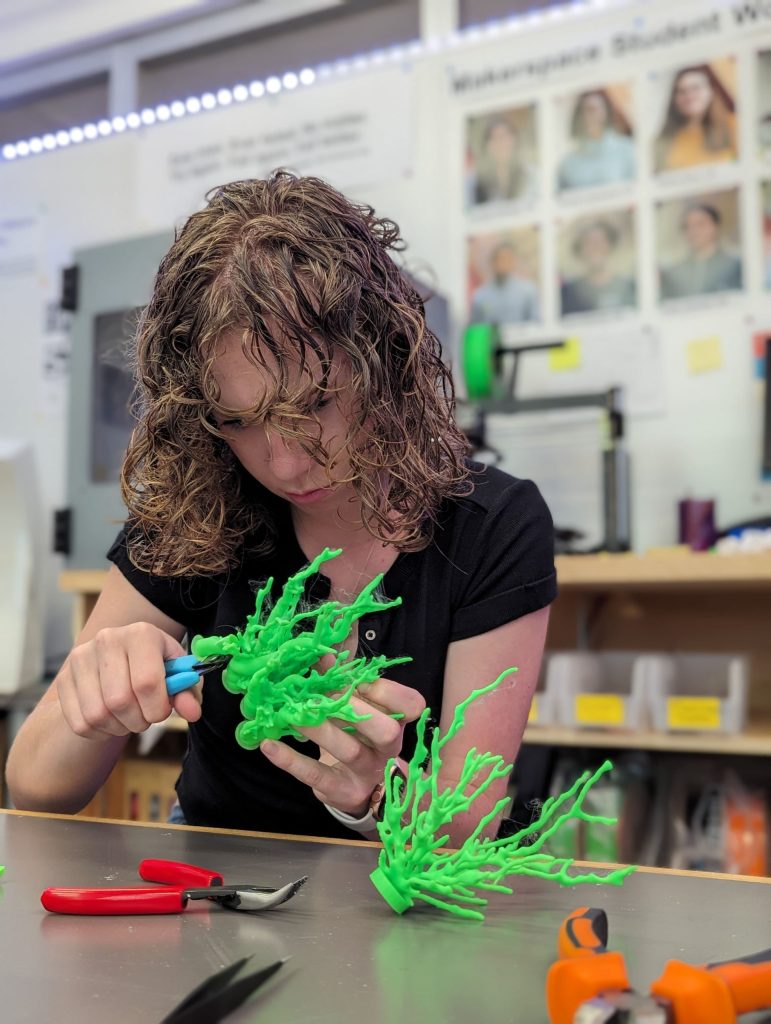
Once your project is accepted, you’ll dive into the creative process with the support of campus experts and access to state-of-the-art tools. From 3D printers and laser cutters to fiber arts tools and microprocessor kits, the Makerspace and Fabrication Lab have everything you need to bring your concept to life. You’ll also have the chance to collaborate with knowledgeable staff and fellow students, making the experience as enriching as it is productive.

3. Showcase Your Work

At the end of the semester, your project will take center stage. Whether it’s displayed at an exhibition or shared with the broader campus community, your work will inspire future innovation and creativity. Completing an SYE project isn’t just about the final product, it’s about the process, the lessons learned, and the mark you leave on the Williams community. You also will be offered an opportunity to amplify your work by writing a guest Makerspace blog post.

What You Need to Know

  • The SYE accepts up to five projects per semester on a first-come, first-served basis. This ensures each participant receives a personalized, focused experience.
  • Selected projects are matched with the expertise available on campus, ensuring the right guidance and resources are at your fingertips.

The application process is intentionally simple, giving you more time to focus on what really matters, creating something meaningful, innovative, and entirely your own. So, if you have an idea that’s been buzzing in your head, now’s the time to turn it into reality. The SYE is your platform; all you need to do is take the first step.

A Network of Campus Partners

The SYE thrives on collaboration, integrating support from campus partners like Alumni Engagement, Career S

ervices, the Zilkha Center, and more than a dozen others. These partnerships enhance the program’s impact, offering students a robust platform to refine their skills and showcase their achievements.

Leadership Behind the SYE

The Senior Year Experience (SYE) at Williams College was initiated under the leadership of Associate Dean Ray Grant, who serves as the Associate Dean for Senior Year Students and Director of Students in Transition. Dean Grant has been instrumental in shap

ing the SYE to provide seniors with meaningful opportunities to celebrate their achievements, explore new interests, and prepare for life after graduation. His dedication to student development ensures that the SYE remains a cornerstone of the senior experience at Williams. 

If the SYE had a superhero, it would be Dean Ray Grant: the guy who turned the “senior slump” into a launchpad for creativity and adventure. As the Associate Dean for Senior Year Students, he’s made sure the SYE isn’t just another check-the-box requirement but a once-in-a-lifetime chance to make your mark at Williams. His goal? Help every senior leave with stories, skills, and something awesome to show for their time here.

Why SYE Matters
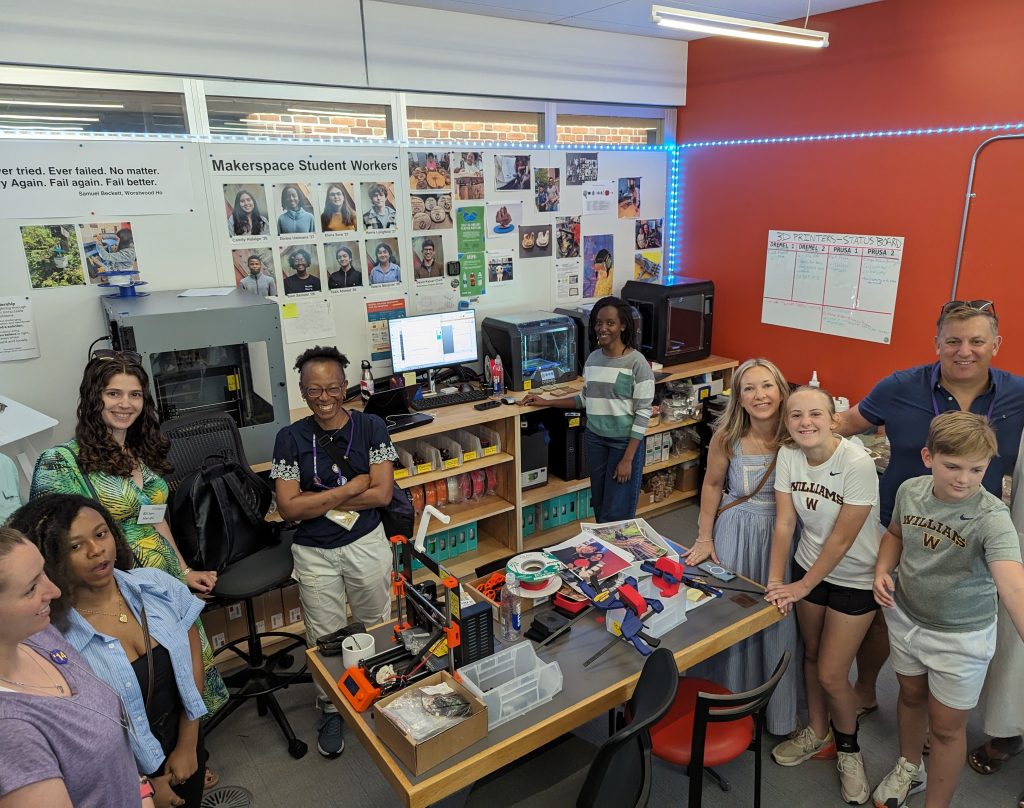
Beyond creating something tangible, the SYE is about professional growth and personal fulfillment. Imagine presenting a digital portfolio of your project to potential employers, highlighting skills in research, design, and execution. Platforms like Wakelet and Bulb, recommended by the SYE team, provide seamless ways to compile and share these experiences.

Inspiring Creations

The Makerspace has already facilitated awe-inspiring projects, such as:

  • High resolution 3D photogrammetry scans of million year old Bovid teeth from an archeological site in the Siwalik Hills, India
  • Extracurricular 3D-printed and painted board games like Catan
  • Sustainably harvested Hopkins Forest logs to laser-engraved garden signs for the Zilkha Center
  • Museum quality exhibition reproductions such as this Mayan Tenon (“monster” head)
  • Lincoln life masks brought to life with 3D modeling

These creations demonstrate the blend of creativity and innovation that the SYE nurtures.

Happy applying!

Studying Savannah Sparrows on Kent Island

The Williams lab studies Savannah sparrows (Passerculus sandwichensis), small migratory songbirds that live in grassy fields across North America (Cornell Lab). Savannah sparrows have been the subject of a long term study at Bowdoin College’s field research station on Kent Island in New Brunswick, Canada. 

The Kent Island research station. Cabins and the main building are photographed from the field designated for Savannah sparrow, herring gull (Larus argentatus), and tree swallow (Tachycineta bicolor) research. (Photo credit: Dan Mennill)

The Kent Island research station. Cabins and the main building are photographed from the field designated for Savannah sparrow, herring gull (Larus argentatus), and tree swallow (Tachycineta bicolor) research. (Photo credit: Dan Mennill)

The Kent Island research station. Cabins and the main building are photographed from the field designated for Savannah sparrow, herring gull (Larus argentatus), and tree swallow (Tachycineta bicolor) research. 

Savannah sparrows have been recorded on Kent Island since the 1960s and their songs have been recorded intensively since 1980 (Williams et al., 2018). Clara Dixon, who thoroughly recorded songs in 1980 and 1982, inspired a continued in-depth study of Savannah sparrows to this day because their songs are an excellent model for studying cultural evolution, the socially learned traits of populations change, and the bird song learning has parallels with the development of human speech (Williams et al., 2022). Male Savannah sparrows learn components of their songs from various tutors, including their biological father, social father, and both hatching and breeding-year neighbors. They then use these songs to attract mates and defend their territories.

Savannah sparrow on Kent Island. A key characteristic to help identify these birds are their distinctive yellow plumage above the eye, as shown in the photo. (Photo credit: Dan Mennill).

Savannah sparrow on Kent Island. A key characteristic to help identify these birds are their distinctive yellow plumage above the eye, as shown in the photo. (Photo credit: Dan Mennill).

Professor Heather Williams first went to Kent Island in 1973, her first year of college. She has maintained her connection to the island, and realized the potential to contribute to the Savannah sparrow research by studying a local population in Williamstown since 2005. Birds are systematically color-banded—given a unique three band color combination on their legs so that they can be identified with binoculars—and their songs are recorded. In addition to analyzing songs, observing birds’ responses to variations in note count and spacing in songs is valuable for understanding which factors drive changes in song traits over time. To study birds’ reactions, our lab conducts playback experiments, which entail placing a speaker in the middle of a bird’s territory, playing stimuli of songs with either variable note spacing or note type, and recording a bird’s response. 

Example song from N.YR.

Example song from N.YR.

Birds may sing an additional ‘chuck’ note in either an earlier or later interval, variable spacing between x notes, and other soft notes that fall between the introductory notes. Last summer, we investigated what drives the changes in the occurrence and number of chuck notes in songs, and how the spacing of x and other notes may influence a bird’s reproductive success.

Henry Alexander '27 and Prof. Heather Williams in the field on Grand Manan, New Brunswick, Canada. Both Williams and Alexander carry microphones used to record bird songs. (Photo credit: Hannah Cumming)

Henry Alexander ‘27 and Prof. Heather Williams in the field on Grand Manan, New Brunswick, Canada. Both Williams and Alexander carry microphones used to record bird songs. (Photo credit: Hannah Cumming)

Birds typically seek out the source of the song in a playback study. Placing a fake bird near a hidden speaker can enhance a playback because the bird directs its behavior towards the specific target. Taxidermy Savannah sparrows have been used in such experiments, but as Professor Williams warned us throughout the summer, they do not last long. The real birds aggressively attack and eventually destroy that type of model. 

We asked the Makerspace to 3D print a durable bird that we could repeatedly use in these playback experiments. The students brought a free 3D model of a Song Sparrow to Alice Sore ’27, a Makerspace student worker, since it was similar in appearance to the Savannah Sparrows we study. Using Blender, Alice modified the model by removing the legs, which would have been too fragile to print and nearly impossible for the bird to balance on. She replaced them with a simple base that could be hidden among leaves or grass in the field. After an initial failed print, Alice successfully produced two near-perfect models, which were then handed over to our lab for painting. A member of our lab, Hannah Cumming ’28, who is a prospective Biology and Studio Art double major, painted the models to match a Savannah Sparrow’s typical plumage. A member of our lab, Hannah Cumming, who is a prospective Biology and Studio Art double major, then painted the model to match a Savannah sparrow’s typical plumage. We gave our two painted models an imaginary three-band color combination as their name, choosing B.OG (Black band on the left leg, Orange band over Green band on the right) for one, and GO.B (Green band over Orange band on the left leg, Black band on the right) for the other. The names were inspired by the amazing peatland environments on Kent Island. 

3D printed Savannah sparrow model created by the Makerspace. Our lab painted this bird to use in our field experiments.

3D printed Savannah sparrow model created by the Makerspace. Our lab painted this bird to use in our field experiments.

B.OB, a Williamstown bird, demonstrates our color-banding system. He has Black over a US Fish and Wildlife Service aluminum band on his left leg, and Orange over Black on his right leg (from the perspective of the bird). (Photo credit: Hannah Cumming)

B.OB, a Williamstown bird, demonstrates our color-banding system. He has Black over a US Fish and Wildlife Service aluminum band on his left leg, and Orange over Black on his right leg (from the perspective of the bird).  (Photo credit: Hannah Cumming)


B.OG, like some of his living and wild counterparts, migrated to Canada with our lab this summer to spend time on Kent Island. We used the model bird in playback experiments to test female responses to song variations. We placed B.OG in the mown path in the middle of a territory and hid the speaker nearby in taller grass. We then conducted the playback experiment to see whether females would respond aggressively to the songs or with intrigue. Approaches without aggression by a female would indicate that certain song traits are “sexier,” meaning the trait improves a male’s reproductive fitness. An aggressive approach would indicate that female choice is not driving changes in this song trait.

Kate Swann (‘26, left) and Hannah Cumming (‘28, right) excitedly preparing to conduct playback experiments on Kent Island. (Photo credit: Ian Kyle)

Kate Swann (‘26, left) and Hannah Cumming (‘28, right) excitedly preparing to conduct playback experiments on Kent Island. (Photo credit: Ian Kyle)

Due to the timing of our experiment, females were feeding their nestlings and did not respond to the songs or birds. Due to the timing of our experiment, when females were actively feeding their nestlings, they did not respond to the songs or birds. This highlighted for us the importance of seasonal timing in behavioral experiments.

We later used GO.B to test male responses in Williamstown. We placed the 3D printed model on a stake in the meadow and played songs to stimulate birds’ responses. Subjects flew around the model and treated it the same as live birds also sitting on posts: the subject approached the bird (whether live or 3D printed), and when it did not fly away, the subject returned to its original post.

This project also taught us how interdisciplinary collaboration between biology and technology can open up new methods for fieldwork. Our lab is excited to continue using the model birds in future research projects! In the future, we hope to expand the use of these models to test additional song traits and to explore how responses vary across seasons and populations.

B.OG perched on a Kent Island tree. We used this 3D printed and painted model to test female responses to song variations on Kent Island. (Photo credit: Heather Williams)

B.OG perched on a Kent Island tree. We used this 3D printed and painted model to test female responses to song variations on Kent Island. (Photo credit: Heather Williams)

B.OG analyzing his fellow birds’ songs, shown in the background. (Photo credit: Henry Alexander)

B.OG analyzing his fellow birds’ songs, shown in the background. (Photo credit: Hen

Kate Swann presented her research at the Summer Science Research Poster Session on August 8, 2025

Kate Swann presented her research at the Summer Science Research Poster Session on August 8, 2025

Works Cited

Cornell Lab or Ornithology. (2025). Savannah sparrow in All about birds. Cornell University. https://www.allaboutbirds.org/guide/Savannah_Sparrow/overview

Williams, H. et al. (2018). The buzz segment of Savannah sparrow songs is a population marker. Journal of Ornithology 160, 217-227.

Williams, H. et al. (2022). Cumulative cultural evolution and mechanisms for cultural selection in wild bird songs. Nature Communications 13, 4001.

Hyperbolic Paraboloid: The Ball that Wouldn’t Roll Away

A still photo from a video of a sweeping hyperbolic paraboloid with a ball resting right at its unstable center. Photo courtesy of Brough Morris.

A still photo from a video of a sweeping hyperbolic paraboloid with a ball resting right at its unstable center. Photo courtesy of Brough Morris.

At first glance, the shape looks like a saddle, a sweeping hyperbolic paraboloid with a ball resting right at its unstable center. Under normal conditions, gravity would quickly win, sending the ball rolling away. But the magic begins when the surface rotates. Suddenly, what was once unstable becomes stable: the ball lingers at the top, as though defying gravity. This simple but mesmerizing demonstration is more than a parlor trick. It’s a tangible, mechanical analogy for a Paul Trap, a device used in quantum mechanics experiments to confine ions and electrons with oscillating electric fields.

The idea to bring this demonstration to Williams College originated in conversations with Professor Fred Strauch, who saw its potential for enriching the department’s Quantum Mechanics (PY301) course. Project owner Brough Morris, Instructional Support Specialist for Physics and Astronomy, and Makerspace student worker Alice Sore ‘27 took on the task of designing a version that could withstand repeated classroom use. Their challenge was to improve on an earlier fiberglass prototype, which only managed to keep the ball stable for about five seconds before imperfections in the surface or misalignment caused it to fail.

This photo displays the hyperbolic paraboloid (connected to a base with rotational motor) that the Makerspace 3D printed. Unlike fiberglass models, this included smooth curves and precise geometry and no bumps. The Makerspace has the largest 3D-printer beds on campus.

This photo displays the hyperbolic paraboloid (connected to a base with rotational motor) that the Makerspace 3D printed. Unlike fiberglass models, this included smooth curves and precise geometry and no bumps. The Makerspace has the largest 3D-printer beds on campus.

A 3D-printed model offered a promising solution. Unlike fiberglass, which introduced bumps and inconsistencies, 3D printing could produce smoother curves and more precise geometry. Brough designed the surface to be as wide as possible while still fitting in the Makerspace printer’s build area, which was larger than any other printer available on campus. Multiple design iterations in CAD ensured that the final geometry struck the right balance, shallow enough to reduce instability, but still faithful to the physics of a Paul Trap. Rigidity was also essential: any flexing or vibration in the surface during rotation would send the ball off course. To get the balance right, Brough consulted with Jason Mativi, Senior Science Center Shop Engineer, about print density and material strength, ensuring the final model would be both stable and durable.

The fabrication process involved careful modeling of the hyperbolic paraboloid in CAD. Once the paraboloid was printed and mounted on a rotating base, the demonstration came to life. Smooth, precise, and stable, the 3D-printed saddle surpassed the earlier fiberglass attempt, holding the ball far longer (see video) and illustrating the physics concept in a way that is both intuitive and unforgettable.

A critical addition to this setup is the custom control box that Brough and Kevin Forkey, Lab Supervisor and Lecturer in Physics, built to regulate the motor speed. The experiment only works in a narrow frequency range, around 100 rpm. A little too fast or too slow and the ball will slowly drift away from the center before eventually flying off. At the correct speed, though, the ball doesn’t just sit precariously balanced, it truly stabilizes. If nudged slightly, it self-corrects and returns to the center. This visual proof of a dynamically stable equilibrium makes the analogy to the Paul Trap even more compelling.

Another photo of the hyperbolic paraboloid printed by the Makerspace.

Another photo of the hyperbolic paraboloid printed by the Makerspace.

The project draws inspiration from a similar setup at Harvard, but with a Williams Makerspace twist. The collaboration between Brough and Alice highlights how a mix of creativity, technical skill, and persistence can transform abstract concepts into hands-on learning tools. By June 2025, the hyperbolic paraboloid demonstration will be ready for classroom use, giving physics students a chance to see, not just imagine, how stability can emerge from instability. With the wires cleaned up and the motor properly mounted, the demonstration is now classroom-ready and will be used in Quantum Mechanics (PY301) starting June 2025.

What makes this project exciting is not only the final product but what it represents, the blending of mathematical surfaces, modern fabrication techniques, and physics pedagogy. In the classroom, the spinning saddle offers more than a visual spectacle. It anchors a difficult idea: the dynamic stabilization of particles in a Paul Trap in an experience that students can watch unfold before their eyes. It’s proof that sometimes, the best way to teach quantum mechanics is to let a ball roll across a 3D-printed saddle and show that, with the right motion, even instability can be tamed.