Monthly Archives: November 2016

Coffee with Milk and Pop Culture

We live in a world where terrible things happen daily. Not a day goes by where we are allowed to forget all of the horrible things happening news and social media makes that impossible. What’s even harder to understand is that a majority of these tragedies aren’t random accidents or Mother Nature striking, but rather are the result of people perpetrating acts of senseless violence against each other. Personally, I cannot make sense of the chaos we live in, and if I truly had to think about how horrendous human beings are to each other I would probably be permanently depressed. Entertainment allows us to escape this gruesome reality. The culture industry with its repetition may be subconsciously shaping our tastes, but it is also a way to somehow make sense of the world we live in and give us some sanity. All entertainment provides an escape from our own lives, it gives us something that we’re lacking in our reality, and only by really embracing pop culture can we be freed from the element of it that is repetitive and controlling. This is exemplified through one of my personal favorite television series, Gilmore Girls. This series follows the life of the infamously witty Lorelei Gilmore and her daughter, Rory, as they go through life consuming food and culture in the weird but amazing small town of Stars Hollow. This show exemplifies the counterintuitive idea of why we need to embrace the culture industry in order to avoid being made into its pawns.

Episode 1: “Pilot” (Getting to know the Gilmore girls)

This first episode sets the tone for this feel good television series. This episode is where you’re first introduced to the weird eating habits, quick one-liners, and obsession with coffee that is an integral part of the Gilmore lifestyle. At the end of watching the first episode I was left wishing I liked the taste of coffee and knew enough about pop culture that I could casually reference movies when I talked. Other characters look at their relationship to culture throughout the series with a mixture of bizarreness and envy, but the show seems to claim that this relationship with culture is what set Lorelei free from the oppressive household she grew up in. They embrace everything that intellectuals such as Leavis and Arnold claim is wrong with the culture industry. Lorelei and Rory don’t glorify the classics or hold them up as the only way to become holier than thou in the same way that Leavis does. Leavis claims that there is, “a separation new and abrupt between, sophisticated culture and popular.” (Leavis 188) Gilmore Girls throws that claim out the window, by erasing the line between “high” and “low” culture that Leavis imagines while also showing that our current culture industry isn’t valueless. Rory is depicted as the epitome of a “good girl” through being extremely interested in reading the very books that Leavis and Arnold claim are the path to salvation from the culture industry. Rory’s divergence from their prescription of classics exists in the very sense that she had control over what she read and read not out of desire to be saved from the trash the culture industry produces, but because she is entertained by reading these books, they aren’t a way to save herself. To her these books are the same as sitting down to watch Lord of the Rings for the hundredth time.

http://static.yourtango.com/cdn/farfuture/vQ0uWIJoAI3ZyruP2GaByGWdqIhMEgZaIaUVY1giorY/mtime:1422481704/sites/default/files/image_list/gilmore-girls-

Episode 5: “Cinnamon’s Wake”

            Cinnamon, who is the neighbor’s beloved cat, passes away suddenly and the entire town flies into action to set up a wake. And for anyone who has never seen the show, I will say it again this episode revolves around Stars Hallow putting together a wake for a cat. For me, this episode really highlights how close-knit of a town Stars Hollow really is. Raymond Williams praises the type of working class culture present in Stars Hollow and argues that a lack of money forces people to be dependent on one another and allows for greater bonds of community than in a culture where everything can be purchased and you have to rely on no one. He writes, “I think this way of life, with its emphases of neighbourhood, mutual obligation, and common betterment as expressed in the great working-class political and industrial institutions, is in fact the best basis for any future English society.” (Williams 8) Barbara Ehrenreich’s book Nickel and Dimed, shows tangible evidence from her social of experiment of trying to survive on minimum wage is that thing most vital to your success is the support system you cultivate through your family, coworkers, and neighbors. Where the show begins to disagree with Williams’ theories is his claim that popular, consumer culture and working class culture need to be mutually exclusive.

http://i.onionstatic.com/avclub/4285/36/16×9/960.jpg

Episode 14: “That Damn Donna Reed”

This episode in particular draws attention to the inversion of gender stereotypes that are present in the plot of this show. In the beginning of the episode, Lorelei, Rory and Rory’s boyfriend Dean are all enjoying a night of watching The Donna Reed Show while consuming exorbitant amounts of food. Both Lorelei and Rory mercilessly mock what they view as the absurdity with which Donna Reed, a housewife in the 1950s, tends to her husband’s needs. Dean has a harder time understanding what they view is so wrong with wives preparing dinner for when their husbands arrive home from work, as that is how his family has always functioned. Lorelei in contrast has been on her own since she got pregnant with Rory at sixteen and rejects most gendered stereotypes. She is the sole provider of a single parent household, doesn’t cook, eats crazy amounts of food, is independent, and doesn’t seek a man’s approval. The plotline of this episode follows Rory and Dean coming to terms with why they view The Donna Reed Show so differently. Where he saw a woman happily choosing to devote her life to her family, Rory saw a woman with no other options being forced into a life of servitude to a man. Rory ends up doing research on Donna Reed and learns that Donna Reed did a lot more in real life than being a housewife, and realizes that it is a double standard to not support a woman’s choice to be a homemaker. To make amends with Dean she dresses up in traditional 1950’s garb and cooks an elaborate dinner for him. Dean responds to this whole ordeal by saying, “As amazing as this whole thing was, I mean, the music, the outfit, the dinner, I hope you know that I don’t expect you to be Donna Reed. And I don’t want you to be Donna Reed. That’s not what I meant. This just totally got blown out of proportion. I’m actually pretty happy with you.” The resolution of this simplistic problem, not only provides the viewer with a dose of everything will be okay if we work to understand each other’s perspectives, but the idea that larger problems, like gender oppression, can begin to be solved through consuming pop culture.

Episode 31: “Bracebridge Dinner”

The Bracebridge Dinner is an event Lorelei organizes at her inn. A wealthy customer rents out the entire inn for a dinner that is set during the 19th century. Lorelei and her cook/best friend, Sookie, work to make the dinner as realistic as possible in everything from speaking Old English to playing music from the time period to preparing food from that era. This dinner is the embodiment of luxury. The show never lets you forget that the only reason this dinner is possible is because the group paid a really high price. The group ends up getting snowed in and won’t be able to make it for the dinner. Because everything is all paid for and ready, Lorelei invites all of Stars Hollow to the inn for an impromptu slumber party set in the 19th century. The town allows themselves to become completely emerged in a different era and escape from their daily lives. This dinner brought to life another world in a more direct way than movies and television by blurring the lines between fantasy and reality. Although this specific example doesn’t directly revolve around recreating an element of pop culture or becoming engrossed in pop culture, I think of it as the creativity inspired by pop culture on a rich person’s dime. Entertainment is the common man’s Bracebridge Dinner, it is a chance to escape from the daily craziness, and if you’re privileged enough to expand upon the pop culture you consume it can even inspire you creatively.
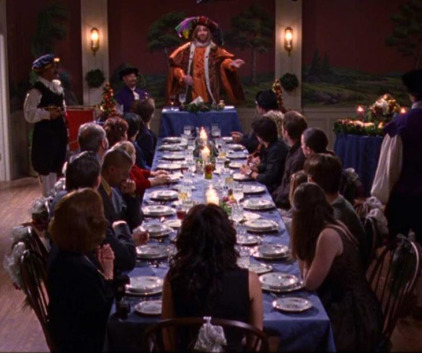
https://31.media.tumblr.com/2ed023a29be86a0e88decf2c7d224702/tumblr_inline_nk98irVgw01smmca3.png

Gilmore Girls provides viewers with an escape from reality, by showing them that pop culture isn’t turning us into terrible human beings, but actually providing us with an alternative reality where we can sort through all of the craziness happening around us. The show’s simplistic plot allows us to address real issues that may concern us such as privilege, gender roles, and the structure of society, while at the same time giving us resolutions that make you believe that you can enact change. Lorelei and Rory’s own consumer behaviors make a point of reinforcing that the culture industry is not just sameness and conditioning, but a way to inspire creativity in yourself.


Ehrenreich, Barbara. Nickel and Dimed: Undercover in Low-wage USA. London: Granta,

  1. Print.

Leavis, F. R. “Literature and Society.” (n.d.): 182-93. Print.

Williams, Raymond. “Culture Is Ordinary.” (n.d.): 3-18. Print.
Popular Culture as an Escape from Everyday Life

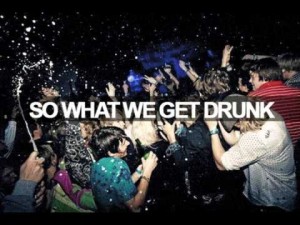
“Young, Wild & Free” by Snoop Dogg and Wiz Khalifa paints a picture of a carefree life. The artists encourage audiences to live freely, particularly through the acceptance of illicit substances. The lyrics are quite blunt in this regard– “So what we get drunk? / So what we smoke weed? / We’re just having fun” (“Young, Wild & Free”). To some, this open acceptance about illegal or socially or religiously frowned upon activities is horrifyingly lowbrow. Such themes are commonplace in many popular songs today, though; LMFAO’s “Party Rock Anthem” demands “One more shot for us, another round…Everybody just have a good time / And we gonna make you lose your mind” (“Party Rock Anthem”). These types of lyrics, while common, overflow with references to alcohol and sex; they border on offensive and socially unacceptable. How can such activities be openly discussed, even encouraged?

In Rabelais and His World, Mikhail Bakhtin describes the phenomenon of the carnival. Rooted in the tendency of Middle Age clowns and fools to mimic serious rituals and feudal traditions for the purpose of laughter– often crude and regarding bodily functions and the grotesque– the carnival was a popular lifestyle (Duncombe 83-84). The carefree heart of the Carnival provided an escape from the drags of everyday life; “[the] carnival celebrated temporary liberation from the prevailing truth and from the established order; it marked the suspension of all hierarchical rank, privileges, norms, and prohibitions” (Duncombe 87). In modernity, the truest form of carnival that exists is Mardi Gras– a freeing celebration of rejection of societal standards regarding bodily appearance, behavior, hierarchy and law. Pop culture, however, reflects closely on the same values.

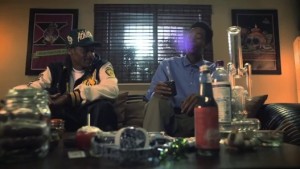
"So what we get drunk?" (Source: https://www.youtube.com/watch?v=kKx9j3KaGAM)

“So what we get drunk?” (Source: https://www.youtube.com/watch?v=kKx9j3KaGAM)

Snoop Dogg and Wiz Khalifa’s “Young, Wild, & Free”, for example, exemplifies a modern carnivalesque, carefree lifestyle as encouraged by Bakhtin. The repeated drug references in the lyrics, as well as the value placed on living without cares, fits the carnival’s disregard for typical societal standards. Bakhtin describes, “During carnival time life is subject only to its laws, that is, the laws of its own freedom… [it was] the second life of the people, who for a time entered the utopian realm of community, freedom, equality, and abundance” (Duncombe 87). Essentially, the carnival has its own laws separate from those of real life, which provides a second, more free and welcoming, world. Some lyrics in “Young, Wild, & Free” openly encourage the breaking of real laws through use of drugs and alcohol. Although some may find these references offensive, religiously sinful, or wrong, “Young, Wild, & Free” relishes any opportunity for escaping social boundaries and living freely.

“Young, Wild, & Free” is part of the Mac and Devin Go to High School movie soundtrack, a film described in its iTunes preview as the “ultimate stoner comedy with a star-studded hip-hop soundtrack” (“Mac and Devin Go to High School”). In the music video, Snoop Dogg and Wiz Khalifa parody the structure of high school as they wreak havoc during a day trip to the teenage years. The music video shows students “Mac” and “Devin” (Wiz and Snoop) fittingly passing their first day at N. Hale High “N. Hale”-ing, as well as their drug trips; the hallways are twisted once each as snow-dusted, an underwater ocean scene, and a cartoon bird haven. Mac and Devin also complete a project for “science class” in which they prepare their own drugs and experiment with THC. Furthermore, throughout the whole video, there is only one appearance of an authority figure, in a screaming adult male, but he does not return again. The carnival rejects all things official and conventional; Mac and Devin certainly achieve a carnivalesque level of freedom in the music video of “Young, Wild, & Free” as they lead the student body in a wild day at school and prevail over authority.

Mac and Devin's "science project". (Source: https://www.videogram.com/comic_embed/2997c0f0-87f4-4fcb-9dcd-42cde0276998)

Mac and Devin’s “science project”. (Source: https://www.videogram.com/comic_embed/2997c0f0-87f4-4fcb-9dcd-42cde0276998)

Bakhtin furthers his description of the carnival, “Carnival is not a spectacle seen by the people; they live in it, and everyone participates because its very idea embraces all the people” (Duncombe 86). In order for a carnival to completely reject all forms of hierarchy and structure, it is vital that all types of people participate (Karimova 48, 38). The carnival celebrates the community, and therefore must be inclusive. “Young, Wild, & Free” exemplifies this trait in the featuring of many types of students– the preppy female, the nerd, the athlete, the fat boy in a wheelchair– and shows them all embracing the carnival at school in unison. “The carnivalesque is in brief a celebration of… community; it liberates people and brings them together and induces them to participate in communal living” (Bell 105).

maxresdefault

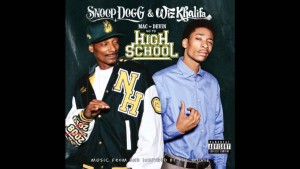
Album Cover of “Young, Wild, & Free” (Source: https://www.youtube.com/watch?v=KEddeCFhExA)

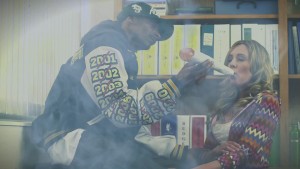
The music video for “Young, Wild, & Free” shows all types of students taking part in the fun as an entire, inclusive student body, rather than as divided by homogenous or exclusive social boundaries. Snoop Dogg lights a huge joint for a preppy white female, and an obese boy in a wheelchair expertly puffs smoke rings. The all-out party at the end of the music video also displays great diversity in the crowd. The point of including all people is also displayed on the album cover; Snoop Dogg is dressed athletically in a varsity jacket, while Wiz Khalifa appears nerdy in a button down. Despite the stigmas regarding these types of students, all of them partake in the festivities and in letting loose and ignoring school authority.

4731201_l2

Snoop Dogg shares the love in the “Young, Wild & Free” music video. (Source: http://veehd.com/video/4731201_Snoop-Dog-And-Wiz-Khalifa-ft-Bruno-Mars-Young-Wild-And-Free-mp4)

The wide reach of the “Young, Wild, & Free” lifestyle is also apparent in the background of the song. Wiz Khalifa and Snoop Dogg are both African American, while featured artist Bruno Mars is from Hawaii; the “Smeezingtons” group that composed the song consists of an African-American, a Caucasian, and Hawaiian Bruno Mars. The artists also reject typical lifestyles; Snoop Dogg (formerly Calvin Broadus) was in and out of jail for drug use for several years, and yet has grown into an incredibly successful musician. Neither Snoop nor Wiz Khalifa (formerly Cameron Thomaz) attended college or are married. Both openly attest to cannabis use. Wiz and Snoop both live atypically of societal standards in these ways; encouraging audiences to live in a carnivalesque fashion requires not just telling, but also showing.

“Young, Wild, & Free” is also able to directly influence real life because it helps dancers let loose– the song is no stranger to dance parties. The chorus is catchy, simple, and fun, so when it comes on the speakers, many a dance floor erupt with passionate singing and unembarrassed dancing. Dancing provides easy means to let go of social boundaries, and therefore everyday access to Bakhtin’s carnival; its role is in “inciting the participants to ‘the greatest exaltation of their symbolic faculties’ into play, and triggering ‘the whole pantomime of dancing, forcing every member into rhythmic movement’” (Stam 89). When everyone on a dance floor partakes unabashedly in dancing together, they are bringing the carnival to real life. “The carnivalesque is not restrained to popular culture texts, but transcends to ‘everyday’ life encompassing… those of audiences” (Karimova 37). “Young, Wild, & Free” provides an easy trigger to an unrestricted dance party– a modern carnival.

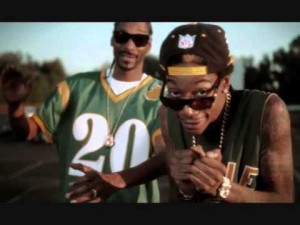
(Source: https://www.youtube.com/watch?v=9E8_f7ek84c)

(Source: https://www.youtube.com/watch?v=9E8_f7ek84c)

A truly inclusive environment, furthermore, is hard to come by in modern society. There are always limiting factors to the extent of a shared experience; money is a frequent concern. A dance floor, however, is one experience that transcends economy. Although the song does encourage certain endeavors that may not be available to all classes, the experience that the song itself provides is. On the other hand, encouraging flashy, crazy parties may seem unwise; however, the benefits of rejecting structure are reaped in the sheer fun to be had. Additionally, although the music video only depicts one school day– a temporary escape– the lesson has been presented (in a readily available song) and viewers must elect to follow in Mac and Devin’s footsteps. The message, furthermore, is widely applicable. Although the song may only be well known to today’s younger generations, the ideals behind it should still be paid attention to by people of all ages. N. Hale High and its liberating wild spirit is a dream come true for students as well as adults bored by the structure and lack of freedom in their lives.

Essentially, Bakhtin’s carnival provides an escape from everyday life via fits of crude humor and unabashed free living, and focuses on welcoming all members of a community despite background, and the rejection of authority, hierarchy, structure, boundaries, and standards (Duncombe 84). Popular culture today, like Snoop Dogg and Wiz Khalifa’s song “Young, Wild, & Free”, strives to achieve these carnivalesque qualities through explicit lyrical content and acceptance of substances typically frowned upon by society, the inclusion of all types of people in the fun, and the deliverance of these qualities to real life. “Carnival changes over time, and if Medieval carnival was a ‘second life’ for people, the contemporary carnival is ‘everyday’ life” (Karimova 46). Ordinary pop culture therefore has become our modern carnival; we must embrace it as an escape from reality and to strive for a “Young, Wild, & Free” lifestyle.

————————-

Works Cited
Bell, Michael Mayerfield, and Michael Gardiner. Bakhtin and the Human Sciences. London: Sage Publications, 1998. Print.
Dogg, Snoop, and Wiz Khalifa. Young, Wild, & Free (feat. Bruno Mars). The Smeezingtons, 2011. Web.
Duncombe, Stephen. “A Politics That Doesn’t Look Like Politics.” Cultural Resistance Reader. London: Verso, 2002. 82-88. Print.
Karimova, Gulnara. “Interpretive Methodology from Literary Criticism: Carnivalesque Analysis of Popular Culture: “Jackass, South Park”, and ‘Everyday’ Culture.” Popular Culture Association in the South 33.1 (2010): 37-51. JSTOR [JSTOR]. Web. 15 Nov. 2016
“Mac and Devin Go to High School.” iTunes Preview. iTunes, n.d. Web. 15 Nov. 2016.
LMFAO. Party Rock Anthem (feat. Lauren Bennett & GoonRock). LMFAO, 2011. Web.
Stam, Robert. Subversive Pleasures: Bakhtin, Cultural Criticism, and Film. Baltimore: Johns Hopkins UP, 1989. Print.

The New Basement Tapes: Fan Art in its Highest Form

In 1965 Bob Dylan went electric at Newport and everyone fucking hated it. Ok, not everyone—there were boos and cheers, after all. Later that year he got married, got strung out on heroin, and the following summer almost killed himself in a motorcycle accident. He didn’t emerge from the woods of New York for over a year, only releasing Nashville Skyline and playing at a memorial concert after Woody Guthrie’s death. Dylan wouldn’t tour for another eight years.

Then we got The Basement Tapes.

bt

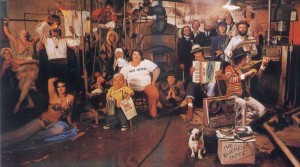
Post Judeo-Christian lyrics and Johnny Cash duets, Columbia Records releases The Basement Tapes in 1975, approximately eight years after Bob Dylan and the Band (then the Hawks) recorded them in the basement of his Woodstock refuge.

Not unlike when he went electric, Dylan changed the game, singing 107 stripped down, low fidelity ballads that sounded like a whisper under psychedelic rock’s recent explosion. It’s not even so much the songs themselves as what they created— a reemergence of Americana, room for bleakness during the summer of love, not to mention the sheer quantity of the recordings (which has a Jack Kerouac single-spaced, taped together On the Road manuscript type magnitude). Rolling Stone ranked The Basement Tapes #292 on their list of 500 greatest albums and it’s widely regarded that, while lauded on their own merits, The Basement Tapes is what put the Band on the map.

So taking all this in—the circumstances for Dylan, the vastness of recordings, the return to folk for a guy who killed himself going electric, and the legacy it left for singer/songwriters forever (think Wilco, the Waterboys, Billy Bragg)— and now imagine that there are more. That’s right. Unrecorded, half-written, scribbled Dylan songs unknown to the world until 2014.

If you’re a music guy, like T Bone Burnett, this is like finding the library of Alexandria didn’t burn after all. And if you’re smart, like T Bone Burnett, you figure out how to do something with these pieces of lyrical gold.

And that’s how we got The New Basement Tapes.

Week of August 4

Week of August 4

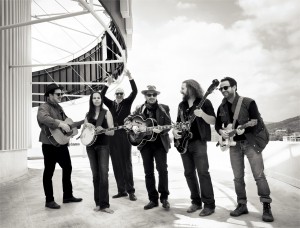
Recording of The New Basement Tapes started when songwriter and producer T Bone Burnett got Elvis Costello, Rhiannon Giddens, Jim James, Taylor Goldsmith, and Marcus Mumford all in a studio at Capitol Records, 47 years after Dylan penned the songs they would record. The only catch was, there was no music. Handwritten lyrics in Dylan’s careless scrawl, sure, but no melody, no notes, no instruments, not even “guitar solo here?” scribbled in the margins. The group, then, was undertaking the not so trite task of putting music to the lyrics of one of the greatest songwriters of all time.

So they did.

Over two weeks the group wrote, recorded, experimented, rerecorded, called in Johnny Depp, and rererecorded over 30 songs, 20 of which made the album. With no lineup and a plethora of talent, the group switched parts and instruments, Mumford singing lead on one of the most popular songs, Kansas City, Goldsmith leading the charge on rewriting the music for it, and Giddens bringing in gospel singers to help her find the right melody for Lost on the River.

In Showtime’s documentary of the recording sessions, Lost Songs: The Basement Tapes Continued, Jim James of My Morning Jacket brings his distinctive voice and penchant for the funk and blues inspired, Goldsmith lobbies for his version of Kansas City, (the version that ends up on the album) over Mumford’s, and Burnett refuses to let anyone leave—refuses to let any interpretation go unheard. Burnett describes those two weeks, saying: “What transpired during those two weeks was amazing for all of us. There was a deep well of generosity and support in the studio at all times, which reflected the tremendous trust and generosity shown by Bob in sharing these lyrics with us in the first place.” What’s left is a bold, musically adventurous, deeply curious, and exceedingly fun album of 20 songs that can almost make you forget who wrote them in the first place.

Week of September 1

Week of September 1

What’s often lost behind names like Elvis Costello and Marcus Mumford is the fact that The New Basement Tapes is, ultimately, a fan album. I’ll concede that it’s hard to think of professional musicians as fans, no matter how languidly they praise other bands or distill their musical pedigree—but this aspect of them is not to be lost. Before Goldsmith was twelve, I can bet he was learning Bob Dylan songs on the guitar. When Jim James goes to a Wilco concert, it’s not as Jeff Tweedy’s compatriot but as a member of an audience. It takes a concerted effort to remember musicians in their humanity—that is, their capacity to still be a fan. To not make this effort would ignore the foundation of the album as a creative effort of fans, albeit very talented fans, to do justice to the work of another artist. Exempting the Costello and Giddens and Mumford from their role as fans would be a disservice to both them and Dylan. Because, when we’re talking about Bob Dylan, sorta like Jesus, no one’s an equal and everyone’s a fan—fans with professional careers of their own, studio time, and the pull to call in Johnny Depp to play guitar on a track—but fans, nonetheless.

Less stigmatized and perhaps more fruitful, The New Basement Tapes is not altogether unlike popular fanfiction or fan art that is a product of fandoms ranging from books like Twilight to TV shows like Fox’s Glee, except, of course, The New Basement Tapes gets advantage of having Dylan’s actual lyrics. Cover songs in general, while sometimes simply mimicking artists, are more often creative and resourceful interpretations that stand on their own merit—making them works of a fan and works of art. The two are not mutually exclusive. Kurt Mosser gives the example of Jimi Hendrix’s cover of Dylan’s All Along The Watchtower in his essay “Cover Songs”: Ambiguity, Multivalence, Polysemy, saying: “Hendrix… takes an austere and minimalist recording of lyrics that are, even for Dylan, obscure and polysemous and changes it into a driving rock n’ roll song featuring extended displays of Hendrix’s guitar work.” Later, Mosser invokes a philosophy of linguistics, often referenced as “cluster theory”, to show that the very use of the words “cover songs” “indicates that there is a relationship between the cover song and its base,” through referential communication. It is not only the art itself, but the way we—consumers— approach and understand this art that recognizes an inherent connection to an original work of art, while still seeing the newly created, or “cover”, as merited in its own existence. Cover songs, like fan art and fanfiction, just more direct, link the artist with the consumer in a way that makes the consumer an artist, too—if only because they consumed in the first place. Far from the only example, Hendrix’s cover is still perhaps the best at getting at the heart of cover songs as both inextricably linked (and indebted to) the work of the original artist, while still being an independent work of art.

Now take All Along The Watchtower, take away any preexisting musical version, increase the required innovation, and multiply it by 20. That’s The New Basement Tapes.

Week of August 18

Week of August 18

On their own, The New Basement Tapes are a remarkable feat of musical ingenuity and collaboration. But it’s status as a quasi fan/cover album resurrects a bias for original work and the dismissal for any art that’s directly based off another’s. Less critiqued because of the commonality of Dylan covers, the genre of fan art and cover art is largely swept under the category of art* where the asterisk says “but not really”.  In his essay Like a Version: Cover Songs and the Tribute Trend in Popular Music, George Plasketes gives a number of examples of cover and tribute albums before sweepingly asserting that “the recent proliferation of cover and tribute recordings is culturally characteristic of the repetition mode of postmodern times—retrieving , repeating, rewinding, and resurrecting virtually everything into an exhaustive cycle of retreads.” Ok, is that enough to make Mumford say “ouch”? Plasketes and the like-minded music reviewers he cites devolve cover music into the art of the lazy and unoriginal—those not good enough to write for themselves, or too complacent to do so. Broadened to all fan and cover art and suddenly entire genres and works of art are discounted on the basis of their relationship to the art that came before it. If we can already conclude that consumers are interactive and creative in their relationship with art, as is proved with the very existence of professional cover-bands like the Grateful Dead’s “Dark Star Orchestra” and the plethora of fanfiction posted on sites like tumblr and reddit, then Plasketes argument is that sure, fans make things, but it’s not creative and it’s sure as hell not good. Once mindless consumers are, in this argument, regarded as merely third grade artists redrawing exactly what’s in front of them.

But this argument is too easy. Not only is it reductive of entire swaths of fan-made art, it rests on its laurels in equating “unoriginal” and “repetitive” with bad, despite giving no critique of the genre other than its straightforward description: art made in the image (or sound) of other art.

The New Basement Tapes are perhaps the highest functioning form of this art and avoid criticism like Pasketes by its virtue of being so well done—it is, however, very much the paradigm of what Plaskete criticizes. More than anything, it’s important to see that The New Basement Tapes is very much the rule for fan and cover art, and not the exception—not in terms of quality (not everyone can sing, not everyone has access to Capitol Records, this is a given) but in the creativity and ingenuity it inspires in the consumer. That art is able to, at the very least, inspire its consumers to create their own work, regardless of quality, is a testament to the critical engagement of the consumer. The New Basement Tapes wouldn’t exist without Bob Dylan or his lyrics, and in this way it’s exactly like 50 Shades of Grey and Twilight, Kirk/Spock slash fiction and Startrek. Each “cover” owes something to its “original”— but complacent, simple-minded replications of their respective originals they are not. Regardless of the social stigma attached or lacking to each of these forms of fan/cover art, and with little emphasis put on their varying qualities (i.e. good/bad), they all arise from the same circumstances of a consumer interacting with its culture, a fan reading and listening critically, and then deciding that they, too, can create something.

So they do.

basement-tapes-5

Burnett and the group he assembled manage to record one of the most musically complex and wide ranging albums of the 2000s. Whether or not you like the album (Rolling Stone loves it, Pitchfork is ambivalent), The New Basement Tapes occupies a space as one of the most creative and experimental cover albums of Dylan’s work. Rather than a carbon copy of Dylan’s simplicity and growling voice, The New Basement Tapes incorporates instruments unknown to Dylan’s work and lets the music breathe. In Matt Melis’ review of the album, which appears on the music-news website consequenceofsound.net, he concludes the article by surmising that the listener “[gets] the sense that Dylan’s greatest gift to the band may not have been his lyrics. The real gift may have been giving Burnett and these five musicians an excuse to go and chase down their own Basement Tapes.” To generalize this claim is to get at the very heart of fan/cover art, or any art directly influenced by a single force, which is that while the content of the original art is imperative, it’s the opportunity for creativity, collaboration, and ingenuity that it creates, and which the consumer seizes, that makes it so important.

We may call Bob Dylan a musical god but we certainly don’t treat him like it. Music, in this way, is not prescriptive. Jim James doesn’t listen to Dylan like the prophet Muhammed and worship at his feet but rather brings goddamn psychedelic Kentucky blues-rock to songs written while Dylan was reading way too much Bible and stripping down his recordings. Giddens, a black woman from the band Carolina Chocolate Drops, brings a soul that white people have been trying to replicate since Alan Lomax went recording local folk songs all over the American south. Taylor Goldsmith comes in as the young, unknown guy from a mid-level band that’s best known for its first album, and fights to the death with Marcus Mumford (of slightly more fame…) to get his (better) version of a song recorded. The New Basement Tapes is not a tribute album, it’s not an homage to Dylan—by the time it’s recorded, it’s not even a Dylan Manifesto. The New Basement Tapes is full fledged musical ingenuity that springs from the handwritten lyrics of a guy they all admire; a guy they’ve all called a genius, once or twice.

Where Dylan would have liltingly sung, Costello belts. Where Dylan would go acoustic, James shreds and Giddens wails. Where Dylan might mope, Marcus goes passionately rueful, as if to say “I’m not finished yet.” These songs, while a gift from Dylan, exist in their own merit. They take liberties with Dylan’s lyrics, are made of a style all their own, and are the product of a critical, creative process of engaging with a music legend’s work. To ignore the impact of Bob Dylan in creating this record would be empirically wrong– he is undeniably the source of inspiration and the well from which these songs were recorded. But to dismiss The New Basement Tapes as a recreation or a carbon copy with no merit or originality of its own would be deaf to the music on the album. More than anything, The New Basement Tapes embodies the relationship between consumer and artist; fan and artist; artist and artist. In it, the very real link between consuming and creating becomes tangible, resulting in a creative product of its own merit, made possible only by the existence of fan and artist and the active, engaging relationship between the two.

The Delight of Good Times

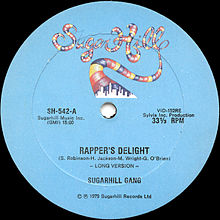
At the end of June, 1979, the band Chic released their song “Good Times.” “Good Times” has many of the hallmarks of a 1970s hit with its disco sound and its danceable groove. “Good Times” quickly became a popular song in its own right, but one of its major claims to fame is that it was sampled, meaning its beat was used for another song. Only three months after the public release of “Good Times,” a group known as the Sugarhill Gang released “Rapper’s Delight,” which used the underlying beat from “Good Times.” Even with its sample of “Good Times,” “Rapper’s Delight” is a different type of song. “Raper’s Delight” is not disco like “Good Times;” it is rap. Rap was only just being created in the 1970s, and “Rapper’s Delight” was the harbinger of this new genre. “Rapper’s Delight,” in many of its facets ranging from its lyrics to its musical style to its methods of production and more, had major characteristics that could be considered quite ordinary.
A major aspect of rap in general is its history. Rap began in the South Bronx in New York City as disk jockeys talking, often in rhyme, while introducing upcoming songs and while playing their tunes (Blanchard). The South Bronx in New York in the 1970s was an extremely poor area. This style of music was created by people who held low socioeconomic status and were often African-American. Rap began as a movement of people who were not elite. They were the opposite.
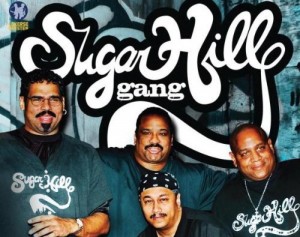
“Rapper’s Delight” was no exception to this rule. The members of the Sugarhill Gang were not from privileged backgrounds. They were lower class artists from the New York area who had not grown up in especially well-to-do households (North Jersey). Englewood, New Jersey, the hometown of the original members, is far from a wealthy area (Factfinder). The artists of the first commercially successful song of what would blossom into a whole genre were not of any special or important social class or group. They were regular people. They were ordinary.

93e12cf28c9b458324a9dbe925b6e7e8-1000x790x1
The humble origins of “Rapper’s Delight” did not hinder its importance. The song was hugely influential in starting the whole genre of rap and making rap mainstream (Blanchard). “Rapper’s Delight” was produced by the small label Sugarhill Records, and the following decades saw many more record labels and productions companies sign rap artists. Rap became a major part of American culture after the releases of “Rapper’s Delight” and other songs. What started as poor disk jockeys in the South Bronx met a trio from a town not far away to start a major facet of culture. Before the commercial success of “Rapper’s Delight,” rap and the artists who made it were just regular people.
Enough about the production and background of a song; the most important part is the song itself.
Musically, “Rapper’s Delight” is somewhat simple. The underlying beat is not all that complicated; it is in common time, a generally easy and adaptable time signature to use. It is also somewhat repetitive. In addition to having the song in an easily workable time signature, the writers of “Rapper’s Delight” had a key advantage when writing the music: they did not write the music. Like its inspirations, “Rapper’s Delight” was a song that used a pre existing beat. In the case of “Rapper’s Delight, the beat was a simple baseline with accompanying chords. Disk jockeys by, definition of what they did, used beats and songs they did not write; they played and played with the songs they had on their tables. The beat itself was ordinary to begin with, and artists who were talented or famous for creating popular disco beats never worked even a minute as writers for the Sugarhill Gang. What better way to start a mainstream genre than by ripping a record?
The most influential and defining feature of “Rapper’s Delight” are its lyrics. The way in which these lyrics are presented is simple. The lyrics are mostly presented as rhyming couplets in a simple AABBCC rhyme scheme that continues throughout the song. For example, the first rapper to sing raps, “See I am Wonder Mike and I like to say hello/ To the black, to the white, the red, and the brown the purple and yellow” with the “ow sound at the end of both lines. The song is longer than many at around seven minutes but it is still mostly comprised of a series of rhyming pairs of lines. The way in the which the lyrics are presented is not complicated or hard to understand. It is regular, ordinary.
Not just the way in which the lyrics are presented but the lyrics themselves are simple and commonplace. Early in the “Rapper’s Delight”, the verse “Now what you hear is not a test/ I’m rappin to the beat/ And me, the groove, and my friends/ Are gonna try to move your feet” introduces what the song sets out to do. Rap was a new genre that needed an explanation. The lyrics then discuss topics such as women, “the ladies fight for my delight” and then go to even more average topics. The lyrics “Holiday Inn” are stressed at one point. Saying “Holiday Inn” is one of the song’s largest indications of being average. The song then discusses superheroes with “I said, ‘By the way, baby, what’s your name?/’ Said, ‘I go by name of Lois Lane/ And you could be my boyfriend, you surely can,/ Just let me quit my boyfriend called Superman.’” Toward the end of the song, The Sugarhill Gang inserts a verse about going to a friend’s house where the food is bad. That’s right, the song that brought a new genre into the mainstream mentally brought viewers to a land where “the stinky food’s steamin’, your mind starts to dreamin’/ Of the moment that it’s time to leave/ And then you look at your plate and your chicken’s slowly rottin’/ Into something that looks like cheese.” The lyrics of “Rapper’s Delight” could not signal any more than they already do that this song does not come from a wealthy or especially privileged place. Part of the song comes instead from a place of wanting something good to eat. The topics of this song are all regular conversation. The lyrics of this song comes from a place of being regular, a place of being ordinary.
The general theme here is that “Rapper’s Delight” was born of the ordinary. From its lyrics to its melody to its production “Rapper’s Delight” was made of the regular, ordinary aspects of life. No special or privileged social class started the process of bringing rap music into the mainstream American conscious. This part of American life was not elite or even upper-middle class. It was Englewood, New Jersey and South Bronx, New York coming together to make a song that made a genre that made an industry.
In the late 1950s and early 1960s, the theorist Raymond Williams wrote about what constitutes culture. He argued that the best facets of culture are generally created by people he describes as “ordinary” (Williams). Williams argues that looking for uninfluenced groups in remote regions such as the Appalachian Mountains is not necessary. Instead, culture can be created by people in urban areas so long as they are of the “ordinary” social class as opposed to the educated elite or upper-middle class. Williams published his essays more than a decade before the release of “Rapper’s Delight,” but he was correct in how “Rapper’s Delight” and rap in general would come into being. He knew how new and influential facets of culture would be created. He knew what would form them, what would shape them. A group of ordinary people sampled a song and made it into their own creation. They took something made by people traditionally thought of as professional musicians and created something out of it. A style of music started in a poverty stricken area and became a mainstream national sensation.
“Rapper’s Delight” is ordinary in that playing it on a record or iPod is an ordinary occurrence. This definition of the word ordinary is not the one Williams used. He used the word to mean that the song is musically simple. It is about going to a friend’s house where the food is bad. It is about superhero movies. It is about the concept of rap itself. This song is exactly what Williams meant by “ordinary.”
In being ordinary, “Rapper’s Delight” and its genre is helped springboard became influential to an extent that a song or style created by a class never could. In the decades following the release of “Rapper’s Delight,” rap became a platform for communication about serious societal issues. According to an essay from Stanford University, rap carries the “potential for political advocacy” (Blanchard). “Rapper’s Delight” was able to speak to people about rotting food and Lois Lane. If it can discuss “something that looks like cheese,” rap can present ideas about politics or social change and more, which it did with a high degree of success in later decades.
Culture is ordinary. There is not a special class who are involved in the creation of meanings and values, either in a general sense or in the specific realm of the arts including music. In fact, a great part of the American way of life, and of its arts and learning, is not elite or middle-class. The Sugarhill Gang was in so many ways the definition of ordinary. The music off which they based their songs was ordinary. It was people talking over records; how much more ordinary can there be? No massive studio, no contracts, no child prodigies making songs at the age of four. Rap began as people just talking a little more rhythmically than they usually did. A British Cambridge-educated theorist from the Welsh side of the England-Wales border predicted this creation. A study at a major American university analysed it. Most importantly, the rappers kept rapping and creating the exceptional out of the mundane, or at least some of them did anyway.

220px-rappersdelight

The Working Class and Star Wars


It is said with some regularity that working class people in America are invisible to the middle and elite classes. Take for example William Deresiewicz’s essay “The Dispossessed,” in which he argues that the decline of working-class representation in popular culture has led to an ignorance of what a working-class life entails. “The working class,” Deresiewicz says, “ is American culture’s great lost continent.” Or take Heather Buckelew’s editorial in the Stanford Progressive, “Making the Invisible Visible: the Working Class in the Economic Crisis,” in which she posits that the struggles of the working class in the economic climate of 2010 were largely invisible to people outside the working class due to lack of media representation.

Deresiewicz and Buckelew may be right that the middle and elite classes have become disconnected from the poor, but that is by no accounts due a lack of representation in popular culture. In fact, the working class has always defined a fair portion of culture. Just look at the CBS Network’s lineup of sitcoms. Two Broke Girls uses the image of an elite woman’s descent into the working class to demonstrate that the elite are woefully unprepared for the rigors of working class life. Mike and Molly depicts a relationship between a cop and a teacher, showing images to the public of some of the financial hardships faced by the working class while still taking time to show the benefits of a large and tightly-knit family.

But the impact of the working class on these shows is mostly in the final product, as the shows are written, produced, and acted out by members of a higher class (even Mike and Molly producer Chuck Lorre, who had a working class childhood, has distanced himself from it in such ways as changing his surname from Levine due to the low self-esteem that he associated with it). The impact of the working class on culture goes much deeper than writing shows that appeal to the working class: some facets of popular culture are not just for or about the working class, but by the working class.

One interesting example of culture about the working class and by the working class is the original trilogy of the Star Wars saga (episodes IV, V, and VI). Scenes of the working class are coded into the trilogy: Luke Skywalker is the son of a farmer; Han Solo, a smuggler, performs for commission the dirty work required of him by his boss, Jabba the Hut; Even Princess Leia is working class, as she gives up the prospect of a comfortable elite lifestyle to aid the rebellion; there are even scenes of her doing work with her hands, like on Hoth in Empire Strikes Back.

It is of note that Star Wars creator and director George Lucas was the son of a stationery store owner, so he has a distinctly working class background. After the success of the first Star Wars movies, he purchased a property which he calls Skywalker Ranch; the working-class connotations of a ranch suggest that even though he is rich and famous, he is not estranged from his working-class roots, like Chuck Lorre is. Star Wars differs from the CBS comedies, then, in that its depictions of the working class are actually projections of George Lucas’s working class identity, as opposed to guesses at what a working class life might look like. Deresiewicz notes that television has many shows with people who have working class jobs, but live middle class lives; shows for the working class by members of higher classes just aren’t accurate.

luke-moisture-farm


Luke was raised on a moisture farm on the desert planet of Tatooine, giving him a distinctly working class upbringing (Source: StarWars.com)

Keeping this in mind, it would be of use to explore the writing of Raymond Williams. In his essay “Culture is Ordinary,” Williams establishes what I have already said; that there is a working class culture distinct from that of higher classes. Williams says that the working class have their own institutions distinct from the institutions of other classes, and that it is an industrial culture focused on “neighborhood, mutual obligation, and betterment.”

That the working class are often ignored by higher classes is not lost upon Williams. He opens “Culture is Ordinary” by using the image of a chained-off library at a cathedral that he is not allowed to enter because of his working-class status to convey this to the reader. The library is a place for the elite and for the clergy — not for the working class. The people who use the library want nothing to do with the working class, but, as Williams goes on to say in another essay, “Working Class Culture,” the joke is on the upper classes.

The reason for this is because the middle and elite class cultures have been visibly influenced by working class culture. So not only is there a working class culture that is distinct from that of other classes, but it’s not the result of the imposition of the latter onto the former (as some have argued); it’s the other way around. The most important thing that the working class have to impose upon the rest of society, according to Williams, is its democratic values — a consequence of the extension of its neighborhood- and family-based social organization.

How is this accomplished? Let’s go back to Star Wars. The trilogy depicts the working class heroes’ role in a rebellion to overthrow the oppressive Galactic Empire. These heroes, and the rebellion as a whole, are imposing their more democratic ideals upon the galaxy. Looking deeper, Emperor Palpatine, the man in charge of the empire, is distinctly elite: he was a prominent senator before he managed to bring about the end of the republic that preceded the Empire. The way Palpatine was able to get all the power of the Galactic Republic for himself — and this is admittedly outside the original trilogy — was by convincing the other elites in the senate to vote to give him their power in a state of emergency, which Palpatine himself had secretly perpetrated. Before it is challenged by the rebellion, the Empire exerts its dominance for some twenty years over the galaxy. That leads to an important observation: Lucas seems to be saying that in the absence of the working class, society will tend toward injustices like those of the Empire. The empire was the result of a lack of working-class representation in the vote which gave then-senator Palpatine power, and the Empire was not challenged until the working class rebelled, overthrew it, and established a new government. It seems, then, that one mode for the spread of democratic values by the working class is by rebellion.

palpatine

Senator Palpatine wears distinctly elite clothing and is constantly surrounded by other elites in the senate (Source: ponikva.info)

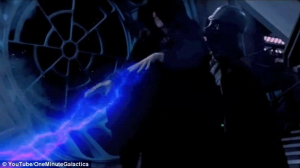
Lucas’s argument about the working class continues in the last sequence with Luke, Darth Vader, and Emperor Palpatine. Luke defeats his Vader, his father, in a lightsaber duel, but refuses to kill him. Palpatine wants Luke to “join the dark side;” His refusal to kill Vader is a refusal to do so, so Palpatine tries to kill Luke using force lightning. Vader, in an act of redemption, picks up Palpatine and throws him into the ship’s reactor, killing him. This move is suicide on Vader’s part due to the lightning, and as he lays dying, he has a final conversation with his son Luke. The Jedi theme plays softly in the background, signalling Vader’s return to the light side of the force.

vader

Darth Vader redeems himself by killing Emperor Palpatine, signalling his redemption from the dark side of the force (Source: Daily Mail)

Before looking into the working class images coded into this scene, we must understand that the Jedi are themselves part of the working class. The only model for the Jedi way of life in the original trilogy is Master Yoda, who lives in solitude and must work to be entirely self-sufficient. When Luke joins him to train, the two exhibit interactions typical of the working class as defined by Williams, forming a family-like bond. The Jedi way is not so different from the working class way.

So Luke, representative of the working class, defeats Vader, somebody who defected from the working class to the elite. The viewer is then made to cheer for Vader as he redeems himself by returning to the Jedi way and killing Emperor Palpatine, which is code for his rejoining the working class. Lucas uses this sequence to create an argument that, one, the working class will emerge superior to the elite (Luke defeats Vader), and two, we should cheer for the working class as it does this (Vader’s redemption). After Vader’s death, he becomes a force ghost, which is the Jedi analog of achieving Nirvana, due to his return to the working class, Jedi way of life (the Force is meant to resemble a deity and the Jedi are the clergy of a religion). If one considers that the that the most ardent practitioners of that religion are granted an ultimate afterlife, it’s like Lucas is saying that the best way to get to heaven is to be working class.

George Lucas’s Star Wars, then, is an argument for the working class. If Williams is to be believed, the people of the middle and elite classes aren’t aware that they are partaking something that is working class when they watch the movie, but nevertheless, they are unknowingly consuming something that they would otherwise try to distance themselves from. In fact, more than that, they’re cheering for the very working class culture that they’ve tried to make invisible. Deresiewicz and Buckelew are unintentionally correct that the working class is invisible. What they mean to say when they say this is that the working class is unrepresented, which seems to be untrue, given that one of the most popular movies of all time is about the working class. The working class is invisible to the middle and upper class, but this actually allows it to secretly impose upon these classes its institutions and its ideals of a democratic society.

Sources:

Deresiewicz, William. “The Dispossessed.” The American Scholar. Phi Beta Kappa, 1 Dec. 2006. Web.

Buckelew, Heather. “Making the Invisible Visible: The Working Class in the Economic Crisis.” The Stanford Progressive, Jan. 2010. Web.

Williams, Raymond. “Working Class Culture.” In The Uses of Literacy: Aspects of Working Class Life”, by Richard Hoggart (1957).

Williams, Raymond. “Culture is Ordinary.” 1958.

The Six Second Carnival

Tristan Colaizzi


Six seconds isn’t a lot of time. It takes about six seconds to tie your shoe or unlock your door, but six seconds was the magic length that made Vine, a social media powerhouse, engage over 40 million users. The concept behind the app is users post six second videos that repeat on an endless loop, allowing users to re-watch Vines, over and over again without having to move a finger. Vine, under Twitter’s ownership, does have similarities to Facebook and Instagram, in its user base and popularity, but its unique six second platform is what allowed for Vine to break into the highly competitive market in 2013. Vine serves as a platform for raunchy, childish, low-blow carnivalesque content, while reshaping the internet in many respects by creating countless fads, which grabbed the attention of millions, such as What Are Those? Smack Cam, and Damn Daniel, to name a few. It changed how millions of people interact with each other and is, by Bakhtinian standards, a modern carnival of epic proportions.

The first logical question to ask when examining Vine is why six seconds was chosen. It turns out that is a pretty easy question to answer. In an interview that aired on NPR’s All Things Considered, Vine creator, Dom Hoffman, admitted that creators had toyed with the idea of ten seconds and five seconds which turned out to be too long or short respectively. (Sydell) They decided on six seconds because it “allowed for the aesthetic feel the creators wanted but preserved the quickness they wanted to promise users.” (Sydell) After deciding on six seconds and realizing that the videos “end[ed] very quickly and [] felt anti-climactic,” Hoffman added in the unique endless looping feature, giving birth to a non-stop, hectic, carnivalesque atmosphere that all vines have. (Sydell) But even though six seconds was chosen because it felt right to the creators, why is it the formula that became so popular? The answer is in our attention. In today’s world and especially online everything happens quicker and more seamlessly, so to grab someone’s attention can be difficult and to keep it is in another challenge entirely. Getting someone’s attention is more on the users of Vine than anything else. If your content is interesting, people are going to look at what you have to say. However, content is not exclusive to Vine, the same people can use Facebook or Instagram to spread their ideas too, and they do. What is unique to Vine is how the app keeps your attention. Psychologists have created many different models of memory over the last century that try to explain how we pay attention and store memories. One of these models is the “Multi-Store Model,” by Richard Atkinson and Richard Shiffrin. The model published in 1968 is relevant because it gives time limits for the three classes of memory; sensory register (several hundred milliseconds), short-term store (30 seconds or less), and long-term store (indefinite). What Vine does, different from Instagram and Facebook, is their platform exists only in short-term store, more commonly known as working memory. (Atkinson) What this allows for is the user to view many videos in a very short period of time, paying attention to the video in its entirety. In a perfect carnival there is mixing of people and ideas, so much mixing and so much happening all at the same time that it becomes chaotic and crazed. A Vine feed is the same thing, an infinite number of diverse six second videos mixing one after the other in one chaotic all containing app. It isn’t possible to become bogged down in one vine for half an hour like can happen with a video on Facebook, instead by keeping the user’s attention in short-term store she is constantly inundated with new, different, exciting information just like in a Bakhtinian carnival.

This carnival is not exclusive either. For as long as it has been around, Vine has been absolutely free to download from the Apple app store and later free on Android as well. Any smartphone has a camera, and almost everyone, regardless of class has a smartphone. Given it may not be the newest version with the best camera, but you don’t need a good camera to use vine. In fact, in an all-time greatest Vines compilation on YouTube the vast majority of the videos are blurry, with muffled audio. (Best Vines Of All Times) This all is to say that Vine is accessible to all, and it can be seen in its diverse user base.

The modern carnival’s platform may be the structure of the app, but it is the content on Vine that makes it a carnival. The carnival as Bakhtin put it is a “suspension of all hierarchical rank, privileges, norms.” (Bakhtin 87) The best content to look at is the content that has been seen by the most people on Vine, therefore the users that have the most loops played of their vines. One of those people is Matthew Espinosa, a kid I grew up with.

Matthew Espinosa is a nineteen-year-old from Northern Virginia who attended Bishop Ireton High-School where he played football and lacrosse. He comes from a middle class family living in the suburbs of DC. Matthew also has over six million followers on Vine and has now starred in his own movie. But when Matthew was 15, before Vine landed itself in every teenager’s phone across America, he was just another kid in my neighborhood. He went to the same elementary school, and played in the same sports leagues as every kid in our town. Matthew is a normal kid, and he became one of the most famous Viners of all time. Vine is not an app whose content is dominated by famous celebrities or political figures, in fact only one person on the list of top fifty Viners was previously famous. (Rankzoo) The other forty-nine were kids just like Matthew who millions and millions of people loved for their vines. Matthew puts it perfectly in one of his vines where he says, “I’m not famous, I’m not in movies, TV shows, magazines, I don’t have paparazzi, I’m just a kid with a camera and a Vine account,” that was before he reached six million followers. Matthew’s vines were for the average kid, not a bloating of an ideal to live up to. Matthew and Viners alike brought the carnival down to the people, they didn’t hold it above their heads. One example of this common vine was one where Matthew recounts a childhood fear, “When you’re in line at the grocery store and your mom leaves you; She’s coming I swear, I don’t know how to use a credit card [starts crying], [pulls out phone] mom I need you! Hurry up! [then more exaggerated tears]” (Huge Matthew Espinosa 15:50) In another he exaggerates the fearful moment we have all had while dreaming, “Am I the only one that literally has a heart attack when you’re like half sleeping and half awake, and you trip in your dream and you wake up like, like crying and you’re like Uggghmmeee [starts crying in tears]” (Huge Matthew Espinosa 16:30) Across most of his vines Matthew over-dramatizes everything he says or does. In doing so he embarrasses and makes a fool of himself, by screaming and crying in a real grocery or poking fun at the childish terror he sometimes feels while dreaming. But, in Vine, just like in Bakhtin’s carnival, it is precisely the suspension of seriousness and formality that qualifies something as a Carnival. Bakhtin notes that “in reality, it is life itself, but shaped according to a certain pattern of play.” (Bakhtin 86) The vines are real, they do exist in reality, but under their own rules.

Matthew’s Vines, although carnivalesque, don’t entirely show a dissolution of social boundaries. But we can see this in the most famous Viner of all time, Andrew B. Bachelor. Unlike Matthew who comes from a white middle class family, Andrew, better known as King Bach is an American immigrant, initially born in Canada and raised by two Jamaican immigrants. Both Bach and Matthew were unknown before Vines release in 2013, and now sit with a collective 22 million followers. (Rankzoo) Accompanying them on the top are Lele Pons, and Brittany Furlan, two female Viners. The diversity of race, sex, and economic status of the most popular Viners shows the dissolution of social boundaries that the carnival calls for, unlike the predominantly rich, white stars of Hollywood.  Moreover, if Vine truly is a dissolution of social boundaries, then we should see social interactions of people with wildly varying social backgrounds. The most prominent Viners have numerously made appearances in each other’s Vines, not as an outsider sitting in one of Ellen’s white chairs, but as an integral member of the Vine. For example, King Bach and Brittany Furlan often play a couple in many of their shared Vines. They partake in the raunchy unfiltered chaos that is Vine’s carnival seamlessly together, and they are only able to do so because of the dissolution of social boundaries that exists. It is precisely this type of qualification that makes Vine a carnival under Bakhtin’s classification.

King Bach’s Vines show what Bakhtin calls a “marked suspension of all hierarchical rank, privileges, norms.” (Bakhtin 87) Many of King Bach’s vines do this through racial play with police. He takes the power structure in America and reverses it. Bach, just like Matthew often does an exaggeration of typical life, seen in one of his videos where he gets pulled over by a policeman who then frames him with alcohol and a gun, because he is black. (King Bach Police Vine) By making this Vine, Bach is calling out the injustices in the ranks and norms of our society. His voice gets heard in Vine, not the voice of the policeman that is quoted in Sundays newspaper. He is turning society upside down by making his, economically and socially depressed voice, heard over the policeman’s. Bach goes from being the town peasant to being the King. This theme continues over to another one of his Vines where Bach is pulled over by an officer who asks him “do you have any idea how fast you were going?” to which Bach responds, “according to my snapchat selfie, 24 miles per hour, ya bitchhhhhh.” (Ultimate King Bach 5:55) In real life if Andrew B. Bachelor said this to a police officer, not only would he be ticketed and arrested, but risks even being killed. King Bach’s ability to do something so unrealistic and backwards from real life, yet playfully humorous goes to show how Vine is a modern carnival. Vine is a place where diverse people can disregard the rules and hierarchies that normally govern them, and in an endless six seconds of raunchy unfiltered chaos flip the rules of society.

Unlike a Mardi Gras carnival Vine was created to turn a profit. This requires Vine, just like Facebook and Instagram to have advertisements. But unlike Facebook and Instagram, Vine’s advertisements do not compromise its ability to be a Carnival. If we look at advertisements on Facebook they often surround the user’s news feed. On Instagram advertisements are placed into a user’s feed, often looking just like a post your friend would make. But on Vine advertising is different. For example, if you work in marketing for Nike and you want to advertise a new shoe that is coming out, on Instagram you would pay to post your advertisement on a million feeds and it would come up as the users scrolled through. On Vine, however, you pay them to advertise the new shoe, but they don’t just throw it into users feeds. What Vine does is they reach out to a famous Viner who has followers that are likely to buy Nike, such as King Bach, and he would make a vine where he says “Check out the new Nike shoes I just got, they aren’t out yet, my friend hooked me up, but you can pick them up on December 3rd.” But King Bach doesn’t have to make that Vine if he doesn’t want to. If he decides that he is against Nike for some reason Vine cannot make him post a video. They cannot force content into the users’ phones like Facebook and Instagram do. In other words, the power of the carnival is still in the hands of the people who populate it. The lack of control on other social media platforms is striking. On Facebook and Instagram you might think that by having ads surrounding your feed, or mixed into it, doesn’t affect what you are consuming, but psychology says otherwise. These ads cannot be weeded out or ignored because of the way that all humans pay attention to what is in front of them. As it is noted in Attention by Alan R. White, “when one attends to X, e.g [Facebook or Instagram], although there must be some description of X, e.g. as [Facebook or Instagram], under which it is true that one is aware of X or realizes that it is X, yet it is not merely possible but very common that one does not realize that in paying attention to X one is paying attention to Y” e.g an advertisement. (White 1) White is saying that in being focused on your feed on Facebook or Instagram you are, by default, subconsciously playing attention to the ads that surround it.

So it seems like Vine has struck gold. It has provided 40 million users with a modern version of Bakhtin’s carnival. In all controllable aspects of the app that is undoubtedly true, but that doesn’t mean it’s possible. A little under a month ago Twitter announced that after five quarters of loss and firing nine percent of their employees they would be shutting down Vine. The carnival was no longer profitable, at no fault of its own, and we cannot blame Twitter for shutting it down. In fact, Vine’s closure says nothing about the efficacy of the app. It says something about the industry that the carnival had to exist in. An industry that values profit over the carnival.


Works Cited

Atkinson, Richard C., and Richard M. Shiffrin. “STORAGE AND RETRIEVAL PROCESSES IN LONG-TERM

Bakhtin, Mikhail. Rabelais and His World. Compiled by Stephen Duncombe, London, Verso, 2002.

“Best Vines Of All Times (Best Compilation) (@VineCreative).” Youtube, www.youtube.com/watch?v=k1MLpsU7QWs. Accessed 17 Nov. 2016.

“Huge Matthew Espinosa Vine Compilation – All Matthew Espinosa Vines (212 Vines) – BEST VIN.”Youtube, 23 Aug. 2014, www.youtube.com/watch?v=e0qbKoq-zjI. Accessed 17 Nov. 2016.

“King Bach Police Vine.” YouTube, www.youtube.com/watch?v=Na88ilPgikI. Accessed 17 Nov. 2016.

MEMORY.” Psychological Review, vol. 76, no. 2, 1969, pp. 179-93. APA PsycNET, psycnet.apa.org/ journals/rev/76/2/179/. Accessed 16 Nov. 2016.

Sydell, Laura. “How Vine Settled on 6 Seconds.” NPR, 20 Aug. 2013, www.npr.org/sections/ alltechconsidered/2013/08/20/213846816/how-vine-settled-on-6-seconds. Accessed 16 Nov. 2016.

“Ultimate King Bach Vine Compilation with Titles – All KingBach Vines 2016.” Youtube, 2016,  www.youtube.com/watch?v=pPrDK_olPuM. Accessed 17 Nov. 2016.

“Vine Users Ranked in the Top 1000.” Rankzoo, rankzoo.com/vine_users?page=1. Accessed 16 Nov. 2016.

White, Alan R. Attention. Oxford, Basil Blackwell, 1964.

The Humans: Realism as an Alternative Entertainment

The glamorous world of the show business attracts a large audience, and for a good reason. The combined effort and talent of the playwright, actors, directors, and set designers can produce a beautiful product: awe-inspiring shows. But why are humans so captivated by entertainment? Not everyone has the knowledge and experience to appreciate or criticize entertainment the way professional show or movie critics do. For most people, it is simply because they enjoy the experience. That is, they leave the play feeling better than how they arrived. Many plays (and movies, for that matter) offer the viewers a picture of a better, more perfect world than the one in which they actually live. Richard Dyer, in his essay “Entertainment and Utopia”, writes that entertainment, specifically show business, present elements of the utopian through the plotline, characters, set, and music, in a way that enthralls the audience; they can temporarily enter into an idealized world. This appears in Wicked The Musical, most obviously during the song “Defying Gravity”, when Ephaba rises from the stage, suspended in mid air, surrounded by artificial fog, as she sings about about her newfound power and freedom. Wicked attracts a worldwide audience because it tells a story about love, true friendship, and valuing others for who they are at the core, not on the surface. But could there be a different type of entertainment that succeeds without offering an idealized version of the world? A type that still attracts crowds, but possibly for different reasons? In an alternate type of entertainment, realism replaces utopianism, and the world on stage allows the viewer to acknowledge and relate to the universal experience of humans as we are, rather than the idealized vision of how we would like to be.

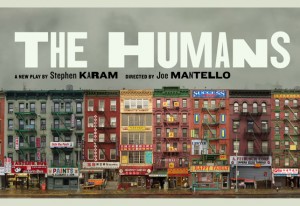
the-humans-poster

In the play, The Humans (New York opening 2016), written by Stephen Karam and directed by Joe Mantello, we enter the lives of the Blakes, a middle-class American family, during their Thanksgiving celebration. The play takes place in the new home of Brigid Blake (Sarah Steele) and her boyfriend, Rich (Arian Moayed), in their tiny, two-story Manhattan duplex. But as with many family get-togethers, any seemingly ordinary event can quickly turn into a nightmare. A sudden influx of familiar faces revives past arguments, and provides an open-mic for honest, and sometimes harsh, opinions. Throughout the course of the play, the multi-layered complexities of the Blakes unravel and the tension grows until they reach their breaking point. In the opening scene, Brigid’s family arrives from Scranton, Pennsylvania. Her father, Eric (Reed Birney), her mother, Deirdre (Jayne Houdyshell), her sister, Aimee (Cassie Beck), and her grandma, Momo (Eric’s mother, played by Lauren Klein) who has dementia and resides in a wheelchair, all eventually settle into the less-than-homey apartment. The couple, Brigid and Rich, have not completely moved in yet, so the already dreary apartment looks especially barren and “a touch ghostly” on this Thanksgiving evening. The set includes a narrow metal spiral staircase that connects the top floor to the basement, and a folding table with plastic chairs. Someone hung a singular string of Christmas lights over the kitchen in attempt to brighten the permanently dull space. The apartment is nothing special, and everyone in the audience recognizes the characters as ordinary, middle-class human beings.

the_humans_off_broadway_cred_joan_marcus-jpg-606x455_q100

What good is a play that depicts an ordinary world in which nothing seems exciting or amusing? In other words, what are we, as the audience, to gain by watching this play? It does not captivate us for its grandiose music, costumes, or sets in the way that other plays do. Jill Dolin in Utopia in Performance: Finding Hope in Theater writes that utopian entertainment “calls the attention of the audience in a way that lifts everyone slightly above the present, into a hopeful feeling of what the world might be like if every moment of our lives were as emotionally voluminous, generous, aesthetically striking, and intersubjectively intense”(5). Rather than depicting “what the world might be like” or what humans could be like, realism appeals to an audience for another reason. It allows us to focus in on a universally relatable topic: what it means to be human. Nothing in the play, no songs, sound effects, costumes, or anything within the realm of the utopian, distracts the audience from this because they do not exist. The director, Joe Mantello, and set director, David Zinn, successfully make the set of the play so common and generic, so real, that the audience forgets that these people are actually actors in a play, not just, say, our next-door neighbors. The audience feels at home with the Blakes, they welcome us into their family holiday to be a part of their evening. The Blake’s world is our world, and as they become more and more real, their lives on stage take on the characteristics of our lives: unstaged and unscripted

From left to right: Eric, Deirdre, Aimee, Brigid, Rich

From left to right: Eric, Deirdre, Aimee, Brigid, Rich

Certain sentiments arise in the play that undeniably relate to most humans. For example, the feeling that life is a never-ending list of chores and responsibilities. Eric and Deirdre have worked for decades in the same jobs, as a school maintenance worker, and as a office manager at a firm, respectively. Despite their many years of work, they still face financial insecurity. Eric says “I’ll tell you, Rich, save your money now. I thought I’d be settled by my age, you know, but man, it never ends. Mortgage, car payments, Internet, our dishwasher just gave out”. Karam does a wonderful job capturing how difficult it is for people to make ends meet. Another source of disagreement springs from Eric and Deirdre’s interactions with their daughters in sort of battle between generations. Even the location of their homes shows a divide. Brigid has just moved to the glamorous New York City, while Deirdre and Eric live in suburban Scranton, Pennsylvania. Additionally, they are devout Christians who constantly nag their daughters for their disinterest, which is made obvious when Brigid says, “no religion at the table!”. Eric says to Brigid, “you put your faith in juice cleansing…”, in another stab at the younger generation. And Deirdre makes her point crystal clear when she gives the young couple a statue of the Virgin Mary as a housewarming gift. Another disagreement arises between Brigid and Deirdre, who cannot for the life of her understand why Brigid and Rich have not gotten married yet! Never missing an opportunity to bring it up, Deirdre responds to Brigid’s reference to her “mother-in-law” by saying under her breath, “She isn’t your mother unless you get married”. Furthermore, Eric stigmatizes mental illness and refuses to pay for Brigid’s therapy, despite her constant insistence on needing it. “Well, save some of the money you spend on organic juice and pay for it yourself” he says to Brigid, a harsh response, indicating clearly their differing views. These interactions between the family members on stage feel all too real to us audience members. The ability to relate to to these characters almost has an effect of breaking down the fourth wall between the audience and performers, as if we are present in the room with them.

605

The Humans reaches another level of realism through its use of humor. Despite the dark reality that this play depicts, Karam still manages to incorporate humor into the script, and its response by the audience is both expected and puzzling at the same time. At the dinner table, Eric asks Rich if he takes medication for his mental illness, because “in our family, we don’t have that sort of depression”, to which Aimee responds “yeah, no, we just have a lot of stoic sadness”. The audience, myself included, laughed. Moreover, Deirdre sends articles to her family via text and email all the time, mostly articles about faith and homosexuality (because Aimee, the elder daughter, is gay). Brigid, annoyed with her mother’s constant messages says, “you don’t have to text her [Aimee] every time a lesbian kills herself”. The audience responded to that remark with a kind of uncomfortable laugh. But how can we justify laughing at these topics? Depression, sexuality, and suicide are serious matters that hit uncomfortably close to home for so many people, so why did we laugh? In The Culture Industry, Adorno explains that “there is laughter because there is nothing to laugh about. Laughter, whether reconciled or terrible, always accompanies the moment when a fear is ended” (112). Similarly, The Freudian Relief Theory states that “laughter is a physical manifestation of the release of nervous energy” (Bardon, 9). Maybe one of these theories can offer some insight as to why human’s response is laughter, since undoubtedly some element of fear or anxiety associated with these topics exists. Karam understands the human aspect of it; what provokes genuine laughter, but also what the effect of this laughter is. When an actor said something, everyone in the audience laughed together, along with the characters who chuckled on stage. In the presence of discomfort or fear, everyone responded the same way through laughter. The shared laughter creates solidarity between audience members. In a sense, laughter in this play brings people closer together into a community of shared experiences, shared fears, and shared anxieties.

The small gestures, subtle remarks, and dark humor that feel so genuine to us point to an even bigger picture of humanity. According to Karam, The Humans explores the “big existential horrors of life that everyone deals with”(Lecture Series), and the Blakes perfectly embody these “horrors”. After years of facing financial difficulties, Eric asks the heart-wrenchingly revealing question, “Don’tcha think it should cost less to be alive?” Not only Eric feels hopeless about life. Aimee faces the possibility of being fired from the law firm where she has worked for years. Even more, her ulcerative colitis has worsened and she may need surgery. And on top of all of this, she is heartbroken over a recent breakup with her girlfriend. How’s that for perfect timing? In utopian entertainment, a character might resolve his/her issues on the premise of the saying, when life gives you lemons, make lemonade. Take Forrest Gump, for example. In this utopian world, he never meets a challenge he cannot overcome. But the overriding message in The Humans reflects the more realistic sentiment that when life gives you lemons, it is awfully difficult to make lemonade. Forrest Gump survives a war, makes millions as a shrimper, and runs across the country with few, if any, setbacks. Eric Blake cannot even retire. If utopian entertainment offers its viewers impossibilities, why not look to realism for a better understanding of what is possible?

the_humans_production_still

People are drawn to entertainment that offers a more perfect world, but in analyzing The Humans, it becomes clear that Stephen Karam sees greater value in representing the real world. The play offers satisfying and refreshing depiction of reality. No sugarcoating, just true hard life. So, to return to my question, what are we, as the audience, to gain by watching this play? The answer is a greater understanding and appreciation for humans, with all of our imperfections. By using realism rather than utopianism in his play, Karam offers us a greater understanding of ourselves, the humans around us, and the world in which we live.

A New Ending but an Old Story: Alternative History for Tarantino


Inglourious Basterds is Quentin Tarantino’s alternative to one of America’s more comfortable historical narratives. World War II’s morally simplistic narrative of good versus evil is relatively uncontested. Especially in the European sphere, a continent away from the nasty questions of atomic weapons and internment camps, the West celebrates American heroism and its conquering of Nazi evil. When George Bush wanted to label his enemies, the conquered alliance of WWII offered a name: the Axis of Evil, which wasn’t the descendent of the Axis Powers historically but was forced into that narrative rhetorically. The war’s memory might not be fresh among living Americans, but it still offers a shortcut for accessing feelings of American victory over evil. What should we make, then, of Tarantino’s new ending to the war?

Critic Jonathan Rosenbaum, formerly of the Chicago Reader, offers a critical takedown of the movie’s new ending: “Inglourious Basterds makes the Holocaust harder, not easier to grasp as a historical reality,” (italics his). That is, by ignoring some of the horrors of reality, Basterds’ fantasy encourages historical amnesia. However, this seems challenging to reconcile with the opening scene’s portrayal of the coldblooded murder of Jews to the delight of an SS officer. An officer who responds to being called the Jew Hunter with relish, for he “love[s] the title.” The movie contains depictions of the day-to-day horror of the bureaucratic work that supported the Holocaust, and takes the time to capture Shoshanna’s fear in response to it. Her gulps of air, after Hans Landa stops questioning her, sound like she has been choked by fear. Ignoring the Holocaust would be problematic, but Basterds doesn’t deny its existence, or even its horror. Additionally, this probably isn’t the right line of inquiry. Rosenbaum-and critics like him- seem occupied with representation of history. But with Tarantino’s construction of a new history, the larger concern should be with the implications of the new ending. What does it show about the stories we want to be true, as compared to the ones that are?

One path to an answer is through the movie’s recasting of the victors, specifically how the alternate conquerors defy Nazi categories of racial purity. The US army fighting on the European front was ethnically diverse; black Americans discriminated against at home fought for the country at war. But Basterds replaces an ethnically mixed group of soldiers with a group of Jews, led by a Native American man. Lt. Aldo Raine “got a little Indian in,” him, and the script suggests his noticeable but never mentioned neck scar comes from a noose. While Raine looks white (he’s played by Brad Pitt!), his backstory grants him the mantle of the racially impure. The other Basterds backstories are easier; they are Jews fighting the Third Reich, two from Austria and Germany, the rest from the States. This shift in history offers the chance for the World War II Jew to be more than a victim. Not only do they escape a pitying victimhood, but the movie invests time and energy into the creation of what Christian Thorne calls the “image of the tough-guy Jew,” so it can celebrate Jews pumping Hitler full of lead, castrating a Nazi via bullets, or lunging in slow-motion to kill Hitler’s bodyguard. But the movie’s character creation doesn’t stop there. The other revenge plot features two conspirators: a Jewish woman and her black lover. She escapes the Nazis before plotting their death. While she does not represent the same vein of Jewish machismo as the Basterds, Shoshanna still offers Jewish resistance. Fredrick Zoller, the Nazi sniper and boy wonder, chases after the Frenchwoman’s love, and expresses an entitlement to her body during the fateful scene in the projection room. The Nazis view her as inferior for her identities as both a woman and a Jew. Her black lover’s inferiority gets taken as fact by Goebbels, who won’t even let Marcel perform his job as projectionist because of his race. Contrast their success with the film’s two white heroes, Bridget von Hammersmark and Archie Hicox, who die before they can come close to defeating the Nazis.  The movie’s resistance comes from the very people the Nazis made a national project of oppressing.

The alternate history’s alternate heroes offer a direct repudiation of Nazi ideology. America’s victory clearly indicated that racially integrated troops could defeat the Aryan army. But the Allies real-life win is complicated by America’s ugly racial past, a point made clear by an SS officer’s pointed jab at “the history of the Negro in America.” Where the US can’t be a perfect hero, the victims of Nazi violence can be. The new world constructed by this alternate fiction places power in the hands of those the Nazis hate, and allows them to defeat their enemies. Basterds’s victory shows us what a world looks like where Nazi ideology doesn’t just lose, but loses to those it hates the most.

Tarantino’s alternate history offers a new path to salvation through ethnic and religious minorities, but also via culture. The conflagration in the theater positions the “movie as WMD, destroying the Third Reich, ending the war,” Ben Walters claims, which is “an alluring idea, indeed, but a flagrantly fantastical one.” (20) A combination of homemade and classic culture destroys both propaganda and Nazis as the whole. Old reels offer the kindling to destroy Nazi culture and society. Two amateurs film offer a narration of the destruction. Movie culture saturates Basterds; Operation Kino is German for cine, as in cinema; Hicox and Hammersmark are a critic and a star respectively; German directors of the period get namedropped; Aldo Raine comes from Aldo Ray; and so on, the movie’s accoutrements forming a veritable mountain of referential winks and nods. The movie indicates a desire to care about movies, and to show that it cares. Movies matter, Tarantino says, and says, and says. The climax comes from movies offering a response to propaganda, with the antidote to poisonous culture coming from its genuinely good variants. The better ending to World War II comes with a cultural solution. Good movies save us from the bad.

This reading of the movie sees it as genuinely transformative. For two and a half hours, the path to a new-and-improved world gets put on display. In this world, the victimized strike back decisively against their oppressors, and movies aid in their fight. But Tarantino doesn’t make this an easy escape to a better world. What critics describe as a fantasy is more complicated than escapism. There are two problems with it. The first comes from the realm of the Basterds.

The Basterds’ obsession with marking their enemies doesn’t indicate a desire to create a new world, but to solidify the hierarchy of the old. The second-to-last shot of the movie is Aldo’s knife carving a swastika into Landa’s forehead, with blood gushing, the victim screaming, and the camera lingering on the butchered skin. Then, the camera flips perspective to a smiling Aldo and Utivich, admiring their “masterpiece.” The stated rationale is that, post-war, Landa will remove his uniform and become anonymous, just another rich man on Nantucket. The scars keep the recognition of Landa’s evil. Preserving the moral hierarchy of the past seems unnecessary-after the real war, Nazis get sent to jail, and even a colonel with immunity likely wouldn’t escape notice as a German who fought on behalf of the Nazis. Beyond redundancy, the markers indicate a desire for a moral hierarchy for the future derived from the status quo. Rather than offer a solution to the conflicts of the old world, the new creation apparently should maintain the old’s battles. Not only is Raine’s practice cruel and bloody, but it passes up transcendence for preservation.

The Basterds' scars

The Basterds’ scars

The second issue with Inglourious Basterds as a solution comes from Tarantino’s treatment of film. The movies-as-savior narrative doesn’t align with the film’s actual stance. Rather, Tarantino forces both film and its creators to die a fiery death. Zoller and Shoshanna die; Marcel and Goebbels die; Nation’s Pride and the unnamed revenge flick both burn. Shoshanna responds to Zoller’s film question “Who has a message for Germany?” by saying she does, for she is the “face of Jewish vengeance.” Then everything bursts into flames. Jewish vengeance answers Nazi patriotism, and the consequence is it all dies. At best, vibrant movie culture serves as a rejoinder to overzealous propaganda. At worst, it cancels it out. Either way, movie culture fails to offer enduring salvation.

Face of Jewish vengeance? Sure. Film representation of a path to utopia? Less clear

Even in Tarantino’s references to movie history, movies create tragedy. One of the weirdest little injections of outside culture comes from the scene where nitrate film’s explosiveness gets explained to the moviegoer. A split screen effect allows for the left side to pan over spools of film while the right contains a clip from Alfred Hitchcock’s 1936 film Sabotage. After the part excerpted for Inglourious Basterds, the boy shown with nitrate film from the sample makes it onto a bus. The package under his arm turns out to be a bomb, which explodes, and the nitrate film amplifies the explosion. The innocent boy dies. Movies can’t be relied on to defend us; we shouldn’t even rely on them to avoid killing us.

Sabotage (1936) on the right, as inserted by Tarantino

Even as Tarantino “both salutes and problematizes the power of film,” as Walters describ es it, he draws comparisons between the actions of the Nazis and their Allied counterparts. (22) Thorne shows this through in a series of paired images; the carving of the swastika in the forehead and Nation’s Hero carving a swastika into wood; Eli Roth and Zoller taking the same angle down the barrel of their guns; the Apache comments from Aldo Raine and the drunken German. Look at the only two times the camera zooms in on a cigarette. First, Hans Landa stabs it into a delectable strudel, ruining the dessert. Next, it rotates in slow-motion after Marcel’s throw before lighting the pile of film. The seemingly unnecessary shot of strudel protruding from cigarette can’t pass without an equally extraneous shot of a cigarette preparing to hit the nitrate. Walters describes a parallel between Landa and Tarantino’s pacing. “The multilingual, dialogue-heavy longueurs that precede each chapter’s concluding ecstasy of violence map onto Landa’s taking his time with his victims, stringing out the small talk, having another glass of milk, not eating the strudel before the cream arrives,” with both the director and the SS officer relishing that suspense. (22) That parallel phrasing produces the uncomfortable comparison of the audience, of us, to the victims. The power of film certainly is “problematized,” for it ties together all-too-tightly the fascists and their opponents.

But then the film reaches off-screen to make sure its critique hits home, too. Both Walters and Thorne point out the callous laughter of Hitler as echoing the cackles within the theater during the exact same show. “Only a thoughtless viewer will not see him or herself reflected in shots of Hitler cackling,” Walters proclaims, with the implication that there are lots of thoughtless viewers. (22) The audience can’t be inoculated from viral ill-will just because it’s separated by a screen. Watching the movie and celebrating its deaths makes you resemble Hitler, which would merely be like the baser elements of internet name calling if Tarantino didn’t lodge this critique through an elaborate visual schema of similarities.

Looking at the film’s alternate history seems misguided as an exercise in finding political messages. Though it creates a new history, that history is subsumed to a larger message. The movie takes on the Third Reich not to prove a point about resistance to fascism, though it comments on it along the way. Rather, the moral logic of Nazism, and our abhorrence for its associations, lulls an audience into cheering for the reversal of Nazi evil as justice. Rosenbaum’s concern- “Basterds makes the Holocaust harder, not easier to grasp as a historical reality,”- gets it perfectly wrong. Basterds makes it possible to grasp the Holocaust as a modern possibility.

Works Cited

Rosenbaum, Jonathan. “Some Afterthoughts about Tarantino.” Blog post. 27 Aug. 2009. Web. 17 Nov. 2016. <www.jonathanrosenbaum.net/2009/08/16606/>.

Thorne, Christian. “Tarantino, Nazis and Movies That Can Kill You-Part 1.” Blog post. Commonplace Book. Williams College, 9 June 2011. Web. 17 Nov. 2016. <http://sites.williams.edu/cthorne/articles/tarantino-nazis-and-movies-that-can-kill-you-part-1/>.

Thorne, Christian. “Tarantino, Nazis and Movies That Can Kill You-Part 2.” Blog post. Commonplace Book. Williams College, 17 June 2011. Web. 17 Nov. 2016. <http://sites.williams.edu/cthorne/articles/tarantino-nazis-and-movies-that-can-kill-you-part-2/>.

Walters, Ben. “Debating Inglourious Basterds.” Film Quarterly, vol. 63, no. 2, 2009, pp. 19–22. www.jstor.org/stable/10.1525/fq.2009.63.2.19.