Author Archives: Tristan Colaizzi

From Batman’s Nemesis to Transgender Hero

By Tristan Colaizzi

Since the creation of the Joker in DC Comic’s original Batman in 1940, he has been known as the green haired villain to the bat. From the original comics to the most recent round of batman movies and now Suicide Squad, the Joker has been played by many actors and characterized by numerous artists, taking on a variety of different forms to fit the changing times. Canonized by his purple coat and manacle laugh, the Joker is on par with Darth Vader and Hannibal Lecter as one of the most recognizable villains of all time. A quick internet search will show the breadth of following and obsession that he has created and the variety of forms he has taken on. In the most recent interpretation, even the villainry of the Joker is modified as he’s portrayed as a hero, not an evil villain. His desire throughout Suicide Squad is to save Harley Quinn, and when he comes so close, but fails to and dies, we feel devastated. In the end, however, the Joker returns and rescues Harley Quinn from her cell.

It should come as no surprise, then, that in a turbulent world pertaining to the rights and discrimination of sexual identity and queerness that the latest rendition of the Joker does not fit the heterosexual male mold he has in the past. In Suicide Squad, while still maintaining the classic image of the Joker, he, or rather she, becomes the villain you root for in a movie that has flipped good and evil, straight and queer.  In order to deconstruct the movie’s gendered sub-plot, a revenge of the transgender, let’s focus on three key elements of his character: the actor who plays the Joker, the physical appearance of the Joker, and the actions of the Joker.


The Actor

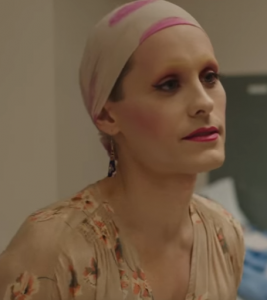
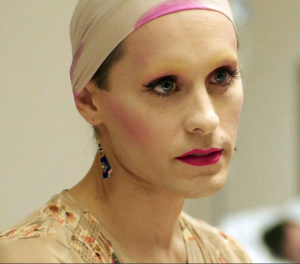
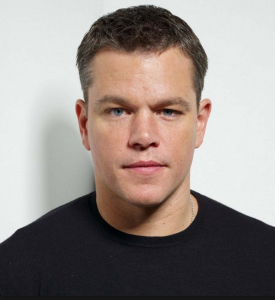
Suicide Squad’s Joker is not a cartoon from a DC comic. Instead, He is a Jared Leto, a carefully picked actor. It is important to note the associations that Leto carries with him. Although being known for looking like a twenty-first century Jesus, Leto is a rumored bisexual, and although that is a very different identity from that of being trans, it still falls under the category of queer, or rather not heteronormative. More importantly, Jared is known for his Golden Globe and Academy award performance as Rayon, a transgender dying of AIDS, in Dallas buyers’ club. Rayon is always in drag, focused more on her beauty and femininity than her life threatening disease. She is the trans that millennials know best and conforms to every trans stereotype imaginable. Jared’s association with Rayon cannot be overemphasized, as it is an identity that will now color ever performance he does. The casting directors of Suicide Squad are undoubtedly aware that they not only are casting Jared, but are also in a way casting Rayon.  Furthermore, Jared’s facial structure, although a male face, caries feminine traits. His narrower nose and thinner, sharper lower facial structure is far from the idealized masculine face as reported in The Morphometrics of “masculinity” in Human Faces which found that, “male faces with a higher masculinity attribution tended to have wider faces with a wider inter-orbital distance, a wider nose, thinner lips, and a larger, more rounded lower facial outline.” (Mitteroecker) This distinction is clear when comparing Jared’s more feminine face to that of Matt Damon’s masculine facial features below. It cannot be ignored that the new Joker is played by a man that is most associated with not being a man. In many respects Rayon is the prelude, of sorts, to Suicide Squad’s Joker. From her facial structure to hair to dress to makeup and everything in between.

 12

The appearance

345

The Joker’s appearance can be read as a distancing from the old Joker, and into a new Joker dressed in Drag. It must be noted that, “Modern transgender performance is most widely known through drag” and therefore when examining a cultural piece such as Suicide Squad any crossdressing or drag performance can be equated to being transgender. (Miller 42)

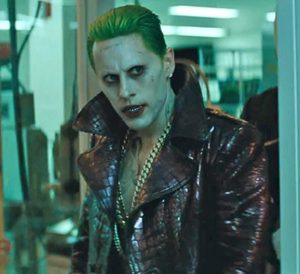
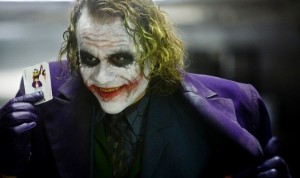
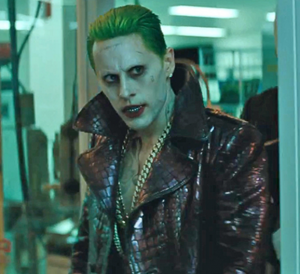
Notice his makeup, his clothing, and his hair as they are unlike any Joker’s that we have seen before. His lipstick is noticed first, in 2008 the Joker had red lipstick sloppily drawn across his face that covered literal scars he had cut into his cheeks, making him look especially villainous and evil, like he was wearing a mask. In contrast, the new Joker’s red lipstick appears to be carefully applied, like a woman at a ball. The new Joker’s eyeshadow is quite light and tasteful, sexualizing the eyes instead of demonizing them as the old Joker’s eyeshadow does. Finally, there is the matter of paleness that all Jokers have on account for being a clown. The 2008 Joker has cracks in his white foundation and other makeup clearly smudging around his face. It appears as though he did a poor job applying clown makeup. In sharp contrast, the new 2016 Joker’s foundation can almost be missed on account for how well it was put on. The appeared effort and cleanliness, as well as feminine manner that new Joker’s makeup is applied is easily relatable to the makeup of Rayon in her drag.  By making the two characters look so similar, the director is intentionally forcing you to picture the new Joker with any non-male person in mind, particularly Rayon.

Paying close attention to the new Joker’s hair reveals that it is much more similar to the style of Rayon than that of the 2008 Joker. In 2008, his hair is longer and is a faded disheveled green, falling in front of his face, whereas Suicide Squad’s Joker has well-kept slicked back hair. There are a few places that we can see this style of hair. One is in the early twentieth century where men often slicked back their hair as it was the popular style of the day, however, more likely (as this movie holds no other similarities to that time period) is that the Joker’s hair is slicked back because it is ready to be put up in a do rag, like the one we see on Rayon, or it is being prepared for a wig, as any short hair would have needed to be controlled and minimized to make the appearance of the wig natural.

In the final layer, the Joker’s famous purple jacket, we can see an important distinction between the two interpretations. In 2008, it was put over a green vest, dress shirt and tie. The three-piece outfit was dirty and too big, but nonetheless masculine, turning the joker into more of a twisted businessman than anything else. But, in 2016 we see no shirt, not tie and no vest. His jacket, now made out of alligator skin, a material largely associated with high feminine fashion, is shiny and unbuttoned with a popped collar and is much longer, going all the way to his shins, resembling something closer to a ballroom gown with too much cleavage than a three-piece businessman’s suit. Particularly noting that the Joker’s jacket almost always covers his nipples, but nonetheless shows a striking amount of cleavage, allows us to draw close analogy to the dress of Rayon as pictured below. This all is to say that the Joker is dressed in drag, complete with a gown and makeup only different from Rayon in the lack of brunette wig, which the Joker could never have and still fit the comic book picture that has existed for over 60 years.

 678

The Actions

910


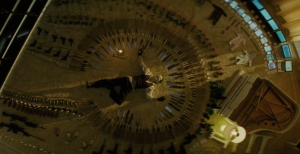
The masterstroke, and final peace to the puzzle that turns the Joker from male to transgender are actions. The clarifying scene is in what appears to be a penthouse living room. The scene is pictured above and shows the Joker lying in the middle of a circle with a hammer and lightbulb, surrounded by knives, roses and baby clothes.

The lightbulb and hammer go hand in hand to symbolize an idea or rather a desire for enlightenment facilitated by a tool that is the hammer. It is not the physical hammer that will achieve the enlightenment, but rather the idea that technology and tools are needed to achieve enlightenment.  The brilliance of this shot comes from the layers of items that surround the Joker. At the center, are the knives, which traditionally symbolize destruction, and in a movie where the Joker never uses knives as a weapon, their placement in this shot must be purely symbolic. The knives exist to destroy, or rather surgically cut away, the part of the Joker that restrains him from becoming transgender. In destroying that part of him, his penis, he can reach the next level of the circle, that of the roses. Roses are symbolic of love and in this case self-love of a physically transitioned Joker, because he has moved through the layer of knives to get to the roses. The roses complete the circle that really isn’t a circle, but rather a womb.  The womb having only one opening that leads out of the penthouse. The Joker’s exiting of the penthouse is therefore an exiting of the womb, a rebirth into a new physical state as well as mental state. Then there is the matter of what is outside of the womb, three baby outfits. The inclusion of these outfits only further solidifies the concept of rebirth into a new body. The joker has destroyed the part of him that he dislikes and in doing so is enlightened as he has found self-love in rebirth.

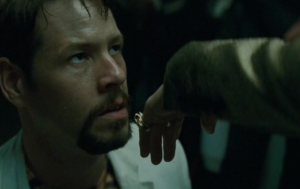
In the next scene, immediately after exiting of penthouse, the Joker takes on much more sexual, feminine, and queer characteristics. She enters the next scene purring at the man who is being interrogated. The Joker then presents her hand to be kissed. It is important to notice how she presents her hand, not as a fist, but rather like a queen or woman would present her hand to a man. By making the straight man kiss her hand the Joker, now fully transgendered, is asserting dominance over the heterosexual norm. This concept is completed when the Joker sits on the man’s lap, crotch to crotch and sexually growls again. Her dominance in this scene, although subtle, sets up a new power dynamic in the movie. It does so because the man who was being interrogated once held all the power over Harley Quinn and therefore, by the Jokers obsession of freeing her, the power over the Joker. The establishment of this power dynamic is completed in the final scene of the movie, where the Joker breaks into the jail that houses Harley Quinn and frees her, giving the Transgender the final move and final laugh.

Taken together these three elements create a new Joker that we have never seen before. We have a transgender villain that instead of being a villain is the hero that we root for, and in the end is the person with the most power. We see a movie that has redefined gender dynamics in a comic book world where men have historically ruled.

As a movie it is entertaining.

As a story it is revolutionary.


Written in the style of Jake Romm

Edited by Abby Lloyd


Sources

Miller, Jeremy Russel. “Crossdressing Cinema: An Analysis of Transgender Representation in Film.” PhD diss., Texas A&M University, 2012. Accessed December 13, 2016. http://oaktrust.library.tamu.edu/bitstream/handle/1969.1/ETD-TAMU-2012-08-11672/ MILLER-DISSERTATION.pdf.

Mitteroecker, Philipp. “The Morphometrics of “Masculinity” in Human Faces.” PLOS one, February 11, 2015. http://journals.plos.org/plosone/article?id=10.1371/journal.pone.0118374.

Ledger, Heath. Dark Night. Directed by Christopher Nolan. DC entertainment, 2008.

Leto, Jared. Suicide Squad. Directed by David Ayer. DC entertainment, 2016.

Leto, Jared. Dallas Buyers Club. Directed by Jean-Marc Vallee. Voltage Pictures, 2013.


The Six Second Carnival

Tristan Colaizzi


Six seconds isn’t a lot of time. It takes about six seconds to tie your shoe or unlock your door, but six seconds was the magic length that made Vine, a social media powerhouse, engage over 40 million users. The concept behind the app is users post six second videos that repeat on an endless loop, allowing users to re-watch Vines, over and over again without having to move a finger. Vine, under Twitter’s ownership, does have similarities to Facebook and Instagram, in its user base and popularity, but its unique six second platform is what allowed for Vine to break into the highly competitive market in 2013. Vine serves as a platform for raunchy, childish, low-blow carnivalesque content, while reshaping the internet in many respects by creating countless fads, which grabbed the attention of millions, such as What Are Those? Smack Cam, and Damn Daniel, to name a few. It changed how millions of people interact with each other and is, by Bakhtinian standards, a modern carnival of epic proportions.

The first logical question to ask when examining Vine is why six seconds was chosen. It turns out that is a pretty easy question to answer. In an interview that aired on NPR’s All Things Considered, Vine creator, Dom Hoffman, admitted that creators had toyed with the idea of ten seconds and five seconds which turned out to be too long or short respectively. (Sydell) They decided on six seconds because it “allowed for the aesthetic feel the creators wanted but preserved the quickness they wanted to promise users.” (Sydell) After deciding on six seconds and realizing that the videos “end[ed] very quickly and [] felt anti-climactic,” Hoffman added in the unique endless looping feature, giving birth to a non-stop, hectic, carnivalesque atmosphere that all vines have. (Sydell) But even though six seconds was chosen because it felt right to the creators, why is it the formula that became so popular? The answer is in our attention. In today’s world and especially online everything happens quicker and more seamlessly, so to grab someone’s attention can be difficult and to keep it is in another challenge entirely. Getting someone’s attention is more on the users of Vine than anything else. If your content is interesting, people are going to look at what you have to say. However, content is not exclusive to Vine, the same people can use Facebook or Instagram to spread their ideas too, and they do. What is unique to Vine is how the app keeps your attention. Psychologists have created many different models of memory over the last century that try to explain how we pay attention and store memories. One of these models is the “Multi-Store Model,” by Richard Atkinson and Richard Shiffrin. The model published in 1968 is relevant because it gives time limits for the three classes of memory; sensory register (several hundred milliseconds), short-term store (30 seconds or less), and long-term store (indefinite). What Vine does, different from Instagram and Facebook, is their platform exists only in short-term store, more commonly known as working memory. (Atkinson) What this allows for is the user to view many videos in a very short period of time, paying attention to the video in its entirety. In a perfect carnival there is mixing of people and ideas, so much mixing and so much happening all at the same time that it becomes chaotic and crazed. A Vine feed is the same thing, an infinite number of diverse six second videos mixing one after the other in one chaotic all containing app. It isn’t possible to become bogged down in one vine for half an hour like can happen with a video on Facebook, instead by keeping the user’s attention in short-term store she is constantly inundated with new, different, exciting information just like in a Bakhtinian carnival.

This carnival is not exclusive either. For as long as it has been around, Vine has been absolutely free to download from the Apple app store and later free on Android as well. Any smartphone has a camera, and almost everyone, regardless of class has a smartphone. Given it may not be the newest version with the best camera, but you don’t need a good camera to use vine. In fact, in an all-time greatest Vines compilation on YouTube the vast majority of the videos are blurry, with muffled audio. (Best Vines Of All Times) This all is to say that Vine is accessible to all, and it can be seen in its diverse user base.

The modern carnival’s platform may be the structure of the app, but it is the content on Vine that makes it a carnival. The carnival as Bakhtin put it is a “suspension of all hierarchical rank, privileges, norms.” (Bakhtin 87) The best content to look at is the content that has been seen by the most people on Vine, therefore the users that have the most loops played of their vines. One of those people is Matthew Espinosa, a kid I grew up with.

Matthew Espinosa is a nineteen-year-old from Northern Virginia who attended Bishop Ireton High-School where he played football and lacrosse. He comes from a middle class family living in the suburbs of DC. Matthew also has over six million followers on Vine and has now starred in his own movie. But when Matthew was 15, before Vine landed itself in every teenager’s phone across America, he was just another kid in my neighborhood. He went to the same elementary school, and played in the same sports leagues as every kid in our town. Matthew is a normal kid, and he became one of the most famous Viners of all time. Vine is not an app whose content is dominated by famous celebrities or political figures, in fact only one person on the list of top fifty Viners was previously famous. (Rankzoo) The other forty-nine were kids just like Matthew who millions and millions of people loved for their vines. Matthew puts it perfectly in one of his vines where he says, “I’m not famous, I’m not in movies, TV shows, magazines, I don’t have paparazzi, I’m just a kid with a camera and a Vine account,” that was before he reached six million followers. Matthew’s vines were for the average kid, not a bloating of an ideal to live up to. Matthew and Viners alike brought the carnival down to the people, they didn’t hold it above their heads. One example of this common vine was one where Matthew recounts a childhood fear, “When you’re in line at the grocery store and your mom leaves you; She’s coming I swear, I don’t know how to use a credit card [starts crying], [pulls out phone] mom I need you! Hurry up! [then more exaggerated tears]” (Huge Matthew Espinosa 15:50) In another he exaggerates the fearful moment we have all had while dreaming, “Am I the only one that literally has a heart attack when you’re like half sleeping and half awake, and you trip in your dream and you wake up like, like crying and you’re like Uggghmmeee [starts crying in tears]” (Huge Matthew Espinosa 16:30) Across most of his vines Matthew over-dramatizes everything he says or does. In doing so he embarrasses and makes a fool of himself, by screaming and crying in a real grocery or poking fun at the childish terror he sometimes feels while dreaming. But, in Vine, just like in Bakhtin’s carnival, it is precisely the suspension of seriousness and formality that qualifies something as a Carnival. Bakhtin notes that “in reality, it is life itself, but shaped according to a certain pattern of play.” (Bakhtin 86) The vines are real, they do exist in reality, but under their own rules.

Matthew’s Vines, although carnivalesque, don’t entirely show a dissolution of social boundaries. But we can see this in the most famous Viner of all time, Andrew B. Bachelor. Unlike Matthew who comes from a white middle class family, Andrew, better known as King Bach is an American immigrant, initially born in Canada and raised by two Jamaican immigrants. Both Bach and Matthew were unknown before Vines release in 2013, and now sit with a collective 22 million followers. (Rankzoo) Accompanying them on the top are Lele Pons, and Brittany Furlan, two female Viners. The diversity of race, sex, and economic status of the most popular Viners shows the dissolution of social boundaries that the carnival calls for, unlike the predominantly rich, white stars of Hollywood.  Moreover, if Vine truly is a dissolution of social boundaries, then we should see social interactions of people with wildly varying social backgrounds. The most prominent Viners have numerously made appearances in each other’s Vines, not as an outsider sitting in one of Ellen’s white chairs, but as an integral member of the Vine. For example, King Bach and Brittany Furlan often play a couple in many of their shared Vines. They partake in the raunchy unfiltered chaos that is Vine’s carnival seamlessly together, and they are only able to do so because of the dissolution of social boundaries that exists. It is precisely this type of qualification that makes Vine a carnival under Bakhtin’s classification.

King Bach’s Vines show what Bakhtin calls a “marked suspension of all hierarchical rank, privileges, norms.” (Bakhtin 87) Many of King Bach’s vines do this through racial play with police. He takes the power structure in America and reverses it. Bach, just like Matthew often does an exaggeration of typical life, seen in one of his videos where he gets pulled over by a policeman who then frames him with alcohol and a gun, because he is black. (King Bach Police Vine) By making this Vine, Bach is calling out the injustices in the ranks and norms of our society. His voice gets heard in Vine, not the voice of the policeman that is quoted in Sundays newspaper. He is turning society upside down by making his, economically and socially depressed voice, heard over the policeman’s. Bach goes from being the town peasant to being the King. This theme continues over to another one of his Vines where Bach is pulled over by an officer who asks him “do you have any idea how fast you were going?” to which Bach responds, “according to my snapchat selfie, 24 miles per hour, ya bitchhhhhh.” (Ultimate King Bach 5:55) In real life if Andrew B. Bachelor said this to a police officer, not only would he be ticketed and arrested, but risks even being killed. King Bach’s ability to do something so unrealistic and backwards from real life, yet playfully humorous goes to show how Vine is a modern carnival. Vine is a place where diverse people can disregard the rules and hierarchies that normally govern them, and in an endless six seconds of raunchy unfiltered chaos flip the rules of society.

Unlike a Mardi Gras carnival Vine was created to turn a profit. This requires Vine, just like Facebook and Instagram to have advertisements. But unlike Facebook and Instagram, Vine’s advertisements do not compromise its ability to be a Carnival. If we look at advertisements on Facebook they often surround the user’s news feed. On Instagram advertisements are placed into a user’s feed, often looking just like a post your friend would make. But on Vine advertising is different. For example, if you work in marketing for Nike and you want to advertise a new shoe that is coming out, on Instagram you would pay to post your advertisement on a million feeds and it would come up as the users scrolled through. On Vine, however, you pay them to advertise the new shoe, but they don’t just throw it into users feeds. What Vine does is they reach out to a famous Viner who has followers that are likely to buy Nike, such as King Bach, and he would make a vine where he says “Check out the new Nike shoes I just got, they aren’t out yet, my friend hooked me up, but you can pick them up on December 3rd.” But King Bach doesn’t have to make that Vine if he doesn’t want to. If he decides that he is against Nike for some reason Vine cannot make him post a video. They cannot force content into the users’ phones like Facebook and Instagram do. In other words, the power of the carnival is still in the hands of the people who populate it. The lack of control on other social media platforms is striking. On Facebook and Instagram you might think that by having ads surrounding your feed, or mixed into it, doesn’t affect what you are consuming, but psychology says otherwise. These ads cannot be weeded out or ignored because of the way that all humans pay attention to what is in front of them. As it is noted in Attention by Alan R. White, “when one attends to X, e.g [Facebook or Instagram], although there must be some description of X, e.g. as [Facebook or Instagram], under which it is true that one is aware of X or realizes that it is X, yet it is not merely possible but very common that one does not realize that in paying attention to X one is paying attention to Y” e.g an advertisement. (White 1) White is saying that in being focused on your feed on Facebook or Instagram you are, by default, subconsciously playing attention to the ads that surround it.

So it seems like Vine has struck gold. It has provided 40 million users with a modern version of Bakhtin’s carnival. In all controllable aspects of the app that is undoubtedly true, but that doesn’t mean it’s possible. A little under a month ago Twitter announced that after five quarters of loss and firing nine percent of their employees they would be shutting down Vine. The carnival was no longer profitable, at no fault of its own, and we cannot blame Twitter for shutting it down. In fact, Vine’s closure says nothing about the efficacy of the app. It says something about the industry that the carnival had to exist in. An industry that values profit over the carnival.


Works Cited

Atkinson, Richard C., and Richard M. Shiffrin. “STORAGE AND RETRIEVAL PROCESSES IN LONG-TERM

Bakhtin, Mikhail. Rabelais and His World. Compiled by Stephen Duncombe, London, Verso, 2002.

“Best Vines Of All Times (Best Compilation) (@VineCreative).” Youtube, www.youtube.com/watch?v=k1MLpsU7QWs. Accessed 17 Nov. 2016.

“Huge Matthew Espinosa Vine Compilation – All Matthew Espinosa Vines (212 Vines) – BEST VIN.”Youtube, 23 Aug. 2014, www.youtube.com/watch?v=e0qbKoq-zjI. Accessed 17 Nov. 2016.

“King Bach Police Vine.” YouTube, www.youtube.com/watch?v=Na88ilPgikI. Accessed 17 Nov. 2016.

MEMORY.” Psychological Review, vol. 76, no. 2, 1969, pp. 179-93. APA PsycNET, psycnet.apa.org/ journals/rev/76/2/179/. Accessed 16 Nov. 2016.

Sydell, Laura. “How Vine Settled on 6 Seconds.” NPR, 20 Aug. 2013, www.npr.org/sections/ alltechconsidered/2013/08/20/213846816/how-vine-settled-on-6-seconds. Accessed 16 Nov. 2016.

“Ultimate King Bach Vine Compilation with Titles – All KingBach Vines 2016.” Youtube, 2016,  www.youtube.com/watch?v=pPrDK_olPuM. Accessed 17 Nov. 2016.

“Vine Users Ranked in the Top 1000.” Rankzoo, rankzoo.com/vine_users?page=1. Accessed 16 Nov. 2016.

White, Alan R. Attention. Oxford, Basil Blackwell, 1964.

Finding Ideology

Finding Ideology

Tristan Colaizzi

Have you ever seen Finding Nemo? Were you ecstatic to hear that Finding Dory was hitting theaters? Do you have more lines memorized from The Emperor’s New Groove than you do of To kill a Mockingbird? So does our entire generation. When I was a kid Finding Nemo was the first movie that I saw in theaters, and after that I watched countless Disney movies from Lelo and Stitch, to Ratatouille, to The Jungle Book. From those movies I could quote countless lines, sing songs by heart, and reenact many scenes without a second thought, but if you told me to quote To Kill a Mockingbird I would be at a loss for words. So my question is, what shaped me more? What has molded my generation into who we are today?

To answer that question we must look at what actually shapes a child. In a study done in 1962 by Albert Bandura, it was found that a child is significantly more likely to change their moral judgment if presented with a model that displayed a different moral judgment from their own. In other words children are shaped by seeing other individuals act and react with the world. But how does that relate to Finding nemo? It does in one very important way: Disney is the model that children grow up seeing. It is the model that has shaped an entire generation almost every day of our lives through movies like Finding Nemo. One might say, yes we did watch those movies as children, but we also went to school and spent time with our parents, and I can’t refute that. What I can say is that in all the time you spent in school, were you ever exposed to as many stories, with as many conflicts and as many solutions as you were with Disney? In an article released in 2015 from BBC it was found that children spend on average six and a half hours in front of a screen every day. School is usually seven hours a day, five days a week, so from a purely mathematical perspective children really do spend more time on screens. I understand that this time is not all spent watching Disney movies, but they still are a big part of a child’s experience. Disney simply gave us as children more examples of how people interact in the world than we could have ever received from sitting in school reading To Kill a Mockingbird, and the stories that we saw from Disney were far more memorable than those from school. All this is to say that, Disney has created an ideology that we all follow, and that ideology screams throughout Finding Nemo.

The first question that we must answer in order to understand the Disney Ideology is who is the audience in Finding Nemo? Now this may seem like an easy question to answer, that it is simply whomever is watching the movie, and that is true, in the sense of the physical person sitting on the other side of the screen, but the audience is actually created by Disney. Finding Nemo for those who are not familiar follows Marlin, a clownfish, on his quest across the ocean to find his son Nemo. Not to spoil the movie, but Marlin with some help from his new amnesic friend, Dory, ends up Finding Nemo. In the opening scene, Marlin is enamored by the beautiful middle class country style home, or rather anemone, he has obtained for his wife Coral, so much so that he exclaims “a fish can breathe out here.”  By exclaiming “breathe” Disney does two things: first it asserts small coral fish as humans, and second, it names Marlin’s family as a middle class suburban family living a comfortable lifestyle. Not convinced? Well Coral then points out how nice the neighborhood is, as we see adolescent fish swimming around playing joyfully together. If you still don’t get it, watch the movie, or at least the opening scene) From this opening scene we know, and any child watching would know, that Marlin is the “good guy”, the fish whose eyes we will watch the movie through, and whose emotions we will side with. The thing is, Marlin is the white middle class American, and that is the audience that Disney has created, regardless of who is literally watching the movie. Now some of you I’m sure are thinking, Hell no, you can’t assume that he is white. That’s a fair point until you look at how other fish are portrayed.

The first fish we see that is not from the coral reef is a barracuda. He is menacing, much bigger and much darker than the bright clown fish. He approaches from the ocean with a growling noise and a sharp set of teeth that snap in Marlin’s face, before he kills Coral and all but one of Marlin’s children, Nemo. Hold on to the snapping teeth, we will come back to it. Now it might seem counterintuitive, but I am going to suggest that the open ocean is representative of the ghetto in a city. When I hear the word ghetto the first thing that comes to mind is a poorly lit street, with one light flickering on and off on a dirty block of close quartered dilapidated townhouses. The ocean is obviously the opposite in its grand size, but it fits the bill everywhere else. It is much darker and clearly dirtier in the clarity of water as depicted by Disney. Perhaps the most key thing to note is where it is geographically compared to the coral reef. There exists a clear separation between the two, and a physical barrier called the “drop off” separates the unknown dangerous ocean from the safe coral reef. The ocean, or ghetto, is literally a drop off in quality of life compared to the coral reef, or suburbia. It is where the “other” lives. Just like in real life the individuals that stereotypically live in the ghetto are physically darker and perceived as bigger and more dangerous.

So what did Finding Nemo teach you and me to think, or rather what political agenda is Disney pushing? I’m not going to answer that yet because we must first further our understanding of the “other” beyond the fish on the other side of the “drop off.” This may seem to contradict itself at first but bear with me. The second type of “other” in Finding Nemo are humans. Their foreignness is all in the subtleties in how they are presented. The first human we see rises from below, wearing full scuba diving gear. His face is unrecognizable, looking more like a green and black monster than a person at all. There is even ominous music to accompany his entrance and therefore perception as evil and powerful. The Humans come in and take whatever they want from the reef, including Nemo, by overpowering all of the fish. The question therefore is what do they represent? To answer that I’ll turn our attention to the next time humans enter the movie, a dentist office. I don’t know about you but pretty much everyone I have met hates the dentist office, if you disagree then you’re either insane or have never been to the dentist, in which case, Go! Dentist offices are simply a horrible place to be, they don’t make you healthy like a doctor, but they go in and drill your gums to pieces, what a perfect profession for Disney to choose for their villain to turn humans from siding with our own species, to siding with a clownfish. In short, we hate this powerful evil massive monster that takes what he wants from the coral reef fish, the middle class, but that is not a political agenda Disney is pushing, because it’s not really a political agenda. What Disney is pushing is a Marxist revolution. That may be a big jump from us not liking the dentist, but let me fill in the gap. To do so I will take us to the end of the movie, once Nemo has been found by Marlin and they are all ready to go home. At this moment a fishing boat, trawling with a massive net to catch a school of grouper, scoops up Dory, Marlin and Nemo. Nemo is able to unite all the fish in the net, who are approaching death to all swim down and break free of the net by snapping it. To me that sounds like a revolution, but what makes it a Marxist revolution? Well if you think about what the humans represent, a powerful machine that takes from the middle class, then you can see how revolting against their industry by releasing fish, food, back into the ocean is really a massive redistribution of wealth, or in this case life. If that doesn’t scream Marxist revolution, I don’t know what does. Look, I know someone is thinking that it’s just a commentary on the environmental harm caused by trawling, and maybe it is, but you cannot deny that there is a political agenda being pushed here, to revolt against the big powerful monsters that take everything from the middle class American.

I told you we would come back to the snapping teeth so here we go. There are three different categories of living creatures in Finding Nemo: Good fish like Marlin, who we categorized as middle class, menacing snapping fish, the first “other,” which I think we can call minorities, and humans, who we just classified as the government or second “other.” Let me clarify the first “other” with two additional instances on why we can call this group minorities, and what political agenda Finding Nemo is trying to push about them. The first instance is a convoluted interaction when Marlin runs into Bruce the shark. Just like the barracuda Bruce introduces himself with an aggressive snap of his teeth after coming onto the screen with a big bloody smile. Bruce fills every stereotype of a minority from the ghetto in his first few seconds on the screen. He is physically darker, clearly dirtier and so on, but then he says ”fish are friends not food.” Bruce befriends Marlin and Dory, which would argue that there is hope in the minority class. That there are good individuals, who break their stereotypes. I urge you not to jump too quickly to that conclusion, because if you continue to watch this scene play out, Bruce smells Dory’s blood and reverts back to his stereotypical behavior of killing. The setting of the phrase “fish are friends not food” is as important as the phrase itself. The sharks are in an Alcoholics Anonymous type meeting, which is quite interesting because it suggests that they are trying to get over an addiction to killing fish. By framing the sharks this way Disney is suggesting that the actions of minorities are a twisted addiction they should try to get over. The dimensions of this addiction doesn’t stop there. If the sharks don’t kill fish, then they are killing nothing, meaning they are eating nothing. If the sharks are not eating anything then they are dying. So if Disney is pushing any agenda it is that minorities are fed by harming the middle class.

The second place where Disney’s agenda becomes clearer is in the following scene. If the Sharks weren’t bad enough Marlin and Dory must dive deep into the darkness of a trench, where they confront a light. The light is like a flickering streetlight in the ghetto. It lights up part of the unknown darkness that Marlin and Dory have found themselves in, but it doesn’t do enough to show the whole picture. In fact the light is the antenna like appendage sticking out of an angler fish, who uses it to draw fish in and then kill them with one bite from their even more menacing set of teeth. Now just apply that image to the ghetto and I think you get the point that I am trying to make, this movie is not about a dad trying to rescue his son. It’s about Disney pushing a political agenda for the middle class white American to continue to fear minorities.

To explain how all of this translates to Finding Nemo and Disney at large creating the ideology of our generation I really don’t think I need to do that much. On the surface Finding Nemo really is just a fun family movie, it has some nice morals and a little bit of bathroom humor, who wouldn’t want to watch it. But Finding Nemo really is a piece of political propaganda under a seemingly unpolitical family movie façade, and that’s why it is successful. No child watches this movie and thinks, huh now I know to be afraid of minorities and revolt against the government. But it is the ideology that they are infused with.  It is the generation who grew up watching Finding Nemo and Disney who might elect Donald Trump as President, a racist bigot who constantly preys on minorities. It is our generation who almost gave Bernie Sanders the nomination so he could radically redistribute wealth away from the rich and into the hands of us, the middle class. It is not a stretch, all you have to do is look up to see that we internalized the political agenda that Disney gave us. We accepted their ideology.

Althusser, Louis. Ideology and Ideological State Apparatuses (Notes towards and Investigation)     (La Pensée, 1970. English Translation: Lenin and Philosophy and Other Essays, Monthly    Review Press 1971)

Bandura, Albert. Social Learning through Imitation. (Lincoln, NE: University of Nebraska Press,            1962)

Wakefield, Jane. Children spend six hours or more a day on screens (BBC News, March 27th         2015) http://www.bbc.com/news/technology-32067158

Disney. Finding Nemo (Disney, Pixar. 2003) http://www.imdb.com/title/tt0266543/