Author Archives: Jacob Pesikoff

As He Stood Rapping

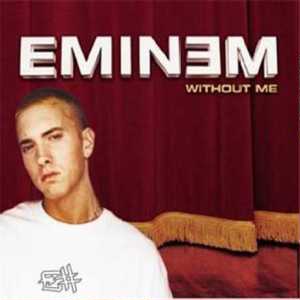
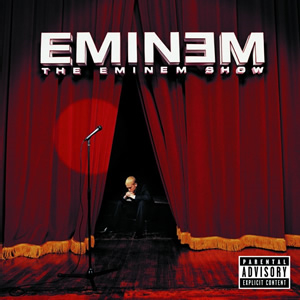
The song came out of the album, following the others through its production. It made its way half a decade later than the first of them, but it fared better than the first ever could. “Without Me” came right from his mouth to the market with not even than three months in between. The song is an introduction, three verses, and a chorus throughout all of which there is a beat that runs so cleanly it gets inside the mind of everyone who tries to give it a listen. Eminem’s song stands back from the rest in its desire for change, trying to be different, hitched to the idea that it can make a change in this world. “Without Me,” like all that came before it, wants to rebel against a system, but what system at first is a mystery. In its creation and content inside, “Without Me” follows the rap, rap, rap, of the song and the beat while all the while saying it the opposite.
Everything can be reduced to the timing in the analysis of its creation. Eminem put “Without Me” into the world right when he finished with his production of 8 Mile, which he created to honor none other than his own story. All the production came intertwined with his story in a movie, a movie about himself no less. Whatever it is, announcing “Guess who’s back/ back again/ Shady’s back/ tell a friend” sure has a nice egotistical ring to it. If that man were honestly trying to break some kind of system, he would surely not announce it with the fullest intent of getting caught, about which he does not stop bragging. All while announcing his intentions in his actions by making a movie, Eminem surely could not be rebelling in earnest.
eminem_-_without_me_cd_cover
Onto the structure of the song, something seems a bit out of touch the way he tries to cram words together into a pattern that he can make fit the message. All the rhymes seem complicated in a way that shows off and provides some form of inaccessibility to whomever tries to emulate the style. All the words come together in a pattern that flows like a stream but is as easy to figure out as thick mud. The rhymes and rhythms take on lives of their own as they twist and turn and ebb and flow through a song on top of, what seems at first, seems to be a simple background beat that gets wildy more complicated the more it is examined. A man trying to rebel and start his movement would keep things simple, but this one cannot be just a regular person. He has to be an icon. Whatever attitude of rebellion he tries to claim goes whish, whish, whish right out the door with those lyrics all strung together in their unnaturally neat and unnaturally tidy order. Every rhyme and every word in it is too complicated to be simple.
All the ways the words come together comes with the words themselves, organized into three not-so-neat verses and a chorus desperate to carry meaning.
The first verse of “Without Me” enters rebellious, strong, and willing to incite anger. A violent alter ego named Slim Shady takes control of the words in his attempt to return from a limbo land between albums and between influences. Shady insults the then-Vice President, all the while screaming about his heart problems and his wife; the words desperately trying to take on insubordinate lives of their own. Even while Eminem seemed to know he was making something for the mainstream, Slim Shady insists on being a nonconformist with his claims that he is “on the rag and ovulating.” Right at the end of the verse the words come together to threaten to take action against the Federal Communications Commission, immediately and harshly. This piece of music tries to intimidate the mainstream while actually being a part of it, the words ending while perpetually lingering.
The song then turns to the second verse after it makes its way through the chorus. Slim Shady or whoever is narrating stops his cause of actively rebelling with his self-conscious incitements of anger to shift over to a mockery of the rebellion he has just been trying to emulate. The words narrate a child, one who is “embarrassed” his parents still subscribe to that old-time rebellion and “listen to Elvis.” The words go on to tell a story of watered-down rebellion, the kind that those who are the mainstream continue to embrace. How bad it is to be a “rebel” when everyone is buying millions of copies of a song and providing a nameless man millions of dollars in profit. At the end of the second verse, the story goes to a line with the illuminating power needed to analyze the song. After that line the song gets easier, more understandable. The narrator offers his “ten cents, [his] two cents is free/ a nuisance, who sent for me?” The first half of the line deals with money and advice, advice and money. The advice is to get money somehow. Earn a ticket out is the advice. The second half provides the attitude toward rebellion that Slim Shady takes to extreme in the first verse. The rebellion is desired and wanted, feeding on consumers to make it happen, waiting for someone to buy the song and embrace the thinned version of rebellion it tries so hard to present.
The rhyme structure and the lyrics all lead down a path toward a fake revolution that is not one but pretends to be. No real rebel would come within a mile of “Without Me” and its central message, but the song tries to be devilish and fool listeners into thinking some would. Rebellion has become an official aesthetic of consumer society. The ones who are against consuming and consumerism are the spokespeople for it. According to some psychologists, rebellion against a perceived authority in this fashion “is really an act of dependency” (Pickhardt). “Without Me” and its claims to be rebellious are fictitious declarations stemming from consumerism acknowledged by the end of the song in its final verses.
In the 1950s, a theorist named Richard Hoggart published The Uses Of Literacy in which he argues revolution is a commodity with which to sell consumerist cultural products. Watered-down rebellion is thickened blood of mass-produced culture. 1) According to Hoggart, culture-producing corporations take money. 2) They drain the actual revolutionary spirit. 3) They replace it with fake cries for revolution. 4) The new fake revolution enters the marketplace masquerading as what it used to be. 5) People like the fake revolution and succumb to it. 6) Except. 7) Not all people are stupid. 8) Some people can deal with stress. 9) Eminem is not stupid and can deal with stress. 10) “Without Me” criticizes the fake revolution. 11) So the fake revolution does not go unnoticed. 12) Fake rebellion sells culture. 13) It weirdly makes sense.
Over thirty years after Hoggart wrote The Uses of Literacy, Dave Marsh, a song critic, published The Heart of Rock and Soul in which he analyses songs for their components. Everything from the artist to the album to the beat to the lyrics to the remakes to the general influence of a song is something for Marsh to consider as he ranks which songs are the best and which ones deserve to bear the honor of being one of the one thousand and one most influential songs the world has so far seen. Songs that cross racial lines are often good as far as Marsh is concerned for the purposes of his list. The 1950s was arguably the first time that white Americans created culture including songs with influences from other groups instead of trying to erase the culture and styles of people previously deemed inferior. Songs since the 1950s are Marsh’s study, and many of them are good. “Without Me” is a song by a white American written well after the 1950s.
the_eminem_show
“Without Me” has revolution against the old like many songs. The first verse comes from an angry alter-ego, its voice forming words that clash with the notions of control, of regulation, of restricting what gets played by radios or people’s mouths. The vice president and his wife are subjects for derision and anger, venting, screaming, protesting. The system almost buckles crack, crack, crack as it is under attack.
What “Without Me” provides is an acknowledgement of the co opted rebellion that forms its industry. The narrator becomes less hostile and acknowledges the new form of culturally allowable rebellion that has taken hold of the industry that the first verse laments. The difference between the old and the new, the actual rebellion and the sanctioned form, become apparent in the words of the song as with the song itself. Rap is not the rebellion it used to be; is has had a “tremendous influence on mainstream” (Blanchard). “Without Me” shows the issues presented by mass industrial rebellion to be too complex, rebellion industry some could call it.
Rebellion is no longer the act of rebellion it used to be but instead a central aesthetic of a consumer society. Opponents of the system are now its controllers and ideologues. “Without Me” starts with rebellion, if rebellion ever was there, then shifts to mocking the rebellion it proposed. In so many ways, Slim Shady is the definition of anti something or rebelling against whatever. Loud, strong, aggressive, insouciant. In so many other ways, though, Slim Shady is the opposite. Sanctioned, permissioned, mainstream, warranted. All of Slim Shady or Eminem’s “lawsuits are settled.” He has no more issues with society or consumer culture in the way it twists him or them into the image of defiance it so desperately wants to convey. At least he was smart enough to realize what was happening. At least he knew that whatever watered-down form of countering something he produced was what listeners wanted to hear. The FCC may have tried to ban him, but he got airplay nonetheless. Marsh knew it. Hoggart knew it. Apparently the real Slim Shady knew it too.
The song is a rabbit.
The Delight of Good Times

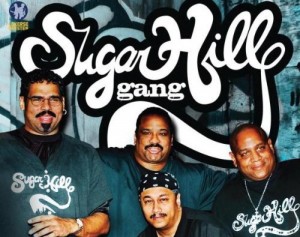
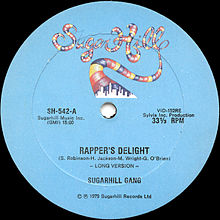
At the end of June, 1979, the band Chic released their song “Good Times.” “Good Times” has many of the hallmarks of a 1970s hit with its disco sound and its danceable groove. “Good Times” quickly became a popular song in its own right, but one of its major claims to fame is that it was sampled, meaning its beat was used for another song. Only three months after the public release of “Good Times,” a group known as the Sugarhill Gang released “Rapper’s Delight,” which used the underlying beat from “Good Times.” Even with its sample of “Good Times,” “Rapper’s Delight” is a different type of song. “Raper’s Delight” is not disco like “Good Times;” it is rap. Rap was only just being created in the 1970s, and “Rapper’s Delight” was the harbinger of this new genre. “Rapper’s Delight,” in many of its facets ranging from its lyrics to its musical style to its methods of production and more, had major characteristics that could be considered quite ordinary.
A major aspect of rap in general is its history. Rap began in the South Bronx in New York City as disk jockeys talking, often in rhyme, while introducing upcoming songs and while playing their tunes (Blanchard). The South Bronx in New York in the 1970s was an extremely poor area. This style of music was created by people who held low socioeconomic status and were often African-American. Rap began as a movement of people who were not elite. They were the opposite.
“Rapper’s Delight” was no exception to this rule. The members of the Sugarhill Gang were not from privileged backgrounds. They were lower class artists from the New York area who had not grown up in especially well-to-do households (North Jersey). Englewood, New Jersey, the hometown of the original members, is far from a wealthy area (Factfinder). The artists of the first commercially successful song of what would blossom into a whole genre were not of any special or important social class or group. They were regular people. They were ordinary.

93e12cf28c9b458324a9dbe925b6e7e8-1000x790x1
The humble origins of “Rapper’s Delight” did not hinder its importance. The song was hugely influential in starting the whole genre of rap and making rap mainstream (Blanchard). “Rapper’s Delight” was produced by the small label Sugarhill Records, and the following decades saw many more record labels and productions companies sign rap artists. Rap became a major part of American culture after the releases of “Rapper’s Delight” and other songs. What started as poor disk jockeys in the South Bronx met a trio from a town not far away to start a major facet of culture. Before the commercial success of “Rapper’s Delight,” rap and the artists who made it were just regular people.
Enough about the production and background of a song; the most important part is the song itself.
Musically, “Rapper’s Delight” is somewhat simple. The underlying beat is not all that complicated; it is in common time, a generally easy and adaptable time signature to use. It is also somewhat repetitive. In addition to having the song in an easily workable time signature, the writers of “Rapper’s Delight” had a key advantage when writing the music: they did not write the music. Like its inspirations, “Rapper’s Delight” was a song that used a pre existing beat. In the case of “Rapper’s Delight, the beat was a simple baseline with accompanying chords. Disk jockeys by, definition of what they did, used beats and songs they did not write; they played and played with the songs they had on their tables. The beat itself was ordinary to begin with, and artists who were talented or famous for creating popular disco beats never worked even a minute as writers for the Sugarhill Gang. What better way to start a mainstream genre than by ripping a record?
The most influential and defining feature of “Rapper’s Delight” are its lyrics. The way in which these lyrics are presented is simple. The lyrics are mostly presented as rhyming couplets in a simple AABBCC rhyme scheme that continues throughout the song. For example, the first rapper to sing raps, “See I am Wonder Mike and I like to say hello/ To the black, to the white, the red, and the brown the purple and yellow” with the “ow sound at the end of both lines. The song is longer than many at around seven minutes but it is still mostly comprised of a series of rhyming pairs of lines. The way in the which the lyrics are presented is not complicated or hard to understand. It is regular, ordinary.
Not just the way in which the lyrics are presented but the lyrics themselves are simple and commonplace. Early in the “Rapper’s Delight”, the verse “Now what you hear is not a test/ I’m rappin to the beat/ And me, the groove, and my friends/ Are gonna try to move your feet” introduces what the song sets out to do. Rap was a new genre that needed an explanation. The lyrics then discuss topics such as women, “the ladies fight for my delight” and then go to even more average topics. The lyrics “Holiday Inn” are stressed at one point. Saying “Holiday Inn” is one of the song’s largest indications of being average. The song then discusses superheroes with “I said, ‘By the way, baby, what’s your name?/’ Said, ‘I go by name of Lois Lane/ And you could be my boyfriend, you surely can,/ Just let me quit my boyfriend called Superman.’” Toward the end of the song, The Sugarhill Gang inserts a verse about going to a friend’s house where the food is bad. That’s right, the song that brought a new genre into the mainstream mentally brought viewers to a land where “the stinky food’s steamin’, your mind starts to dreamin’/ Of the moment that it’s time to leave/ And then you look at your plate and your chicken’s slowly rottin’/ Into something that looks like cheese.” The lyrics of “Rapper’s Delight” could not signal any more than they already do that this song does not come from a wealthy or especially privileged place. Part of the song comes instead from a place of wanting something good to eat. The topics of this song are all regular conversation. The lyrics of this song comes from a place of being regular, a place of being ordinary.
The general theme here is that “Rapper’s Delight” was born of the ordinary. From its lyrics to its melody to its production “Rapper’s Delight” was made of the regular, ordinary aspects of life. No special or privileged social class started the process of bringing rap music into the mainstream American conscious. This part of American life was not elite or even upper-middle class. It was Englewood, New Jersey and South Bronx, New York coming together to make a song that made a genre that made an industry.
In the late 1950s and early 1960s, the theorist Raymond Williams wrote about what constitutes culture. He argued that the best facets of culture are generally created by people he describes as “ordinary” (Williams). Williams argues that looking for uninfluenced groups in remote regions such as the Appalachian Mountains is not necessary. Instead, culture can be created by people in urban areas so long as they are of the “ordinary” social class as opposed to the educated elite or upper-middle class. Williams published his essays more than a decade before the release of “Rapper’s Delight,” but he was correct in how “Rapper’s Delight” and rap in general would come into being. He knew how new and influential facets of culture would be created. He knew what would form them, what would shape them. A group of ordinary people sampled a song and made it into their own creation. They took something made by people traditionally thought of as professional musicians and created something out of it. A style of music started in a poverty stricken area and became a mainstream national sensation.
“Rapper’s Delight” is ordinary in that playing it on a record or iPod is an ordinary occurrence. This definition of the word ordinary is not the one Williams used. He used the word to mean that the song is musically simple. It is about going to a friend’s house where the food is bad. It is about superhero movies. It is about the concept of rap itself. This song is exactly what Williams meant by “ordinary.”
In being ordinary, “Rapper’s Delight” and its genre is helped springboard became influential to an extent that a song or style created by a class never could. In the decades following the release of “Rapper’s Delight,” rap became a platform for communication about serious societal issues. According to an essay from Stanford University, rap carries the “potential for political advocacy” (Blanchard). “Rapper’s Delight” was able to speak to people about rotting food and Lois Lane. If it can discuss “something that looks like cheese,” rap can present ideas about politics or social change and more, which it did with a high degree of success in later decades.
Culture is ordinary. There is not a special class who are involved in the creation of meanings and values, either in a general sense or in the specific realm of the arts including music. In fact, a great part of the American way of life, and of its arts and learning, is not elite or middle-class. The Sugarhill Gang was in so many ways the definition of ordinary. The music off which they based their songs was ordinary. It was people talking over records; how much more ordinary can there be? No massive studio, no contracts, no child prodigies making songs at the age of four. Rap began as people just talking a little more rhythmically than they usually did. A British Cambridge-educated theorist from the Welsh side of the England-Wales border predicted this creation. A study at a major American university analysed it. Most importantly, the rappers kept rapping and creating the exceptional out of the mundane, or at least some of them did anyway.

220px-rappersdelight

We Got Both Kinds: Rap and Country

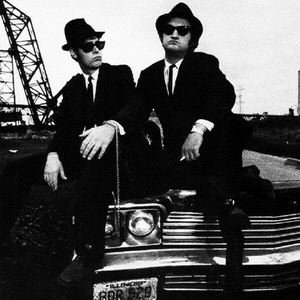
“We got both kinds. We got country and western” (The Blue Brothers). A classic line from a classic movie. The joke of course is that country and western are almost one genre. If not almost one genre, they just flat out are one. The movie from which this quote comes was made in 1980, a long time ago for popular culture. By the time of the movie The Blues Brothers, country and western music had fully transformed from separate, regional entities into one conglomerate. Who is to blame for this merger? Hollywood of course. Producers wanted to promote the dying image of a cowboy using music that sounded to them close enough, so they combined musical styles from the western US with Appalachian styles in the “singing-cowboy” genre. Country-western was born. But enough already about the glory of the olden times, of actors who are long dead or significantly overweight. (Yes, that was the fate of the Blues Brothers.) Those times are long gone. The eighties are over. Before leaving the olden days, however, one question remains? Could a similar event happen again? The world is a different place now. Hollywood’s cowboys of the silver screen endured a mass extinction around the year 2000, and even their deaths were well after their heydays. The southwest is now, one would at least hope, no longer an empty patch of desert administered by the mafia. The question still remains: can history repeat itself? Will the events that befell the regional styles of country and western music happen again? Will two different styles come together to form a conglomerate genre? The responses to these questions would have to account for modern twists.
bluesbrothers

First for a brief history of country music. Country music originated in Tennessee in the 1920s. Over the years it merged with other sounds including western and rock to form a new style called country but with original country having a minority influence, much like how United and Continental Airlines merged to form a new entity called United even though Continental management retained a controlling stake. After starting to come closer to pop in the 1980s, country became a sensation in the 1990s before leaving the Appalachian mountains in the early 2000s. Country began to make its way to big producers on the West Coast. This merge allowed country stars to transition to pop stars. Think Miley Cyrus and Taylor Swift. Cyrus even acknowledge it herself with her single “Party in the USA,” claiming that her life in Los Angeles was “definitely not a Nashville party.” She was right, and country music as a packaged industry was born.
Now to change styles and discuss what many people consider to be one of the most sophisticated and artsy forms of music: rap. Rap as a movement began in the 1980s as a style created mostly by artists trying to be different or independent. Even well into the 1990s, rap producers were generally regional and outside of mainstream music production. Rap and its creation were off the grid. Rap was a style that could not be emulated by Hollywood, by big companies. Many rappers were furious when the first major executives began working with rap. O’Shea Jackson, commonly known by his stage name Ice Cube, wrote “No Vaseline,” a song deploring rappers who worked with large production companies. By the end of the decade, however, rap began to undergo major changes. The 2000s ushered in an era of rap produced by large recording studios offering lucrative contracts. Unlike country music, rap did not move far physically, but socially it changed enormously. Rap as an industry was born.
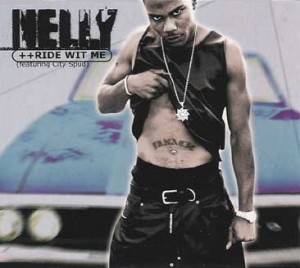
At this point it is time to zone in on one artist. One from a place that is not the birthplace of either country or rap. One from the metropolis of St. Louis, Missouri, home of the famous St. Louis Arch. Cornell Haynes, or Nelly, began his career as a musician around the turn of the millennium. His debut album Country Grammar included the song “Ride Wit Me,” which was later released as a single. “Ride Wit Me” is a little bit more laid back sounding than most rap songs before it. There is less anger, less anxiety, less haste. It still has a noticeable beat and a definite rhyme scheme, but the hard edge is gone. The slow guitar in the back, it almost sounds like… country. Somehow rap and country music wove themselves together. Unlike country-western, country-rap is not considered to be one genre, but country and rap can, as demonstrated by Nelly, come together. Somehow, in this song by this artist, country and rap became the same.
Looking back at the histories of country and rap, the timing makes sense. Both styles became mainstream around the same time. Close to the year 2000, country and rap moved from the status of local style to that of global, mass-marketed phenomenon. With similar timing come similar environments and similar people. Executives saw both genres at the same time and were willing to combine them. The blur of the line between country and rap happened the instant someone with money, power, and the willingness to mass-produce became involved.

nelly_featuring_city_spud_-_ride_wit_me_cd_cover
Mass-production caused the merger. Mass-production created the sameness. Mass-production is by its very nature hegemony. The concept of mass-production is that everything will be the same. All items that come off the assembly line will be identical. This concept works on two levels. First all copies of a single type of object will be the same. All iPads, all ethernet cables are exactly the same. Second, everything is made in a factory, either metaphorical in the case of music or literal in the case of objects, which means everything is created using the same methods of production. Items created using the same methods of production tend to be similar. A motorcycle and a car have similar types of engines because they both use the type of engine that is best mass-produced. The company Achates Power recently tried to fundamentally change the design of the car engine because it would have been more fuel efficient and less likely to break. The idea never caught on because the new engine design was non-trivially harder to produce cheaply in a factory. Music functions the same way. The type of music needs to be able to be created on a mass scale. Because the methods of production of country and rap music became the same, the styles did as well.
In combining country and rap, Nelly may have been a visionary. He took two styles and out of them created one the world had never before heard. The merge of country and rap was an invention, it was an epiphany. “Ride Wit Me” added to cultural growth in making a new form of music, one that included elements from geographically and socially diverse areas. The combination of country and rap was ingenious. It required creativity to be able to blend both style in a way that sounded cohesive and appealing. “Ride Wit Me” was a work of genius. A new style and a new sound are not everyday occurrences, and the harbinger of this new genre truly encapsulated the ability of new culture to be born.
Except that “Ride Wit Me” may not have been the new culture it was promised to be. The merge of country and rap did not take genius or creativity. The major producers can turn anything into a new style in their sleep. If their own talents fail, producers have computer programs to determine for them which new styles to create and explore. Skill and talent are not involved in the creation of a new genre such as country rap. The two styles are not from geographically diverse areas. Nelly’s music was not a combination of Compton and Tennessee, it was a combination of mass-market production and other mass-market production. Two sounds can combine by being played at the same speed at the same time. “Ride Wit Me” is an example not of a new style but of one that was destined to be created from the day that rap and country both became nationally marketed commodities. New culture was not born. Culture shrank. Two formerly separate, local entities merged into a nationally-marketed conglomerate, reducing cultural and musical variety. What had formerly been two became one as samess took hold.
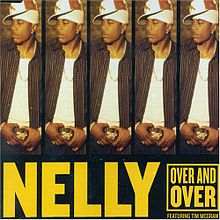
What happened to country and rap music with the rise of Nelly and his single “Ride Wit Me” leads to one basic conclusion. When culture is mass produced, all art is in danger of becoming the same. Rap and country music became commodities and therefore became the same as each other. The mass-marketers are smart; they know what sell and what does not. They know how to make a product people are willing to buy. They know what is required for their products to be successful. Most importantly they know that if something works, repeat it. Fit what you are given into a certain form and reproduce that form “over and over again.” (Pun alert!) After hearing “Ride Wit Me” and the rest of Country Grammar, producers decided to have Nelly collaborate with country singer Tim McGraw on “Over and Over Again.” Producers and marketers use this approach for all kinds of culture from songs to visual art to fiction novels to movies. Mass produced culture becomes an identical mush devoid of any differences.220px-nellyoverandover
Mass culture produces sameness. That sentence sums up what happened to Nelly and so many other artists whose work became mass-produced. Even though, new developments can sometimes crop up on the fringes of society. Most dissipate quickly, but some, such as rap, gain a following. They grow and grow until the culture giants take them and transform them into mass-marketed commodities. This pattern almost feels like a chase. New developments attempting to outrun industrialized culture producers. As shown by The Blues Brothers, the chase, while a long process, can be destructive and often end up bringing about the end of an era for the people even tangentially involved.