In the middle of the Nevada desert stands a 195m tower surrounded by an army of shiny, flat objects in a scene not entirely unlike something one would find in a sci-fi novel. This structure, however, serves a much more mundane, albeit necessary, purpose – the storage of energy.
This structure is called a “concentrating solar power” plant. It works like this: the plethora of mirrors surrounding the tower direct solar rays to the top, where a vat of molten salt sits to absorb the heat energy that can eventually be utilized as electricity. It’s been said that this energy storage method “has the most promise for energy generation and storage from solar power.” Just think about that for a moment though. A tower with special salt is one of our best options for renewable energy storage. Plus, it’s not like the whole world is covered in deserts that are waiting around for us to build salt towers on them.So what other options do we have?
Let me introduce to you solid oxide fuel cells. They promise to produce and store electricity for months after said electricity was produced. What’s more, they need only hydrogen as an input and when run in reverse as an electrolyzer produces hydrogen. In other words, solar and wind energy can be used as inputs to produce hydrogen, which can then be used to produce electricity. For more details on how they work, refer to the above diagram.
These new types of fuel cells are currently produced by only one company – Bloom Energy (NYSE: BE). If they can deliver on their promise of clean, long-lasting energy storage, the implications for the feasibility of renewable energies as our primary – if not only – energy source are massive.
The primary existing energy storage method, lithium batteries, of course has its strengths. It is relatively long-lasting and high in terms of energy density, for example. However, lithium is itself a very troublesome resource in that it is itself a non renewable resource and mining it is extremely water intensive. To illustrate this last point, I ask you to consider the fact that in a given year lithium mining consumes a full 65% of Chile’s entire water supply, which is simply ridiculous.
The batteries themselves are not without issues either. One minor (actual major) one is that they are prone to exploding if they are not carefully monitored. Usually this problem isn’t significant for smaller applications like electric vehicles (EVs) where software is capable of carefully monitoring the battery’s health and status. But in large energy storage plants that contain thousands of lithium batteries there are bound to be accidents. Also, I would be remiss in not reminding you of the notorious tendency of lithium batteries to lose capacity over time. And last of all, lithium batteries are simply too expensive.
Consider California, which produces more than 8 million megawatt-hours (MW) of surplus energy during the summer and yet can only store 150000 MW of it. Why? Because buying the lithium batteries necessary to store it all would cost a grand total of $2.5 trillion. Again, that’s simply ridiculous.
Now let’s return to Bloom. In addition to its innovative solid oxide fuel cells, the company already has a massive presence in developing countries like India that will inevitably consume increasingly large amounts of energy per capita as their economies continue to grow. However, the US also promises to become a huge factor in Bloom’s further growth.
With the election of PresidentBiden and a Democratic congress, the likelihood of a substantial, perhaps even once-in- a-lifetime, environmental aid package has skyrocketed. Biden has already made itabundantly clear that he intends to pass such a package. Such a package will undoubtedly include provisions for increased spending on renewable energy implementation. It really doesn’t take a genius to figure out how Bloom might benefit of such a plan were passed.
So why do I believe that the market hasn’t already priced this possibility into Bloom’s stock price? In short, I don’t. Rather, I believe that because of the uncertainty surrounding the final details of an environmental package and whether it could pass at all, the current stock price still has potential to rise if said package should pass congress.
So why do I believe that an enormous environmental package will definitely pass congress? In short, I don’t. Rather, I believe that even if said package never comes to fruition, the inevitable march towards greater renewable energy adoption continues will present opportunities to Bloom regardless. Such adoption is not only morally justified, but also economically. It is now a fact that fossil fuels cost more per unit of energy produced than renewable energies.
Lastly, I would like to take a quick look at Bloom’s financials, more specifically its EBITDA values.
Based on EBITDA values projected by the S&P’s Capital IQ financial database, I was able to project future EV/EBITDA values with 10X, 15X, and 30X multiples. Using these EV/EBITDA values I project that with conservative 10X and 15X multiples we might be able to expect -61.94% and -36.76% equity upsides, respectively. However, the potential upside seen in the numbers along with the broader trends in politics and society might make this investment nonetheless attractive for certain investor profiles. In short, Bloom Energy (NYSE: BE) presents an interesting, perhaps underestimated opportunity for investment.
Below is a collection of “blurbs” as we call it: brief snapshots and hot takes on a variety of market-related topics. From analyses on Bloomin’ Brands’ role in the restaurant space to the future of mortgage backed securities, we hope our short pieces will provide you with some Insight on the way we’re viewing market movements in the coming months.
Enjoy!
– The Insight Leadership Board
Our Fed-Fueled Outlook for Navigating a V/W/L/U Shaped Recovery
By Maria Chapman and Saamia Khan
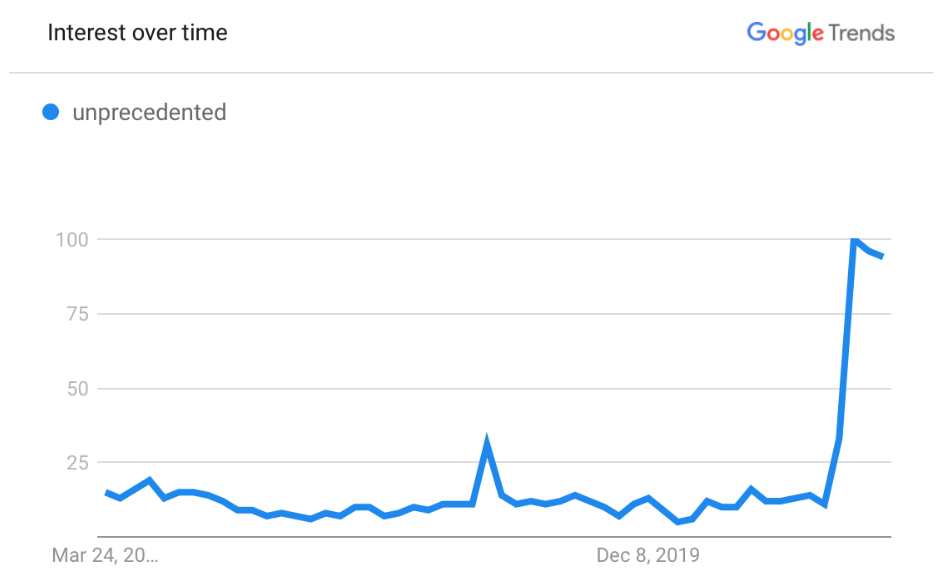
Figure 1: According to Google Trends, use of the word “unprecedented” has skyrocketed since early March, right when the global pandemic forced countries all over the world to go on lockdown
Along with other “unprecedented” situations we’ve seen in the first half of 2020, the Fed has stood out for its extraordinarily unprecedented measures over the last few months in its attempt to triage the effects of Covid-19 on the global economy. In the past few months, we have seen the central bank acting proactively to quell the financial panic that ensued as the U.S. and other countries began lockdown, holding true to its mantra of forward guidance. On March 15, 2020, we saw many of the expected moves: targeting the Fed Funds rate to effectively zero, removing the reserve requirement, declaring a new round of quantitative easing (QE), and encouraging the use of the discount window. The actions that have followed can certainly be categorized as “unprecedented.” The Fed has taken it upon itself to ensure unlimited liquidity in the markets by buying up assets in areas they have never before touched (i.e. municipal bonds, ETFs, individual corporate bonds).
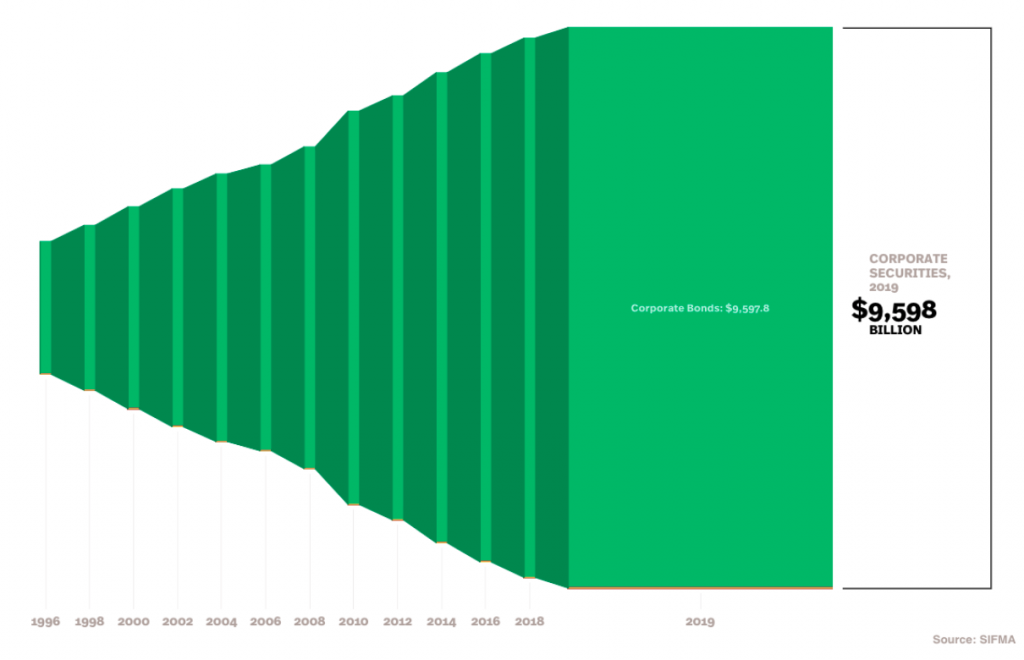
While the Fed has succeeded in making market participants jubilant, we as Insight-ers have had countless conversations about whether or not the market valuations we are seeing are indeed reflective of corporate, and overall economic health. One particular area of concern, as Janet Yellen pointed out on March 30, 2020 during a Brookings Institution video broadcast, are the ever-rising levels of corporate debt. Prior to the coronavirus, a low interest rate environment coupled with investor demand for return encouraged firms to issue massive amounts of debt, often to repay old debt, pay dividends or perform stock buybacks. With companies having to issue even more debt to stay afloat, we could be in for a shock with a surge in company defaults. We are already seeing a massive rise in company bankruptcies.
Figure 2: Corporate debt levels have risen from $5.5T in 2008 to $9.6T in 2019—the Fed’s recent actions in creating a low interest rate environment will only cause this trend to continue
Another foreseeable risk is the illusion of a healthy market as the technology sector outperforms others. The five largest companies in the S&P 500 are in tech and make up about 20% of the market value of the index. Retailers like JC Penney and Pier 1 Imports have filed for bankruptcy while Macy’s (NYSE: M) is down more than 60% since February. Meanwhile, tech giants such as Apple, Amazon, Netflix and Zoom stock have been continuously hitting all-time highs despite the pandemic. Although tech may be the future of our world, the present reality is that the significant performance drops in other sectors such as retail, transportation and travel are affecting the market, even if it’s not always apparent.
We want to emphasize that the Fed has certainly shown that it is more than willing to support the country’s economic recovery through forward guidance. At the same time however, there are inherent risks to striving for a perfect V shaped recovery, risks that should certainly not be overlooked when assessing our market play for summer 2020. Ultimately, we believe no number of stimulus packages nor asset purchases can alleviate the human health-related woes that have inflicted our once strong economy. But shoutout to Jerome Powell for leading us through a volatile first half of 2020 and ensuring liquidity in the markets.
Are MBS-Related Fears Warranted?
By Nathan Szeto
With the recent outbreak of the novel coronavirus, businesses of all kinds have taken to a remote style of work that has resulted in many office buildings being vacated and leases cancelled. Many homeowners, having lost a steady source of income, have found themselves unable to make payments on their mortgages. This situation has led many to question the future prospects of mortgage-backed securities (MBS). More specifically, will MBS cause another financial disaster like that of 2008? The answer is almost certainly no.
First, an important distinction must first be made between agency and non-agency MBS. Essentially, agency MBS are backed by the U.S. government via Freddie Mac and Fannie Mae and constitute 63% of the $11.1 trillion mortgage market as of now. The Fed is currently purchasing MBS and Treasuries at a rate of about $120 billion a month in order to keep the markets running smoothly. Non-agency MBS, aka private-label MBS, are those issued by entities other than Freddie Mac and Fannie Mae and therefore lack the backing of the U.S. government.
Concerns have been raised about non-agency MBS and more specifically the creditworthiness of certain borrowers in what seems to be a situation similar to that of 2008. In fact, ProPublica reports that housing prices have been subject to up to 30% inflation by banks in order to make properties seem more valuable than they actually are. However, what is important to note is that in 2007, there was $2.4 trillion in non-agency MBS, while in 2019 that figures stood at $443 billion. This fact, in addition to the reality that little evidence for the existence of a “housing bubble” exists, leads to the conclusion that even if the non-agency MBS market collapsed, the impact on the economy would not come close to that of the 2008 financial crisis.
One last topic of interest is the awkward position in which mortgage servicers have been placed. The recent CARES Act stimulus package has mandated that all federally-backed mortgages can enter forbearance for a period of one year. While this package is obviously beneficial for homeowners who as a result can continue living in their homes, it puts a great burden on mortgage servicers as they are still expected to make payments to investors for a period of four months after loans become delinquent or enter forbearance. Already at least 7.54% of all mortgages have entered forbearance and that number is expected to grow as the pandemic continues, according to the chief economist at the Mortgage Bankers Association. The increased risk of mortgages has resulted in more stringent regulations for potential borrowers that may persist even beyond the current crisis, according to the economic forecasting firm Oxford Economics. In any case, while the stimulus package does not provide funds to mortgage servicers, loans in forbearance as well as delinquent loans will now be allowed to remain in MBS pools beyond the typical 4 month period. Lastly, to support the functioning of the mortgage market, Fannie Mae and Freddie Mac have been authorized to purchase loans in forbearance according to the Federal Housing Finance Agency.
Flying Blind: Trading Airline Stocks
By Michael Davis
Despite an expected 90% revenue drop for Q2, the airline industry’s stocks have begun to take off, with stocks like American Airlines (AAL) up over 100% from their COVID low. Much like the virus itself, however, the market is fickle. As of today (7/2/20), AAL now sits at $12.50, down 38.5% from a month ago. Now you, dear reader, may be asking: what to do with this volatile yet necessary industry? Short answer: look out for breaking news.
As a whole, the big five stocks in the airline industry are JetBlue (NAS:JBLU), American Airlines (NAS:AAL), Delta (NYSE:DAL), Southwest (NYSE:LUV), and United (NAS:UAL). Within this top five, JetBlue and Southwest standout as the most positive buys. JetBlue has no debt and its EV/EBITDA of 5.29 is well below the transportation industry median of 8.77. Southwest, on the other hand, has a cash-to-debt ratio of .87, well above the transportation industry median of .26 and has a an EV/EBITDA of 5.79, again below the industry median of 8.77. The other three, while larger industry players, all operate with much less cash/more debt and at comparatively worse EV/EBITDA ratios, meaning that while they will stick around, their business models are likely to be impaired for far longer.
As the market stands now, it seems that airline stocks, much like the rest of the market, are handcuffed to any COVID-related news. Vaccine possibility? Look for a rise. Dr. Fauci says there’s an imminent second wave? Look for the fall. After all, air travel is necessary, and as they stand, most airline stocks are probably undervalued. That said, air traffic most likely will not return to its pre-COVID volume for three or more years, meaning that stock movements will be underpinned not by company performance, but by the market’s predictions for the future. The bottom line? Buy with one hand but have the other one ready to sell.
Not-So Bloomin’ Brands?
By Danny Irvine and Chris Bassett
As a result of COVID-19, many firms in the food industry have been hit hard financially from the lack of foot traffic of quarantining and social distancing. Some have fared better than others thus far, with the restaurants already proficient in takeout and delivery such as Domino’s Pizza able to operate more normally than those who offer more of a dine-in experience.
Bloomin’ Brands is a restaurant holding company that owns several American dine-in restaurant chains, including Outback Steakhouse, Fleming’s, Bonefish Grill, and Carrabba’s Italian Grill, typically located in the Northeast. These are higher-end chains, meaning they rely less on takeout as customers prefer the experience of more expensive food in a dine-in restaurant environment. Now, restaurants around the country are starting to open more and more of their locations as social distancing restrictions are lessened. It is unclear how the public will respond at this point in time as fears of the virus may prevent sit-down dining from being as prevalent as before, however there are a few reasons why Bloomin’ Brands may be positioned better than its competitors.
Just prior to the pandemic hitting the US, Bloomin secured a long-term exclusive deal with delivery service, DoorDash, for their Outback Steakhouse brand. The partnership ensures that despite the pandemic, customers can still purchase from Outback, adding an additional component to Bloomin’s revenue stream that their CEO, David Deno, could not have predicted would be especially useful during the proceeding pandemic.
Because Bloomin brands has access to cash, it is more likely to withstand the pandemic. Similar to the majority of companies over the past few months, Bloomin Brands took a loss during the first quarter of 2020 of $34mm, which distinctly contrasts their prepandemic quarterly net income of $65mn. However, over the last few months Bloomin raised $505mm in debt, and after using a portion of that sum to repay some previous borrowings and addressing other financial obligations, they have a $336mn net increase in cash this quarter, which means they have an additional $321mm in cash compared to this time last year. Because their financials were strong prior to the pandemic, they could take on debt to keep their various brands afloat. Bloomin Brands has made between ~$100mm and ~130mm in annual net income each year over the last three years. Therefore, the debt that they took on can be easily paid off over time, once they can safely serve customers in their storefronts again. Thus, although the pandemic wiped out their profitability this quarter, Bloomin brands was able to secure sufficient funding via debt to stay afloat that they can effectively pay down when their normal streams of income return. Notably though, it will take some time to pay down this new debt, meaning that a full recovery for Bloomin looks to be 5-7 years out.
Looking Beyond: A Glimpse into BYND
By Mohammad Mehdi Mojarradi and Michael Bedard
Beyond Meat (BYND) is a rising plant-based food company that went public in Q2 of 2019. BYND’s diversified revenue stream has allowed it to stay afloat during the COVID-19 crisis. Despite 42% of its revenue coming from food services, the hit on restaurants has not had a debilitating effect on BYND unlike some of its competitors, namely Impossible Foods. The company’s primary source of revenue, grocery stores and supermarkets (58%), have been relatively steady. In fact, while BYND reported an adjusted EBITDA loss of $2.1 million in the year-ago period, their Q1 2020 adjusted EBITDA was reported at $12.7 million, despite restaurants getting destroyed as a consequence of COVID-19. Evidently, BYND handled the massive shift in demand from food service to retail adequately. It is important to note that since COVID-19 became a global issue only in the last two weeks of Q1, BYND’s performance in Q1 cannot be viewed entirely in conjunction with COVID-19. However, because it can be for Q2, we believe BYNDs performance in Q2, which has been promising thus far, will be most telling of how the company will emerge from this crisis.
As of March 28th, BYND reported that it has taken adequate steps to ensure liquidity in the wake of the Coronavirus outbreak with roughly $250 million in cash with an outstanding debt of just over $30 million. With their fiscal safety secured, BYND leadership has said that part of their plan is expansion into real-meat territory as several meat processing facilities in the U.S. have large outbreaks. According to Tyson Foods executives, roughly half of the company’s pork processing capability has been halted due to these coronavirus outbreaks in their facilities. As gaps in the market open, BYND hopes to slide in by providing larger-than-normal discounts on their products to big retailers in an attempt to minimize the price difference between their product and beef. Currently pricing their products at around double or triple the price of regular beef products, BYND can stand to make solid territorial and financial gains in the upcoming quarters as they lower prices and become more appealing to the average consumer.
Wrapping Up: Two Cents from Jack Sercu ’22
By Jack Sercu
All, I hope you’re well and staying safe at this time. An economic outlook is intriguing to write at this time, and I think cannot be properly considered without looking at the social change our country is currently going through. I believe we are perfectly positioned as liberal arts students – at an extremely diverse institution – to weigh the various factors and come up with a vision for the future. I will look at two different categories and how they will alter the business environment of the future. First, I will examine the push for ends to systemic racism and injustice. Second, I will look out for when we do rebound from COVID, which is not an exact time period, but more so the year after the country/world opens up again. So, without further ado, my fellow Americans, Jack Sercu’s economic outlook/two cents.
It would be ignorant to speak of the future without looking at how the changing political sentiment in our country will affect business. The resource gap for minorities is completely tied to income – no law in it of itself states that blacks should receive worse education, healthcare or other support. However, due to America’s gut-wrenching history where our systems did prevent certain races from most resources/privileges, these gaps have held pretty steady. Picture doing a 100m race where white people start 50m ahead. Anyways, the wave we have witnessed on social media from a combination of friends and celebrity endorsements is to support minority owned local businesses. I believe reallocating your resources as such is a fantastic way to empower minorities. This will not breakup big business and topple capitalism, but I do believe it will lead to more balance between small and large. Attention to small businesses has increased because of COVID, as many have witnessed their favorite local spots struggling or going out of business and are more aware of their power as consumers… Continued here.
No informed investor needs to be told that the movie theater industry is in dire straits with the rise of streaming services like Netflix, Disney+, & Amazon Prime Video, to name but a few. So why in the world would you want to buy stock in any movie theater chain?
The answer: You wouldn’t.
Ok, great. But what about American Multi-Cinema, better known as AMC? It is the biggest movie theater chain in the world, after all. However, it didn’t get that way without taking on massive amounts of debt. This reality, coupled with decreasing revenue figures, market trends, and a poorly executed vision, has positioned AMC to be a poor stock pick within the near future, and a potentially catastrophic one in the event of a recession.
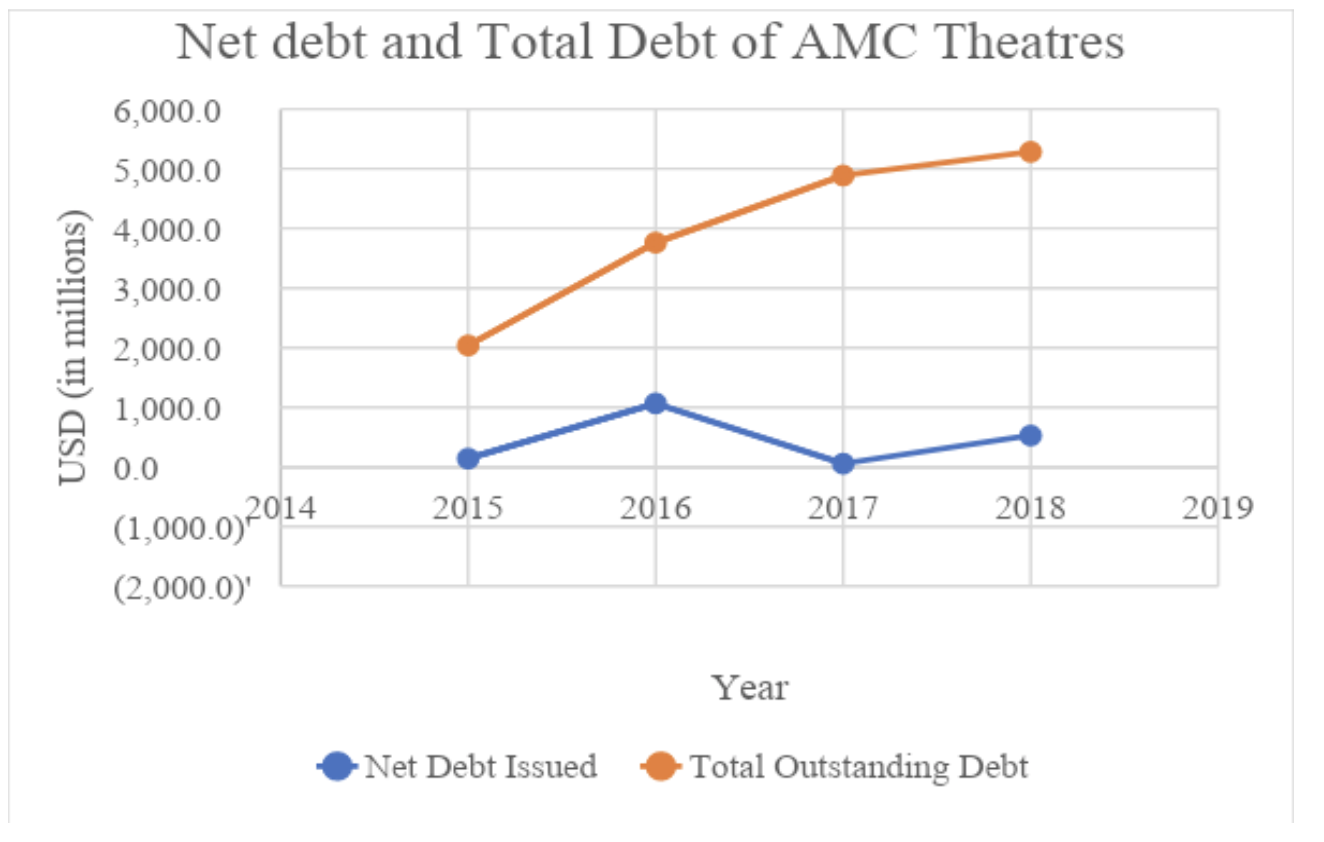
It may seem to the average investor that AMC has increased performance in recent years, and AMC’s yearly total revenues would support that assertion: in 2015, it produced $2.9 billion in revenue, and in 2018, it posted $5.4 billion, an increase of 86%. However, AMC’s revenue growth is deceivingly high because the company has not grown organically. Instead of committing to improving the movie-going experience for its customers, AMC’s corporate branch has embraced an expansion mentality. That’s right, the largest movie theatre company in the world is looking to increase their foothold in its stagnating industry via acquisitions. It’s important to note that we aren’t suggesting that AMC intends to monopolize, but rather it values quantity over quality of their theatres. Since 2015, it has acquired 700 theatres and has issued massive amounts of debt to fund these purchases. As can be seen in the chart below, the company’s total outstanding debt has exceeded $5 billion as a result. Seen in the same figure, the company’s net debt indicates the change in total debt. In 2016, AMC issued $1.75 billion in debt, all of which the company stated went to fund the acquisitions of movie theatre companies in Europe and Asia. In 2017, they made a large sum payment of $748 million to repay debt, but that hasn’t halted its persistently increasing amount of outstanding debt, which at the end of 2018 was $5.2 billion. Understandably so, being in the theatre business is very capital intensive, but the corporate acquisition strategy has jeopardized AMC’s future. The company’s financials reveal that its return on assets (ROA) percentage has been declining over the last few years. Since 2015, the ROA percentage has declined from 3.1% to 1.0%, with consistent decline each year, excepting 2018.
Figure 1: AMC Theatres total debt and net debt from 2015 to 2018
We’ve already mentioned that AMC is at risk of bankruptcy in the event of a recession, but what exactly do we mean? Given that AMC is already operating on very slim margins and is saddled with massive amounts of debt, it’s not too far of a stretch to believe that if the US economy experiences a recession, AMC will lose the ability to pay off its interest and eventually have to file for bankruptcy. For instance, with an operating income of $317 million and net income expense of $224 million, AMC has little room for error if their revenues drop even slightly. Also, the company’s net income margin percentage in 2019 was 0.2%, down from 9.6% in 2017, giving one a sense of just how slim the company’s margins are.
Think about it — is going to see the new Frozen 2 movie really a priority when you’ve just lost your job? (The answer should be no) Now multiply this sentiment by a few hundred million would-be moviegoers and you’ve got a bonafide crisis on your hands.
So why should we believe that a recession is imminent? According to a survey done of economists by the National Association for Business Economics, 3 out of 4 economists believe that the United States will experience a recession by 2021. Ray Dalio, founder of Bridgewater Associates, believes that prior to the 2020 election there is a 40% chance of a recession, up from 35% in February. These fears are supported by the ongoing trade war between China and the United States, as businesses scale back investment and struggle to maintain output levels. Lastly, within the last few months Treasury 10-year bonds fell below those of 2-year bonds. This situation, known as an inverted yield curve, has historically signaled that investors are reinvesting into safer assets and has preceded every recession since 1955. Even if these signals are all wrong, we are hard pressed to say there will not be a recession ever again. And when on hits, 2021 or 2025, AMC’s acquisition-fueled hopes and dreams will likely be demolished.
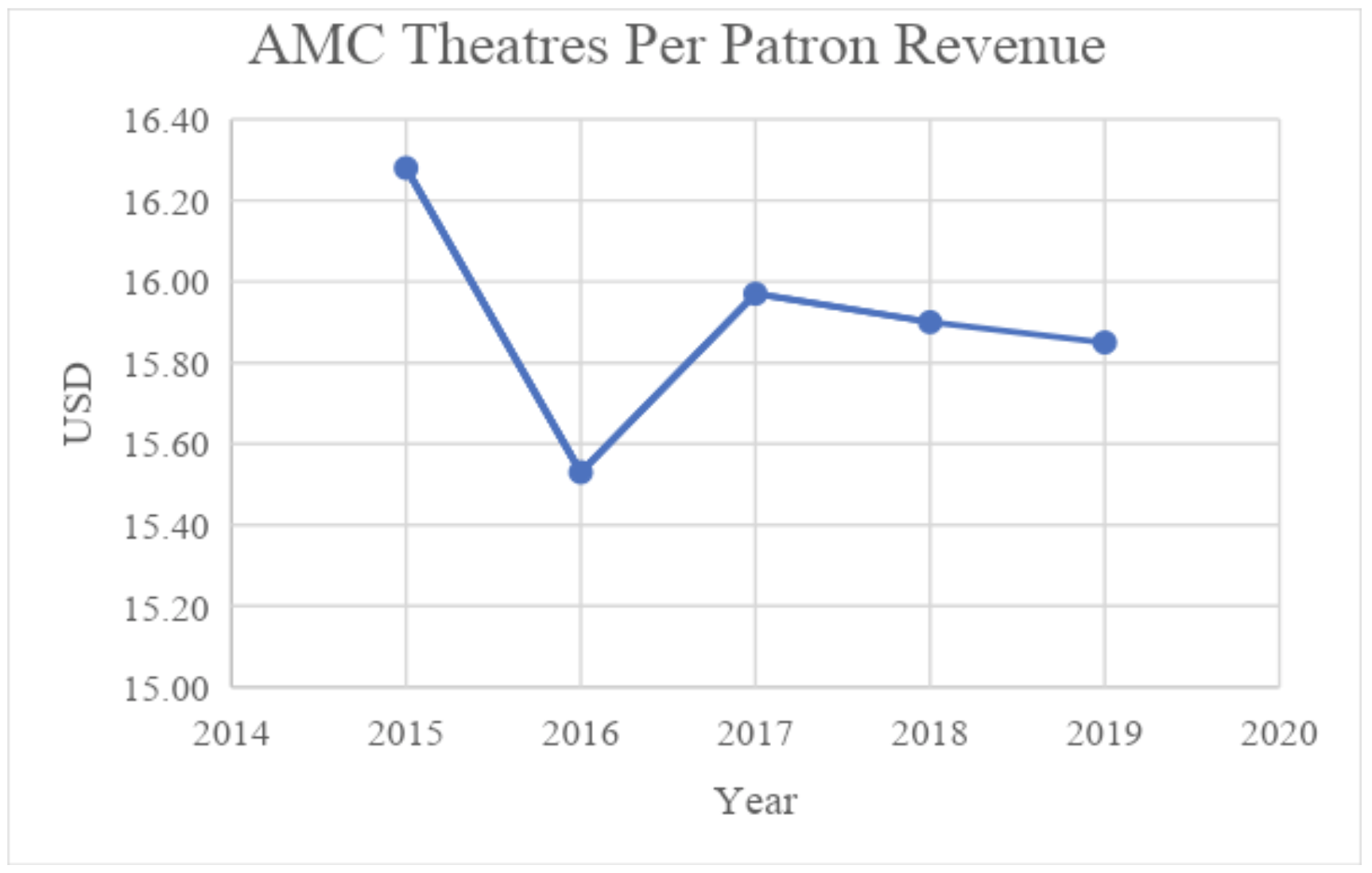
Figure 2: Per patron revenue from 2015 to 2019
AMC proponents would point out that the company has invested in the upkeep of some of its theatres to reduce asset depreciation. The most significant improvement was of 2,279 screens in 2018, with another 600 planned for 2019. Improvements include replacing traditional seats with fewer, but higher quality plush recliners, and improving dining options. This allows AMC to sell seats at higher prices with the goal of improving revenues per movie screen As of now, AMC improved over 2,200 screens, but they own 11,000 in total, leaving potential for a ton of depreciation and high capital expenditures (likely via even more debt) to occur as improvements perpetuate.
We looked at AMC’s revenue per patron because it better indicates its revenue change organically (controlling for acquisitions), compared to their total top-line numbers. The statistic reflects the average amount of money AMC earns from each customer through the ticket and food and beverage purchases Conveniently, it doesn’t take into account quantity of customers, so we can examine solely the quality of how AMC obtains revenue. Since 2015, there has been a 7% increase in the number of patrons choosing to buy food and/or a beverage (from 64% to 71%), suggesting that revenue per patron should increase. However, the overall trend is decreasing. Figure 2 shows the revenue per patron adjusted for inflation from 2015 to 2019. Although the margins seem small, there is a 75-cent decrease per patron. Considering the many thousands of people that visit AMC’s theatres each year, that 75-cent decrease will significantly wound organic revenue streams. Overall, the company has extracted less money from the customer over time, which they hope to offset with their new streaming service.
As if those numbers weren’t already depressing enough, the company has demonstrated no clear vision for moving forward best embodied in its decision to launch a new streaming service, as if consumers weren’t already inundated with other options. However, to add insult to injury, they have decided to structure it in the worst possible manner. Known as “AMC Theatres On Demand,” as uninspired a name if there ever was one, it is nothing more than a glorification of Google Play or iTunes, versus a proper streaming service. At least Google Play and iTunes admit that they’re not good deals. On top of the $15 annual membership fee required to use the service, each and every film and show has to be either rented for $3-6or bought for $10-20. The movies are neither exclusive nor early access, as would be hoped for from the world’s largest movie chain. Even though the service provides in-theater benefits, value provided is still extremely poor and will likely fail to contribute to AMC’s bottom line meaningfully.
The launch of the streaming service is a symptom of a larger problem at the megacorporation that is American Multi-Cinema. That AMC’s leadership feels that yet another streaming service is necessary to raise profit margins indicates that it lacks the vision and creativity necessary to reverse the course of a company in an already dying industry. It reflects a management desperate to turn around a faltering company via uncalculated grasps for salvation.
The reality is that AMC is a company without ideas in a dying industry. Falling actual revenue per patron figures coupled with a massive debt load indicates that the company not only lacks future potential for growth but is extremely at risk of defaulting on its debts and filing for bankruptcy in the event of a recession. Worst of all, the debt AMC has accumulated has done little to grow its falling revenue.





 The answer: You wouldn’t.