Rust, Patina, and Star Wars: Playing with Copper-Infused PLA

A photo of the copper infused PLA printed Benchy before the oxidization process.

A photo of the copper infused PLA printed Benchy before the oxidization process.

What if your 3D prints could age like ancient artifacts? That was the question I asked myself when I got my hands on a spool of copper-infused PLA. Unlike ordinary plastic filaments, this one behaves a little more like metal: it shines, it scratches differently, and, best of all, it rusts.

With a little kitchen chemistry (just vinegar and table salt), I discovered that you can accelerate corrosion and grow that gorgeous blue-green patina we usually see on old copper roofs or statues. Suddenly, a simple 3D Benchy boat looked like it had been dredged up from a shipwreck… or stolen from a galaxy far, far away.

The Secret Weapon: A New Nozzle

During the submersion, the copper failed to oxidize in the vinegar and salt solution because there was no oxygen available.

During the submersion, the copper failed to oxidize in the vinegar and salt solution because there was no oxygen available.

Before the fun part (corroding things), there’s the practical problem: copper filament is brutal on regular brass nozzles. They get chewed up fast, and I didn’t want to spend my weekends endlessly recalibrating.

So, I splurged on an E3D V6 1.75mm Nozzle, a hardened steel nozzle disguised as brass in its heat performance. At $21, it wasn’t exactly cheap, but it meant I could use a variety of filaments, including abrasive ones, without damaging the nozzle. So I can still print fast, but will have less maintenance.  In other words, more time experimenting, less time swearing at the printer.

Painting with Chemistry

The 3D Benchy boat after (correctly) using a spray bottle (vinegar, water, salt) to initiate the oxidization process.

The 3D Benchy boat after (correctly) using a spray bottle (vinegar, water, salt) to initiate the oxidization process.

I started with the classic test print: a 3DBenchy boat.

I mixed up my “magic potion”, vinegar plus salt until it wouldn’t dissolve anymore. I submerged the boat in the solution and left it for two days and… nothing happened. I realized that oxidation requires air. So I set it on a tray and sprayed the boat every couple of hours with a cheap misting bottle. A bit of oxidation occurred but it was underwhelming. I experimented and used 220 grit sandpaper to smooth some edges and surfaces of the benchy. I gave it the same corrosion treatment, and waited. Within hours, tiny blue crystals nucleated across its surface like frost on glass. My theory is that sanding exposed more of the copper embedded in the PLA material. Now, each cost of spray deepened the effect and dried differently depending on where the misted liquid pooled, dripped, or got caught on overhangs.

Slowly, the hull blossomed with patches of turquoise and jade crystals. After four days of experimenting, flipping, spraying, and waiting, I finally had my masterpiece: a lost, sunken ship.  The edges shimmered like oxidized jewelry, while the lip of the hull turned into a miniature science experiment in evaporation. It felt like I was less “finishing a print” and more “collaborating with chemistry.”

It looked ancient, precious, and heavy with story. The corrosion process didn’t just coat the print,  it transformed it into something that felt alive, growing, and shifting with each spray. Under natural light, the patina was subtle; under LEDs, it glowed like a relic.

Who knew that a bit of vinegar, salt, and patience could turn plastic into treasure?

Final Thoughts

The final look of the 3D Benchy boat after the oxidization process on the copper PLA print.

The final look of the 3D Benchy boat after the oxidization process on the copper PLA print.

This project reminded me why I love tinkering: sometimes it’s not about controlling every detail, but about letting the materials surprise you. Copper PLA, a new nozzle, and some kitchen chemistry turned my prints into artifacts that could belong in a museum. And what’s really exciting about this test is that it is another tool the Makerspace has for projects with faculty or students.

And honestly? I’ll never look at table salt the same way again.

Lions at the Spruces

2024 Big Art Show Exhibition

2024 Big Art Show Exhibition

What do Vienna, a long-lost trailer park in Williamstown, and two fifth graders have in common? They all came together via architecture, storytelling, and a whole lot of glue in a Makerspace project that began as a college classroom assignment and grew into something far more textured (literally and metaphorically).

Welcome to ARTS 222 / ENVI 202: Critical Architecture Practice, where theory meets practice, and memory is not only something you hold onto, but something you build.

The Backstory: Lions, Memory, and the Spruces

The Spruces was a trailer park in Williamstown, Massachusetts that was flooded by Hurricane Irene, and then closed in 2016. While it’s no longer standing, its memory continues to ripple through the town’s environmental and architectural narratives. For this class project, led by Giuseppina Forte, Assistant Professor of Architecture and Environmental Studies, (with TAs Elijah Washington ‘24 and Grace Espinosa ’26), students set out to reimagine the site and its emotional geography through architectural modeling.

David Keiser-Clark took measurements of the lion statues (on site) at the former Spruces in Williamstown, MA

David Keiser-Clark took measurements of the lion statues (on site) at the former Spruces in Williamstown, MA

The mission

Recreate a tabletop model of the Spruces site and anchor it with two majestic lions, inspired by those that once guarded the entrance. But these weren’t just any lions.

How to (Re)Build a Lion

Let’s rewind to Vienna, Austria. A statue stands outside the METAstadt in Donaustadt of a proud, regal lion. David Keiser-Clark, Makerspace Program Manager, searched Google and found what appeared to be an exact match of “our” lions at the METAstadt. He found a digital version of the statue that had been uploaded by a tourist who scanned it with Polycam in LiDAR mode with their iPhone 14 Pro Max (credit to @Stefan_80888). David drove to the Williamstown lion statues, and used a 30’ measuring tape to mark down the dimensions.

Left: Autodesk Fusion 360 CAD renderings created by Alice Sore '27, from measurements, to 3D print the pillars and base. Right: digitized lion scan placed, to scale, on top of pillars structure.

Left: Autodesk Fusion 360 CAD renderings created by Alice Sore ’27, from measurements, to 3D print the pillars and base. Right: digitized lion scan placed, to scale, on top of pillars structure.

Alice Sore ’27, a Makerspace student worker, used AutoDesk’s Fusion 360 software to model the statue’s pedestals and columns from scratch, creating not just pieces of the project but a learning moment. She used this experience to then lead the Makerspace’s first “Teach-In: Learning Fusion 360”, and walked fellow students through the software and showed them how to model architectural structures with precision and confidence.

Intelligent CAD modeling includes auto-centering devices that also add strength and rigidity.

Intelligent CAD modeling includes auto-centering devices that also add strength and rigidity.

Once the lion, pedestal, and columns were ready, we printed them in white PLA in four separate sections, kind of like Legos for architects, and bonded them with cyanoacrylate glue.

Left: first completed statue. Right: The second one is always easier and quicker.

Left: first completed statue. Right: The second one is always easier and quicker.

But they weren’t finished. Not yet.

Enter: Two Fifth Graders and a Can of Paint

What do you do when you want your lion statues to look like they’ve stood in the elements for decades, rather than hours?

You recruit two fifth graders, naturally.

Elizabeth Heeringa and Anderson Keiser-Clark, fifth graders, provided the vision for aging and the labor to complete the entire post-processing effect. (Clockwise from top left: Anderson on left, and Elizabeth on right; Elizabeth dry brushing with greens to create moss effect; Bottom left: more dry bushing; Bottom right: Getting out the ladder as these lions are tall!

Elizabeth Heeringa and Anderson Keiser-Clark, fifth graders, provided the vision for aging and the labor to complete the entire post-processing effect. (Clockwise from top left: Anderson on left, and Elizabeth on right; Elizabeth dry brushing with greens to create moss effect; Bottom left: more dry bushing; Bottom right: Getting out the ladder as these lions are tall!

Elizabeth Heeringa and Anderson Keiser-Clark, armed with brushes, DryLok Masonry Waterproofer, acrylic paint, a misting bottle, and a creative eye, transformed glossy 3D prints into textured, time-worn sentinels. They painted the lions with two coats of DryLok, which added grit (sand is in the paint) and also obscured the 3D printed lines. They then used an “acrylic wash”, a mixture of 85% water and 15% black acrylic paint, and spritzed the lions multiple times, allowing them to dry between each coating. Finally, they used a technique called dry-brushing, using tiny brushes and miniscule amounts of pure acrylic color to create highlights. They used greys to emphasize age, and greens to simulate moss or lichen, until the lions no longer looked like something made yesterday but like artifacts pulled from a lost world. (Elizabeth shared that an optional final step would be to dip a paint brush in white acrylic paint and then flick it at the object to create little stippled drops of paint.)

Elizabeth initially warned that the black acrylic wash solution goes on strong and creates deep and dark puddles, but eventually dries much lighter. Effectively, she said: "Don't worry, David." Left: You can see the difference of the acrylic wash on cardboard (dried dark), and how 3 successive additive layers dried on the scrap base with slightly darker tones and increase variation of patterning. Right: Massive puddling and dripping of black paint that will dry in significantly lighter tones.

Elizabeth initially warned that the black acrylic wash solution goes on strong and creates deep and dark puddles, but eventually dries much lighter. Effectively, she said: “Don’t worry, David.” Left: You can see the difference of the acrylic wash on cardboard (dried dark), and how 3 successive additive layers dried on the scrap base with slightly darker tones and increase variation of patterning. Right: Massive puddling and dripping of black paint that will dry in significantly lighter tones.

Elizabeth created this original 3D post processing recipe from scratch. You saw it here first.

Anderson also helped calibrate the Makerspaces 3D printers, because of course he did.

Left: Lion dripping from the acrylic wash spray; Right: Completed lion after multiple acrylic wash sprayings.

Left: Lion dripping from the acrylic wash spray; Right: Completed lion after multiple acrylic wash sprayings.

A Model of Memory

Meanwhile, Professor Forte and her team worked on designing the 30” x 30” tabletop model of the Spruces site built to a scale of 800:1, which means it represents a 2,000’ x 2,000’ section of land. Four interlocking 15” x 15” environmentally friendly MDF panels called Eucaboard (made from eucalyptus fibers), two layers thick, formed the base. An etched river flows through the landscape, marked by laser-etched topography and filled with translucent blue acrylic.

Every detail of mobile homes represented by tiny markers, zones carved into MDF, and even the idea of including a scale model trailer with furnishings was designed to be both informative and deeply effective. This wasn’t just about land use. It was about memory, displacement, community, and presence.

Why It Matters

Architecture isn’t just about buildings. It’s about what we build to remember. What we build to mean something.

This project took a long-forgotten corner of Williamstown, wrapped it in theory, scaled it to human imagination, and rebuilt it with resin, MDF, paint, and story.

It involved artists, scientists, young makers, international scans, and kids with paintbrushes.

And as the lions stood silent, strong, slightly green at the mane you could almost hear them guarding the gates not just of a trailer park, but of a memory that refuses to fade.

Left: Lion and Elizabeth; Right Anderson and Lion.

Left: Lion and Elizabeth; Right Anderson and Lion.

2024 Spring Big Art Show Exhibition. Lions standing as sentinels.

2024 Spring Big Art Show Exhibition. Lions standing as sentinels.

Elizabeth’s Post Processing Recipe

Elizabeth mentions it’s important to use the normal version of DryLok Masonry Waterproofer, as the “extreme” version lacks the sandy texture.

Elizabeth's supplies.

Elizabeth’s supplies.

More Information

Postscript (February 14, 2025)

Brenda Aubin of Dining Services reached out to the Makerspace to include the lions in their Winter Carnival celebrations, complete with AV and slideshows for ambience. Dining Services rock!

Brenda Aubin of Dining Services reached out to the Makerspace to include the lions in their Winter Carnival celebrations, complete with AV and slideshows for ambience. Dining Services rock!

Makerspace Collaborating on Multiple Sustainability Projects

Last spring semester, the Makerspace @ Williams College pivoted to focus on academic projects that support teaching and learning goals; previously, this focus had been an aspirational goal. The Makerspace Program Manager, David Keiser-Clark, and his team of amazing student workers, now support a dozen interdisciplinary academic and campus projects at a time. A quarter of these projects support sustainability, or specifically the Zero Waste Action Plan, including: (1) a three-college collaboration to create an eco-friendly deterrent for Japanese Beetles in our community garden; (2) a prototype to upcycle plastic bottles into 3D printer filament; and (3) a set of laser engraved wood signs, sustainably harvested from Hopkins Forest, for a Stockbridge-Munsee led garden video and audio tour at the Mission House in Stockbridge, MA. Below, you’ll find a brief spotlight on each project, and possible ways we might build on these initial efforts.

E4 Bug Off Team Project : Mitigating Japanese Beetle Damage
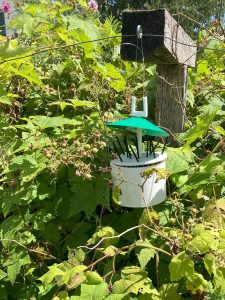
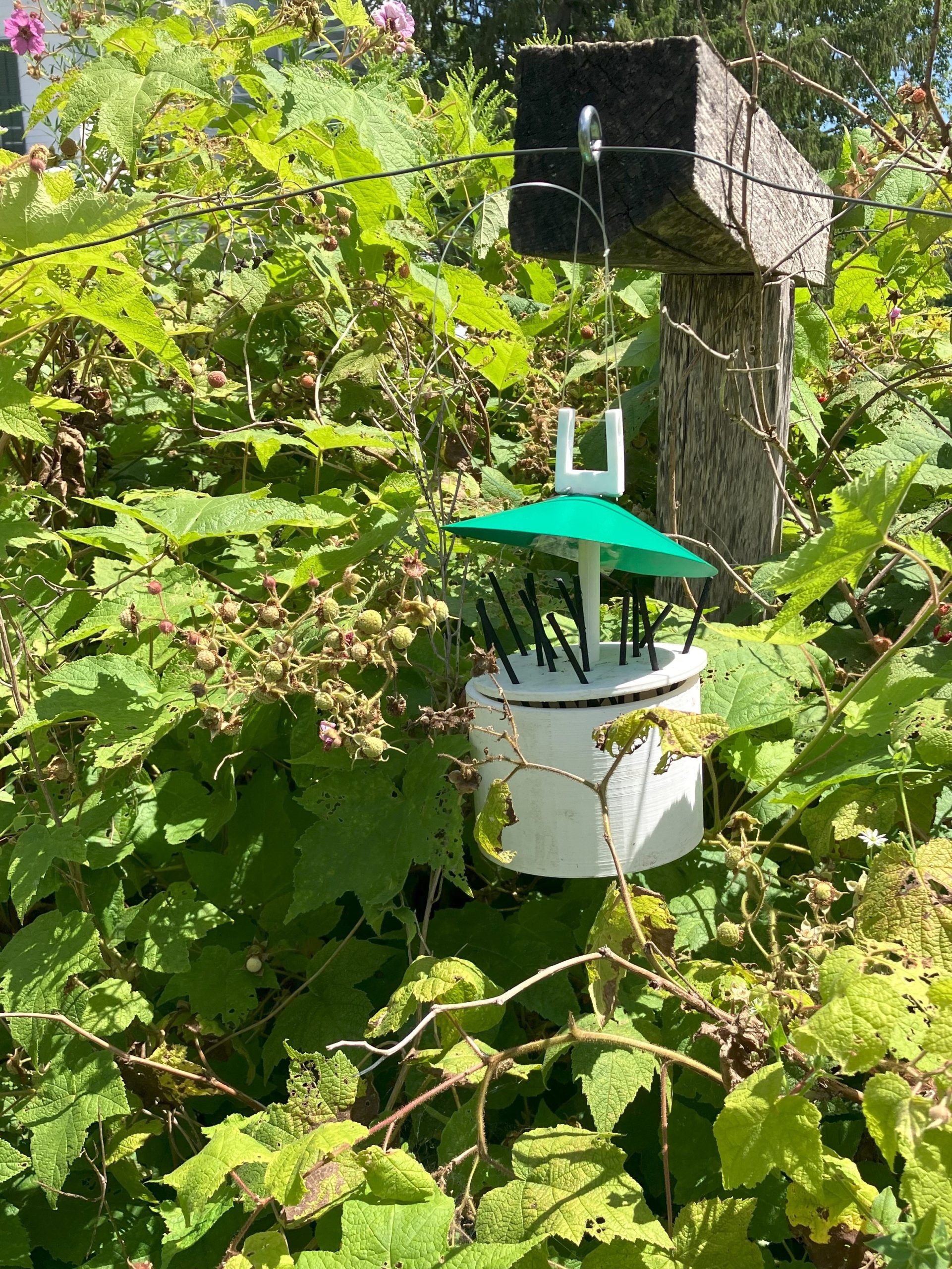
E4 Bug Off Team Project, installed in the Williams College Community Garden : Mitigating Japanese Beetle Damage

E4 Bug Off Team Project, installed in the Williams College Community Garden

The E4 Bug Off Team is a collaborative environmental project between engineering students from Harvey Mudd and Pomona Colleges, and students working with the Williams College Makerspace and Zilkha Center. The engineering students researched and developed a prototype that would safely repel Japanese beetles to hopefully stop them from defoliating raspberry bushes in the Williams College Community Garden. The Makerspace used 3D printers to create the parts and subsequently assembled the model. Zilkha Center interns then deployed the model in the gardens. The device is designed to be low-maintenance and only needs the reservoir filled weekly with 100% peppermint essential oil. Japanese beetles, in addition to other bugs and mammals, dislike the smell of the mint family, and the concentrated peppermint essential oil diffuses into the air via permeable wicks that extend from the reservoir tank.
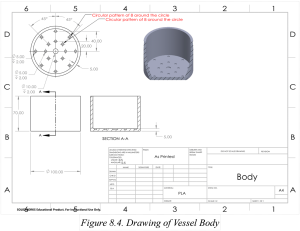
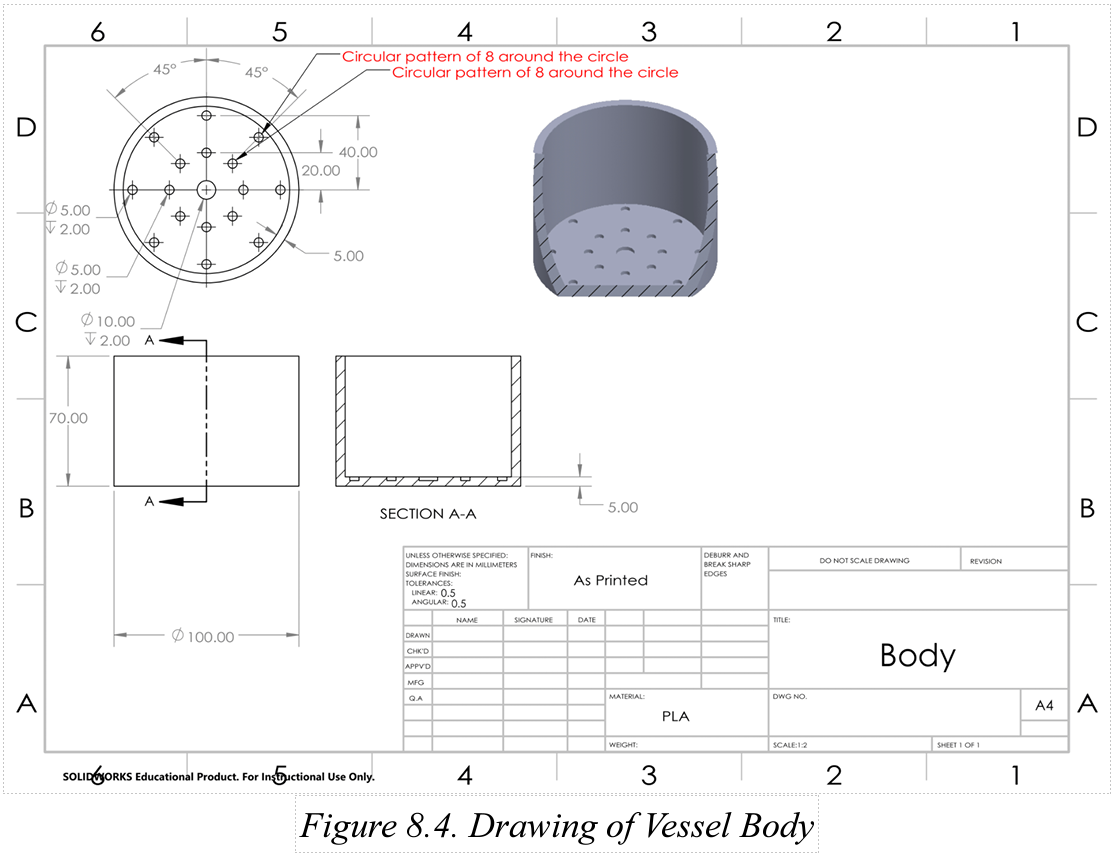
One of five engineering diagrams from the 30-page E4 Bug Off Team Project.

One of five engineering diagrams from the 30-page E4 Bug Off Team Project.

The initial model was installed in the garden in July 2022, at the tail end of the raspberry season, and immediately leaked. This spring (2023), the Makerspace re-printed the reservoir tank with a higher density (50% solid as compared to 15%), tested the model and, after 24 hours, found it to be 100% water-tight. This second model was introduced into the garden with mixed results: the functional model performs as intended, but the impact is difficult to measure without a control plot or method of measuring beetle activity this year. 

In addition to recording measurements of a control plot, additional steps to increase effectiveness could include fabricating additional models to better saturate the air within the berry patch or returning the project to the engineering team for design modifications. The final version would be printed with ASA filament, which is physically stronger and UV/moisture resistant, as compared to PLA or ABS filaments.

To learn more about this project, read this blog post by Makerspace student worker Leah Williams.

Contributors: Harvey Mudd College (Students: Javier Perez, Linna Cubbage, Eli Schwarz, Stephanie Huang; Professors Steven Santana and TJ Tsai), Pomona College (Student: Betsy Ding), Zilkha Center (Students: Martha Carlson, Evan Chester, Sabrina Antrosio; Staff: Tanja Srebotnjak, Mike Evans, Christine Seibert) and Makerspace (Student: Leah Williams; Staff: David Keiser-Clark)

Polyformer: Sustainable 3D Printing at Williams College

While completing a month-long Zero Waste Internship at the Zilkha Center (through the ’68 Career Center’s career exploration Winter Study course), Camily Hidalgo pitched building a machine to convert waste plastic into usable 3D printer filament. The project aligns with the Williams College Zero Waste Action Plan, which is based on the sustainability strategy in the Williams College Strategic Plan. She envisioned this as being a collaborative effort between the Williams College Zilkha Center and the Makerspace. 

After researching several options, she selected the Polyformer because it is an open-source (publicly accessible) project that seeks to create a DIY kit, composed of standard and commonly found parts, able to convert and upcycle plastic bottles (waste) into usable 3D printer filament. This project was launched in May 2022 and has quickly amassed more than 4,000 people who follow and/or contribute to the project (on Discord), while a core group of dedicated volunteers develop the project.
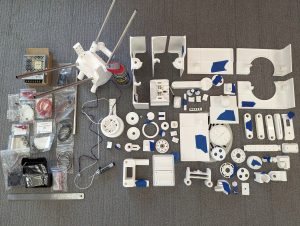
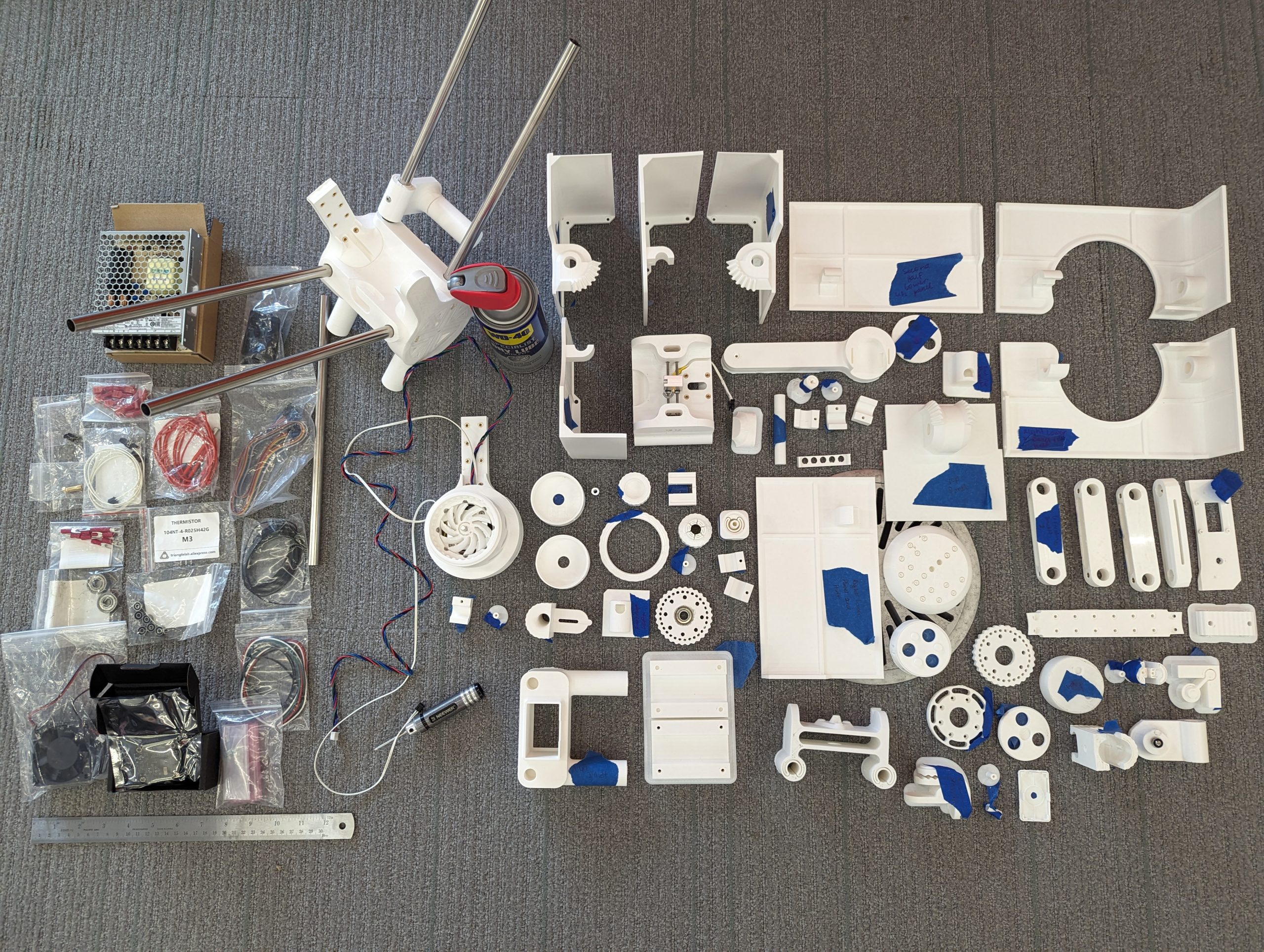
Many of the 78 printed parts that will be assembled into the Polyformer.

Many of the 78 printed parts that will be assembled into the Polyformer.

The intended outcome is to build a machine, based on standardized specifications, that effectively slices a water bottle into a half-inch wide ribbon, and then feeds that ribbon through a heated funnel, called a hot-end, to extrude it as 1.75mm PET filament. Camily seeks to create a working prototype to demonstrate our ability to disrupt our plastic waste stream and upcycle that into usable 3D printer filament. Approximately 40 bottles are required to create a standard 1 kg roll of filament, (enough to print 6 of the aforementioned beetle devices!). This project seeks to raise awareness that we can both reduce the quantity of waste that the college ships offsite while using that waste to create new filament and thereby purchase less of that virgin material from China. Upcycling waste can reduce the environmental impacts associated with the extraction of raw materials and product manufacturing as well as the significant carbon footprint associated with shipping those products to us from the other side of the globe.
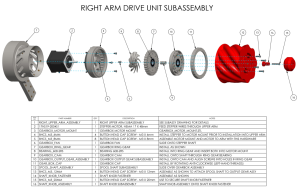
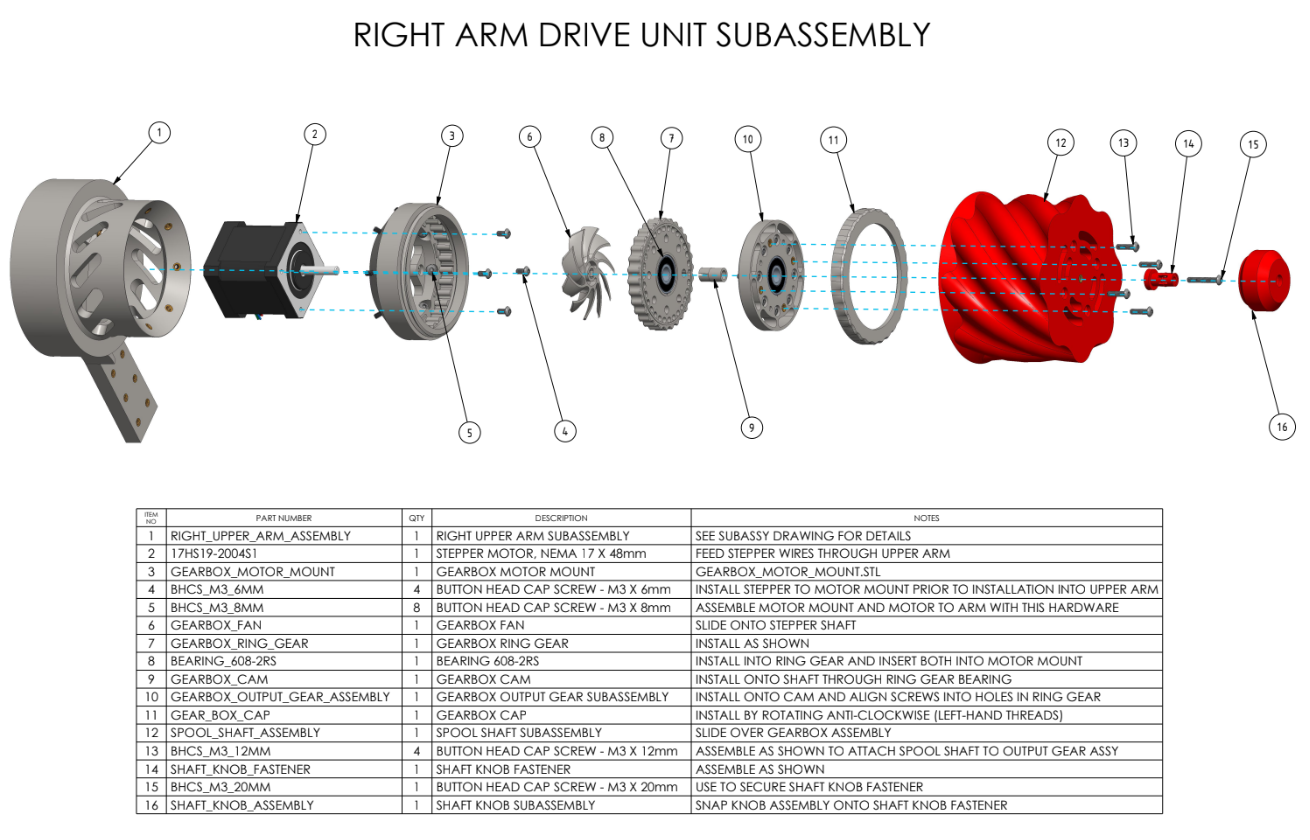
Polyformer diagram for building the "Right Arm Drive Unit Subassembly."

Polyformer diagram for building the “Right Arm Drive Unit Subassembly.”

Camily Hidalgo notes that this project is complicated because the design is constantly being improved. Additionally, it requires 3D printing 78 individual parts and then assembling those with a kit of sourced materials that includes a circuit board, LCD screen, a volcano heater block and 0.4 mm hot end, a stepper motor, stainless steel tubing, bearings, neodymium magnets, lots of wires, and lots of metal fasteners.

This project began last spring semester and, as of this summer, all 78 parts have been locally printed. Assembly has begun, and will be completed during the fall semester, followed by actual testing under a science lab exhaust hood to safely capture antimony, a VOC released when PET reaches its melting point. 

To learn more about this project, read this blog post by Makerspace student worker Camily Hidalgo.

Contributors: Zilkha Center (Student: Camily Hidalgo; Staff: Tanja Srebotnjak, Mike Evans, Christine Seibert), Makerspace (Students: Camily Hidalgo, Milton Vento; Staff: David Keiser-Clark), Chemistry (Professors: Chris and Sarah Goh; Staff: Gisela Demant, Jay Racela)

Laser Engraving: Stockbridge-Munsee Garden Video and Audio Tour
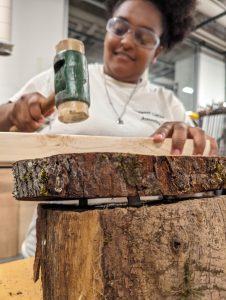
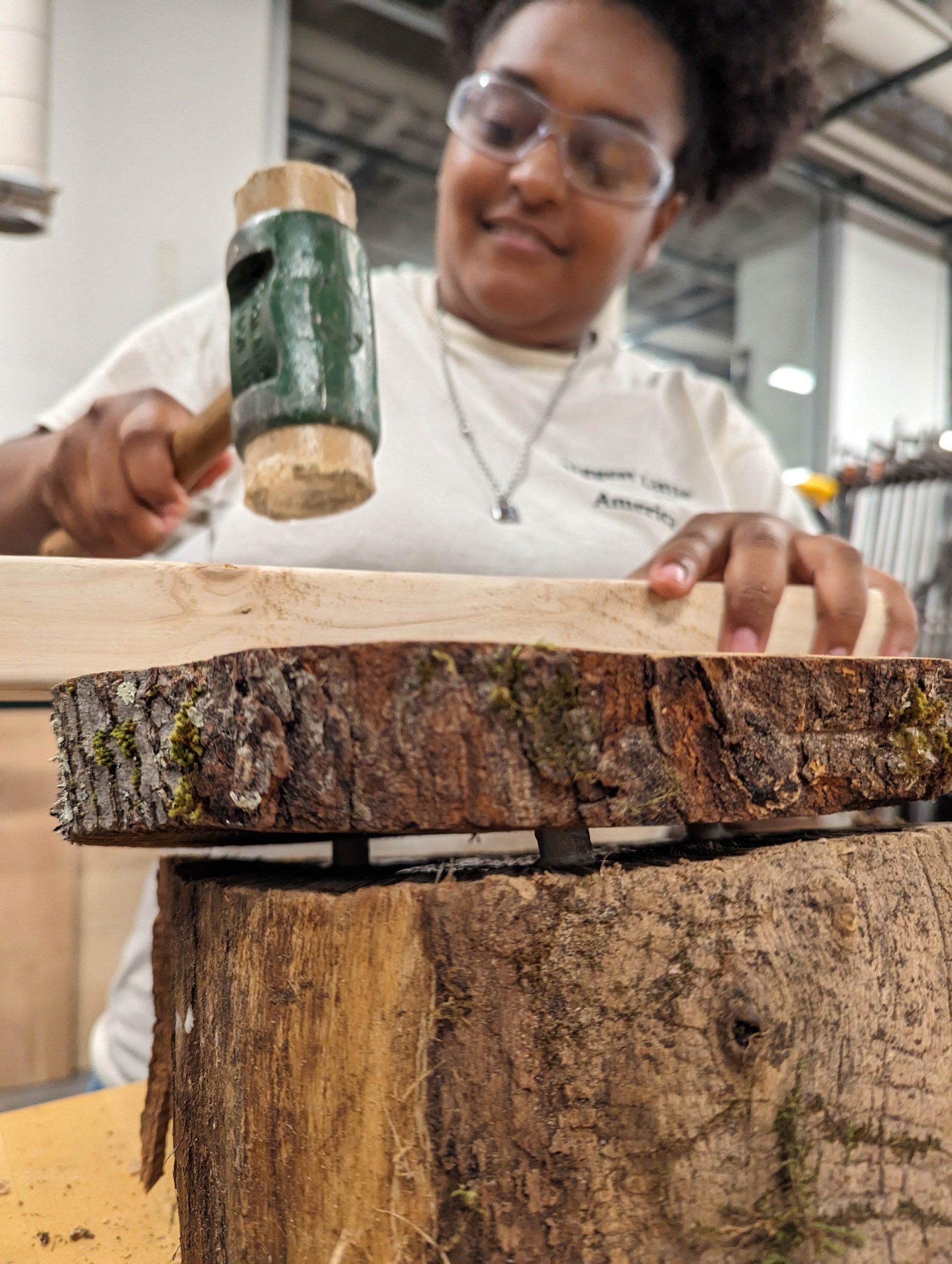
Yoheidy Feliz connecting a red maple slab to a slanted locust base, with dowels and wood glue.

Yoheidy Feliz connecting a red maple slab to a slanted locust base, with dowels and wood glue.

The Stockbridge-Munsee Community Historic Preservation Office summer intern, Yoheidy Feliz, reached out to the Zilkha Center for help with creating locally sourced wooden signs for a permanent video and audio tour at the Stockbridge-Munsee Garden in Stockbridge, MA. She received a dozen sugar maple and red maple discs, plus locust wedges, all sustainably harvested from already fallen trees in the Williams College Hopkins Forest. 

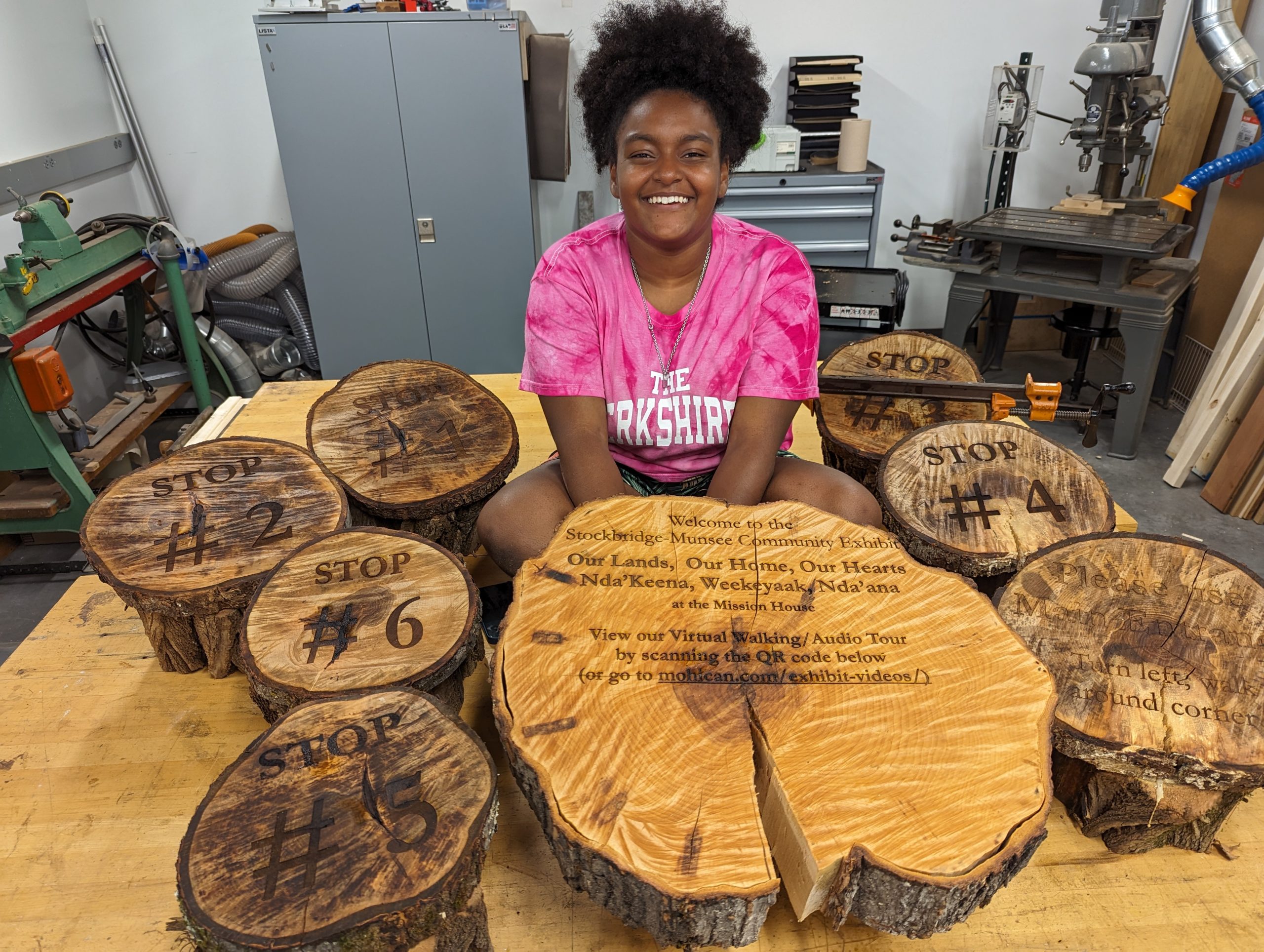
Yoheidy approached the Makerspace and, in collaboration with expertise and tools from the Science Shop, learned how to use an industrial laser engraving machine to etch a welcome sign with QR code, as well as multiple audio guide messages, onto sanded wooden discs. She attached these discs to sloped wooden bases (“wedges”) using woodworking dowel joinery, wood glue and a mallet, and then applied a natural, non-toxic preservative coating of Walrus-brand tung oil. 
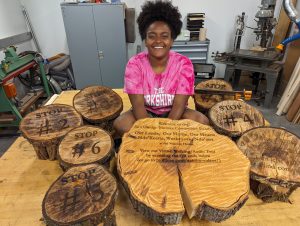
Yoheidy sits with her series of laser engraved wood slabs. She later added a laser engraved metal QR code label that directs users to the hosted video tour.

Yoheidy sits with her series of laser engraved wood slabs. She later added a laser engraved metal QR code label that directs users to the hosted video tour.

The day after completing all of this work, she installed these at the Mission House garden, and then created these stunning video and audio tours to guide local and remote viewers through the gardens.  

To learn more about this project, please be on the lookout for an upcoming Makerspace guest blog post by Yoheidy Feliz.
Contributors: Stockbridge-Munsee Community Historic Preservation Office (Staff: Bonney Hartley, Historic Preservation Manager; Student: Yoheidy Feliz), Science Shop (Staff: Jason Mativi, Michael Taylor), CES & Zilkha Center (Staff: Drew Jones, Christine Seibert), Makerspace (Staff: David Keiser-Clark)

Cloning the Last of its Kind
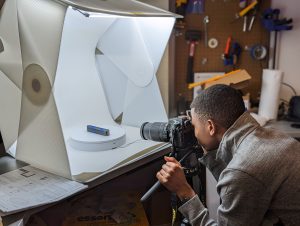
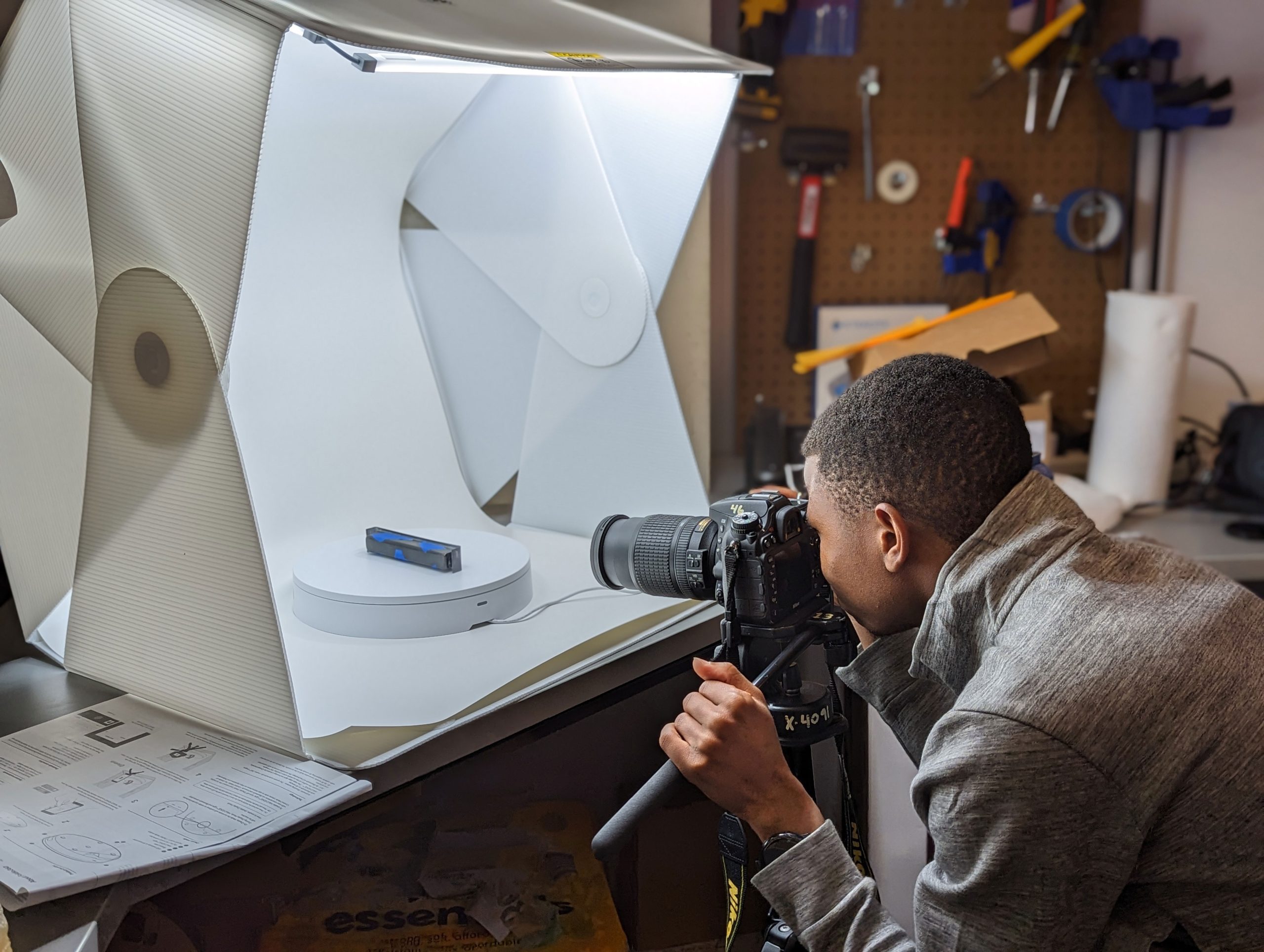
Milton Vento ‘26 using photogrammetry to create a 3D object

Milton Vento ‘26 using photogrammetry to create a 3D object

Most recently, Associate Professor of German, Chris Koné, approached the Makerspace with a problem: all but one of the file hanging clips to his beloved office desk had broken. The result: piles of overflowing manila folders surrounding his desk, cramping his office and style. He searched Ebay, Etsy, and Amazon, but was unable to find replacement parts. He even visited a store in NYC that specializes in providing office parts. Alas, the parts were obsolete. So he approached the Makerspace and asked if we might be able to replicate his last remaining viable part.
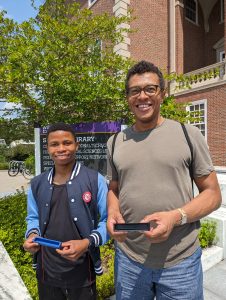
 

Milton Vento and Chris Koné hold the original and cloned objects.

Milton Vento and Chris Koné hold the original and cloned objects.

Milton Vento, the Makerspace’s summer student worker, took on the task as his first project, using it as an opportunity to learn photogrammetry, an accessible and low-cost method of taking many photographs of an object from varying angles and then using software to stitch them together into a 3D digital object. He expanded the project by testing four different methods of creating 3D objects using: standard manual DSLR photogrammetry with Metashape software; photogrammetry using a smart turntable that rotates and sends an infrared signal to the DSLR camera, causing it to iteratively release the shutter and then advance the turntable several degrees and then repeat that process; an older DAVID5 object scanner; and the RealityScan app that requires only a smartphone. This exploration resulted in two distinctly more efficient workflows that will become standard use this fall in the Makerspace. 

He also successfully re-created a 3D object of the final remaining desk part, and printed and delivered a half dozen of these parts to Chris. Should any of these ever break, the file can easily be retrieved and re-printed. 

Contributors: German Department (Professor: Chris Koné), Makerspace (Staff: David Keiser-Clark, Student: Milton Vento)

Future Project Ideas

One upcoming and likely collaboration between the Makerspace and the Zilkha Center would be to laser etch additional sustainably-harvested Hopkins Forest wood slices to create signs for the Williams College Community Garden. Additionally, the Zilkha Center, Makerspace and MCLA Physics and Environmental Center may brainstorm the possibility of creating a larger prototype for upcycling plastic into pellets. The pellets could then be used for injection molding, given to local artists for artwork, or sold regionally; this idea was sparked by Smith College’s collaboration with Precious Plastics


You can find this blogpost and other sustainability projects at sustainability.williams.edu.

Cave Bear Tooth: Preserving the Past with Pixels

A prehistoric cave bear tooth (a molar), excavated from Divje Babe, a cave site in Slovenia that also houses evidence of Neanderthal activity. The tooth is estimated to be 80,000 years old.

A prehistoric cave bear tooth (a molar), excavated from Divje Babe, a cave site in Slovenia that also houses evidence of Neanderthal activity. The tooth is estimated to be 80,000 years old.

What happens when a scientific technique meant to illuminate the past threatens to erase it? That’s the puzzle at the heart of an interdisciplinary project at Williams College, where Chemistry Senior Lecturer Anne Skinner and a team of Makerspace collaborators including Sebastian Tabit ‘25, Sam Samuel ‘26, Alessandra Menjívar ‘26, Camily Hidalgo ‘26, Tazmin Appiah ‘25, and myself set out to solve a very modern problem using very ancient material.

The object in question? A prehistoric cave bear tooth, excavated from Divje Babe, a cave site in Slovenia that also houses evidence of Neanderthal activity. The tooth is estimated to be 80,000 years old—far beyond the limits of radiocarbon dating.

Enter Electron Spin Resonance (ESR) dating, the technique Anne specializes in. ESR is powerful because it can measure radiation damage in buried objects up to several hundred thousand years old, making it one of the few methods capable of dating a sample this old. But here’s the catch: ESR dating destroys the sample. Once the tooth is tested, it’s gone forever.

A prehistoric cave bear tooth (a molar), excavated from Divje Babe, a cave site in Slovenia that also houses evidence of Neanderthal activity. The tooth is estimated to be 80,000 years old.

A prehistoric cave bear tooth (a molar), excavated from Divje Babe, a cave site in Slovenia that also houses evidence of Neanderthal activity. The tooth is estimated to be 80,000 years old.

So, how do you preserve something that can’t be preserved?

The Solution: Photogrammetry and High-Resolution 3D Printing

The Metashape software displays "orbits" of the many flat digital photos that were required to accurately construct the 3D object of the tooth (viewable in the center of the photo).

The Metashape software displays “orbits” of the many flat digital photos that were required to accurately construct the 3D object of the tooth (viewable in the center of the photo).

Before an object like this tooth is subjected to ESR, we set out to create a permanent, high-resolution, 360-degree digital record of it. Our goal: generate a 3D model so detailed that paleontologists decades from now could examine the tooth’s grooves and ridges as closely as if they held the original.

This wasn’t just an exercise in academic curiosity. Teeth are one of the most species-specific anatomical features in mammals. Species designations often hinge on subtle differences in tooth structure. Given that mammal species are generally constrained by both time and environment, the ability to revisit the shape of this tooth even digitally is essential to maintaining scientific accuracy.

Beth Fischer, Assistant Curator of Digital Learning and Research at the Williams College Museum of Art, led two photogrammetry workshops that covered photography and using the Agisoft Metashape software. These workshops were well attended and incredibly helpful to us.

These are views of the digital model within Metashape's software. Clockwise from top left: (1) a wireframe of 203,000 triangular vertices; (2) a color map that represents the software's confidence in the digital reconstruction (blue = high confidence, red = low confidence); (3) a solid rendering of the object; (4) a model that includes color texturing.

These are views of the digital model within Metashape’s software. Clockwise from top left:
(1) a wireframe of 203,000 triangular vertices; (2) a color map that represents the software’s confidence in the digital reconstruction (blue = high confidence, red = low confidence); (3) a solid rendering of the object; (4) a model that includes color texturing.

Using photogrammetry, a technique where detailed 3D models are made by stitching together a series—typically between 60 and 300—of high-resolution photos, we generated a complete digital scan of the tooth. This method is especially powerful in the field, where researchers may only have time to snap photos before reburial or transfer.

Anne’s verdict? The Makerspace’s digital rendering of the cave bear tooth was “highly satisfactory.” Even the resulting resin 3D print produced with the Science Shop’s in-house Stratasys printer was “quite satisfactory and usable.” However, our rapid FDM (Fused Deposition Modeling) 3D print of standard PLA, while helpful for quick prototypes, lacked the fine detail required for scientific documentation.

What We Learned (and What Comes Next)

This project was as much about process as it was about product. We asked:

  • Establishing the dimensions of the digital 3D tooth (in Metashape) so that it exactly matches the real life tooth's measurements taken using calipers.

    Establishing the dimensions of the digital 3D tooth (in Metashape) so that it exactly matches the real life tooth’s measurements taken using calipers.

    Can we scan all surfaces of an object ourselves? With a carefully positioned camera, proper lighting, and a rotating turntable, yes. But for even better results, investing in multi-angle structured light scanning or more robust photogrammetry rigs would help.

  • Can we print highly detailed models ourselves? Our current tools (Prusa MK2, MK3, and Dremel Digilab) are great workhorses, but not yet up to the task for archival-quality replicas. High-resolution SLA (stereolithography) printers, especially those with resin-based technology, offer much finer detail with smoother surfaces.
  • Can we replicate the feel of bone? We’re intrigued by the idea of creating our own 3D filament using bone powder though this would take experimentation (and a safety check!). Another challenge is capturing the color variations between bone and embedded soil. While current printers work with uniform filaments, full-color printing or texture mapping onto the 3D model in digital environments might be a viable workaround for now.

A Window into Ancient Minds

Why does all this matter? Because the site of Divje Babe is home not just to teeth and bones but also to what many believe could be the world’s oldest known musical instrument. A pierced bone, long thought to be part of a bear, has holes that some researchers argue form a flute. It’s a controversial claim challenged largely by those who underestimate the cognitive and cultural capabilities of Neanderthals.

But that’s the point.

Every preserved tooth, every digitally immortalized fragment, helps rewrite the story of who we are. This project isn’t just about technology or teeth. It’s about legacy ensuring that the data of today can still speak clearly to the scientists of tomorrow.

Looking Ahead

This pilot project was a success. Anne has already begun applying the lessons learned to future samples, including those from students conducting honors theses on sites across Europe and Asia. We’re now exploring expanded collaboration across departments: Chemistry, Biology, Geosciences, and beyond and even considering an independent study to deepen this research into 3D scanning and scientific preservation.

Comparison of an 80,000 year old cave bear tooth (on left) with a 3D printed resin tooth derived from student photogrammetry work (on right).

Comparison of an 80,000 year old cave bear tooth (on left) with a 3D printed resin tooth derived from student photogrammetry work (on right).

We’re excited about the possibilities about pushing the limits of what can be preserved, even when the object itself must be sacrificed.

Thanks to Anne Skinner’s vision and the incredible work of our student team, we’re one step closer to ensuring that prehistoric stories can still be told even in a future filled with lasers and layers of resin.