
When you walk into the Makerspace this summer, you might notice a few new additions that don’t quite look “new.” That’s the point.
This summer, the Makerspace team of Divine Uwimana ‘27, Qi Wang ‘26, and David Keiser-Clark, Makerspace Program Manager, brought new meaning to old materials, transforming pieces of Williams history into functional, beautiful tools for creativity and collaboration.
Apothecary Cabinets
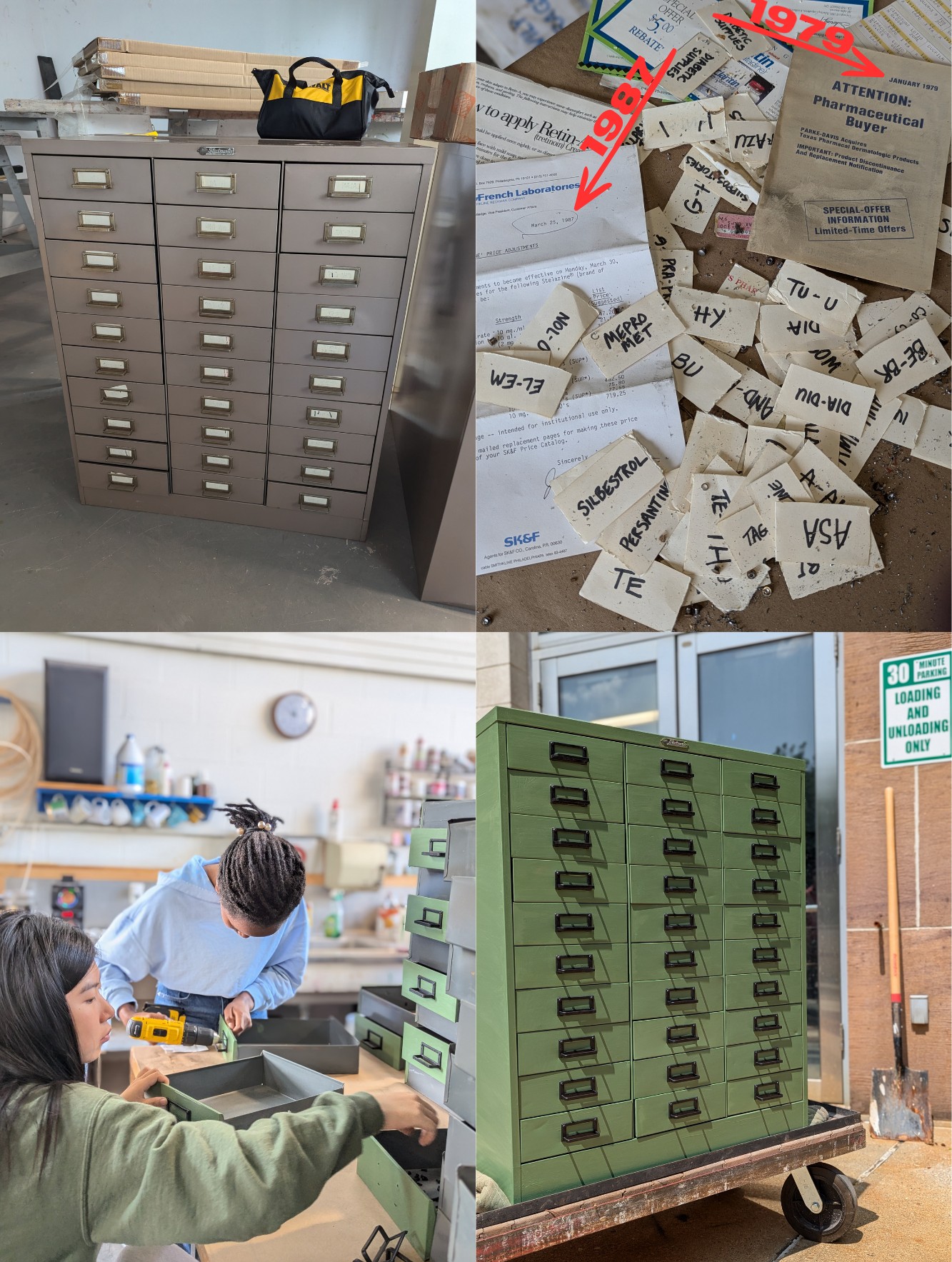
Upcycled three apothecary cabinets, rescued from the former Purple Dragon store on Spring Street, and that date back to Hart’s Pharmacy. The photo in top-right is of papers discovered when cleaning and painting the cabinets.
Take the three apothecary cabinets, for example. These dusty, beige, medicinal storage units were rescued from the former Purple Dragon store on Spring Street—once Hart’s Pharmacy and now just a memory. They now help organize the Makerspace’s growing inventory of electronics, mechanical fasteners, adhesive tapes, small tools, and material supplies in neat little drawers, right where they belong.
- Restoration: removed handles, vacuumed, painted with non-toxic Ottosson Linseed Oil Paint
- Next steps: Collaborate with the Spencer Print Studio and their Risograph (it’s like a Xerox copier that outputs vivid screen prints) to create artistic drawer labels.
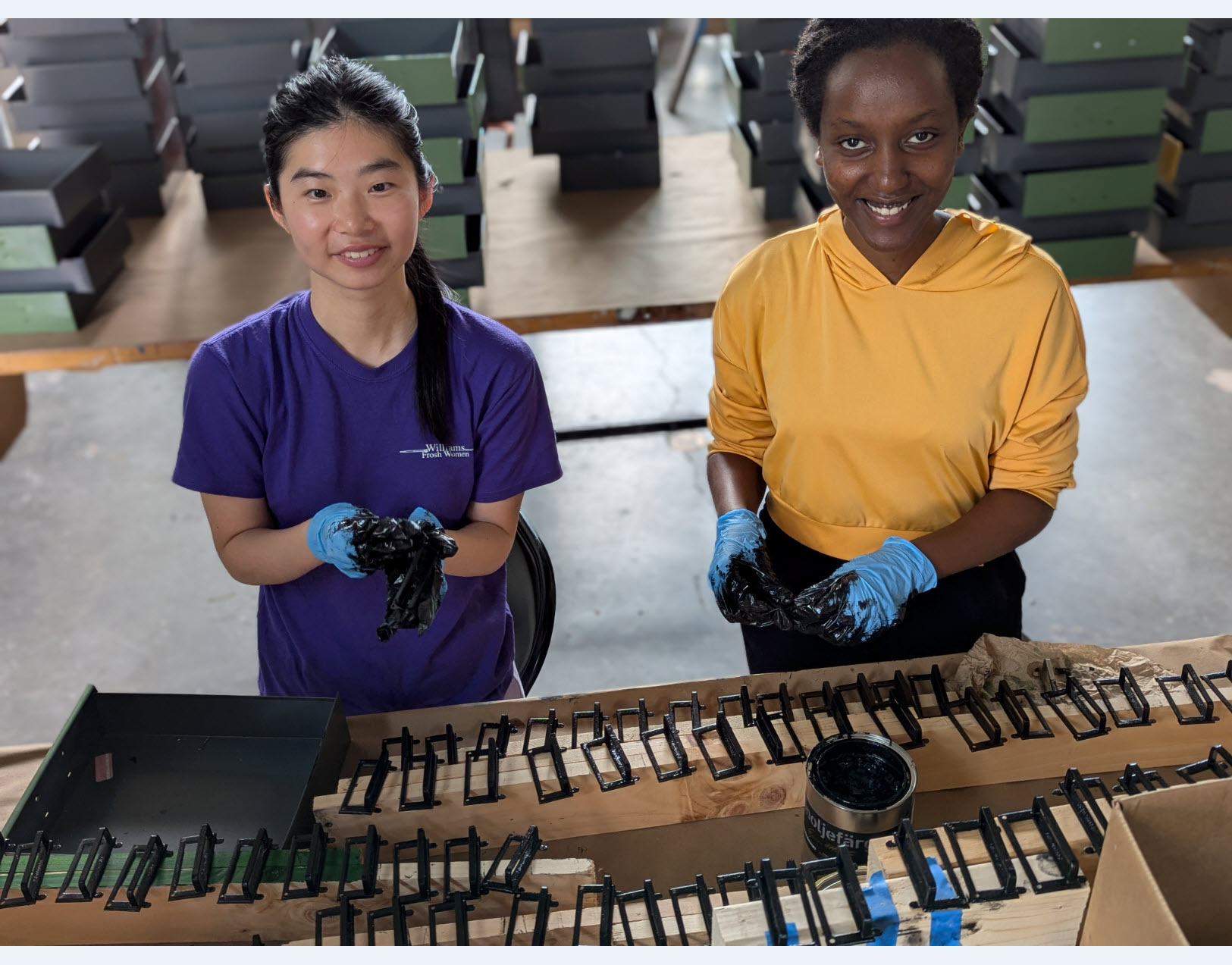
The summer Makerspace team of Divine Uwimana ‘27 and Qi Wang ‘26 transformed these apothecary cabinets.
Magazine Rack
Or the tall metal magazine rack, once tucked away in Room 204 of Bascom House before the Davis Center moved to its new building. Rather than becoming scrap, it’s now a sleek storage solution helping Makerspace users find inspiration through printed guides and materials.
- Restoration: reformed sheet metal feet, painted with non-toxic Ottosson Linseed Oil Paint
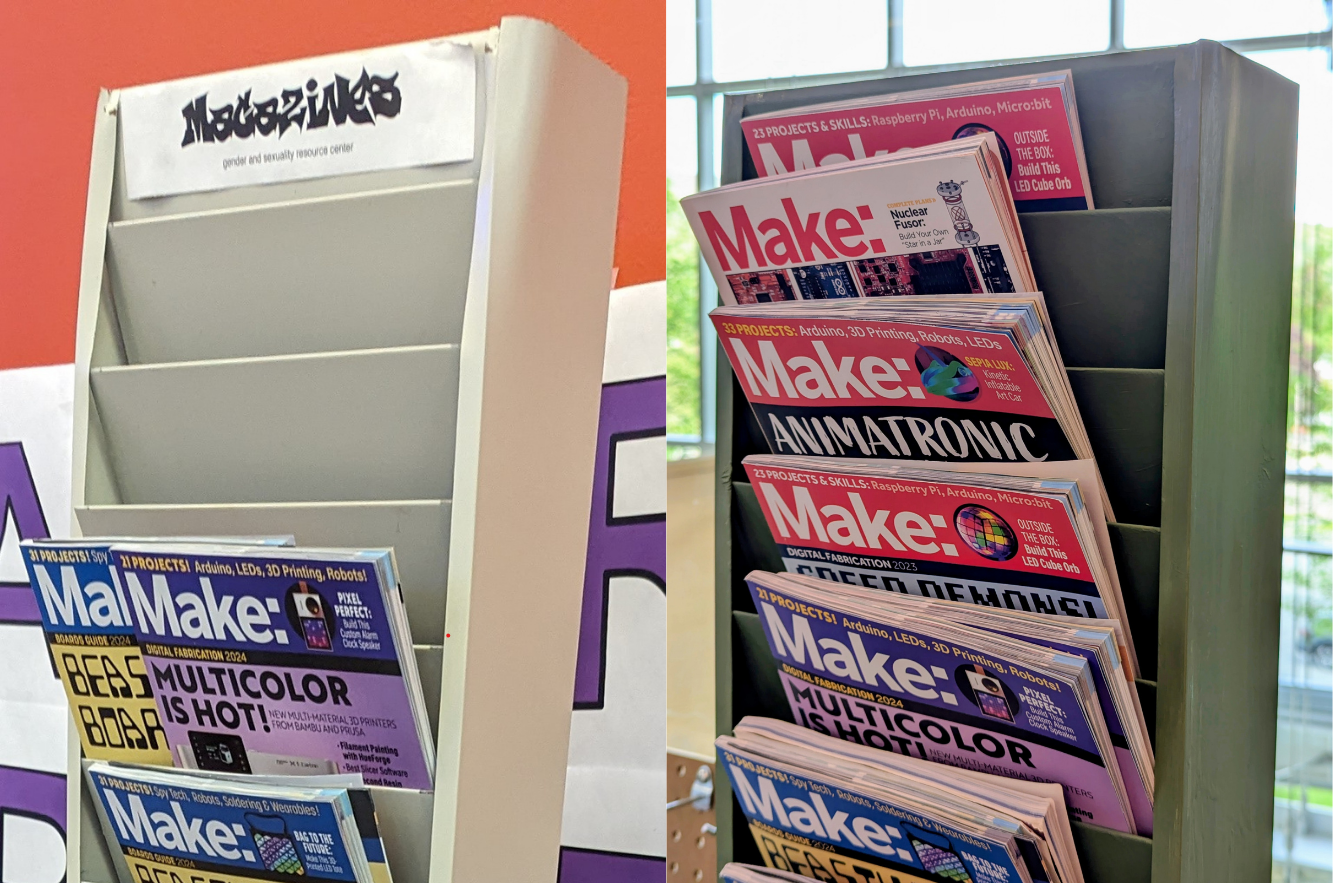
Upcycled one magazine rack from the old Davis Center in Bascom House.
Cubby Organizer
And then there’s the cubby organizer, which tells a particularly satisfying story of transformation. What began as a broken particle board box used to store printer resin was reborn, after a careful sun cure, some table saw finesse, and a lot of ingenuity, into a functional storage cubby, proving that even sticky beginnings can lead to tidy endings.
- Restoration: Salvaged usable particle board, cut and routered, and reshaped into a purpose built cubby for our organizer trays
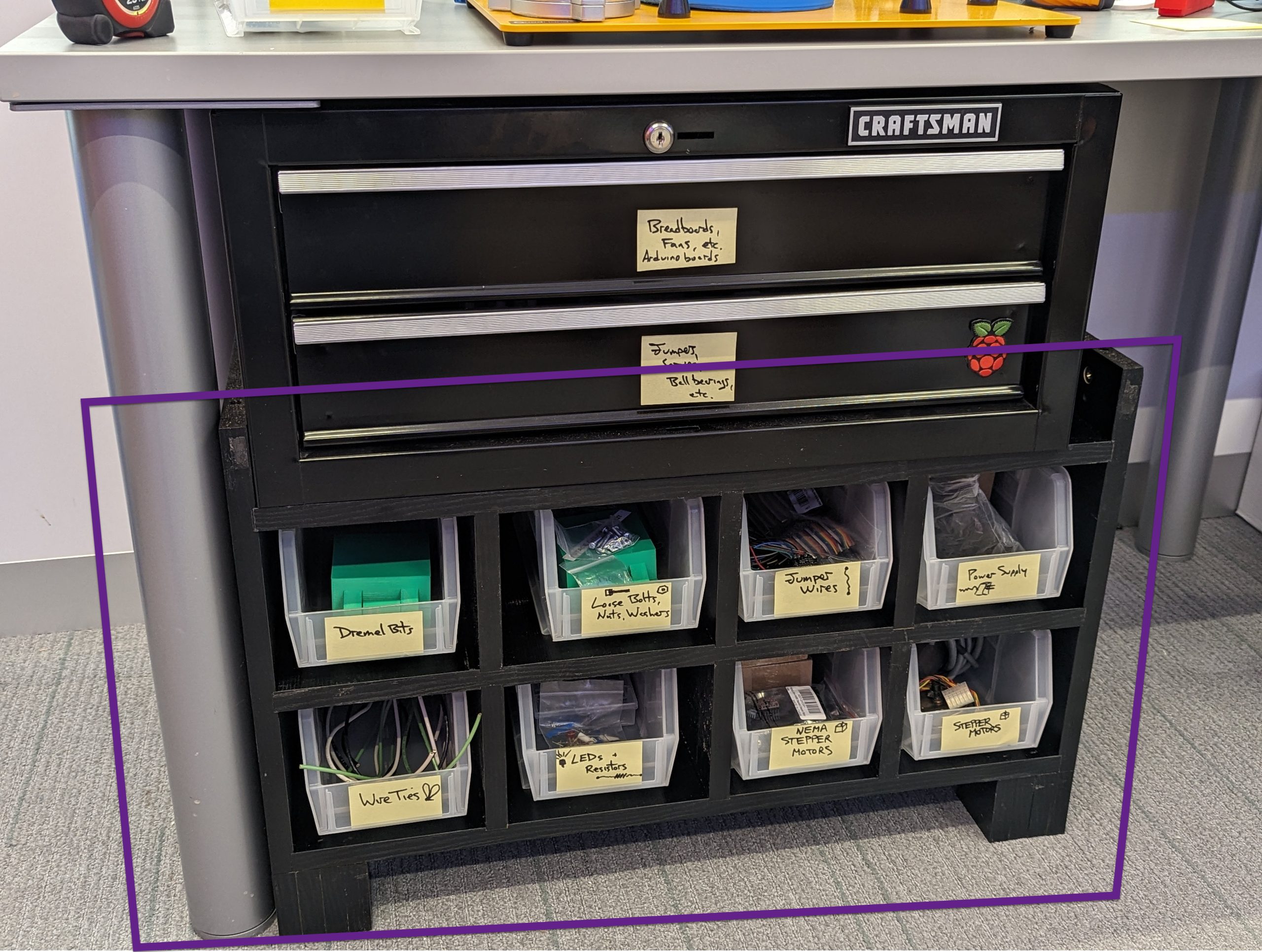
Repurposed a broken and trashed particle board box and David recrafted it into the Makerspace’s first custom organizer. Less material for the landfill, and it’s actively in use.
Work Tables
We also welcomed three sturdy tables from Bascom 204, each measuring 60″ by 30″, providing generous surface space for sketching, soldering, and brainstorming. These pieces carry with them the spirit of student collaboration from their previous home and now continue their journey in a space built on invention.
- Restoration: removed blemishes and splinters by sanding formica top and oak edges, and then our awesome Facilities crew sprayed them with a coat of polyurethane
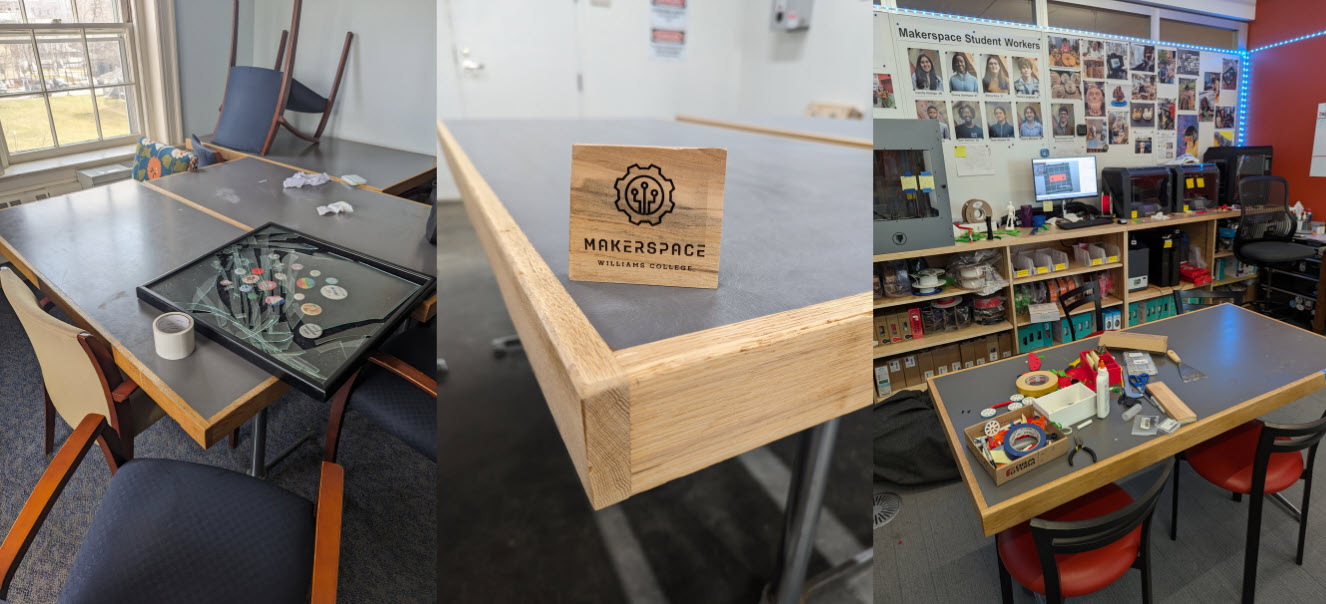
Repurposed three tables, also from the former Davis Center that was in Bascom House. David sanded, oiled, and applied a topcoat of polyurethane. These tables have never looked better, and are staples now in the Makerspace and FabLab. Zero dollars spent on furniture.
Workbench
Finally, the new workbench carries a deeply personal legacy. Donated by Carolyn Behr, it once belonged to her late husband Robert “Bob” Behr, Class of 1955. After decades of serving as the heart of his home workshop, it now anchors our own, a quiet nod to generations of builders past and present.
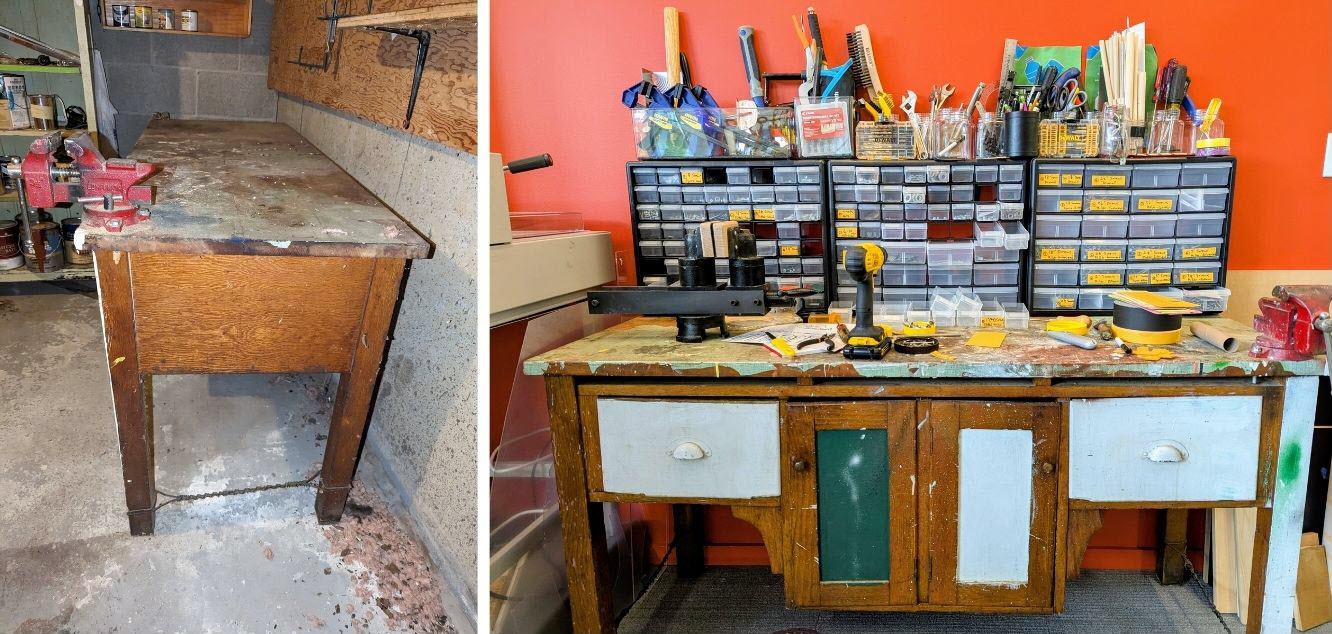
This workbench was donated by Carolyn Behr. It had belonged to her late husband Robert “Bob” Behr, Class of 1955. After decades of serving as the heart of his home workshop, it now anchors our Makerspace, a quiet nod to generations of builders past and present.
The Makerspace: Practicing Sustainability
These upcycling projects are more than just practical solutions—they are a reflection of how the Makerspace values sustainability, storytelling, and thoughtful design. Every scratch, label, and drawer has a history. And now, a future.
Stay tuned for more stories like this as we continue to build with care—for the planet, the past, and each other.