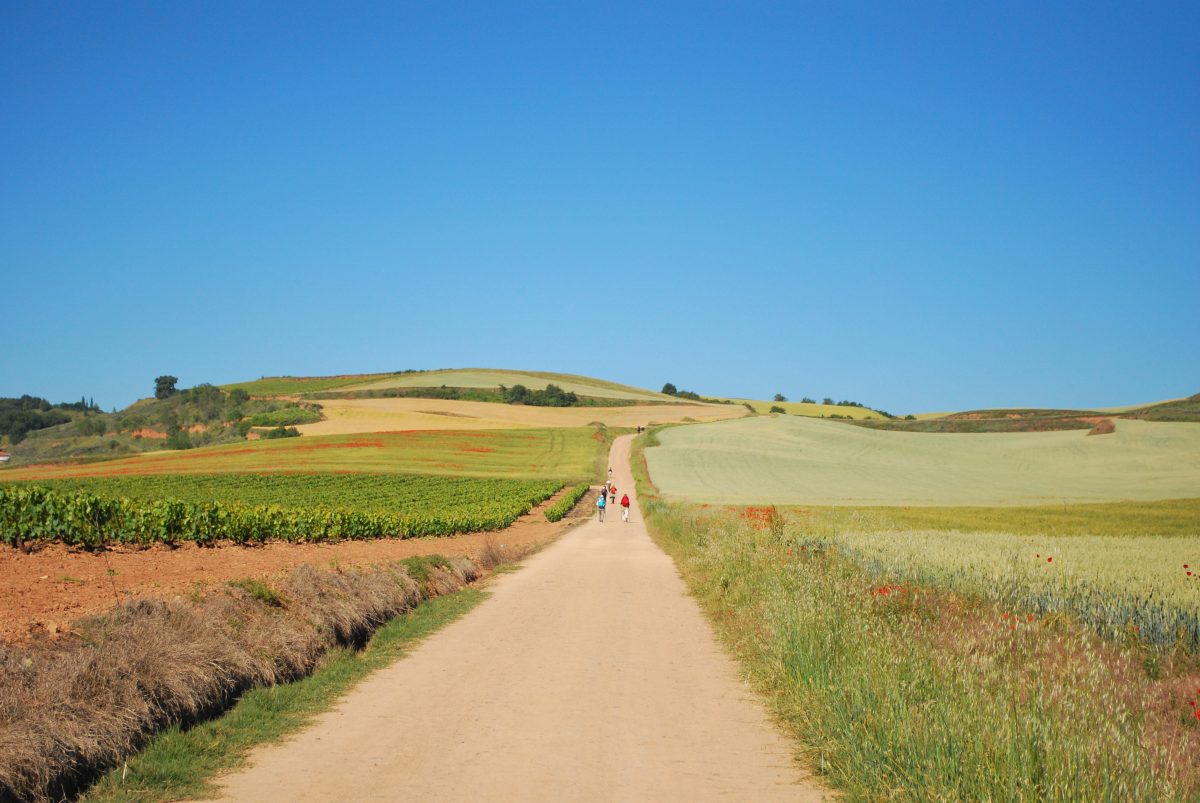
Walking

Don’t look me in the eye,
stay by my side.

Don’t nod your head,
follow my tread.

Jesus doesn’t show his face,
yet footsteps shuffle in his place.

So let’s go walking.

Amongst us he first stands,
in temples made by human hands.

Then he says he’ll not depart,
when he dwells within our heart.

How can he walk if he’s stuck to me?
Fixed to my present infirmity.

He pushes me out of the door.

Something changes as we wander about,
only I talk yet he eases my doubt.

The presence I say that I adore,
becomes reality and more.

Take me back to the garden of old,
or the glory of the city of gold.

For we are walking.


In the Silence, I Hear Your Voice

In the tender hush—
the silence within silence—
stillness unveils presence:
not marked by time,
but wrapped in it.

An ever-present God,
eternal,
unfolding,
Alpha and Omega—
not beginning,
not end,
but the luminous hush
of now.

Just this.
And this.
And this:

the rustle of one leaf’s descent,
the ripple that startles a still pond,
the falling blossom’s wordless prayer—
each echoing the sacred
and the vast.

In the heart of stillness,
where emptiness cradles fullness,
each breath becomes a hymn.
Each step, a psalm.

Everything I’ve done
remembers you—
whispers
your
name. 

This poem is a quiet meditation on divine presence revealed not through words or doctrine, but through silence, stillness, and the unnoticed rhythms of nature. It speaks to God who is not confined by time but is intimately present in each fleeting moment—a falling leaf, a ripple, a breath. In the emptiness of silence, one finds fullness, and in that fullness, a deep remembering: that all their life, every action, has been quietly shaped by and directed toward the sacred. It’s a recognition that the ordinary is holy, and that God is heard most clearly in the hush beneath all sound—a silence so intimate, so profoundly still, it becomes a meeting place. Here, face to face, without distance or mask, the sacred gazes back from within the quiet rustle of leaves, the breath within breath. God revealed not by thunder, but by the delicate whisper of the everyday, each moment an encounter, each silence a communion.


Isaac Rivera ’26 is a Biology major from Denver, Colorado. He is drawn to the quiet space between Zen and Catholicism, where presence becomes a form of prayer. He enjoys long runs at sunset, slow conversations over mezcal with friends, and writing about land, identity, and spirit. After graduation, he is discerning between teaching, military service, and humanitarian aid—seeking a life rooted in strength, stillness, and service.


In the Trees 

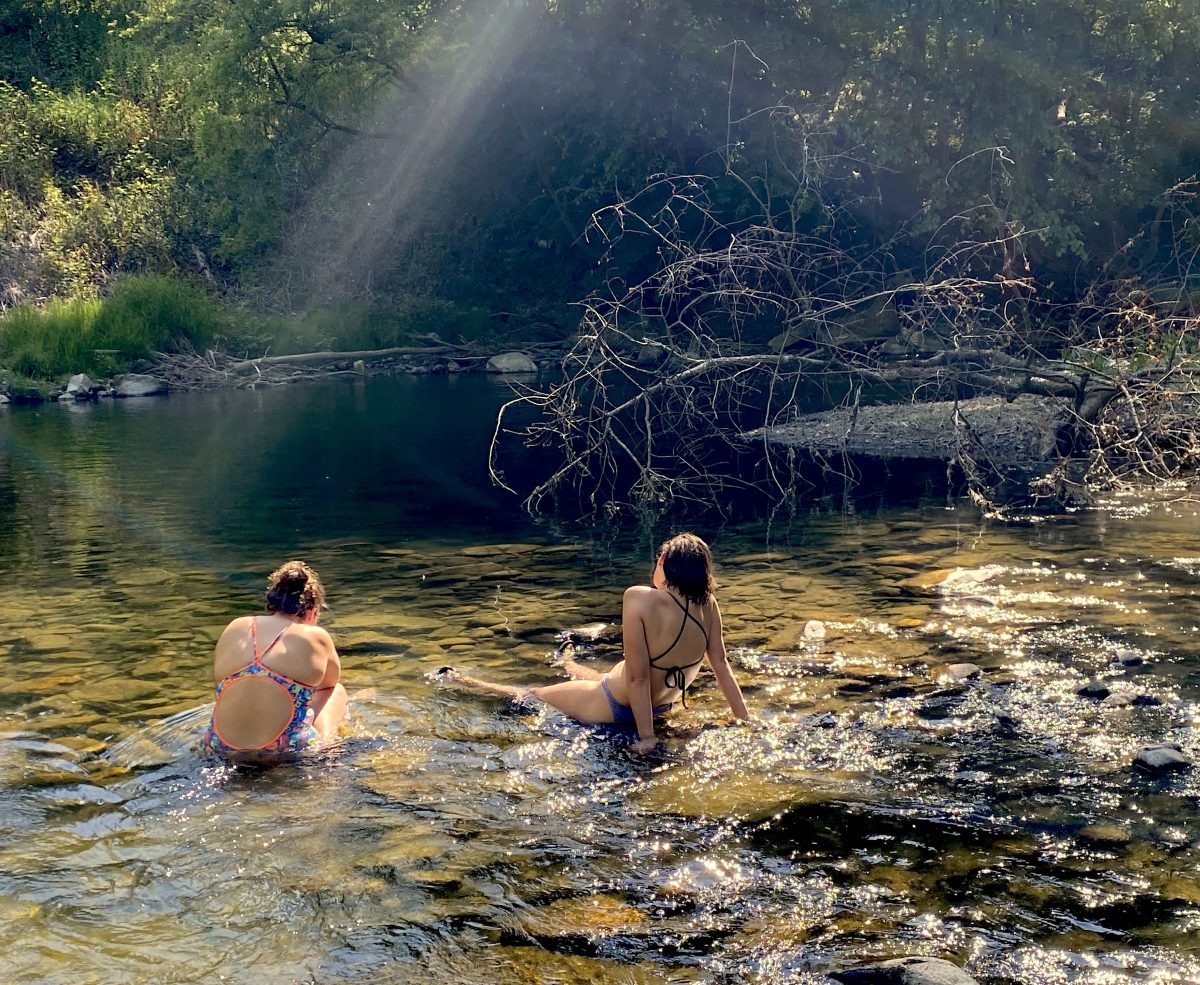
I followed the winding path a ways from our campsite—Bible, journal, and pen in one hand, water bottle and headlamp in the other. I had traversed this same path about an hour ago to get water, which was now boiling in the comically large pot over the fire. The roots wove up and down through the dirt. When I was younger, I used to mistake them for snakes, jumping back in fright, but no longer. I swerved around the roots with ease and hopped down the “stairs,” larger rocks shoved into the steep embankment by some kind-hearted trail volunteer that opened onto the pond. 

Pond wasn’t quite the right word for it. The word pond conjures the image of a small body of water, muddy, filled with frogs, and surrounded by tall grass. A breeding ground for mosquitoes and all other sorts of pests. No, pond wasn’t the right word. 

I surveyed the seating options and staked my spot on a large rock which slanted gently into the water. It wouldn’t provide much rest for my aching back, but it was flat enough that I figured I could lay down and take a nap should I feel so inclined. I heard rustles around me as the others settled into their chosen spots and then, after a minute, it all went quiet. It was the kind of silence that one can only find out in the wild. Silence that isn’t quite silent, but it cuts deep to your core. Each whisper of the wind through the tops of the trees. Each slap of the water up against the rock at your feet. Each splash as a fish jumps into the air seems to roll over you, attempting to remind you that this is real, you are here. It could almost be a dream, but then a bird caws or a chipmunk rustles in the undergrowth. 

You can’t find that kind of silence in the city, where it never feels like a dream. There is too much action, and there are too many people. Just as you begin to drift into that dreamlike state, a child screams or a fire engine wails and you are reminded, harshly and unpleasantly, of where you are. The silence isn’t the same. 

I sat there on the rock for a moment before I began to move again, my body somehow too restless after hiking for 12 hours that day and summiting three mountains to be still. I took off my shoes, my trusty Chacos, first. Then I peeled off my socks and stretched out my aching legs. Only a few weeks into the summer and the z-shaped stripes of pale skin on my foot created by the straps of my sandals were already glaringly white compared to the dark tan around them. This was a result to be expected after many hours spent stretched out in a canoe, the sun beating down on them. Above the line of my socks, my legs were coated in mud, and I shuffled my way down the rock to the water’s edge. I dipped a hand in first to test the temperature. It was perfect—slightly chilled as a mountain pond should be, but the warm summer sun had raised the temperature just enough that I could splash the water over my body without feeling shivers down my spine. 

I splashed the water up onto my face and rubbed, feeling layers of built-up grime peel away. Then I cupped my hands and poured water onto my legs and began to scrub at the patches of dirt which coated them. They slowly began to melt away, turning first to mud, and then with many more layers of water, and then finally disappearing. I lay back on the rock, letting the rays of late afternoon sun evaporate the drops of water off my legs. I crossed my arms behind my

head and closed my eyes. I could feel the sun soaking into my skin, its warmth seeping into the cavity behind my eyes. There was a slight orange glow that I could still see, even with my eyes closed. 

A dragonfly buzzed over my head, and I abruptly sat up. I watched it make its way over the pond to settle on a lilypad, then lift off and fly back over to me. It hovered in the air for a moment and I held out my hand in invitation. It hesitated, then turned its tail and flew in the other direction, back over the pond. I looked up into the sky. The wisps of clouds were frozen in the air like the pieces of cotton ball that used to get stuck to my fingers when I was doing art projects in elementary school. There was always just a little bit too much glue on my fingers to pull them off. The trees were casting their dark shadows over the pond’s surface now and I opened my Bible for the first time. 

I opened it to the passage I always turn to—in pain, in anger, in sadness, in joy. “For our light and momentary troubles are achieving for us an eternal glory which far outweighs them all.” There was rustling on the rock behind me. I knew if I turned around, I would see Daniel sitting there. But my thoughts that summer had already become too occupied with him, and there were more important things to think about. Like the setting sun, turning the bottom hemisphere of the sky a burnt sort of orange. It wasn’t really a beautiful sunset, not like the ones you see when you google the word “sunset.” It was a calmer, more gradual lowering of that glowing ball of fire from the sky behind the mountains in front of me. Or perhaps behind me. I couldn’t quite tell which direction I was facing and the light that was being cast from it filled the entire sky with an even glow. 

The fish had begun to quiet down. I could still see them swimming below the surface of the water, chasing each other to and fro in flocks. On occasion, one of them would still jump out of the water, much less frequently than before. All of the birds had flown away now, retiring to their nests for the night, and were nearly silent, except for the single confused calls that would pierce through the air every couple of minutes. The ripples on the water had slowed, too. The water bugs laid themselves down to rest wherever water bugs do. I could almost believe I was alone on that rock, looking out over the water to the now dark shadow of the trees on the far shore. I could have let it scare me, the fear of the cold. I was shivering now, so I slowly replaced the layers I had shed before, one by one. The darkness and the thought of the bears which roamed through the forest could have frightened me too, but I knew I wasn’t alone. 

On the rocks around me and slightly deeper into the forest were eight others I had come on this trip with. I could only imagine they’d spent the past few hours in much the same way as I, although I was sure I had snagged the best view. Our counselors were still up at the campsite, cooking a dinner which would hopefully be ready soon. My stomach was rumbling. And of course, there in the trees which lined the pond and in the clouds in the sky and the moon which now shone on us from above and further upward and onward, He was there. 

I’d never really managed to find God out there before in the wilderness. Some part of me believed He was somewhere, far off in the sky, watching over me as I stumbled over rocks, pulled myself over boulders on the trail, and lay myself down to sleep under the stars. When I used to stare up at the constellations in the dark, craning until my neck hurt and I had finally managed, with much help, to find the North star, I wished deep in my heart that I could truly believe He was up there, looking back down at me. I imagined that to Him, I was one of many uncountable stars, each as new and beautiful as the last. 

I’d heard the others at camp the summer before share their stories of how deeply they believed in Him, how He had saved them from kidnapping, from malignant tumors, from depression, and saved their parents from strokes. They were so firmly set in their faith, and I would cry myself to sleep wondering why I, despite all my parents had tried to instill in me my entire childhood, still couldn’t manage to believe. But sitting there beside that mountain pond as dusk turned to night, something finally clicked. How could I be alive in all this, after a day filled with stress and tears? We had almost run out of water on the trail after our second peak when one of the water spouts was broken. I had run up and down about half a mile of trail three times to fill people’s bottles from the small stream of water we had seen running down the side of a rock. Our plan to rest on top of the next mountain had been destroyed and I had barely made it into camp with my wits intact. But here I was and the sun had set just perfectly behind the mountains and I knew that this time by the water with nothing but me and the sky above me couldn’t have been an accident. 

There is a peace that comes with this realization, that you are not, are never, alone. A sense of calm in the understanding that life is not random, that it is not up to us to figure out our purpose. There is a power that comes with the knowledge that we are not the deciders of our own destinies. A power that has allowed me to make hard decisions with peace in my heart, has gotten me through college applications and my Grandpa’s death. To know that He is always there, guiding our footsteps and our hearts. I finally began to understand this beside that pond, and I haven’t gone back. 

I said before that one couldn’t quite call it a pond. For me, it seemed more of a gate, gilded and grand. I didn’t know what was on the other side, but as the sun sank behind the trees and goosebumps began to run up my legs from the cold and perhaps a bit of something else, I felt that I finally saw Him the way they did, just a little. I think He really was there by that pond, in the breeze and the animals, in the rocks and the water that I splashed up onto my legs, and in me.


Elizabeth Harris ‘28 is probably going to be a double History and Chemistry major. She is from Brooklyn and enjoys going on runs, calling her mom, writing in her journal, and taking dance classes at Williams. She is very grateful to Telos for providing a space to explore the intersection of learning and her Christian faith.

On Christian Mysticism

On Christian Mysticism.docx

Andrew Dao ‘28 is a prospective English major from Westford, MA. He finds the Scholastics to be wonderful thinkers and is thankful for Telos to have given him opportunities to explore them more. As such, he believes in free will and the existence of the soul (or consciousness), and isn’t a big fan of physicalism. He also enjoys hanging out with friends and watching cheesy movies.

Unravelings

Very early on, I believed. These memories are faint, but I still remember praying aloud every Sunday for a parking spot, at my mom’s request, while my mom drove us around the cramped alleyways of Taipei. I asked God for help whenever I lost something, which I often did. I prayed with my mom before bed. We prayed together when I was diagnosed with a severe case of scoliosis and when we couldn’t find my cat. Although I was never that dedicated—going to church and reading the Bible were never fun to me—I did have faith.

My mother, a devout Christian, raised me in her non-denominational church in Taiwan. It was a thriving and close-knit community, but it might seem pretty unusual to most Christians in the US. We didn’t celebrate Christmas or Easter. Our meetings had no sermons, no priests or pastors, no pews—we all sat in folding chairs, people stood up spontaneously to pray or testify, and people would call on the name of Jesus again and again, with increasing fervor and volume. The adults and baptized teenagers would have grape juice in tiny little plastic cups. They practiced full-immersion baptism in a small bathtub in the basement. 

I don’t remember exactly how or why I stopped believing in God; it happened gradually, so that when I was twelve, I came to the conclusion that God didn’t exist. 

As a child, I understood prayer as a magic spell that was supposed to get me whatever I wanted. I quickly realized that my magic spell didn’t work most of the time, so I largely stopped praying. But I sometimes still made bargains with God when I was really desperate, when I really needed something to happen, rather than merely wanting it. “If you do this for me,” I’d beg, addressing a God I wasn’t sure was listening, “I promise I’ll worship you forever. Give me another chance, and I’ll give you another chance, even though I don’t know if you exist.” God promptly let me down. This sounds silly now, but for a child who was completely sincere, it felt like a serious breach of trust. I felt like God had betrayed me. I don’t think anybody offered me a different interpretation of prayer, one that went beyond asking a distant genie to grant wishes. Since that was my only conception of prayer, and prayer was my only relationship with God, I felt like God wasn’t there at all. 

Apart from this feeling of abandonment, I started asking questions that my mom told me not to ask. I had always annoyed adults with my incessant inquiries, and as I learned more about the world, I developed many questions about our faith. It wasn’t even something as deep as the problem of evil; most of it was inspired by my mom and her church’s insistence that every single word in the Bible was the literal and perfect word of God. As a kid, I probably took that stance even further and more literally than they intended it, thinking that God personally wrote everything in the Bible and completely endorsed it. So when I began to read the Bible for myself, I wanted to know if God really ordered disobedient children to be stoned to death, whether all the people and animals in the world were produced from incest after Noah’s ark, and whether my mom really thought that wives must submit to their husbands (she said she did, even though she was far more assertive than my dad). Apparently, my burgeoning moral compass, curiosity about science, and refusal to accept patriarchal norms got in the way. Adults evaded and dismissed my questions, refusing to have an actual discussion about them. I was left feeling estranged and confused. What was supposed to be God’s writings and teachings began to seem ridiculous. Once I started thinking for myself, my childhood faith became untenable. 

I grew bitter. I rolled my eyes when people praised God or read the Bible to me. I read novels during church, paying no attention to anything I was told. I made it clear that I didn’t want to be there. Even as my mom pressured me to go to Bible study and well-meaning cousins called me to read the Bible, I disengaged completely and inwardly scoffed at everything. In my stubborn pride, I considered myself above it all. 

This was the first unraveling. My faith came apart completely; the belief system that my mom gave me had disentangled beyond repair, and could no longer hold me.

As I got older, I developed an even stronger contempt for God, for religion, and for Christianity in general. In high school, I realized that I was bisexual and fell in love with a female friend who became the first person I’d ever dated. During my honeymoon phase, I was so excited that I almost told my mom about my relationship, hinting at it while leaving myself plausible deniability. But my mom immediately started panicking, saying that she was worried that Satan was luring me into sin. (When I was little, she often shared interviews about how God saved “formerly” gay people from their wicked homosexual lifestyles.) At this point, I had already identified as atheist for years, and my mom’s hurtful reaction to my attempt to share my joy only solidified and intensified my distaste for Christianity. After all, my entire high school friend group was also queer, and I received the message that Christians condemned our very existence as evil. Because I had never been exposed to any other form of faith, I was convinced that all Christians held these beliefs—beliefs that not only made no sense to me, but seemed actively cruel and harmful to me and my loved ones. As time went on, my attitude went even further than atheism, into something that could be more accurately described as anti-theism. Thus, I wove together an impenetrable set of ideas about Christianity, all of which I strongly opposed, since I am passionate about justice and equality for women and LGBTQ communities.

During COVID, something strange happened. I had been stuck in a multi-year rut of meaninglessness and emptiness that only got worse when I started college. I felt lost. Something was missing, something deeper than what my therapists could address, and I was inexplicably drawn towards religious and spiritual life. It’s hard to express just how shocking and surprising this new development seemed to me, considering the deep aversion I held against anything Christian; my yearning for God was completely out of character. You must understand that I was stubbornly atheist to the extreme, having rejected God much more resolutely than I ever believed in God as a child. It pains me to admit this, but ever since my first unraveling, I looked down upon people of faith as delusional and narrow-minded, and I was filled with contempt and bitterness against Christianity. 

I thought I had left faith behind forever. And yet, there I was, nervously setting up meetings with the College Chaplain, Reverend Valerie, meetings that proved to be revelatory and cathartic. One Sunday, I worked up the courage to step into an Episcopal church service, a drastically different experience from the Sundays of my childhood. I emerged stunned and in awe of how much it spoke to my soul. There I was, daring to ask questions again, this time finding myself engaged in refreshingly open and honest dialogue with priests and chaplains. They patiently encouraged my curiosity and demonstrated that I—a queer person who is deeply distrustful of exclusionary religion—had a valued place in the community, and that my faith did not have to go against everything I stood for. In fact, I learned that my faith could bolster and ground my passion for justice and reconciliation. There I was, dismantling my preconceptions about faith with the help of kind peers and mentors, surrounded by people of faith who welcomed me just as I was, difficult questions and all. There I was, somehow feeling God’s loving presence again, as if for the first time.

It felt like healing—from the ways that religion had hurt me in the past and from my own misguided prejudices against faith. It felt like freedom. 

As I tentatively dipped my toes into a very different kind of faith than the one I had known before, I felt pulled in, deeper and deeper; and the deeper I delved, the more alive I felt. Even though I was filled with wonder, I was also disturbed and perplexed at how this could happen. I was unraveling again; my cynical self was coming apart. If anything, this second unraveling was harder and more destructive than the first, since I was older now and had stronger and more deliberate convictions to untangle. This time, I had to painstakingly unravel the rigid intellectual edifice I had built up against faith for years. It was a long and arduous process, but I had help along the way—I read books that offered a radically different vision of faith than the one I was used to, I actively participated in progressive Christian communities online, and had long conversations with chaplains and priests. I learned that, for me at least, faith isn’t intellectual assent to a set of propositions. It isn’t about having absolute certainty; instead, I’ve found it to be more about trust and relationships and sacrificial love. At my current church, I learned that women and queer people could be, and are, in positions of leadership, bringing much-needed voices and perspectives to the church. I learned a new way to pray using the Episcopalian Daily Office and the Book of Common Prayer, which I have grown to love. I learned about various non-literalist ways of reading Scripture, discovering the vast and wonderful diversity in biblical interpretation and realizing that I didn’t have to shut down my mind and heart when reading the Bible. I learned that participating in my transformed faith, both communally and privately, brought me a special kind of joy and fulfillment that nothing else had been able to give. I learned to make peace, for the most part, with my mom’s expression of faith, even if I did not share it myself. Above all, I learned that God’s love is expansive—much more expansive than our selfish attempts to limit it. And Christ does not abandon his lost sheep. 

As I see it, God called me back. It might be presumptuous of me to relate my experience with Paul’s conversion on the road to Damascus, but that was kind of how it felt. My old self would probably scoff at my current self in contempt and disbelief. Sometimes, I still ask myself: what have I become? And then I wonder: who else could do this but God? Who else could be the originator of such a comprehensive unraveling, such an unbelievable reversal and transformation? 

Untangling the trappings of my previous worldviews was challenging, and I cannot possibly detail everything that I’ve come to see differently. I’m still changing and learning more every day, and I know I’m never going to have faith completely figured out. But to me, that’s the beauty and excitement of it—I am on a lifelong journey, with infinite possibilities of discovery and renewal ahead of me. This is a well that will never run dry. 

Because I’ve had to unravel my inflexible systems of belief, my faith isn’t as tightly-wound as before. I don’t cling too hard to intellectual arguments about specifics of doctrine. But I do believe that my repeated unravelings made my faith more resilient than it ever could have been otherwise. Because I have already torn everything down, twice, my new understanding of faith is much more durable than anything I’d possessed before. I worked out what was important and what was not; I realized that faith wasn’t about weaving a tight and unchanging web of unassailable beliefs. Unraveling wasn’t something to be afraid of. In fact, it saved my faith. Here, I am reminded of the symbolism of baptism: “Therefore we have been buried with [Christ] by baptism into death, so that, just as Christ was raised from the dead by the glory of the Father, so we too might walk in newness of life” (Romans 6:4, NRSV). I see my departure and return to faith as such a dying and rising—my old self needed to be unraveled before I could discover a new way of life, itself a form of death and resurrection. For me, faith is about transformation. It is an openness to be changed, a willingness to see things differently and to do things differently. And so, paradoxically, the unraveling of my faith has been an indispensable part of my faith. If I may be so bold, I would even say that it has been a gift from God.


Abby Shen ‘24.5 is a Philosophy major. In a Record article, Abby shared that making Kant memes is one of her favorite things to do, and she wants everyone to know that her favorite tree on campus is the tree next to Schapiro near the First Church Congregational Parking Lot.

Kingdom Ruins

Athens doesn’t have skyscrapers. Due to strict zoning laws that prevent any building from obstructing the view of the Acropolis, the city simultaneously feels both incredibly open and claustrophobic. There are no buildings looming over you, so you can see plenty of sky, but at the same time, that means all the buildings and sidewalks are that much more squeezed together. But when you do get to some elevation, you can see a whole lot more than in other cities.

One morning during a trip to Greece with my school’s Classics department, we were walking toward the Areopagus, also known as the Rock of Ares, which is a sizable overlook on a hill next to the Acropolis. I opened my Bible app and began to read Acts 17, the chapter where Paul first enters Athens and gives a sermon at the Areopagus to the Greeks. It’s unclear whether Paul actually delivered the speech on or just near the rock, but I liked to imagine that he might have been at the same lookout spot that I was as he prepared to preach.

Luke sets up the scene by telling us that “while Paul was waiting for them in Athens, he was greatly distressed to see that the city was full of idols.” [1] It’s always comforted me to know that a man as joyful and optimistic as Paul felt this way when looking at the world. Despite this feeling, Paul began by looking for common ground with the new citizens he had observed. “‘People of Athens!’ he opens, ‘I see that in every way you are very religious. For as I walked around and looked carefully at your objects of worship, I even found an altar with this inscription: TO AN UNKNOWN GOD. So you are ignorant of the very thing you worship—and this is what I am going to proclaim to you.” [2] Bishop Robert Barron calls the Areopagus sermon a “masterclass in evangelization” because “moving through the culture of his time, (Paul) assimilates what he can and resists what he must.” [3]

Yet, even with a nuanced sermon being delivered by one of the church’s most famous evangelists, Luke records that while a few people believed Paul, it wasn’t overly effective. In fact, some of the listeners sneered at him, and Paul departed for Corinth shortly after. Athens is then not mentioned for the rest of the New Testament. There’s a good chance that Paul would’ve died thinking that Christianity in Athens would never take root. So reading this narrative atop the Areopagus, I was very moved by just how many churches I could see in the distance. Not just that, but all around the Areopagus there were ancient pagan sites that only remained as ruins, and next to many of them, you could see large churches standing tall. It was very powerful to think that the same idols that caused Paul to feel distressed were now all overtaken by churches that came from the seeds of his ministry, even if he was never around to see it.

It’s interesting how Luke seems to describe the members of the Areopagus as men who just waste their days talking about vanities. Luke’s entire account of Athens is unusually short, so it’s funny that he took the time to include the following description: “All the Athenians and the foreigners who lived there spent their time doing nothing but talking about and listening to the latest ideas.” [4] You can almost hear him rolling his eyes as he wrote it. It reminds me of a great quote by St. John Chrysostom, a fourth century archbishop and church doctor who describes vanity in one of the most unique ways I’ve ever heard. “Consider what comes of food, into what it is changed. Are you not disgusted at its being named? Why then be eager for such accumulations? The increase of luxury is but the multiplication of dung! For nature has her limits, and what is beyond these is not nourishment, but injury, and the increase of ordure.” [5]

In isolation, this might be a pretty depressing quote. Chrysostom seems to suggest that much of what we pursue in life, whether it actually be food and luxury or the vain talk at the Areopagus, is in fact a waste of time. Not just a waste of time, but an active multiplication of something bad. It’s like in the movie Inception when characters are described as getting stuck in dreams, where nothing they do matters, and they can become apathetic almost to the point of death. The plot revolves around characters creating little personalized items called totems, something like a coin or a spinning top, that can help them identify what is real and what isn’t. So if so much of what we do is just multiplying dung, what do we focus on to know what’s real?

Later in the same sermon series, Chrysostom says the following. “God made Heaven, and earth, and sea. Great works these, and worthy of His wisdom! But by none of these has He so powerfully attracted human nature to Himself, as by mercy and the love of mankind. For that indeed is the work of power and wisdom and goodness. But it is far more so that He became a servant. Do we not for this more especially admire Him? Are we not for this still more amazed at Him? Nothing attracts God to us so much as mercy. And the prophets from beginning to end discourse upon this subject.” [6]

He tells us to focus on the Incarnation and the mercy that flows from it. By prioritizing that, we can make sure we are spending our lives on what’s real and avoid the pitfalls described by Luke and Chrysostom. Going back to Paul’s sermon, we can see a nice parallel. “In the past God overlooked such ignorance, but now he commands all people everywhere to repent. For he has set a day when he will judge the world with justice by the man he has appointed. He has given proof of this to everyone by raising him from the dead.” [7] Paul knew what these men were used to talking about, and made sure to center his message on Jesus’ identity and actions.

I truly hope that one day I get to explore more of the locations from the Book of Acts, and walk by more of the geography that the early apostles visited as they preached. But in the meantime, as I try to avoid vain talk and multiplying dung, I’ll never forget visiting the Areopagus, and seeing the impact that was eventually had by preaching centered on Jesus and his mercy. Lord, give us the strength to do the same!


FOOTNOTES

1: Acts 17:16

2: Acts 17:22-23

3: https://www.wordonfire.org/articles/barron/paul-on-the-areopagus-a-master-class-in-evangelization/

4: Acts 17:21

5: Sermons on 2 Timothy

6: Sermons on 2 Timothy

7: Acts 17:30-31


Andrew Nachamkin ’24 is a Statistics and Classics double major from the Hudson Valley, NY. Ever since middle school he has been fascinated by church history and apologetics, and is grateful for Telos for giving him outlets to explore these topics. Outside of school, he enjoys Nintendo games and basketball. After graduation he will move to New York City to work in finance.

As a Child

“When I was a child, I spoke like a child, I thought like a child, I reasoned like a child. When I became a man, I gave up childish ways” – 1 Corinthians 13:11.

When I was a child, my parents taught me two moral maxims: “Try your best,” and “Treat others the way you wish to be treated.” I suppose most children learn some variant of the Golden Rule, and for a good reason—it teaches you to share your toys and hopefully later in life to do something altruistic out of your abundance. The other maxim runs deep in the American culture and canon, that the hard work and effort of individuals ought to be rewarded, and it is an invitation that my parents inherited from their parents.

On my mother’s side, my grandfather was once a self-described “rote Catholic,” and he put my mom and uncle through 13 years of Catholic school for its solid formation. My father’s family grew up non-religious. My mother threw off Catholicism like a restrictive garment after high school; my father had never worn religion aside from a few Baptist services. They raised us non-religious until I was about 8 or 9 and they realized we did not know who Jesus was, as a figure in history. So we started attending a Unitarian Universalist Congregation, a quasi-humanist religion that believes in a higher power and that all the other major world religions are equally valid approximations of one God, although it has a historical connection to Judeo-Christian values. While such an inclusive sentiment is politically correct, and some Toronto-area professionals drew inspiration from this religious potpourri for meaningful work and commendable service, it seemed hard to establish a belief system on such shifting or relativist ground. When the only thing you can say about a higher power is that it is everywhere and infinite, you end up worshiping some derivation of my parents’ moral maxims, what C.S. Lewis calls “ethical platitudes” in The Allegory of Love. ¹

To my dad, “try your best” meant continuous self-improvement in the form of to-do lists and Getting Things Done and 10-point plans. My mom gave us sound proverbs when my brother and I left homeschooling and ventured into public high school: put in the work at the start of the semester and your teachers will be willing to give you the benefit of the doubt later on, and don’t cut corners now lest you deny yourself the opportunity to build skills for the future.

As a family, we left the Unitarian Universalist Congregation when my mom felt that our learning there was stagnating, and some of us relocated to a Christian Reformed Church. My mom had a friend who worked there with a feisty heart for God, and she was open to giving a church that could form someone like that a chance. I found myself, a 7th grader, in the company of people older (sometimes) and wiser about God. I began reading the Bible, overcoming my social anxiety to participate in the youth group, and having weekly conversations with the youth pastor. I would ask her questions like, “What does it mean that Jesus descended into the earth after He died?” She showed me the bedrocks of her faith, the creeds and the meaning of grace and baptism, and how she had walked with God through her husband’s early passing. Most of my questions were innocent, intimate, but if I had asked anything profane she would have unraveled and answered those questions, too. 

I felt loved in these conversations, and I felt enough, resting in God’s love. My initial acceptance of Christianity, then, was on an emotional level, feeling that the presence of God abolished my fear and my inadequacies. I cared a lot about what other people thought, and I thought a lot about my “looking glass self,” introspecting my life’s feelings and purpose. The verse from the Gospel of John about Christ offering the Samaritan woman “living water” brought me release from my inner monologues. I was baptized at the end of the 7th grade, shortly before we moved back to the U.S. from a work permit in Canada. My parents were accepting of my choice; my mother felt the religious potpourri from the Unitarian Church had been the training wheels from which my siblings and I could decide the beliefs and principles to guide our lives.

We moved churches again, this time out of necessity. The Christian Reformed Church is known as the Dutch Reformed Church in the U.S., a nationality that (despite the many other European countries in my ancestry), my family doesn’t share, and a denomination that doesn’t have much of a presence in southern Connecticut. By this time, my mother believed that church was a body of people working together to become better people and was looking for something with “a little more of Jesus than the Unitarians.” She opted for the United Church of Christ, a denomination that has as its tagline, “don’t put a period where God has put a comma.” I went to church on Sundays with the family, then to a youth group on Tuesdays at an evangelical megachurch with contemporary rock worship music. I was caught between two churches, with different creeds and different politics and at bottom different dispositions: “come as you are” versus “come to Jesus.” I wondered if these could be different sides of God’s love, the radical inclusion and also the right formation, but my mom seemed to think they were two different incompatible “versions of Christianity,” and the evangelical megachurch was not her version of Christianity, so our conversations in the van ride home from youth groups never got much of anywhere.

When you treat others the way you want to be treated, sometimes you miss the mark; I missed the point of Christianity for most of my childhood and adolescence. Theory of mind is an early developmental milestone but we carry emotional immaturity and the heuristic that the love we need is the longing of the world into adulthood. When we ask the question, “What would Jesus do?” we commit to treating others not the way we want to be treated, or even the way they want to be treated, but in the way that God regards them. The great commandment of my childhood was not wrong, but it got at a secondary perspective to Christianity, like a book jacket that doesn’t do justice to the contents within. When asked, “‘Teacher, which is the great commandment in the Law?’” Jesus responded, “You shall love the Lord your God with all your heart and with all your soul and with all your mind. This is the great and first commandment. And a second is like it: You shall love your neighbor as yourself” (Matthew 22:36-39). As Christians, if all we do is look around the world and mirror the love we can give, we miss the primary perspective: seeking God’s face. Perhaps, like the oft-mentioned reconciliation of faith and works in salvation, the relationship is not so much quantitative as it is qualitative. Jesus calls us not to love God more than we love others, since in its highest expression it is the same love, particle and wave, but simply to love God first.

Like our family’s past moves between churches, coming to college jolted me into reassessing some of the things I had taken for granted. I wrestled with my persistent confusion about the kingdom of God and the promise for a “new heaven and a new earth,” that God wants to transform not just the spiritual but also the physical. I wrestled with the vagueness of my idea of God, that I had always seen Him as infinitely perfect, eternal, and the ideal of all virtues, but not always as relational and near. I had to remind myself that I was a child of God, through a debilitating season of depression in junior year of high school, before I could put the ways, the beliefs, of childhood behind me.

I had started, like some of the rationalist philosophers, with myself as the measuring line and the center. Descartes’ asymptotic view of human perfection in Meditations charts the course I tried to take, on my own terms, a quest of continuous self-improvement to which faith was prefixed. But I could not, and neither could Descartes, see God face to face in the mere negation of my inadequacies, finitude, and imperfection. C.S. Lewis cautions against such an approach to God: “Thus at each step in the process of refinement our idea of God contains less and less and the fatal pictures come in (an endless, silent sea, an empty sky beyond all stars, a dome of white radiance) and we reach at least mere zero and worship a nonentity.”² Living water could only be a generative “mental image” if I focused not on the experience of being thirsty but on the one who wants to give me rest. 

C.S. Lewis summarizes this shift in attention as seeking happiness as a by-product instead of chasing it, seeking God and not our own self-referential states or even our idea of Him as the object of our thoughts. Lewis writes, “My idea of God is not a divine idea. It has to be shattered time after time. He shatters it Himself. He is the great iconoclast.”³ Help me to see you, God, as who you are, not who I think that you are. I needed to unravel the thesis that I was ultimately working toward my own redemption (whether on earth or in heaven) and to come back to the cross; it was not my imperfections but my very desire for perfection that I needed to cast down. I found an interlocutor, another first-year student willing to unpack his own faith history and the reason we both ended up here—at the credo, at Williams. He got baptized last spring and I started observing the Sabbath. What would it mean for our relationship with God to more deeply pervade our lives?

On a recent drive home, my mother wept, saying that in religion you don’t have to worry about and control things so much. The maxims “Try your bestand “Treat others the way you want to be treated wove our family together in my childhood, but as my siblings and I grow up, and my parents get older, we have pulled on them at the edges. My grandfather, for one, has become more than a “rote Catholic,” and shared with me a worship song that brought him closer to God than he’s ever felt before. I hold those two postures in my mind: my grandfather standing up with his hands outstretched and my mother weeping with her hand on her chin. [Re]formation and unraveling.

“…but when the perfect comes, the partial will pass away. When I was a child, I spoke like a child, I thought like a child, I reasoned like a child. When I became a man, I gave up childish ways.” 1 Corinthians 13:10-12


FOOTNOTES

¹ The Allegory of Love, p. 324

² Miracles: A Preliminary Study, p. 73

³ A Grief Observed, p. 92


Harper Treschuk ‘26 is a Philosophy and Psychology double major. She enjoys writing longhand in composition books and going on afternoon walks with a voice recorder. On campus, she is a representative in the Honor and Discipline Committee and co-leads a first-year Bible study.

And So I Walked

When I first sat down to read And So I Walked: Reflections on Chance, Choice, and the Camino de Santiago, I wasn’t sure what to expect. I’d never heard of the Camino de Santiago before, and didn’t consider myself to be a memoir type of girl. “Just try the first chapter,” I told myself.

I’d planned on reading for only a few minutes—I was meeting friends later and didn’t want to be late. But as the minutes ticked by, I kept flipping through the pages, devouring each word. Soon enough, I was a hundred pages in (and late).

Earlier that month, I’d joined Telos’ Winter Study book club, which is how I found myself reading And So I Walked, the Reverend Anne Gardner’s account of her journey along the Camino—a 500-mile stretch across Spain marking St. James’ historic pilgrimage, now annually traversed by thousands of wayfarers from all over the world.

Gardner, a high school chaplain, was not alone on her journey. She was accompanied by her wife, Beth; a former colleague, Jess; and two graduating students, Sascha and Meredith. Each member of the group entered the Camino with the hope that the walk would illuminate or enlighten that elusive “something” in their life. They appointed themselves with nicknames such as “Just Go,” “Go Slow,” “Ami-go,” “Go-Go,” and “Let Go.” These names represent the purpose of their respective journeys. For Rev. Gardner, taking on the name “Let Go” encapsulates her desire to let go of her need for control and allow God to unravel her plans in favor of His. She and all her companions are searching for the magic of the Camino.

One component of the Camino’s magic is realizing the wonder of others’ love for her. When first hearing about it, she was worried the walk would be a solo trip, but soon found a cohort of loved ones walking not only with her, but for her. Beth, knowing how important the Camino was to her wife, braved the strenuous path out of love and devotion to Gardner. Sascha walked the Camino not from his own interest in St. James’ pilgrimage, but so that Garnder wouldn’t be alone. The unpredictability and stress of the Camino allowed Gardner to realize and appreciate this radical love, and it reminds us to give thanks for our own loved ones. Despite times of unraveling, or rather especially in times of unraveling, love is a constant.

On the Camino, taking a step away from the comforts and chaos of the modern world allowed Gardner and her companions to evaluate themselves and their lives, learn about their strengths and weaknesses, and determine how and where to go forth after ending their journey. I finished And So I Walked the day after I started it. Every page, I marveled at a new joy, ached over Gardner’s sorrows, and simply sat in silence with the story. Gardner’s account reminded me to joyfully embrace the unexpected wonders of life with an open mind and open heart instead of dwelling on what I perceive is the “right” path.

Gardner’s memoir even convinced me to walk the Camino myself. Just kidding. I might have been convinced if it weren’t for the fleas, but alas…


Anna Halfman ’27 is a prospective Economics and Art History major who loves dancing, reading, hiking, and sharing baked goods, especially chocolate-y ones. On campus, she enjoys dancing with StuCo and CoDa, and working on Alhambra Consulting and Williams Investment Group.

Laden


I. “All you who labor and are heavy laden…

Misunderstood–again.
Heart trampled,
Torn to pieces.

You throw your head
back. A nasally laugh
squeezes past the
roof of your mouth

before you bite down
hard. Clenched teeth,
sharp inhale.

You hold your breath.
Silence as you sit
across from her.

The table, a chasm
between you.

You reach across,
an arm extended.
Your tongue offers
a mending phrase.

But her sharp reply
stings your skin,
and deep you
feel the pain.

II. …Come to Me…

You hear a word
pulled from the deep
recesses of the Spirit:
“Murabeho [1], goodbye.”

Say it to her.

Let her go.

III. …And I will give you rest.”

Goodbye. Not a
clean break but a

steady undoing
of habits and associations
that took years to form.

You held her, dear,
until she began to
burn your fingers.


FOOTNOTE

1: “Goodbye” in Kinyarwanda.


Sarah Gantt, former Editor-in-Chief of The Williams Telos, graduated from Williams College in June 2023 with a Bachelor’s in Art History and English and a minor in French. She currently teaches English in Kigali, Rwanda as a Fulbright grantee. In her free time, she uses her writing and editing experience to help local arts organizations with various projects.

Sanctuary: The Manifest Kingdom

If you’ve ever watched the Hunchback of Notre Dame, you’re probably familiar with the concept of sanctuary. If you haven’t, allow me to set the scene for you. Near the end of the movie, we find Quasimodo, the titular character, chained atop the Cathedral of Notre Dame. He is crying out for Esmeralda, his gypsy “friend,” who is literally being burned at the stake in the city center. In a momentous display of strength, Quasimodo breaks free of his chains, swoops down, scoops Esmeralda into his arms, and climbs back up to the top. He holds her scorched—but otherwise alive—body above his head and shouts, “Sanctuary! Sanctuary! Sanctuary!” The crowd below riots, but they are powerless. His declaration of sanctuary protects Esmeralda and rescues her from certain death at the hands of the state.

Sanctuary—in all its cinematic, political, ecclesiastical, and biblical forms—is a universal human desire. It signifies a place of refuge, a protected space that lies in the gap between life and death, flourishing and decay. To the church, and those familiar with church, sanctuary is where people are gathered and therefore, according to the Scriptures, God is with them. To the political refugee, sanctuary is a haven where they are offered life temporarily as a reprieve from the clutches of the state. To the student, sanctuary is where life is breathed back into tired eyes and buzzing brains. Yet, whether you are a migrant facing persecution from the state or an overwhelmed student, sanctuary offers something we all want: rest for our weary souls. 

Growing up in a small Chinese Baptist church, I thought sanctuary was mostly a place where church stuff happened. Sanctuaries were where I did Bible Drills, played hide and seek with my friends in the choir loft, played piano while the adults were in meetings, and snuck behind the altar to eat communion wafers (whoops). Sanctuaries didn’t receive much reverence from me, much less any feeling that I would desperately want to be in one. But now, amidst surmounting political unrest, a continuing mental health epidemic, and countless other ways in which this current moment presses and crushes our souls, there has not been a day that I have not wanted and sought out sanctuary. So, how and where do we find it? 

In the Bible, sanctuary is first invoked when Moses encounters the burning bush in Exodus 3. As the story goes, Moses is tending to his sheep and sees a bush on fire yet miraculously not burned up. As he approaches the bush to examine it, God calls out, “Do not come near; take off your sandals, for the place you are standing is holy ground” [1]. In the first sanctuary, God’s presence is both too set-apart for Moses to approach and too intimate for Moses to have his sandals on. There, upon that sacred ground (sancta terra in Latin), Moses receives his commission to lead God’s deliverance of the Israelites. God proclaims that He has seen the affliction of His people, and in response, He is sending Moses to free them from their slavery. 

In the first sanctuary, Moses finds his purpose.

This is no mistake, nor is Moses’ response to his great commission. Moses hides his face and says to God, “Who am I that I should go to Pharaoh and bring the children of Israel out of Egypt?” At this point in the story, Moses is a mere shepherd, has a speaking problem, and is wanted for murder back in Egypt. He is, in the most human response, afraid of his calling. Moses thinks he is not enough—not well-spoken enough, not powerful enough to save the Israelites. After all, he is being told by a God-sent burning bush to go start an insurrection against the most powerful nation on the face of the earth. Of course he feels unworthy. God knows that. 

God already knows who Moses is—his faults and his story—and has chosen him regardless. 

Yet God’s response to Moses’ fear is not one of affirmation. It is not “you’ve got this,” or “you’ll figure it out, dude!” Instead, God says what might be the most central promise in the entire Bible: “I will be with you.” The promise shows that what is necessary is not Moses’ abilities but God’s. It shows that Moses has been chosen, but God is the one who is crucial. This is God’s promise to expand that first sanctuary—extending, through Moses’ faithful movement, the places where God is with man. God’s plan for the Israelites is to extend His presence and power beyond the burning bush, using His chosen shepherd to lead His people to freedom.

And yes, this all points to Jesus. It always does. 

When Jesus came, fully God and fully man, He extended that sanctuary to the ends of the earth, to every people, tribe, and tongue. Jesus, God-with-us, is the perfect embodiment of what it means for God to dwell with man. Just like Moses, He offers freedom to all that follow Him into it, and just like God, He invites us to join Him in that same mission.

I suggest to you, dear reader, that the way we create and become sanctuary for others is the ultimate way we reflect God’s love. I believe that if we truly grasped and embodied what it means to be a sanctuary for the world, to be a saving space filled with hope, we would become more like Christ. And in that becoming, we would display to the world the power, magnitude, and temerity of God’s love. Nothing is greater than that call.  

And so, as you seek sanctuary for yourself or others and ask where sanctuary can be found, I ask you Moses’ question: Who are you? Who are you becoming? 

I only ask, and care, because a sanctuary requires people. Inside sanctuaries, God helps us do the holy work of connecting places to their purpose and people to their Creator. It is where God, through His people and His power, does the unexplainable, sets the oppressed free, and brings life to the lifeless. A sanctuary is where God meets man. It is the kingdom of God made manifest. And as Moses’ story shows, that requires people. 

A sanctuary does not have to be the Exodus or some cinematic heroic moment. It does not require stained glass windows or marble columns. Not all expressions of sanctuary must be momentous. Sometimes sanctuary looks like an elderly undocumented woman living at the church because otherwise she’d be deported. Sometimes it looks like taking a deep breath and saying, “Jesus, come.” Sometimes it looks like the carpeted room in the back of the basement where you can escape from the worries of the world and have friends pray over you. Sometimes it looks like a hug.

So I ask again: Who are you? Who are you becoming? In what ways are you becoming a sanctuary? Do you believe God wants to be with you in every moment? How are you extending the miracle of presence to the hurting? Have you been a safe space for the weary? Are you taking part in God’s mission to set people free? If you’re afraid of that calling or stuck in that becoming, welcome to the party. I’m glad you’re here. You’re not alone. God is with us.


FOOTNOTE

1: Exodus 3:5, New American Standard Bible.


Loren Tsang ’22 majored in Political Science with a concentration in International Relations and Leadership Studies. He now works at Buckhead Church in Atlanta in their college ministry while pursuing a Masters in Christian Leadership at Dallas Theological Seminary. In his free time, he enjoys going to the gym, making music, chasing sunsets, and cooking with his mom.