As a college student, you often hear fellow students dismissing certain elements of daily life as “social constructs.” While people tend to focus on and mock the idea of a social construct, it’s important to remember that social constructs can’t be simply dismissed. Social norms, however frivolous or repugnant they may be, have real world consequences and effect change in people’s lives. Reputation is one of the social constructs we often encounter that greatly impact many of our interactions with other people. It can be informed by attributes such as race, occupation, education, wealth etc. Regardless of where a person’s reputation is derived from, it can affect how others contextualize them within society, and by consequence how others interact with them.
This concept can apply to literature as well, particularly in the relationship between authors and their readerships. French philosopher Michel Foucault saw the author’s name as a functional item, a means of classification, used to categorize texts and generate relationships between texts. He also saw the author as a function of discourse for the readership, stating “Discourse that possesses an author’s name is not to be immediately consumed and forgotten; … Rather, its status and its manner of reception are regulated by the culture in which it circulates” (123). Foucault later clarifies that the “author function” he’s discussing is a construction that is “assigned a ‘realistic’ dimension as we speak of an individual’s … ‘creative’ power, his intentions or the original inspiration manifested in writing” (127). These aspects of the author we find frequently discussed are “projections … of our way of handling texts: in the comparisons we make, the traits we extract as pertinent, the continuities we assign, or the exclusions we practice” (127). Essentially, Foucault is making the claim that a reader’s understanding of an author is limited and based on a series of projections, things the reader may think they know about the author in question.
Stephen King possesses the image of a titan within the horror genre, with this idea being fed by his many horror works, and the popularity they’ve gained for the genre. In a 2014 interview between King and Rolling Stone writer Andy Greene, Greene comments that by becoming a writer of primarily horror novels, King was entering “one of the least respected genres of fiction.” King replies by stating that he never had much interest in the styles of the conventional literary greats such as Hemingway and Steinbeck, taking time to add, “I have to say this: To a degree, I have elevated the horror genre.” With this statement, King raises the idea that his work, being truly exceptional, has earned the horror genre some of the prestige it initially lacked. Greene remarks that few would argue with King’s claim, giving it some measure of credence. I find this interview to be especially significant because it was conducted by Rolling Stone, which tends to focus on popular culture. In a way, publications like Rolling Stone help in setting the tone of American culture, and by promoting King, they increase his cultural significance. King’s name functions to characterize the discussions around his work, with the interview serving to put his name on a pedestal. As a result, discussions about King usually set him up to be a luminary within the horror genre, which will have ramifications when discussing non horror work.

While the Rolling Stone interview helped to heighten and reinforce King’s reputation, not all literary critics have been so kind to him. King received the National Book Foundation’s award for distinguished contribution in 2003, attracting the ire of Yale English Professor Harold Bloom. In a column for The Boston Globe, Bloom decried the foundation’s decision, believing commercial success to be their only criterion in selecting King. He then introduces J.K. Rowling and her Harry Potter series into the argument, referring to the first novel, The Sorcerer’s Stone, specifically. While Bloom says he “suffered a great deal” while reading what he perceived to be a terrible novel, he draws attention to a positive review written by King. In his review, King comments on the possibility that children reading Harry Potter may grow up to read some of his novels. Bloom takes this idea further, stating, “When you read Harry Potter you are, in fact, trained to read Stephen King.” He believes a sort of vicious cycle has formed, where unskilled authors are building off of one another in order to achieve prominence, seemingly lowering literature in the process. Indeed, Bloom seems to dislike most new literature, as he ends his column by naming only four American novelists, “who are still at work and who deserve our praise.” Throughout his column, I viewed Bloom functioning as a literary elitist using his elevated position in academia to espouse his views, which seem to be counter to anything he sees as popular culture. He doesn’t believe King and Rowling deserve their success and allows his repugnance to overpower his discourse, going as far to dismiss their work as irrelevant were it not successful.
Using literary elitism to limit a writer’s validity as an author doesn’t need to have the vitriol employed by Bloom, and can be more effective without it. King has been faced with genre shaming, meaning that critics don’t take his work seriously as literature because it falls within the horror genre, which they see as facile. While discussing his novel Bag of Bones with Time, he mentioned how his new publisher at the time helped him to break his horror centric image, “Scribner [was] … interested in the book rather than in [my] reputation … which was a penny-dreadful reputation at that point. … To some degree, they rehabilitated my reputation” (Cruz). King admits that his critics had relegated him to a producer of “penny dreadfuls,” meaning that in their eyes, he only produced cheap, sensational stories. It’s important to note that King made his transition to Scribner publishing in 1998, after he had already released several successful non horror works, such as The Green Mile and the Dark Tower series. By getting a new publisher that advertised his work in a different way, he was able to move past the farcical reputation established by his detractors. King’s reputation was also aided by The Shawshank Redemption, specifically the film adaptation. Aja Romano of Vox details the adaptation’s importance for King’s career, saying the film “drew popular attention to the fact that King could do more than ‘just’ write horror, and helped kick-start critical reassessment of him and his work.” Notice how Romano specifies by saying the film drew “popular attention.” The Shawshank Redemption was originally published in 1982, but it received little attention until an adaptation was made, a task undertaken by readers. As the film version of the story grew in popularity, eventually becoming the highest ranked movie on IMDB, it piqued people’s interest in the source material, which served to bolster the idea that King could still write well when outside the horror genre. King switching publishers was action taken by the author, while the creation of a film adaptation to The Shawshank Redemption was an action originating from the readers. These two actions, though originating from two different parties, both serve to appeal to the readers, showing again how the culture of the day sets the tone of discussion for authors and their works.
So let’s see an example of the “author function” influencing how one of King’s work is handled in discussion. From 2014 to 2016, King published a trilogy of thriller detective novels starting with Mr. Mercedes, marking his first project in the detective genre. In a review of Mr. Mercedes, The Guardian writer Michael Smith begins by admitting that he judges King works differently: “Stephen King is one of the few writers so well known that even people who don’t read have heard of him. As a result, he is judged by different rules.” Smith says that he examines new King novels on two levels when reviewing them. First, he reviews the novel on the premise of its quality as a standalone work. The second level of analysis, centers around “the question of whether it’s a good Stephen King book, because he puts each novel in front of bazillions of readers who return for his distinctively unstoppable storytelling engine, his particular and hugely dependable voice.” Smith then outlines a third level of analysis, a method seemingly designated only for non horror works, “King isn’t as trapped in the horror ghetto as he once was. Therefore, there is a third level of potential scrutiny – that of assessing the book within whichever genre it inhabits.” Smith is reviewing King’s writing in Mr. Mercedes based on his ability to adapt his writing style to the detective genre, since the discussions surrounding his works tend to take place within the horror genre. Unlike past critics, he doesn’t relegate King to being ‘just a horror writer,’ but decides to view his writing within the detective genre. King’s name, carrying a myriad of connotations from his lengthy career, requires Smith to analyze Mr. Mercedes within multiple contexts, in order to form a solid opinion on the novel as a whole.
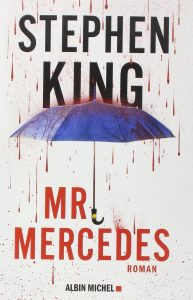
The New York Times review of Mr. Mercedes, by writer Megan Abbott, spends more time reflecting on some of King’s possible influences. Abbott points out that King has admitted to his horror works being inspired by the anxiety of the era he wrote them in. She then posits the idea that this concept still holds for Mr. Mercedes, “King cannily focuses on a particularly urgent and timely one: the spree of rampage killers dominating current headlines.” The novel centers around a cold case involving a man driving a Mercedes into a crowd during a job fair, drawing parallels to violent rampages from that time, such as the shooting in Aurora, Colorado and the bombings at the Boston Marathon. When discussing the protagonist of the novel, former detective Bill Hodges, Abbott references the work of Raymond Chandler, a renowned author within the detective genre. She specifically highlights from an essay called “The Simple Art of Murder,” in which Chandler laid out some of the hallmarks of writing within the detective genre, such as the character elements that construct a good detective protagonist. Abbott notes how King initially draws from Chandler in constructing Hodges, only to later depart from his methods later in the novel. While I enjoyed this review and its ideas as to where King drew inspiration, I was careful to remember that many of Abbott’s ideas were not based in fact. Her review was informed by things she assumed to be true, pieces of the projection of King.
In observing King’s career, I believe it’s easy to see how the name ‘Stephen King’ has escaped the man in some regards. What began as a man trying to earn living as a writer has been transformed into debates regarding the validity of his works as literature, and the validity of the horror genre and genre fiction as a whole. King has remained relevant and active as an author by finding ways to restructure how readers view him in literary discussions, and engaging them with more frequent departures from the horror genre. I’m interested to see how the King name will continue to evolve over time, and whether his work or their adaptations will hold more sway with public opinion. I see King’s image and discussions regarding him shifting more towards horror again, given that the 2017 film It, based off King’s novel of the same name, has become the highest grossing horror movie of all time. But King could always steer the discussion in a different direction by releasing a novel set within a genre he hasn’t worked in before, as he did with Mr. Mercedes. Whatever project he decides to put out next, his readership, both the admirers and the detractors, will be waiting to discuss it in ways only befitting of a Stephen King work.
Works Cited
Abbott, Megan. “Stephen King’s ‘Mr. Mercedes’.” The New York Times, The New York Times, 5 June 2014.
Bloom, Harold. “Dumbing down American Readers.” Boston.com, The Boston Globe, 24 Sept. 2003.
Cruz, Gilbert. “Stephen King on His 10 Longest Novels.” Time, Time, 6 Nov. 2009.
Foucault, Michel, et al. Language, Counter-Memory, Practice: Selected Essays and Interviews. Cornell Univ. Press.
Greene, Andy. “Stephen King: The Rolling Stone Interview.” Rolling Stone, Rolling Stone, 31 Oct. 2014.
Romano, Aja. “Stephen King Has Spent Half a Century Scaring Us, but His Legacy Is so Much More than Horror.” Vox, Vox, 4 Aug. 2017.
Smith, Michael Marshall. “Mr Mercedes by Stephen King Review – a Crime Thriller from the Horror Master.” The Guardian, Guardian News and Media, 4 June 2014.

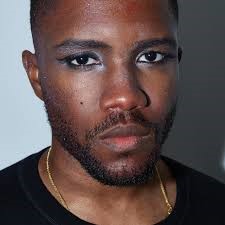 If you’re unfamiliar with Frank Ocean as an artist, it’s hard for me to believe you, but I would encourage you to take a break right here and give him a listen before we move forward (“Solo,” “Ivy,” “Pink + White,” and “Thinkin Bout You” would be my personal favorites, while his feature on “Slide” is bound to make anyone get their groove on). One of my friends on campus cites Frank as “one of the greatest things to have been made in the U.S.,” and I can’t help but nod my head vigorously every time I hear him say that. Rising out of an era in 2010s hip-hop where rap needed to hit hard and make you grit your teeth from the taste of testosterone (looking at you, Kanye), Frank came on the scene willing to strip everything down to its core. Ocean lives in metaphor, writing lyrics that leave most moody adolescents and young adults repeating them for the sake of how they sound rather than their significance as prose. His beats are simple, his raps are melodic, and he’s willing to manipulate his voice, the synthesizer, and electric guitar in low key but successful ways. He’s not afraid to make you feel emotional, kind of like the old Drake? Although that would be insulting to Ocean (as Christian Thorne professed last semester, “It’s the end of hip-hop. You’ve got an aggressively bland Canadian running the game.”), so maybe something closer to Lauryn Hill. Frank is more of that lay-back, smoke-a-joint, call-your-mom kinda vibe. So, once again, how does Ocean manage to make love more real?
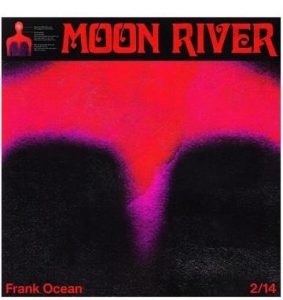 I’m hesitant to declaim my take on the original version of “Moon River,” since I’ve never seen Breakfast at Tiffany’s. But from what I can tell, Audrey Hepburn sang that song in the film with a subtle, whispery voice to express her aspirations towards fame, which makes Frank Ocean’s more sentimental twist on it all the more impressive, to differentiate between love for entertainment and love for a person. With Ocean, “Moon River” begins with him counting his listeners in with a sharp “one, two” before they are greeted by steady bass guitar chord progressions and Frank’s auto tuned falsetto. Ocean then begins to long after “Moon River, wider than a mile / I’m crossing you in style someday.” The sudden shift from a major to a minor key as he sings the two words, “Moon River,” pierces the ears just enough for listeners to feel the reverberating high pitch cling onto their heartstrings and reach their toes. On “wider than a mile,” Frank layers his natural voice over his auto tuned one, allowing listeners to feel the breadth of his sentiments before he switches back to falsetto on “I’m crossing you in style.” Listeners hear his natural voice only at the end of the lyric: “– someday,” emphasizing the solitude and hesitancy with which an Ocean would contemplate crossing a River. Frank chooses to center his listeners on the lament of this ballad, mixing his voice over itself and echoing it in and out so that they can feel him along the shadowy waters of his romantic life. Just the first verse of Ocean’s song asks listeners to take in what is being sung, to question what is not being sung, and to identify which gaps are being filled with the alternating sounds of his voice. Without even knowing who or what Moon River is — it really could be a river illuminated by the light of the moon — Frank sings the opening of a song that is painful, unexpected, and entrancing, a love at first listen.
 So I would sit there, changing the radio station or turning down the volume on my cell phone, knowing that I would never stop enjoying hip-hop music, but also knowing that I would have to keep my interest in it hidden from my parents. Unlike when I would casually contemplate lyrics from Pink Floyd or Stevie Wonder with my dad, blasting their songs from our living room speakers, I only listened to rap through my headphones, while I was commuting to school, when I was alone with similarly interested friends, or when I went to a party and the DJ knew what was up. But I’ve grown tired of the secrecy! It’s too fatally ironic to feel pressured into dismissing an art form that in itself seeks to combat oppressional institutions and the silencing of people of color. I believe that it was the combined instances of being unable to passionately converse about post-90s rap with my family, watching Netflix’s Hip-Hop Evolution, and reading from Jay-Z’s Decoded that has now led me here. The words that particularly struck me from Jay-Z were: “The reason hip-hop is controversial: People don’t bother trying to get it. The problem isn’t in the rap or the rapper or the culture. The problem is that so many people don’t even know how to listen to the music.”
 So let’s take a sample from Jay-Z’s “99 Problems:” “Rap mags try and use my black ass / So advertisers can give ’em more cash for ads, fuckers / I don’t know what you take me as / Or understand the intelligence that Jay-Z has.” Mags, ass, cash, ads, as, has — the words themselves provide familiar imagery of popular rappers living the high life while also trying to avoid being played by the entertainment industry. And the fact that the lyrics all rhyme on top of a booming hip-rock beat, complete with a surprisingly infectious cowbell (that we’ll always need more of), reinforces the recognition of that identity even when the words are missed. As Jay-Z says, even when the story itself isn’t real, it is an artist’s ability to formulate, mix, and remix words along with music that grants them the clout they deserve. With rap, we can say, it is not only the type of language that creates these hard-hitting, hustling, hypermasculine rap personas, but more importantly, the composition of those words on a page and then to a beat — the sound of those words as they are spit in succession.
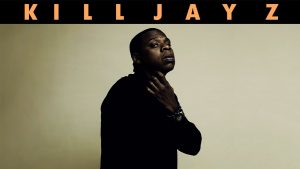 Okay, so the “disappearance” of an author from her writing, or a rapper from her lyrics, or a human entity from her persona, can be contested in some aspects of hip-hop music. But what happens when there is a purposeful self-erasure and redefinition of an author’s persona? Maybe in looking at the first song on Jay-Z’s latest album, “Kill Jay Z,” we can realign ourselves with some aspects of Foucault’s thinking. Michel believes that “the author also constitutes a principle of unity in writing where any unevenness of production is ascribed to changes caused by evolution, maturation, or outside influence,” and we need only take a short look at the lyrics in “Kill Jay Z” to see the ways in which Jay-Z’s content has matured as he has.