When it comes time to find a new book or movie to watch, we each have our own process in doing so based on the importance we delegate to certain aspects. For some people, the author is the most important, for others it might be the plot, or maybe it solely on the structure. However, regardless of the path we each took to arrive at our chosen piece of entertainment, our final objective is to consume the content within, yet it is during this process of consumption that troubles me. Since our biggest bounty is when we analyze someone’s work, we come to the conundrum of priority. What I mean is that to what extent do we look outside of what is in a book or shown in a movie during our quest for knowledge? One prominent strategy is to enrich our understanding of someone’s work by considering the major events that went on during that work’s writing process: the author’s biographical information, purpose, to name a few. Is the analysis of works, from literature to the arts: of movies, plays, paintings, and more, really the way to proceed or should we be considering a different approach and setting that as our standard? Instead of this complicated paradigm, let us return to a more simpler time. Now I will not say that the end-all solution is contained here as that is simply impossible, but what I do have just might be worth a bit of consideration – the analyses derived with external help is more often than not already in the piece of work, just look.
So rather recently, an article written by Aaron Short appeared in Cracked.com, a website for the defunct comedy magazine that features a wide range of articles, opinions, and other interesting tidbits, talking about how Quentin Tarantino’s movie Death Proof is related to Uma Thurman’s story that ran a couple months back detailing her relationship with Tarantino during Kill Bill. But before the details and relevance of the article can be even discussed, there are a couple of things that must first be ironed out. Starting with a simple summary: Death Proof is about a serial killer stuntman aptly named Stuntman Mike, who tries to kill his victims in accidents where only he manages to miraculously survive until he sets the wrong group of people as his next target. Like any Tarantino movie, Death Proof contains a mix of comedy and action that is superficially enjoyable, but unless the audience is cognizant of some important relationships, the deeper meanings and what the Cracked article is talking about will be lost.
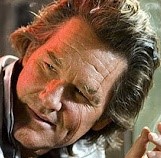
Kurt Russell as Stuntman Mike
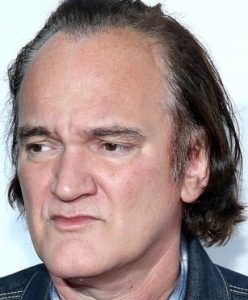
Quentin Tarantino
Although this is quite obvious, it is important to make clear that Stuntman Mike is the symbolic image of Quentin Tarantino and to do that, we have to realize the all-important foot fetish is one of the defining features of Tarantino. Seemingly like an affirmation to his well-documented attraction of feet, particularly of women’s feet, the movie contains multiple shots of feet: from the feet on the dashboard in the opening credits, to various moments of feet sticking out of cars as their owners lie reclined in their seats enjoying themselves, yet this array of scenes does not tie Mike to Tarantino since we are only affirmed as to the fact that Tarantino has a foot fetish. But then comes the kicker. About an hour into the film, Mike touches, sniffs, and indirectly licks (he wets his finger before touching the foot again) Abernathy’s foot while she sleeps with her feet out the window in the back seat. Since no one else besides Tarantino himself has this defining characteristic we associate Mike to Tarantino. But then, as a way to further imprint this message into the audience’s mind, we are treated to a visual spectacle. Although Kurt Russell plays Stuntman Mike instead of Tarantino, the prominent chin, the striking nasolabial folds, and the well-established brow furrow only heightens the idea that Mike is Tarantino. In fact, if we imagined a ten-year older Tarantino with a dark tan, grizzled look, and an over exaggerated hairdo, we must just come up with Mike and it is because the audience imagines Mike as Tarantino that the crux of the movie is addressed.

Uma Thurman

Zoe Bell
We must also explore the character the actress, Zoe Bell, plays – herself. The Cracked article mentions how back in Kill Bill, Zoe Bell was the stuntwoman for Uma Thurman (Short). While the tidbit on the origin of the actresses’ relationship is an interesting fact, the audience does not need to read Short’s article to realize that Zoe Bell is a reference to Thurman. Visually, the two actresses are similar enough that the audience could easily mistake one for the other. Sure, their voices sound completely different, but the initial impact is enough to cultivate the connection of Zoe to Thurman even when Zoe is her “own” character. When the audience sees Zoe for the first time, it is through the lens of Mike’s camera (like how Tarantino the director directs his film), but more importantly, this scene is shot so that the audience does not hear Bell’s voice which would break the illusion of Zoe being Thurman.
Now that we have ironed out some of the more obvious details, we can finally address the bigger issue at hand. Going over Short’s articles, he makes a couple interesting observations of which some we have already shown can be derived from the movie. But what about the other claims? In particular, the article insinuates that there is something twisted with Tarantino in his “obsession with Thurman” which culminates in a newly founded disdain for the director by the author. This is interesting because the author uses a plethora of external sources to come to this final conclusion, yet if we were to only examine the movie, we would come up with a totally different conclusion. Namely, Death Proof is not a movie to highlight and show off all the sick labels people now stick on Tarantino following Thurman’s allegations; rather, it is an apology in the form of a movie. It is a movie that Tarantino felt he had to make to express remorse to the woman he had mistreated a year prior.
Back in Kill Bill, as director, Tarantino had the power to command the various actors and actresses to do what he felt was necessary and if it was somewhat dangerous, then so be it. However, in Death Proof, the situation is reversed; this time Tarantino is under the whims of the cast. Mike, being the symbolic Tarantino and having failed to kill his intended victims, becomes the aggressed. The trio of would-be victims quickly pursues Mike over a long stretch of road performing the same actions to him that he did to them mere moments ago. During the few times the two groups in their respective car are side-by-side, Mike cannot help but scream “I’m sorry”, “I didn’t mean anything”, “I was just playing around” in rapid succession. Considering the rocky relationship between Tarantino and Thurman, this moment was Tarantino’s way of apologizing having not the ability to do so personally – a symbolic gesture from one proxy to another. While the finer minutia of detail in the movie requires watching Kill Bill, the audience can discern a dichotomy between the director and the actress without having access to external details because this message was an important one Tarantino wanted to convey.
But that is not all because the ending of the movie deviates from our normal expectations. After Zoe’s group finally detains Mike, they proceed to gang up and exact their “justice” via an onslaught of punches – a moment that empowered women like no other during the movie – before a roundhouse kick by Zoe knocks Mike to the floor where then “the end” flashes on the screen. The ending is weird because of how the juxtaposition of the end with the previous few scenes makes for a rather sudden halt to the movie. But if we consider what Tarantino was trying to convey, then the ending becomes all the more appropriate. So long as our previous propositions hold true, then what the ending really implies is that after a long time, symbolically shown through the extended car chase, Thurman and all the other women Tarantino might have offended in one way or another is finally able to openly wear all of their grievances, but Mike does not die as a result of the beating he sustains – nor is his fate ever explained – thus contributing to why the ending feels rather abrupt. This purposeful lack of clarification is brilliant in allowing Tarantino to highlight how the effects of his previous actions are still an ongoing issue.
Yet Death Parade is not the only Tarantino movie where an article’s conjectures can be found within a movie. Three years ago, with the Black Lives Matter Movement in full-swing, Tarantino was part of a Rise Up march condoning police brutality. Subsequently, The Guardian published a new article talking about how Tarantino’s actions have led to police boycotts of his movies and of how Tarantino has “recently been involved in a race debate” (Lee), but back in 2012, Tarantino’s movie Django Unchained already portrayed Tarantino’s stance towards racism. If we went further back to 1997, Tarantino cast an African American woman as a lead role in Jackie Brown when very few blockbusters had done so. None of the information in the article pertaining to Tarantino is news, for all we had to do was watch his movies.
The premise of Django Unchained is a freed slave tries to save his wife from slavery with the help of a sympathetic white bounty hunter, Dr. King Schultz. Like the movie Defiance, the oppressed rises up to overthrow the oppressors. As a bounty hunter, Django kills a multitude of white men from overseers to plantation owners to stagecoach bandits as he journeys to save his wife. His remark “[being able to] kill white folks and they pay you for it, what’s not to like” only heightens the animosity that Django feels towards many pre-Civil War Southerners. But Django Unchained is less concerned with revenge and more about giving power back to black people whether it be through giving more authority to black people or by undermining the credibility of racist Southerners. In particular, there is one scene where Django, dressed in flamboyant blue, almost akin to a Medieval prince setting out to save his princess, confronts two overseers about to punish a black slave while triumphant music blares in the background. While the rest of the world is a splattering of brown and gray, the audiences’ eyes cannot help but be attracted to the bright blue outfit seemingly calling out: “look at me for I am the hero of the story.” Then, in a reversal of fortune, Django proceeds to whip the same overseer who had wanted to use the whip as punishment. Compared to killing white men, this is much more degrading as now the overseer is the slave in this scenario.
But the degradation of racist white men is not only through violence. More specifically, the movie goes at length to magnify various faults of these men. The overexaggerated Southern accents on the plantation overseers to the point that the audience has trouble understanding and their uncivilized appearance makes them seem like a part of the very same group they are in charge of. Additionally, no expense is spared in making fun of the Ku Klux Khan style outfits with the white hoods poked with two dots for eyeholes. The movie also highlights the brutality bigoted men treat black folk as was the case where Mr. Candie ordered the death of the slave, D’Artagnan, by attack dogs. Although such extreme treatment is thankfully no longer present in society, much of the mannerisms, like that of how plantation leadership addressed their slaves, remains a major issue in the racial divide present today. By subjecting his audience to brutal scenes that highlight the issues in racism is, we are able to easily see Tarantino’s viewpoint towards racial inequality even before he participated in marches against racism.
Yet, do not be mistaken in thinking that the point is to cast everything about the author away and only live in the plot. Rather, the point is to understand that knowing additional information such as author’s purpose, pertinent background or biographical information is potentially useful but only to a limited extent. At best, having knowledge the context can only supplement, not dictate, our learning as we ultimately have to prioritize the content over all else. In fact, it is from using a plethora of sources as evidence that critics are more likely to make a wrong conclusion as was the case with Short’s article. To be true to the information provided means sticking with the source material more so than relying on any other bits of information Hence, any conjecture not based on what is within the novel is simply conjecture and cannot be given precedence over what exists. At best, all those different viewpoints can only be interesting points to consider: for if it was really that imperative, the author would have made sure to highlight its importance without the need for external help, yet perhaps this suggestion is wrong in that we lose too much. Maybe the end result of literary analysis is one where multiple sides conflict, never to come to a consensus, but this question is one that we each must contend on our own.
Thank you Max Wu’21 for your help with editing.
Bibliography
Lee, Benjamin. “Quentin Tarantino Joins Police Brutality Protest in New York.” The Guardian, Guardian News and Media, 26 Oct. 2015, www.theguardian.com/film/2015/oct/26/quentin-tarantino-joins-police-brutality-protest-in-new-york.
Short, Aaron. “The WTF Story About Tarantino’s ‘Death Proof’ You Never Knew.” Cracked.com, Scripps, 4 Apr. 2018, www.cracked.com/article_25507_the-wtf-story-about-tarantinos-death-proof-you-never-knew.html.
Tarantino, Quentin. “Death Proof.” Flenix , 29 June 2017.
Tarantino, Quentin. “Django Unchained.” Flenix , 12 May 2017.