Author Archives: Molly Egger

Death in Utopia: How Pop Culture Gets Away With Murder

The promise of a perfect world, a perfect society free from social ills and injustice, the utopia has enchanted and enthralled humanity for generations. Since the publication of the novel that coined the phrase, Utopia by Thomas More, it has fixated the imaginations of creators and audiences alike for centuries. In modern media and popular culture, there are few attempts to create pure utopia. Instead, authors, screenwriters, directors, carefully infuse their work with utopian elements. This trend reappears countless times throughout modern pop culture and one, perhaps somewhat unexpected example, is detective fiction.
death_in_paradise_titlecard

Since trying to argue my point with every detective story as proof would quickly become messy, I will focus on one specific series: Death in Paradise. The show follows a reluctant English Detective Inspector (D.I.), Richard Poole, who is “temporarily” relocated to an island in the Caribbean called Sainte Marie to work with local law enforcement.  In each episode, the team is confronted with a new impossible, wildly creative murder that only the brilliance of the D.I. and the tenacity of the team can solve. So, though it has a few distinguishing features that come with the paradise locale, it fits the general detective fiction trope rather nicely, not at all out of place amongst the dozens of other detective shows the BBC airs.

fd07733adc0b472a67f1c64af3780a18d9ae6d25

A core goal of utopian societies is a concerted effort to perfect institutions. This seems an inherent part of the detective story. The detective serves as something of an indicator species: a brilliant member of the police force who unfailingly solves crime and locks away dangerous criminals is evidence of an institution operating at its highest possible capacity. And when they start watching, the audience takes it on faith that, in the end, the detective and his team will stop the bad guys. Their belief in the detective is transferred onto the police force as a whole, allowing them to experience a second-hand utopia through this perfected institution.

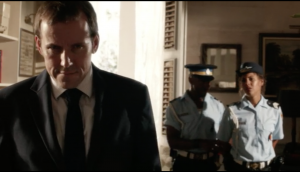
Further than just believing in the ability of the detective, the audience must trust his goodness. The main detective of a show is never corrupt and often storylines will revolve around him rooting out misconduct amongst his peers. Death in Paradise tackles this trope in the first episode of the series. D.I. Poole’s first case ends in the arrest of one of the local police officers for abusing the benefits awarded her position to smuggle goods into the country and for murdering her accomplice. This one episode very deftly proves to the audience the virtue of the remaining members of the team and assures them that the D.I. will prevent any future corruption of the system.
screen-shot-2016-11-29-at-9-30-23-pm

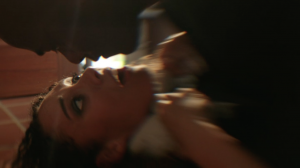
Professor George Grella analyzes a final way in which detective fiction perfects the system: the act of the murder itself and the concluding capture of the murderer. In his paper “Murder and Manners: The Formal Detective Novel,” Grella writes that “the detective novel features two expulsions of ‘bad’ or socially unfit characters: the victim and the murderer” which in turn “ ensures the continued happiness of those remaining” (Grella 41). Grella reasons that to merit being killed, and to make a compelling story that involves multiple suspects, the victim must either be a particularly detestable person or have done something particularly detestable. A possible exception to this is if a person is murdered accidentally, but even then, the murderer believes they are killing the horrible person, not an innocent stand in. For example, in season one, episode two “Wicked Wedding Night,” a hotel butler mistakes a newlywed bride for a serving girl who had refused his advances but actively sleeps with other people in the hotel. Though the bride had done nothing wrong, she was killed in the butler’s attempt to eliminate someone who had violated the social code and in the end, the maid ends up dead.
screen-shot-2016-11-29-at-9-42-53-pm

In this sense, death in a detective series serves a very different function than death in  perhaps a drama or a thriller. In these types of stories, the audience is meant to empathize with the victim and detest the murderer for killing them. In detective stories, the victim must be viewed unfavorably by the audience because they are meant to remain impartial, the death serving as  merely an opportunity for them to test their wits and logic. This disparity is the reason death only exists as utopia in detective novels.

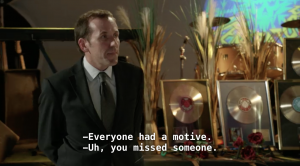
So, by killing the victim the murderer completes the first “expulsion” and the detective then completes the second by arresting him. The murder is necessary for the first expulsion because the victim is truly only guilty of social infractions and is therefore out of the detective’s hands. By killing a socially undesirable person, the murderer serves a function in the utopia but in doing so, they have themselves committed a violation, risking the security of the society which can only be restored by their removal. In season one, episode seven “Music of Murder,” the lead singer of a local band is killed before a reunion show. In the exposition scene, D.I. Poole reveals motives for five of the six suspects. The victim had wronged nearly everyone close to him but none of his actions directly violated law. His death was the only way to expel him from society to ensure the happiness of those around him. The detective then comes along to tidy up the mess by removing the person who killed him. In this way, each installment of detective system cleanses the system.In these three ways, detective fiction offers the audience a partial utopia.
screen-shot-2016-11-29-at-9-42-08-pm

A second, essential feature of the utopia is that it must be felt universally. The word itself derives from “eu-topos – denoting a region of happiness and perfection” (Munker). Linguistically, the term encompasses the entirety of a place, not simply a single person which implies that there must be a general sense of well being and goodness. The means of achieving this widespread happiness inevitably varies from person to person but the overall effect must always be the eradication of injustice. Detective fiction does this neatly and rather surprisingly. Murder, and the resulting bubble of suspicion, crosses all social bounds. Anyone can be murdered, anyone can be guilty. By confronting us with humanity’s universal flaws and weakness, detective fiction forces us to regard everyone, regardless of real-world social stigma, as existing on the same plane. While this method is crude and not as sunny as many imagine a perfect system should be, it is, undoubtedly, equalizing. Beyond this fundamental equality, there is a sense of universal improvement that comes at the end of every story that ties back to the “expulsions” mentioned earlier. A systematic and habitual purge of all the bad apples must mean that the remaining society is, as a whole, good and therefore better.

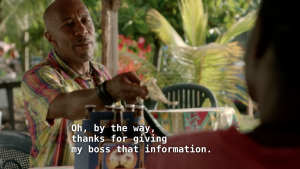
Death in Paradise, along with many other modern detective series, particularly American ones, has taken the theme of equality further and has made concerted efforts to diversify their casts and advance the roles of women. The show holds true to Caribbean demographics. Three of the four members of the Santa Maria police force, as well as the police commissioner, are of African descent, leaving the detective inspector as the sole primary Caucasian character. This in not merely for the sake of appearances. Within the show, there is an ingrained appreciation of local knowledge.  Dwayne, the longest standing member of the force and the show’s primary source of comedic relief, frequently relies on his contacts in the local community to move along a case, despite facing derision and judgment from his fellow officers. In season three, episode two “The Wrong Man,”  a key witness refuses to speak to the police without first being offered a bribe. Fidel, Dwayne’s superior officer refuses to pay despite Dwayne’s insistence that the man will never budge otherwise. The witness only spills because Dwayne, while sitting down for beers with him at the end of the episode, pays him under the table saying, “ I knew [Fidel’d] never get it out of you any other way.  It’s only his first few months as sergeant.”  The show makes the point that without an intimate knowledge of the local community success is unlikely.
screen-shot-2016-11-29-at-9-48-47-pm

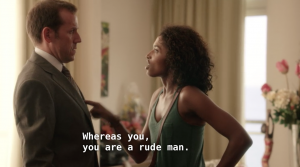
As for the roles of women in the show, again in “Wicked Wedding Night”, Detective Sergeant Camille Bordey effectively reminds D.I. Poole, and therefore the audience, that women are equal to men.  After he spends the first 10 minutes of the show bossing her around and dismissing her inputs, Camille  pulls D.I. Pool aside and tells him frankly:

I am a Detective Sergeant in the Sainte-Marie Police Force. I graduated top of my year, I have three

commendations for bravery, I have been shot twice and I could almost certainly beat you in a fist

fight. Whereas is you, you are rude man. You are ignorant, full of your own self-importance,

expecting everyone to follow you around and hang on your every word? From now on, you treat me

with a little more respect I’ll be forced to forget that I’m a police officer.

This scene sets a precedent for mutual respect  between men and women that carries on throughout the show.
screen-shot-2016-11-29-at-9-43-40-pm

A final, vital characteristic of the utopia is a replacement of the repetition and dullness of the current system with newness and excitement. A detective show changes every week: new victim, new murderer, new suspects. This demands that the series constantly introduces new characters and new adventures. Thinking of increasingly brilliant murderers gives the writers artistic freedom to think up unimaginable scenarios and so the show is never stagnant, never dull. More than that though, detective stories are so appealing because they can be interpreted to possess a comic function. In his analysis of the genre, Grella writes:

The central puzzle provides the usual complication, which the detective hero must remove; and its

difficulty ensures a typically comic engagement of the intellect. The whodunit’s plot, full of

deceptions, red herrings, clues real and fabricated, parallels the usually intricate plots of comedy,

which often depend upon mistaken motives, confusion, and dissembling; it also supports the

familiar romantic

The complexities of a detective story have the same effect on the audience as the twists and misadventures of comedies. In this way, each installment is a rejuvenation of the system.

There is one way in which the detective fiction is repetitive: it always has a happy ending. Though the detective might be stumped for most of the story, in the end, he will pull through. This is true of all 40 episodes of  Death in Paradise. However, it is important to distinguish this repetition from the repetition of the system being replaced. By repeating the motif of victory in every episode, the show reinforces the sense of the reliability of the institution (police force) and the safety of the general society. It gives rather than detracts from the utopia.

What this all boils down to is a reinvigoration of the current system in which it is purified, equalized, and charged with a sense of excitement. By watching a show or reading a book which revolves entirely around murder and crime, people are truly experiencing a partial utopia.


protectedimage-php


Give me your tired, your poor, Your Americanized masses

            According to Rotten Tomatoes’ critical consensus, DreamWorks Animation’s 2015 animated film Homeis “Colorful, silly, and utterly benign… a passable diversion” (Home(2015)). The premise of the movie centers around a semi-purple, six-legged alien race called the Boov as they flee across the universe and resettle on Earth to escape their enemy the Borg, along the way displacing the planet’s human residents. Oh, a sincere, socially ostracized young Boov, sees his species’ relocation as the opportunity to finally win over his fellow Boov and make friends. In his excitement to invite his “best friend Kyle” to a welcome party, Oh nearly alerts the Borg to the Boov’s whereabouts and so he is forced into hiding where he meets Tip, a young human who is searching for her mother. By the end of the film, after a series of misadventures, Tip, Oh, and the Boov reach their fairly classic DreamWorks endings: Tip is reunited with her mom, Oh makes countless friends, and the Boov and humans coexist peacefully. Everyone is happy. It is a “colorful, silly, and utterly benign” ending. At least until it is viewed against a modern political backdrop. When analyzed in the context of recent backlash against immigration and refugees in the United States, Home, 2015’s family friendly DreamWorks Animation movie, begins to embody a strong xenophobic political ideology aimed directly at the most impressionable members of our society.

The Boov moving to Earth

The Boov moving to Earth

First, let’s address the idea of the Boov as refugees. Homeland Security defines a refugee as “a person who is unable or unwilling to return to his or her country of nationality because of persecution or a well-founded fear of persecution on account of race, religion, nationality, membership in a particular social group, or political opinion” (Martin). The Boov fit this definition to a T. The catalyst of the entire movie is that the Boov are being relentlessly hunted by the Gorg. When the viewer is introduced to this concept, the film writers give no reason for the animosity between the two species, nor do they provide an adequate description of any cultural, theological, ideological, etc. differences. Because of this void of information, the viewers derive the aliens’ shared fundamental distrust of each other from the only difference they have been able to observe: their species. The filmmakers have crafted, through omission of information, a scenario in which one group appears to have fled their home to escape persecution from another. As a matter of semantics, though the definition doesn’t include species (because the policy makers were only addressing human conflicts), in a the Official Trailer #1, DreamWorks first identifies the Boov as a “nomadic race,” bringing them linguistically under the arch of the definition. Additionally, the descriptor further intertwines the two groups by assigning to the Boov the qualification of nomadism, which is characterized by continuous movement from place to place and is a core trait of refugees.

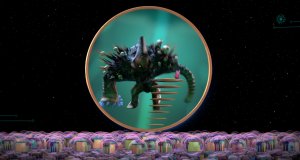
The "nasty" Gorg

The “nasty” Gorg

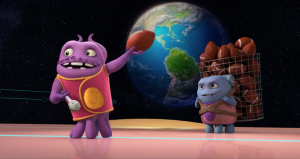
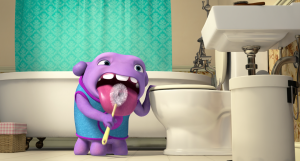
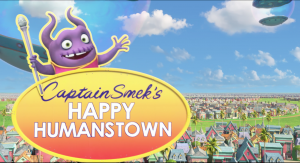
Beyond this textbook definition, however, the Boov are decidedly outsiders to “American” society. The first spoken line of the movie makes this clear. As the Boov’s blue mothership comes into view and Oh’s narration begins, we hear “Today is best day ever!” To start the movie with a snippet of monologue spoken in imperfect English sets the tone of “otherness.” English is not their first language, therefore they are foreign. In addition to this, the Boov consistently show a thorough misunderstanding of both frivolous and essential elements of American life. Within the first six minutes of the movie, Oh cooks a cookbook, decorates with toilet paper, and brushes his teeth with a toilet bowl cleaner. Captain Smek mistakes footballs (a staple of american sports culture) for fruit, tires for headbands and evening wear (but that one’s a euphemism for an extra layer of fat around the waist), oranges for shoes, a vacuum for a horse, etc. Besides simple misconceptions about objects used in daily life, the Boov believe they “are best at deciding what is useful. And what is not,” so when they begin their settlement, they create enormous floating balls of everything they deem “useless,” ranging from toilets and chairs, to bikes and grand pianos.

screen-shot-2016-10-16-at-7-59-32-pm

Balls of “useless” things

screen-shot-2016-10-16-at-8-03-34-pm

Captain Smek demonstrating the use of footballs

screen-shot-2016-10-16-at-8-02-20-pm

Oh brushing his teeth

Now all that’s left to determine is which group of refugees are the Boov supposed to represent. The Boov show important societal variances from Americans that indicate Eastern origins. They exhibit none of the stereotypical American friendly and outgoing personality traits. They are instead more reserved, a trait often assigned to Middle Eastern and Asian cultures, indicating that the Boov are a reference to Syrian refugees.

So hopefully you’re convinced that the Boov represent Syrian refugees and are outsiders in American society. But featuring characters from different cultures and backgrounds hardly makes a movie xenophobic. In fact, it really only indicates inclusivity. So how did the creators of “Home” turn inclusivity into xenophobia? They did it in three steps:

Firstly, the movie begins by playing on American ideals to build a pathos against refugees. While the initial trailer defined the Boov as a “nomadic race,” Oh’s own definition of his people is that the Boov are the “Best species ever at running away!” To an American audience, running away means defeat and defeat means weakness. Weakness is a deplorable quality to many Americans. The nation is locked in a constant struggle to prove itself to be the strongest and the fiercest in the world. The average movie goer would find it incredibly difficult to empathise with characters who consider vulnerability a trait of which they should be proud. And the Boov certainly take pride in it. Captain Smek, the commander of the Boov, lists his admirable leadership skills as “cowering, running, and pulling a skedaddle.”  In American culture, there are heavy, negative connotations associated with these words and ideas because they run in direct opposition of American heroism. The film writers craft the Boov’s dialogue so that these negative connotations are in turn transferred onto the act of fleeing violence and danger. If the Boov had not fled their home planet they would have died but the gravity of that is undermined by the negative pathos of the language of the film. The viewer is instinctively led to look down on the Boov, and, subconsciously, the refugees they mirror.

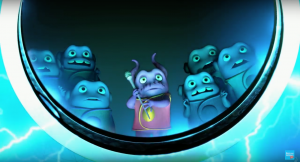
Frightened Boov

Frightened Boov

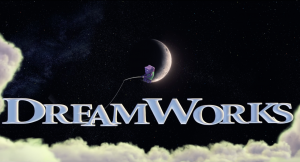
Secondly, the film plays into two American anti-immigrant and refugee fears. A 2013 Stanford Business School article reports that, “one recent survey found 70% of Americans thought allowing more immigrants would make it harder to find jobs”(Zacharia). This scenario is quite literally the first thing you see happen in the movie. Well, more accurately, before the movie even starts. Within the first 30 seconds of the opening credits, the classic DreamWorks boy on the moon is sucked up and replaced with a Boov. The first representation of the refugee aliens feeds off of a very real fear in the modern American psyche. This singular abduction is amplified a thousand fold when the Boov descend on the planet, remove all the people, and relegate them to a false suburbia in Australia. This drives home the point that when outsiders come, they have the potential to significantly disrupt American way of life.

The new DreamWorks Boy

The new DreamWorks boy

screen-shot-2016-10-16-at-8-21-10-pm

The looming threat of the Gorg invasion gets to the second fear. A month and a half before the movie came out, abcNews published a story that opened with “Top U.S. counterterrorism officials say they worry a potential terrorist could be hiding among refugees who are looking to come to the United States after escaping the brutal war in Syria”(Fishel). There is a substantial fear felt across the country that as the government invites in refugees, it also opens the door to the terrorists the refugees are fleeing. This sentiment has been growing for years and continues on today. Presidential hopeful Donald Trump bolstered his campaign by engaging with this fear and proposing a ban on all muslims and refugees coming into the United States. The movie also capitalizes on this when Oh mistakenly notifies the Gorg about the Boov’s location, nearly resulting in the destruction of the planet. This storyline magnifies the audience’s investment in the plot of the film because it reinforces fears that are prevalent in their own lives.

The e-vite approaching the Gorg mothership

The e-vite approaching the Gorg mothership

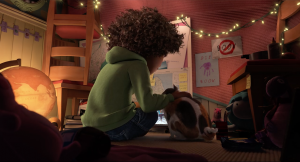
The film hammers the final nail into the proverbial, xenophobic coffin with the concluding message of the film: you are not welcome here unless you adopt our ways. This idea develops through the relationship between Tip and Oh. When we first see Tip, she is watching a video of mom playing in the snow. As the camera pans out, you see tacked on the walls drawings that say DIE BOOV, small Boov cutouts with pins sticking out of their hearts, and a dartboard with a Boov face covered in darts. She thoroughly despises them for ripping her family apart but by the end of the movie, Oh is her best friend. What spurred this transition? The Boovs learned how to be American.

Tip's decorations

Tip’s decorations

Throughout the journey, Tip instructs Oh about Western culture. She explains that animals don’t need to serve a purpose outside of companionship, elements of gender when she kicks him out of the women’s restroom, and the general idea of holding on to hope and persevering through hardship, rather than giving up. But for all that she’s teaching Oh, Tip never bothers to learn anything about his culture. She consistently brushes off all of his attempts to share. Perhaps the most outright the movie comes in revealing this discrepancy is at a moment when Oh tries to play Tip Boov music and she immediately rejects it and puts on Western music. She tells him “If you want humans to not hate you, you could start by liking some of our stuff.” This is a blatant revelation that the Boov, and therefore refugees, will only find a place in society if they abandon their culture and embrace America’s. Tip serves as a model for transition. Her family immigrated from Barbados and she learned to share American ideals. Once she learned how to “fit in” with the American kids, she was “finally happy.” In the end, the refugee Boov must change their entire way of life to fit into American society.

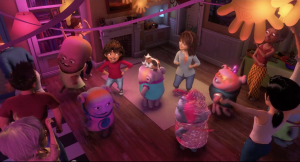
The Boov are dancing at a party with friends, three things they are never supposed to do

The Boov are dancing at a party with friends, three things they are never supposed to do

This is not a new theme in entertainment but what makes it so shocking is its source. “Home” was carefully and meticulously crafted by DreamWorks Animation SKG inc. Jeffrey Katzenberg, president of DreamWorks Animation, is the largest Democratic donor and fundraiser in Hollywood and anyone in the film industry could tell you that his studio reflects that party’s liberal beliefs (Daunt). Heck, anyone who’d watched a Dreamworks movie could probably tell you that. They tend to challenge societal prejudices about marginalized groups and incorporate messages of acceptance. “Home” is a sharp and utterly abrupt departure from that mold. The xenophobic ideology of the film is so unexpected and deeply buried under the guise of inclusivity that it makes liberally inclined people agree to cultural homogenization.