Author Archives: Ben Anthony

Chance the Rebel

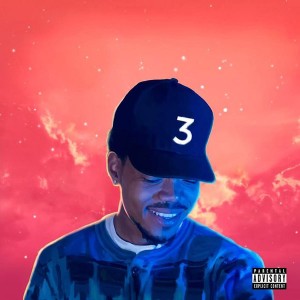
chance_3Grammy nominations and winners are widely debated and argued year after year. Someone is always left out and someone undeserving, so some believe, wins. Hundreds of experts review the nominations and a long, careful voting process takes place. The Grammy Award for Rap Album of the Year is presented to “honor artistic achievement, technical proficiency and overall excellence in the recording industry, without regard to album sales or chart position.” Previous winners have included Kendrick Lamar (2016), Drake (2013), Lil Wayne (2009), and many others who may or may not have been deserving. With the Grammy’s only a few months away and so many amazing albums being released this year, debates for which one is the best have already begun. Although the nomination committee claims it doesn’t regard alum sales as criteria, the album must be sold commercially through a record label to be nominated. With this being the case, there is one rapper who will never be nominated.

“I hear you gotta sell it to snatch the Grammy” states Chance the Rapper, the young and upcoming Chicago Southside native. Chance is defying the norm by passing out his music for free. In his new, highly-praised album, Coloring Book, Chance, in his own style, creates a masterpiece that rebels against what it means to be modern day rap. His wide use of gospel music throughout the album and joyful tone of voice do not sound anything like that of other rappers of this day (who just try to sound tough and “manly”). Having been downloaded by millions of people, it’s safe to say that his album was very successful. To understand why consumers fell in love with this new album by the Chicago rebel, we must look at three key elements: its rebellious nature, who he represents, and his musical style.

Rebellion

“I used to pass out music, I still pass out music”, he says in his last song of the album, “Blessings”. While most rappers must start off by giving out their music for free until they gain a following and get signed by a record label after proving themselves, Chance does not follow this pattern. He refuses to sign with a label. He passes out his music for free and won’t let people pay for it. Coloring Book was only available through the free streaming app “Apple Music” (free unless you want to upgrade to the premium version of course).

He rebels against the idea that the only way to make it in the music industry now-a-days is to sign with a record label. He successfully relies on word of mouth and social media to distribute his music. Even though multiple record labels have gone to him with offers he continues to deny them. He refuses to be controlled by someone other than himself. He does what no other rapper of this day does; he will not accept the help of a record label. Chance doesn’t believe you need a record label to be successful and he is proving it every day with his growing popularity.

Also, take notice at all three of his album covers. Starting with his first album/mixtape, 10 Day, he is looking up into the clouds, as if he was looking up into the music industry. Then fast forward to his second album, Acid Rap, and he is looking right at us; as if he was now in the industry and a part of it. Now finally look at the cover of Coloring Book. He is in the clouds, looking down. He is saying he is above everyone else in the industry, he is better, he is leading them.chicago_from_north_avenue_beach_june_2015_panorama_2

Representation

Let’s listen to his first verse in his intro “All We Got”. He states “this is for the kids of the king of all kings/this is the holiest thing”. He is writing for our generation, the young kids. (Who, in the eyes of God, views everyone as his child). Although you don’t have to be religious he is simply stating he is writing for our generation (it probably does have more significance if you are though). Chance is only 23 but he is undoubtedly the most talented rapper of our generation. Being the most talented, he has become the leader of our generation in the genre of rap and hip-hop.

Let’s move forward to the 8th song in the album, “Angels”. In his first two lines, he sings, “I got my city doing front flips/ When every father, mayor, rapper jump ship”. Chance not only represents our generation as a total but he focuses in on the youth of Chicago, specifically the South Side. He has become a very involved advocate in helping to “clean up the streets, so my daughter can have somewhere to play” (He even won Chicago’s Outstanding Youth of the Year Award). His representation of the Chicago youth has gained him much respect from the community. Chance shows that there is hope; he is giving them a voice when everyone else “jump[ed] ship”. By being proud of his city and referring to the people as “Angles” he is showing the side of Chicago that we don’t normally see. His pride for the city makes him feel like their leader, “City so damn great, I feel like Alexand’”. He steps up to be a leader of people who are struggling when everyone else left them. If he can make it, so can they. He is encouraging them to not accept the conditions they are in but to fight back and improve their lives, to rebel, because “You don’t want no problem with me”. The people of Chicago are his “Angels”, surrounding him always.

Musical Style

His masterpiece, the single work of art that brings everything together: Coloring Book (so named because of the countless biblical references and gospel style). When thinking of rap or hip hop music, people tend to think of gang members rapping about drugs, drinking, and women (in the not so respectful way). The album not only rebels against these typical styles but goes one step further and introduces gospel music. This isn’t the first time someone has tried to do this. Kanye West started off inserting gospel in his earliest raps but as he progressed as a rapper he has skewed very far from his roots (you can hear it in The Life of Pablo). Chance, on the other hand, stays true to this spiritual and heavenly music from his earliest works, to his work on Surf, and now in Coloring Book.

First off, his voice and style of rap are very different from regular artists. While most rappers are aggressive (almost sounding angry), or mumble so much they are impossible to understand, Chance has a very joyful and light-hearted tone. He is, for the most part, happy and praising someone or something. While most rappers just care about beats and rap bad lines on top of them, Chance is very focused on his lyrics. He has a uniqueness of using many adlibs, including his signature “na na na” to start of many of his songs and verses. He preaches God, his family, and his community like no other rapper of this day does (having one song dedicated just to God, “How Great”). Just like chance sings, “we don’t do the same drugs no more” in “Same Drugs” (which is actually about growing up and no longer sharing the same interests as other special people in his life, not drugs), rap isn’t the same rap it used to be. His stylistic flow is much different than any other rapper. He is able to have fun and is able to fuse together a melodic flow with his regular rap flow that is pure genius and is something no one else can really do with such smoothness.

ThImage result for chance the rappere brilliance of Chance the Rapper is the actual music. Gospel rap? Yes, that is what Chance does. He uses gospel. He includes old-school instruments like the saxophone, trumpet, string instruments, and even a choir. His jazzy, gospel hip hop album is something that is very rare in today’s music industry and something that is usually never this successful. He’s able to combine modern music with the past and blend it into something that sounds beautiful. With the release of Coloring Book, Chance has evolved rap and hip hop into something it has never been before.

So, one might ask how Chance the Rapper has gained such a big following. It is because people love change and deviating from the norm. They like to rebel against the norms that are put in place by the culture industry; it has become very appealing to them. According to the article Dark Age: Why Johnny Can’t Dissent by Thomas Frank, our society today has turned from “the clunking tailfin-and-ranch-house economy of the 1950s into a golden new hyper-consumerism”. Citizens are now considered consumers and buying/consuming objects releases some sort of existential feeling inside them. It is because of this that we can no longer refer to movies, TV shows, music etc. as “simple entertainment” but more like “economically crucial tools”, says Frank. We can no longer think of Coloring Book as just a mere album but something much more; it is a movement to deviate from what rap has become and rebel the standards that have been put in place by other rappers. It is because of this, that rebellion has become the official aesthetic of consumer society. Chance’s new album Coloring Book proves this is true by the widespread fame he has acquired from it.

In the book Contemporary Issues in Marketing and Consumer Behavior, author Elizabeth Parson poses the question “what if countercultural rebellion, rather than being a consequence of intensified consumption, were actually a contributing factor?” She goes on to state that “rebellion drives the consumer society”. This happens because people feel the need to compete with one another. They need to stand out from the sameness in society and rebel against conformity. While some rappers are all making the same garbage and mumbling their voices over some good beats (or bad ones), ChanceImage result for chance the rapper is rebelling against them and makes himself distinct in everything he does.

Chance is not inciting rebellion. He is the rebellion. Everything he does is against the mainstream norms of what it means to be a rapper in this day and age. He warns us too, if someone is going to try to stop him, “Its gon’ be some dread head n****s in the lobby”. Consumers are filled with “sameness” in their everyday lives. When something comes that rebels against the culture industry and mass art, people flock to it and consume it because consumerism is “no longer about ‘conformity’ but about ‘difference’” (Frank). By the way he raps, his style of music, how he represents the people as being a part of them, Chance is the difference people want to consume. His rebellious nature has become the new aesthetic of what people want to consume in a society filled with sameness.
The Power of Laughter

tc84xhhhzsr4nhpbv4cbzfrqqtq

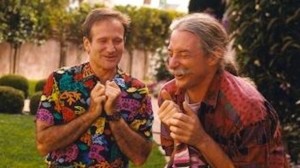
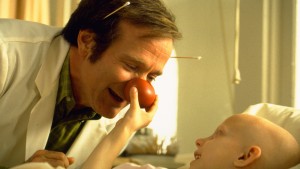
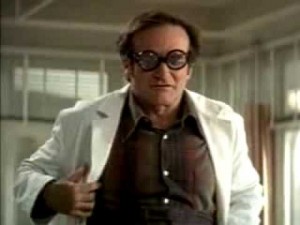
Laughter, in its purest form, is the best indication of happiness within a person. Laughter can bring people together, make someone feel better, and even increase someone’s quality of life. It is a natural healing agent that is vital to a person’s well-being. It is not just some meaningless reaction expressed as way to “cheat happiness” like Theodor Adorno believes, but rather an uncontrollable release of joy inside that person. They might not always be happy or have an overall happy life but all that matters is how that person is feeling in that exact moment. In the movie Patch Adams, which is based on a true story, a doctor named Hunter “Patch” Adams treats patients by not only giving medical treatment but also by healing them through laughter. As he says repeatedly in the film, “laughter is the best medicine”. Of course, people can’t just receive laughter as a treatment, but the laughter he prescribed drastically improved his patients’ overall quality of life by relaxing them, lowering their blood pressure, decreasing the amount of pain they’re experiencing, boosting their immune systems and many other benefits. Laughter gave these people hope and a reason to fight off their diseases. The patients were able to live more comfortably and enjoy their lives much more because of it. For them, laughter wasn’t just some meaningless action to disguise the fear within them or a quick break from the pain they were experiencing, they laughed because it showed that even in their time of pain and suffering there could still be happiness buried within them. This happiness allowed them to enter a new world where they were freed from the restraints of their current ailments.

According to Mikhail Bakhtin, there are two worlds that we live in; one “official” and one “non-official”. The “official” world is our everyday lives while the “unofficial” world is one that is completely different from the “official” in that it follows no rules and anybody could be anyone. As Bakhtin says, “[the carnival culture] offered a completely different, nonofficial, extraecclesiastical and extrapolitical aspect of the world, of man, and of human relations” (84). By living in this “unofficial” carnival world people can strip themselves of the stress, pain, frustration etc. of the world they live in and adopt a new culture, a new world in which they can be anything they want. It is not just some show they go watch or some book they go read to escape their world. It is something they go live, something they go to experience with others. It is embraced by everyone who goes and lives it. It is a world filled with all different kinds of forms of expression and art. Bakhtin describes carnival as a balance of art and life, “It belongs to the borderline between art and life. In reality, it is life itself but shaped according to a certain pattern of play…Thus carnival is the people’s second life, organized on the basis of laughter” (86). Therefore, if carnival is life itself and is organized on the basis of laughter then that means laughter organizes life itself. Laughter is what people use to create a better world to live in. It isn’t a “sickness infecting happiness…drawing it into society’s worthless totality” (112) as Adorno believes it to be. Rather, laughter is life, it’s what life is built from, it gives meaning to life.hqdefault

In Patch Adams, we see clearly how this is put in effect the real world. Patch creates a homemade hospital where he treats people who can’t afford a real hospital. There he treats people both with real medical treatment and with jokes, happiness, and joy. In a similar way of how carnival is a borderline between life and art, Patch balanced medical treatment with laughter. This balance, although very unorthodox, proved to be very effective. In the movie, the nurses said that since his arrival to the hospital, patients’ optimism greatly increased and the amounts of medication required decreased. The laughter and joy that was given to them through Patch significantly increased their wellbeing and improved their lives. He had such a tremendous impact on the patients’ lives that, even in times of tremendous pain and suffering, he was able to bring out true happiness from within them through laughter. This sort of practice was very different from the one that was common in that time.

The hospitals and doctors of that time were very disconnected from their patients. As shown in the movie, patients were referred to by their room number or bed number or the disease they had e.g. “patient 205” or “the cancer patient”, but Patch believed that there should be a personal connection between the doctor and patient: he believed that instead of calling the patient by a number or disease, doctors should call them by their name, get to know them, and understand the difficulties they are going through. He adopted a very carnivalesque culture in which doctors are not above patients but on the same level. He says in the movie “everyone that comes into my house is both a doctor and a patient”. He believes that patients can learn from doctors just as much as doctors can learn from patients. In essence, when you stepped foot into his hospital, you entered a hospital that embraced a carnival culture built on laughter. It may seem that this laughter was only temporary and that it only was a quick escape from their real lives of pain, but it functioned as something much more than that.

images

Adorno believed that laughter is a “sickness infecting happiness” when in a false society but, as previously mentioned, Patch Adams’ hospital isn’t like the real world: when people enter it, they enter a new world. So, according to Adorno, laughter is just an escape from one’s reality. People only go to temporarily escape their reality, but, at the end of the day, they are still in pain and are suffering from a disease or mental health disorder. The people are scared of death so they go to the hospital to relieve their fear. He is basically saying that they are never truly happy because they are constantly fearing their lives and the laughter they experience is fake laughter, it is just a cover up for the terrible lives they are living. This argument is very far from the true reality of things.

Happiness can be a transient feeling. No one can constantly be happy, but at the same time, no one can constantly be sad. Some people may feel sad or happy more times than the other but they are not constantly feeling that emotion. To say that laughter is a consolation prize for not having a life worth living is very narrow-minded. Throughout the course of life, people experience all different types of emotion, and all these emotions at points in time add up to equal the overall quality of life for the person. Although, at a single point in time, you can’t tell if a person’s overall quality of life is good or bad, those moments will all add up to something that shows a person’s life is worth living and through the laughter they experience, they will ultimately have a life worth living because their temporary breaks from the real conditions of their lives aren’t just breaks.

A break has no meaning; it is something to just stop the thing you’re doing. This second world the people go to is much more than just a break; Bakhtin describes it as, “something must be added from the spiritual and ideological dimension. They must be sanctioned not by the world of practical conditions but by the highest aims of human existence, that is, by the world of ideals” (87). In order for something to be not just a break, but an actual second world, it has to have an ideological meaning that is spiritual. This is exactly what Patch offered. Bakhtin is saying that people going to Patch’s hospital transcend their reality and live in a world where they can all be equal and a world where they are not described by their disease but treated and respected as human beings. They were liberated from the restraints that the real world put on them and went to a world where everyone was equal, i.e. everyone is both a doctor and a patient, and built their relationship off laughter and joy in one another. Patch Adams shows that the patients laughter isn’t just a consolation prize because, though they are sick with disease, their laughter is actually proof they do live a life worth living, proof that their moments of laughter and happiness will add up to something that will transcend the boundaries placed down on them from the real world and free them in the second world they go to live in. This proof is shown countless times in the lives he was able to heal and the joy he placed in the all the souls he touched. People were able to recover more quickly and more easily because they were able to laugh and increase their overall quality of life. Laughter isn’t cheating happiness but rather builds happiness towards a life worth living.patch-adams-robin-williams-640_5d6e918f92c14c6cb142aed28bba98dc

In Patch Adams, a second world is created that isn’t just a break from the real world but rather a place to transcend the real world and get rid of fear, anger, and pain. Patch creates a world built on the foundation of laughter to spread joy to others. This laughter isn’t fake, it isn’t something foreign, it isn’t an emotionless action that they only go to when they don’t receive what they desire. The laughter experienced is pure: it is something that is inside all of them, within all their pain and suffering that, when reached, can lead to the betterment of their lives and create a life worth living.

Chaos and Order: Post 9/11 America


the-dark-knight-2

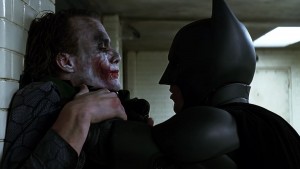
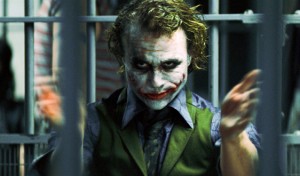
Louis Althusser, a French philosopher writes, “All stories work by doing two things: First, they make vivid some real social crisis (or conflict); and then they provide imaginary solutions to that crisis.” He believes that any story or movie can create an underlying crisis in our society and provide a solution to that problem by providing a solution within the movie. This is very evident in the movie The Dark Knight. Christopher Nolan’s The Dark Knight is a chaos driven movie that shows how the true nature of humans react when pushed to their limits of order. The Joker represents the chaos that terrorism creates through merciless attacks against people and places. Batman, the protector of Gotham, represents the order that is enforced through our military and police force. Batman, dressed in all black, fights crime throughout Gotham and strikes fear into his enemies. The Joker, a crazed psychopath, pushes the people to their limits and forces them to make irrational decisions. The battle between the Joker and Batman is very similar to the United States’ War on Terror. These two battling directly correlates to the U.S. fighting terrorists and how the terrorists influence U.S. citizens. Now I want to pose two points about the movie. First, when all else fails who do the people of Gotham turn to in their time of need? The authoritarian, fascist Batman. Yes, Batman is a Fascist. He runs (and glides) around Gotham under no rules with no one to answer to and delivers “justice” to criminals in the city. The People would rather let an uncontrolled vigilante loose on the streets to protect them than let the men and women of the police force and military do their job. They would give up their rights if it meant they would be safer from all the chaos. The only way to bring order is not by fighting the bad forces with the good, but with other bad forces. And this is why I pose my next point: The Joker is the actual hero of Gotham. Before Joker, Gotham was a mess, the crime mobs ran freely in the streets, police officials were corrupt, and people had little hope. What happened after the presence of the Joker? Everything changed. People needed that chaos the Joker delivered to allow for the order they wanted and so needed. They were willing enough to give up their rights to have to security and social order they desired; sound familiar? (I’ll get to this later). This is because only through chaos can we have order in our society.imgres

Now it may or may not surprise you for me to say that Batman is a Fascist. I mean just look at the guy’s actions. Sure he has one rule to not kill anyone, but that’s it. Is that really the only excuse he needs to do as he pleases? To have to most advanced technology at his disposal, to be one of, if not the most, skillful fighters in the world and not have to answer to anyone makes him a very dangerous person. He acts on his own wishes, does what he wants and does so through fear and intimidation. He has complete control over the city and protects its people by beating criminals to a pulp. And the people allow him. Why? Because they need someone/something that will claim dominance over them. They feel they need something above the law to protect them. The more chaotic it becomes the more power they give him.911-planes

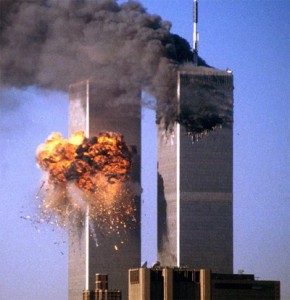
October 26th, 2001, the PATRIOT Act was signed. The act, created because of the terrorist attack on 9/11, was made so the United States was able to fight terrorism domestically and around the world easier and stronger. The act was a tremendous accomplishment for the War on Terror and greatly enhanced the United States’ ability to fight terrorism and keep its citizens safe. But the act also violates many citizen’s constitutional rights. It infringes on their right to privacy, right to a trial, right to free speech and many more. People loved the act so much that they were willing to give up their sacred rights given to them that this nation was founded on. Some people say the politicians who signed the act didn’t even read it. They were so desperate to end terrorism that they didn’t care what the costs would be as long as it would make them safer. The act has authoritarianism written all over it. It gives the government complete control when dealing with terrorist attacks and pretty much says they can do whatever they want to stop them from happening. And it works. The country is much safer than it was before the 9/11 attacks. National defense has improved, flying on airplanes has become much safer, and the government is keeping a much closer eye on possible terrorist attacks. The more of a threat the terrorist seemed to be the more power the people gave to the government. This authoritarian piece of law keeps the United States’ and its citizens much safer from attacks and maintains order within the country. And what was the cause that created this document? The terrorist attacks. Without them, this document would’ve never been passed.

Now I’m not saying to thank the terrorists for killing over 3,000 people in one day. I’m simply saying that without that event the PATRIOT Act would’ve never been signed and we wouldn’t be as safe of a country. Without the terror that filled every American that day they would’ve never felt the need to improve their security and push for better defense. The terrorist created chaos in a country that was already having trouble. It is very similar to how the Joker’s chaos led to a safer Gotham.

dark-knight-joker-560

Before Joker arrived, organized crime ran free, corrupt police infested the system, the city was in worse shape than ever, people didn’t feel great about living there. Now, you might say the Joker was a twisted, evil-minded psycho that killed for fun. He created chaos throughout the city and made the people do things they wouldn’t normally do like try to kill a man who knows the identity of batman so the Joker wouldn’t blow up a hospital. He killed plenty of people and seemed to have no motivation except to create chaos. But who was the majority of the people he killed? Mob bosses, bank robbers, corrupt city officials. He practically wiped out the city’s crime problem all by himself. He took out almost all head mob members, and the ones he didn’t kill he brought under his command. He both exposed and killed many of the corrupt police officers. And at the end of the day, the spirit of Gotham’s citizens was brightened. He did more in a few weeks than Batman was able to do the entire time he fought crime. Although he constantly said he didn’t have a plan, that he “just does things”, it’s a complete façade. He has a very calculated plan throughout the movie and executes that plan perfectly. From the first bank robbing scene to wanting to get caught by Commissioner Gordon. Everything he does is with purpose and it is with this purpose that he was able to accomplish all his goals. It was only with the Jokers chaos was Gotham able to have peace and order. So in this sense the Joker was much more successful in improving Gotham than Batman ever was and is, in some sense, a hero to Gotham. He was hero they needed, but not the one they deserved.

Going back to post 9/11 America, we see a very different America than we saw before the attacks. The attacks woke a sleeping giant. American military force woke up and deployed overseas to combat terrorists. Back home American pride grew and was much stronger before the attacks. The Bush administration took control of the country and gained power through the citizens to combat the War on Terror. They gave the government the power to do what was necessary to keep them safe. They pretty much gave the government unlimited power to do as it wants. Through this, the government was able to combat terrorism and a scale they weren’t able to do before and greatly increased the level of security in our country, which is still apparent today. It was because the terrorist creating chaos that America became a much safer place and a much prouder country for standing up to terrorism. The acts of those few terrorists on that one day, changed America forever. They were the ultimate reason for America being the way it is today.

dent-batsignal_zps3ed9d88dSo how did the Joker create so much good through such bad actions? It’s the same way Batman couldn’t create good through doing good; he, in some sense created bad. Batman was never a hero of Gotham; he was just whatever they needed him to be. Like Alfred said many times throughout the movie, he was able to make the decisions that no one else could. He tried to inspire a city by showing that common people can stand up and rise above the ordinary to make the city a better place. But the reason he failed was because you can’t fight bad with good; you have to get your hands dirty. This is why the Joker is so glorious in establishing order. He knows Batman’s technique will never work, he knows that the only way to stop the crime in Gotham is to plunge the city into chaos. He shows the city of Gotham what real anarchy looks like, they experienced the terror he brought on them, and they came out a better people and a better city. You have to fight fire with fire, chaos with chaos. And it is only through chaos that we can have established order.
When people are pushed to their limits, on the verge of death, or in the face of chaos, their true nature comes out. They show who they really are. In Joker’s ferry experiment, the people, and criminals, of Gotham show their true nature. When evacuating the city, the city loads two ferries to leave Gotham; one with criminals from jail, the other with civilians. As part of his plan the joker rigs the boats with explosives and gives them each the detonator to the other ship. He tells them if one boat switches the detonator to the other boat that boat will live (they only had about thirty minutes to decide). The movie switches between the two boats and shows how at first the passengers want to pull the trigger right away. But they can’t decide what to do. The boat with the civilians takes a vote, which ends up being an overwhelming amount in favor of detonating. But no one can do it. When finally, one man volunteers to do it, he gets up, walks over, takes the detonator out the box, holds it in his hand, puts his finger on the key…and freezes. When on the brink of taking hundreds of lives, putting his beliefs to the test, he couldn’t do. He showed that at his core, he wasn’t a killer. Even on the ferry of criminals, one man stood up, took the trigger and threw it out the window. This goes to show that even in the city’s darkest hour, when everyone thought all hope was lost, the people showed that they are better than who they show. That deep down, they are not all as ugly as the chaos they were thrown into. It was through Jokers actions and him pushing them to their limits that he was able to bring out the true nature within them, their good and belief in each other.

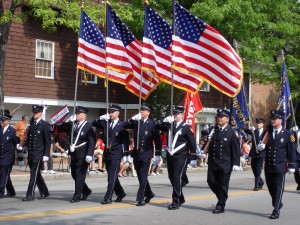
memorial-day-parade-with-flagsWhen the 9/11 attacks occurred heroes were born. In one of the darkest hours this generation has seen, the common people of America rose up and became part of something greater than themselves. The first responders showed the courage within themselves to help protect and rescue the civilians in harm’s way. Regular citizens too rose up to the call, and instead of running away, ran into the flames or chaos and helped those injured from the attacks. It is in these times of great duress, brought upon by an outside force, that humans show their true colors. It is only through chaos that people see who they really are. This chaos shows the flaws in systems, the injustices hidden, and the good within. The Dark Knight shows us that only through chaos is order able to be established in our society. It shows how the 9/11 attacks, though were a terrible event in our nation’s history, ended up creating good in our society and created a safer nation.