Author Archives: Amanda Reisman

Harry Potter: More About Race Than You Thought

Here is what I thought I knew about Harry Potter: everything.

I have read every book and can quote every movie. I can name the actors who play the major characters, and how they were casted. I can name all the minor characters and describe every detail of the plot. I can list facts about the characters that only a small portion of Harry Potter fans would understand. I can talk about why this series is so amazing and why it has had such a profound impact on who I am. I can rant about how my childhood wouldn’t have been the same without this series. But honestly, none of this matters.

Now, do not take this to mean that I was obsessed with these books. I was unreasonably obsessed. Instead of doing homework or having fun, I would read. I would buy the next book in the series before I was even half way through the one before. I read each one so fast that wanted to make sure I could get my hands on the next book as soon as possible. A second could not be spared. My life seemed to revolve around the stories that J.K. Rowling told. I was so drawn to this imaginary world that I removed myself from reality.

As young as I was when I read the series, I only could digest the information that was in pain sight. All the clear-cut elements of the story were easily accessible to my young mind, and I was taking everything in. I wanted to know all that could be known about this new world, and I thought I did.

According to Chuck Klosterman, there are three kind of information:

  1. “Information that you know you know.
  2. Information that you know you don’t
  3. Information that you don’t know you don’t know” (Klosterman 2007).

Looking back now on my knowledge of Harry Potter, I would say that I fall into the third category. I thought I knew everything, but there was so much I wasn’t aware of. I feel that young viewers are so blinded to the real but hidden messages in the series. I was blinded because of my age and my love for the series. Despite the constant war between good and evil present in the movies, we all wish we could be a part of this fantasy. Readers become obsessed with the fake reality and desire to be a part of the wizarding world. We even created one in Orlando, Florida! However, there is something that we haven’t noticed in Harry Potter: racial notions. The movies seemingly eliminate race by creating an almost entirely white wizarding world, but it creates a new racial hierarchy among magical and non-magical people. The battle between good and evil is a racial war. Viewers are unaware of this racial tension because it has been manifested in a different way. The racial war takes place in a seemingly non-racial way.

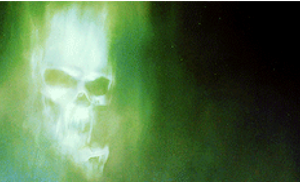
J.K. Rowling has created a world that seemingly transcends the social construct of race by creating a new, almost entirely white, world. At first glance, Harry Potter seems to have no racial storyline. White people control both sides of the war. The fate of the wizarding world is left in their hands. The non-white minorities are essentially left to watch as the future of their world is fought over. I realize that by showing how white people control both sides of the war, I am not explaining the racial tension. Lord Voldemort (the Dark Lord) is the leader of the evil forces. The Dark Lord is summoned by the Dark Mark, which is a figure sent into the air.
screen-shot-2016-12-15-at-8-11-23-pm

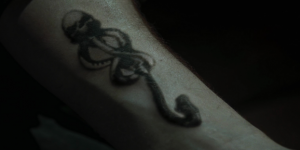
The Dark Mark’s purpose is not only to summon the Dark Lord. It is also used as a threat, creating tremendous fear. The Dark Mark can only be produced by a loyal member of Voldemort’s forces.
screen-shot-2016-12-15-at-8-11-31-pm

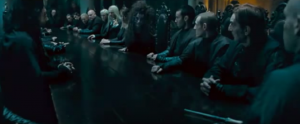
These members have a physical mark of darkness on their arm to show their loyalty to evil. Instead of using traditional racial stereotypes to signify evil, J.K. Rowling uses white men with dark marks as evil figures. In this white wizarding world, the evil ones are just a little darker than the rest.
screen-shot-2016-12-15-at-11-32-43-am

The notion that darkness in the mist of whiteness represents evil as a clearly racist notion. Being darker or having dark marks on your skin represents evil according to the Harry Potter series. This dark mark is easily covered up by these characters. Therefore, the darkness isn’t something that we can see in plain sight just by looking at a character. Thus, race can be hidden within characters, hidden from viewers.

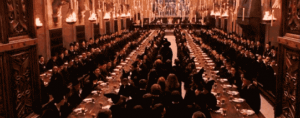
The evil white characters show a slight darkness inside of them, but where do the actual non-white characters come into play? In an almost entirely white series of movies, minorities have a total of six minutes of dialogue. Eight movies and only six minutes of dialogue. These characters barely seem to exist.
screen-shot-2016-12-15-at-8-11-42-pm

Picture of Hogwats students where almost everyone appears to be white

Non-white characters: https://www.youtube.com/watch?v=x67OjOLj11g

These characters additionally have seemingly easily replaceable, inconsequential roles. The uniqueness of their identities is cast out the window, which further marginalizes the minorities. The presence of these characters doesn’t distract from the fact that the wizard world is entirely white, so why did J.K. Rowling bother to include them? The casting a few non-white minor characters helps to create the white world because these characters seem out of place. The inclusion highlights the exclusion and aids in creating a world dominated by whiteness.

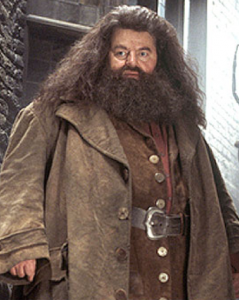
Within the wizarding and non-wizarding worlds, another separation is created. All magical beings are placed above humans. Wizards refer to humans as “muggles,” which can be translated to mean a person with no skill or ability. Muggles are seen as weak and inferior to wizards because of their lack of power. However, there are muggle parents who give birth to wizards. Hermione, as an example, is referred to as a mudblood by evil characters. The word Mudblood literally translates to dirty blood. Voldemort and his followers take wizard superiority to a new level. He believes that wizardry should be kept within all magical families (pure bloods), and people like Hermione should be killed. Harry Potter and his supporters separate from Voldemort on this very point. They believe that all are equal. No wizard is greater than any other. Voldemort’s blood purification is comparable to the Hitler’s Nazi regime in Germany in the 20th century. Hitler believed in the extermination of Jews, and Voldemort believes in wiping out impure wizards. J.K. Rowling’s wizarding world has created a hierarchy that on the surface doesn’t appear to be about race but in reality, is solely about it. Viewers, especially young people, watch the series and immediately call Voldemort a murderer and claim that is what separates the good and the evil. However, we miss over the fundamental fact that he is killing to gain power and purify the wizarding race. There are two main characters who will help clarify Voldemort’s beliefs. First, Rubeus Hagrid is half wizard and half giant.
screen-shot-2016-12-15-at-8-11-47-pm

He has all of the magical capabilities that any other wizard has, yet he is treated by the Malfoys and other supporters of Voldemort as nothing but a dumb giant. These evil characters treat him as inferior simply because of who he is. Though not apparently about race, Hagrid’s treatment by the evil wizards is clearly about wizard race. Second, Hermione Grander has two human parents. However, she somehow became a wizard. She also is treated terribly by the evil characters, especially Draco Malfoy. Because her bloodline is “impure” she is viewed as weak and lower in status. Despite her non-magical blood line, Hermione is the brightest student in her class.

https://www.youtube.com/watch?v=nAQBzjE-kvI

She demonstrates above average knowledge and ability, despite her magical race. Overall, having an entirely white world seems to eliminate racial tensions. However, the new racial hierarchy created between people of different magical biology exemplifies the manifestation of a different racial battle in Harry Potter. Also, it is plausible that the impure white characters in a way represent nonwhite people (despite their white skin color) because of how they are viewed and treated by the pure wizards. The wizarding world therefore represents a racial battle, which further illuminated J.K. Rowling’s shift in racial relations from actual races to wizarding races.

The superiority of pureblood wizards can be equated to white dominance. Voldemort strongly stands by the idea that his race of wizards is better than all others and is the only group fit to control the wizarding world. There is no other family who agrees with him more than the Malfoy’s. Lucius and Draco Malfoy are the epitome of white privilege and narcissism. Their appearance and attitude attempt to emanate superiority. Both of them have bleach, blonde hair. Their hair is as close to white as hair can get.
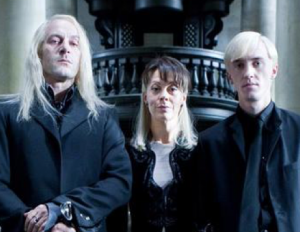
screen-shot-2016-12-15-at-8-11-52-pm

They are one hundred percent pure blood wizards with opulent wealth and flaunt it whenever possible.

https://www.youtube.com/watch?v=lG1UytBbJpE

The Malfoys are as white as white can get, and they use their status to their advantage. Ironically, the epitome of whiteness is one of the main representations of darkness. Additionally, The Malfoys belittle everyone who threatens them. However, they are the weak ones. In every battle, they either lose or run away.

https://www.youtube.com/watch?v=jrrrWuIYaGU

https://www.youtube.com/watch?v=JB2ZfDph1pE

https://www.youtube.com/watch?v=quyH6bvLqfA (at the end)

Additionally, Voldemort ultimately loses to Harry Potter. The good, impure forces defeat the evil, pure forces.
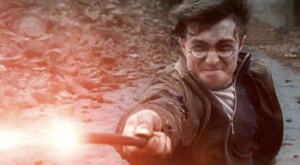
screen-shot-2016-12-15-at-8-11-55-pm

https://www.youtube.com/watch?v=ITqYqMNF4R8

The evil characters view the impure as genetic mistakes. However, these biological differences are what makes the good characters more human and better than the pure wizards. J.K. Rowling has changed the racial stereotypes. The impure wizards are the brightest, and the pure, extremely white wizards are weak. Viewers are blind to this change in racial stereotypes because it is hidden underneath wizard races.

Now, I realize that I need to discuss two main characters who also help explain J.K. Rowling’s racial reversal. Ron Weasley and Harry Potter. Ron is a pure blood wizard.
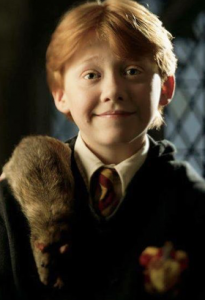
screen-shot-2016-12-15-at-8-12-00-pm

However, his family doesn’t have a lot of wealth. Additionally, Ron’s father is fascinated with muggles. The Weasley family despite their pure blood status, isn’t treated nicely by the Malfoys and other supporters of Voldemort because of their lack of wealth and association with muggles. Ron shows tremendous bravery and sacrifice, human traits that evil wizards lack. Now, the main character, Harry Potter, is a half-blood wizard.
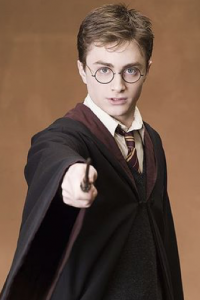
screen-shot-2016-12-15-at-8-12-10-pm

His father was a pure blood wizard and his mother had two muggles parents. Therefore, he lacks complete purity. However, he becomes the most powerful wizard in history. His mother sacrificed herself to protect him, which gave him more power than any evil force. The human love inside of him is what allows him to defeat evil, not biological wizarding power. Overall, complete whiteness, purity, and wealth are associated with inhumane evil. Ron and Harry, both “impure” wizards, successful defeat evil. This is another example of J.K. Rowling’s reversing of racial associations. The purest form of wizardry isn’t the most powerful.

Not only is there a difference between pure and impure wizards, there is a magical hierarchy within the creatures of the wizard world. I am going to discuss two creatures who have racial and stereotypic connections to the human world. The Goblins in Harry Potter control Gringotts, the wizarding bank. These big nosed creatures are regarded as mistrustful and greedy. https://www.youtube.com/watch?v=mcMjdSk9EfY (Griphook leaves Harry, Ron, and Hermione because he got the sword).
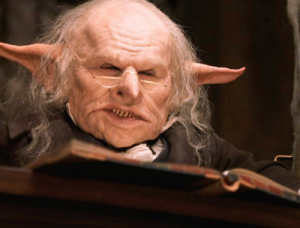
screen-shot-2016-12-15-at-8-12-15-pm

(Griphook: main goblin)

These goblins embody the stereotypes associated with Jews. Jewish moneylenders have been stereotyped as extremely wealthy, deceitful, and having big noses. All of these features are present in goblins. Second, the house elves are represented as the lowest level of society. They are essentially enslaved by their masters and can only be freed when presented with clothes. These creatures depend on their masters to survive and live in fear of punishment. Dobby, a house-elf of the Malfoy family, is a perfect example. He wears a dirty pillowcase, is beaten by his master, and even punishes himself when he disobeys.
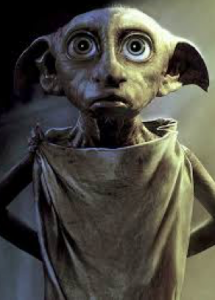
screen-shot-2016-12-15-at-8-12-20-pm

Dobby worked for the Malfoys, who are the epitome of whiteness in the Harry Potter series. House-elves clearly provide a direct comparison to enslaved African Americans in 17th to 19th century America. Slaves are completely submissive to their masters will and live in fear. House-elves and slaves were both treated as nothing. African Americans didn’t even count as people, and house-elves are regarded as worthless. Both goblins and house-elves provide connections to human stereotypes and racial prejudices that upon watching Harry Potter for the sole enjoyment of the series, we are blind to. We are not aware of these connections because these characters seem virtually trivial to the plot and aren’t present in the battle between good and evil. J.K. Rowling has hidden these racial messages in places where viewers won’t notice them.

Carin Möller, a Lund University graduate, wrote her Bachelor’s thesis on Harry Potter, in which she states, “Indeed, the racial identifiers seem to exist only as a vehicle for Rowling to show how race has no real meaning in her magical universe” (Möller 2014 page 3/234). I agree that the white world she created essentially signifies that the race of her characters is inconsequential. However, having replaceable minority characters excludes them because their fate is determined by white people. She may as well have never included them. Harry Potter proves that race in general does have meaning. Carin is just like every other viewer. She overlooks the underlying messages about race by claiming race has no meaning in J.K. Rowling’s magical universe. Race has meaning; however, it is hidden in seemingly non-racial relations. Racial meaning is present in pure versus impure wizardry, in the inferiority of magical creatures, and in the darkness hidden within the white characters.

Mikhail Lyubansky of the University of Illinois claims, “the racial issues of Rowling’s story about young wizard Harry Potter can be found in every corner.” (Lyubansky page 19/17). The presence of racism is not as easily accessible to the target viewers of Harry Potter, young kids, as this author makes it seem. They are also not found in every corner. They are hidden in the magical and non-magical tension. The simple creation of a mainly white world doesn’t provide racial tension. Readers of Harry Potter see a false form of racial tension in this world because we aren’t aware of the deeper meanings behind the relationships between characters. When we see the evil characters get defeated, we don’t immediately connect their defeat to their poor treatment of house elves and impure wizards. Over time we may become more aware of the causes of their defeat. However, young viewers and first time watchers cannot see the causes of downfall of Voldemort and his forces. We notice Voldemort’s attempt to purify the wizarding race, but it is almost impossible to notice the underlying messages about white superiority, non-white exclusion, and racial reversals. Even many adults still haven’t noticed the presence and significance of race in these films. It is difficult to uncover and must be searched for in unexpected places.

Overall, one might argue that because Harry Potter defeats Voldemort we are suddenly aware that Voldemort was wrong in trying to purify the wizard race and all magical race is now obvious to viewers. I disagree with this argument. There are certain aspects of race that we are aware of. We immediately notice skin color. J.K. Rowling has created an almost entirely white world, in which the fate of the minority depends on the white characters. There is a battle between which whiteness is better. The pure blood evil characters, who have slight darkness in the midst of the complete whiteness, or the impure good characters, who have more lightness and purity that the pure blood characters. Upon watching Harry Potter, we simply see good and evil. We see light and dark; pure and impure. However, we can’t see how J.K. Rowling has ironically flipped the racial connotations. The epitome of whiteness and purity carries the dark mark. They are weaker than they perceive themselves to be because of their irrational desire for a wizarding world of complete purity. They lack human traits of love, friendship, and sacrifice, and the biologically flawed characters rise up to defeat the evil ones. They have strength, intelligence, and bravery-traits that are usually associated with the purity and wealth of complete human whiteness. These characteristics in the real world aren’t stereotypically associated with the poor, dirty blood, and low life people (wizards). J.K. Rowling has created a more positive outlook on race. Anyone can have any trait. Even the whitest wizards can be the evilest, and even the most impure wizards can courageously save their race from extinction. The ideology is that pure white domination is wrong and impure whites can be smarter and stronger. Therefore, Harry Potter is a call for equality, overturning the status quo of white domination. This view of the race present in Harry Potter isn’t obvious. It is hidden in the backgrounds of the characters. This type of race isn’t always seen when you see the characters in the movie. We can’t see who is pure and who is impure just by looking at them. Race in Harry Potter isn’t always turned on and is therefore difficult to uncover and analyze. J.K. Rowling created a white world so that she can develop race relations between the magical characters and almost completely hide them from viewers.


Written in the style of Chuck Klosterman

Edited by Ashley Zhou


References

Klosterman, Chuck. “Death by Harry Potter.” Esquire 2007.

http://www.esquire.com/entertainment/a3556/klosterman1107/


Lyubansky, Mikhail “The Psychology of Harry Potter.” Benbella Books Inc.

https://internal.psychology.illinois.edu/~lyubansk/Harry%20Potter.pdf


Möller, Carin “Mudbloods, Half-bloods and Pure-bloods.”  2014.

http://lup.lub.lu.se/luur/download?func=downloadFile&recordOId=4285141&fileOId=4285142


Rowling, J.K. Harry Potter and the Philosopher’s Stone. London: Bloomsbury Publishing, 1997. Print

Rowling, J.K. Harry Potter and the Chamber of Secrets. London: Bloomsbury Publishing, 1998. Print

Rowling, J.K. Harry Potter and the Prisoner of Azkaban. London: Bloomsbury Publishing, 1999. Print

Rowling, J.K. Harry Potter and the Goblet of Fire. London: Bloomsbury Publishing, 2000. Print

Rowling, J.K. Harry Potter and the Order of the Phoenix. London: Bloomsbury Publishing, 2003. Print

Rowling, J.K. Harry Potter and the Half-Blood Prince. London: Bloomsbury Publishing, 2005. Print

Rowling, J.K. Harry Potter and the Deathly Hallows. London: Bloomsbury Publishing, 2007. Print

Images from Google and Video clips from Youtube
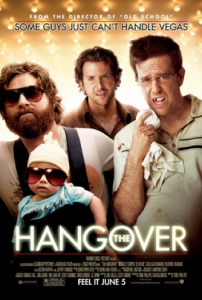
Fake Perfection

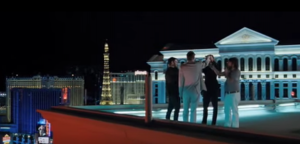
Chris Bender came to producers in 2002 with a story. He heard that Tripp Vinson, a close Hollywood friend, had gone mysteriously missing after his bachelor party in Las Vegas. Vinson woke up the next morning in a strip club with an enormous debt to pay. Screenwriters converted the story of Vinson’s bachelor party into a movie script centralized around the idea of having the ultimate night out, and director Todd Phillips signed off on the production of the movie.

In 2009, The Hangover was released, and it was very successful. Famous actors such as Bradley Cooper, Zach Galifianakis, and Ed Helms combined with a laugh out loud funny script produced the tenth-highest-grossing film of 2009. The film won the Golden Globe Award for Best Motion Picture-Musical or Comedy. The Hangover quickly became arguably one of the most hilarious movies ever made.

screen-shot-2016-11-19-at-11-33-54-pm

Movie critic Betsey Sharkey from the Los Angeles Times sums up The Hangover perfectly. She says, “there is a sort of perverse brilliance or brilliant perverseness to be found in this story of a bachelor party gone terribly wrong.” The success of The Hangover can be attributed to one thing: stupidity. The movie implements the epitome of idiocy and carelessness combined with crazy, unrealistic situations. The lack of maturity present in this movie is absurd but comical. Viewers watch The Hangover and fall out of their seats with laughter. The movie allows us to temporarily vacate our lives and enjoy 99 minutes of completely isolated happiness. We can enter into this new world of laughter and find pleasure and temporarily free us from our responsibilities and obligations. This sounds like the perfect life, right? Wrong. We may be free from reality, but we immediately return to our boring lives of homework and tests. Our escape to utopia is short-lived.

Through laughing at the Hangover, viewers find a new respect and almost admiration for the characters. They can survive a carefree, reckless night and overcome all their difficulties in the morning. Everything works out in the end, and they had fun, even if they don’t remember it!

However, the movie wasn’t titled The Night Out. It was titled The Hangover. The characters struggle to retrace their steps in the morning. Their “hangovers” are essentially the consequences from the night before. They wake up to find a baby, a tiger, missing teeth, etc. After living recklessly for a night, their responsibilities creep back into their lives the next morning. We laugh as the characters’ attempt to put the pieces together from their night, but what are we really laughing at? Was it their careless partying or was it their attempt to remember what happened? The answer is both. We laugh at how much fun they had, and we almost envy them in these moments of complete chaos and stupidity. Honestly, I wish I could live as carefree as they do, but how realistic does that seem? Their hangover honestly seems like my worst nightmare. They don’t remember what happened and everything seems to be spinning out of control. Anything could have happened that night. However, we find their encounters in the morning more comical than the actual events of the night. As viewers, we consider their crazy consequences hilarious because of their absurdity, but if we were in their shoes, I’m sure we wouldn’t be laughing. The effects of their carefree partying make this utopia unrealistic, yet people continue to try to live the “party life.” The party life is appealing because of its freedom, and we often forget about its sustainability and consequences.


The following clip shows the morning after their night out. Their consequences and problems are very apparent.

screen-shot-2016-11-19-at-10-01-40-pm

https://www.youtube.com/watch?v=xlrqaAjBwS4


I can’t talk about The Hangover without mentioning another movie: Ferris Bueller’s Day Off. These movies center around the idea of taking a break from reality. Ferris skips school for a day, and the four main characters in The Hangover go to Vegas to escape. Tired of going to school or work, all these characters live the party life for a day.

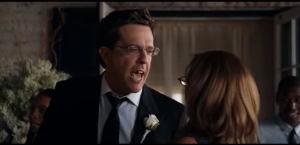
Another similarity between the two movies can be found between Cameron and Stu. Cameron, Ferris Bueller’s friend, was initially terrified of disappointing his father. He would never dare touch his car or disobey him in any way. After spending the day with Ferris, Cameron realizes that he can’t live his life in fear of his father. He ruins his father’s car and accepts that he will take responsibility for it. Now more confident than ever before, Cameron will stand up to his father. In The Hangover, Stu, one of the four main characters, is submissive to his girlfriend in every way. Melissa is controlling and dominant. Stu is scared of her and would never tell her that he was going to Vegas. Upon returning from the wine country he was supposedly visiting, Stu, now with a missing tooth, has to confront Melissa. After she accuses him of never doing what she wants him to do, he’s finally had enough and breaks up with her. Cameron and Stu have revelations during their escapes from reality, and they gain confidence and self-respect.

screen-shot-2016-11-19-at-10-05-16-pm

https://www.youtube.com/watch?v=4NvFgoAKOhI


Does living freely make us more confident? When we are stuck in our realities, are we weaker and more submissive? Do we need to be shown that consequences almost don’t matter? Living carelessly doesn’t make us more confident. It allows us to find ourselves. A utopian world can help us discover who we can be, but this world can’t be sustained. We need a world with boundaries, rules, and work. We can’t take that day off because the consequences never leave. If anything they get worse. In The Hangover, the characters solve their problems and move on. This notion is far from a sustainable reality. We, as viewers of The Hangover, are shown that we can take that time off, but we aren’t shown that we can’t live the party life all the time. We need to be aware of how this movie is preventing us from seeing that the party, careless utopia is not stable and not perfect. The Hangover and Ferris Bueller both provide us with unsustainable fake utopians. Breaks from reality can help us find ourselves, but we can’t afford to give up the work life for the party life.


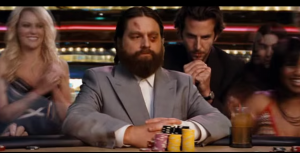
One example of their problems being solved can be seen in the following clip where Alan counts cards at a casino to pay off their debt. He suddenly gains this ability and doesn’t get caught. Their consequences are fleeting.

screen-shot-2016-11-19-at-10-14-45-pm

https://www.youtube.com/watch?v=jxTngPDNqk8


Rotten Tomatoes movie critic Justin Strout says, “As if it wasn’t bad enough to be stuck in Las Vegas with these middle-aged misanthropes, The Hangover does the inconceivable disservice of robbing the audience of that elusive sweet spot of GCA usefulness: the drunken escapade.” He is claiming that The Hangover robs its audience of a great drunken adventure. I will agree that some of the consequences present in the movie are a bit extreme. However, all the problems are solved by the end of the movie, which proves the false perfection that audiences are blind to.

Some people claim that you have to live every day like it’s your last because you don’t want to look back on your life with regrets. I understand that we need to make the most out of every day. However, if you treat each day like you will never live again, you probably won’t live to see the next day. Our desire to live every day like it’s a bachelor party is very common. People with the “party life” mentality feel like their jobs are pointless and that they need to get out more. This freedom is reasonable to want, but it is not a sustainable life style. Skipping work to party is seen as a way to live the perfect life, but we often don’t realize that going to work and providing for ourselves is the most desirable life. As humans, we always want what we don’t have and strive to live the lives that we can’t. If we aren’t well off enough to live the party life, we live it for a day and struggle through the consequences. Sadly, it’s human nature to desire this fake perfection.

The design of The Hangover is unique and allows for viewers to internalize its key messages. The movie initially skips over the events of the night out and goes directly to the consequences. Viewers see the problems resolve themselves as we journey with the characters to discover what happened the night before. This gives the viewers an unrealistically positive outlook on their night out. After laughing at what happens to the characters, we are left with accepting that it’s fun to live freely for a night because everything will work out in the end. The jumping forward aspect of The Hangover prevents the viewers from seeing how having a wild night is a representation of a false perfection. We watch this movie and think of the party life as a utopian lifestyle. The creators of The Hangover wanted to create a hilarious movie that exemplified a night out gone totally wrong. However, their movie design ironically produced the opposite effect and allowed viewers to accept the characters’ crazy actions as being socially desirable.

Slap-stick comedies, Ferris Bueller’s Day Off, and the Hangover are all some form of perfection. The characters escape from their work lives in order to live the party life for a day. However, these utopians are not forms of a sustainable lifestyle. We can’t skip out on our responsibilities and get wasted. The party life, despite how appealing it seems, is not a true form of utopia. The Hangover is a representation of a fake perfection. It’s an unattainable lifestyle that is extremely desirable because of its seemingly utopian nature.


References

Bakhtin, Mikhail “Rabelais and His World.” 1965.


Sharkey, Betsey. “The Hangover Review.” Los Angeles Times. Rotten Tomatoes. June 5, 2009.

Web. https://www.rottentomatoes.com/m/10010667-hangover/reviews/?type=top_critics


Strout, Justin. “The Hangover Review.”  Rotten Tomatoes. June 4, 2009. Web.

https://www.rottentomatoes.com/m/10010667-hangover/reviews/?sort=rotten


Images and Videos from Google and Youtube

Sisterly Love: A Deviation from Mainstream Disney

By Amanda Reisman

Is all love the same? No! Bear with me, and I will explain how love varies in depth and meaning. I don’t mean that our love of Harry Potter differs from our love of food. I’m talking about people. We all love in different ways. Some people love more, and some love less. Some try to hide their love, and some love too much. How do we learn to control the love that seems to consume and conquer us? We become subjects to whatever our hearts desire. Who we love and what we love becomes a part of who we are. We perceive this love in its many different forms. There is forbidden love, idolized love, fake love, and real love. Where do we draw the line? Is the love we see in media real? Can we tell if our love is true?

The culture we consume has generally portrayed love as the ultimate goal. This creates a real world desire among people to find their “soulmates.” I put the word soulmates in quotation marks to emphasize how the idea of finding our one true love has been produced and implemented into our culture through media. The belief that we each have a soulmate, a person who we are designed to be with, is quite controversial. How can we know who that is? What if we haven’t met that person? Regardless, media has instilled a concept of finding our own Prince Charming. Children watch movies where princes and princesses fall in love and live happily ever after. The prince is idolized and made out to be the ideal soulmate. The princesses sing song after song about finding their prince. They become entranced by just the thought of seeing their lover again. The practicality of these movies is absurd. Frozen, the first break in the seemingly never-ending stream of Disney princess movies, has stemmed away from this culturally produced notion of love.

Frozen (2013) is centered around a princess named Anna whose sister, Elsa, has ice powers. Her sister accidentally freezes Anna’s heart, and only an “act of true love to thaw her frozen heart.”

screen-shot-2016-10-15-at-3-17-54-pm

Elsa accidentally freezes Anna’s heart

https://www.youtube.com/watch?v=KqDE95-gP6M

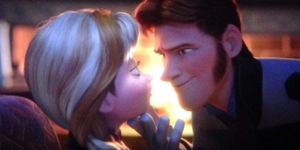
The movie initially revolves around Anna’s mission to find Hans, a prince who she met and immediately fell in love with. She was so focused on finding “the one” that she declares Hans to be her soulmate immediately after she meets him. Needing love to save her, Anna journeys to find him for an act of true love. This act of true love is immediately perceived as a true love’s kiss. A true love’s kiss immediately references another Disney movie: Sleeping Beauty. Sleeping Beauty waits for Prince Phillip’s kiss to save her from her deep sleep. The idea of a true love’s kiss solidifies Disney’s focus on how only real, romantic love can save us from evil. This love is seemingly the only form of protection from evil. The beginning of Frozen seems to fall right in line with Sleeping Beauty. The search for love as the savior from death is common in both of these movies. True love’s kiss wakes up Sleeping Beauty; however, Anna, of Frozen, realizes she has been blinded and tricked by her desires.

You are now probably wondering why I explained the similarities between an old classic Disney princess movie and Frozen. Disney, by creating Frozen, is ironically mocking their previous movies. Now before you immediately disregard my assertion, just listen to what I have to say. After Anna finally finds Hans, she is dying and in need of an act of true love. Believing Hans is her knight in shining armor, Anna asks for a true love’s kiss. He rejects her attempt and reveals how he only pretended to fall in love with her to become the next King of Arendelle. Her obsession with finding her one true love resulted in her thinking that Hans was the one. What she thought was true love couldn’t save her. Her infatuation deceived her. There was seemingly no happily ever after.

screen-shot-2016-10-15-at-3-18-02-pm

Hans reveals his true intentions

https://www.youtube.com/watch?v=KqDE95-gP6M

Anna has been tricked! What? Disney, who? The prince and princess are supposed to fall in love and live happily ever after. What happened? This unprecedented twist of events is unlike any Disney princess movie ever made. The man has deceived the woman for power! Now that definitely couldn’t be Disney!

To continue my thoughts on the divide between Frozen and previous Disney movies, I would like to compare the opposing plots from Frozen and Cinderella (1950). In the movie Cinderella, Prince Charming, after dancing with Cinderella at the ball, needs to find her again. He believes he has found his true love and is relentless in finding her. Eventually, they reconnect and live happily ever after. On the other hand, Frozen’s Anna is fighting to find Hans! This is the first Disney movie where the girl is desperately trying to find the boy. She feels that she “needs” to find him to survive. Despite proving that Disney is mocking their previous work with this idea of needing a man to “survive,” the beginning of Frozen draws attention to this role reversal, which is just one difference between these two movies. Cinderella follows right along Disney’s classic princess movie mold. The girl meets the boy, and they fall in love. Some evil thing happens that attempts to separate them, but they find each other again and live happily ever after. This structure is mocked by Frozen. The girl meets the boy, and the girl thinks she found true love. Some evil thing happens, and the boy leaves the girl to die in order to take over her kingdom. The change in plot makes a joke out of every classic Disney princess movie by showing how completely unrealistic and farfetched those movies actually are. Love at first sight is actually not a realistic notion! Not everyone is who they say they are or who we want them to be!

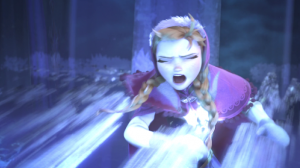
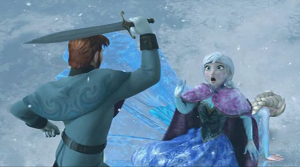
After Hans abandons Anna, she manages to find her sister. Hans, in order to become King, needs both Anna and Elsa to die. However, Anna steps in front of Hans’s sword to save Elsa and freezes there. By sacrificing herself, she performs an act of true love and suddenly unfreezes and returns to her normal health.

screen-shot-2016-10-15-at-3-18-11-pm

Anna sacrificing herself for her sister

https://www.youtube.com/watch?v=b2xn0jDmiTw

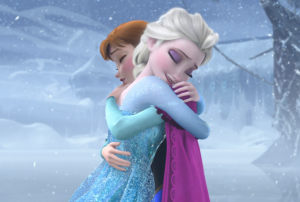
Their sisterly love saves them. Anna is cured, and Elsa learns to control her powers through love. Family is the most important part of our lives! The love we feel for our family is insurmountable. This unbreakable bond will protect us from everything! Frozen broke away from mainstream Disney princess movies by changing its view on powerful love. Previously, the love between a prince and a princess was enough to stop evil. In Frozen, the love between two sisters is stronger than any relationship or any impending danger. Only “love can thaw a frozen heart.” The notion that “love thaws” is crucial to the ideals present in Frozen. Love defrosts; it unfreezes; it warms. Love removes the cold. Only true love can save us! Real love can be found, where Disney has never before represented it, within our families.

This stress on familial love instead of romantic love was a significant change for Disney to make. Their target audience being children is vital to how they construct their movies. Kids watch these movies and immediately associate with/desire to be the princesses. Previous Disney princess movies have instilled ideas of soulmates, “Prince Charmings,” and true love into the minds of 5 year-olds. That’s ridiculous! We should be teaching kids about family, loving your family, and putting your family above all else. Frozen is the perfect demonstration of familial values, and Anna is the greatest example of bravery and selflessness in all of the Disney princess movies.

Frozen is an unprecedented creation where love triumphs all and combats evil. There are some movie critics who would disagree with the facts I have stated about Frozen. Elizabeth Weitzman, of the New York Daily News, claims that there is still something missing from Frozen. “What’s crucially missing, however, is a hissable villain” (Weitzman, Elizabeth, Frozen, Movie Review). I’m sorry…what? A “hissable villain!” Why would we create movies geared for kids where powerful villains are the enemy? These kids learn to hate the Evil Queen or Maleficent without truly understanding why these characters are seemingly inherently evil. The classic Disney movies provide no solutions to help cure these villains of their evil intentions. The prince and princess simple defeat their villains. However, Frozen has no specific villain. Hans is definitely a despicable character, but as a viewer, I can understand why he was so evil. He wanted to become King! He is ultimately defeated by Elsa and Anna’s realization that love thaws! No matter what evil comes about, their unwavering love for each other will win at all costs. In classic Disney princess movies, there is no such revelation. There is only romantic love defeating evil!

Other critics have stated that Frozen is just another Disney love story. On http://www.imdb.com/title/tt2294629/reviews,  a critic under the username rford191 had a particularly interesting and astonishing review of Frozen. This reviewer said one con of Frozen was “plot idiocy…If fear is the enemy, why do you seclude/terrorize the princess with insecurities? How/why does “love” recall winter? Didn’t Elsa love her family all along? Wasn’t there “love” present all this time? There was zero explanation for how this worked. Just “love”” (rford191, “An Astonishing Disappointment” IMDb Reviews and Ratings for Frozen). This critic may be right to some extent, but, until the end of Frozen, there was never a direct declaration of love or any act displaying sisterly love. Anna, despite her sister’s neglect, sacrificed herself. This act of pure love cannot be surpassed by anything else. The ultimate declaration of love is putting someone else’s life ahead of your own; sacrifice. In the video clip that I added, Anna clearly chose to save her sister over herself by running away from Kristoff to stop Hans’s sword. Additionally, Anna’s growth as a character is crucial to the plot. Her flaws are transformed into bravery. She overcomes her past with her sister’s neglect and the loss of her parents to realize what she truly wants and who she wants to be with. She discovers who the important people in life are and who she can trust and count on. Anna does have many weaknesses. She is tricked and deceived because of her willingness and hopefulness in the world of love. She is the only Disney character who has these prevalent insecurities. Anna is not perfect, which separates her from all the idolized princesses of previous movies. Ultimately, she overcomes these imperfections through courage and sisterly love. The love she feels for her sister was always there, but she needed to be brave in order to save Elsa (thus displaying her love). Love, a warm feeling, is ultimately what recalls the eternal winter. This is a slightly abstract idea, but that’s just Disney! It’s the underlying messages sent by the presence of warmth and sisterly love that are important in differentiating Frozen from previous Disney princess movies.

Many critics have claimed that Anna is just another princess who falls in love and lives happily ever after. I will admit that part of that statement is true. She finds love with Kristoff, and we are expected to believe that they will live happily ever after. However, she doesn’t end up with the prince, the first boy she meets! Kristoff, the ice man, is from a different world.

screen-shot-2016-10-15-at-3-18-21-pm

He comes from no wealth or power, and she actually takes the time to get to know him. She fell in love over a period of time rather than just instantly! This also distances her from almost every other Disney princess who falls in love with the prince who saves her. Additionally, Kristoff doesn’t save Ana! She actually saves herself her willingness to protect her sister. It is important to note that Anna is the hero of her own story. This is the first time the princess has ever been the hero in any Disney princess movie! Anna overcomes her previous family issues, her internal struggles, and her obstacles with love in order to save Elsa and help recall the eternal winter.

Do you see it now? Frozen has provided us with a deviation from the never-ending stream of perfect princesses and princes riding off into the sunset. We have struggles of love, power, and trickery! The main character is flawed, but she surmounts her imperfections in order to survive. Frozen’s value of sisterly love in order to stop evil differs from previous classics in which romantic love is the ultimate goal.

screen-shot-2016-10-15-at-3-18-29-pm

These plot twists are new for Disney. They have thrown the cookie-cutter model out the window, thus proving why this movie was so successful. Everything about this movie was unexpected from Hans’s duplicity to how sisterly love saves Anna. It provides the viewers with a new take on love, deception, and family! Disney has diverged from its previous mold of romantic love, idolized princesses, and heroic princes.

To finally solidify all of my points, the break between Frozen and classic Disney movies are a perfect example of distinction within a similar realm of culture. Disney has been producing these princess movies for decades, but “for the first time in forever” they have provided a counterculture. This counterculture outright rejects the uniformity of mass produced culture. Adorno is a critic of cultural theory, and he believes that when culture is mass-produced (for example, Disney movies are mass produced) it is in danger of becoming the same. Adorno’s word of choice (“sameness”) is a very close-minded view of culture and is a very ambiguous description. I have spent this essay explaining to you the visible break between classic Disney princess movies and Frozen. This division is clearly not “sameness.” It is a totally different new realm of culture that has stemmed from a mass produced system. Adorno claims that despite appearing different, culture all lands in the same place. To counter Adorno’s view on the sameness of mass produced culture, Frozen is the perfect break from previous Disney movies by exemplifying sisterly love, strong female characters who overcome their flaws, and women becoming the unexpected heroines of their own stories.

Images from Google, and Video clips from Youtube.