By David Shakirov
UPDATE 04/29/2019: After a run up from $7.60 (original publication of article) to $10.20 (as of 03/29/2019) — a 37% dividend-adjusted gain — the author recommends selling Ford stock due to macroeconomic concerns, including a late cycle position, geopolitical risks, and recession risk. This books a significant capital gain of 37%, or 13% above the S&P 500.

In my last article, I mentioned that tech is not the love-child of the markets anymore. If Apple is no longer “hot”, then neither is a 115-year-old American car company. I’m referring to Ford — at one point the pride of American innovation, manufacturing, and design, and now a company struggling to find their forte in the evolving car business. Investors look to sexy electric vehicle manufacturers that produce models with self-driving capabilities and gut-wrenching acceleration (ahem, TSLA). The newest 2019 Ford mom-van, unfortunately, may not hit those marks. Kidding aside, Ford’s stock (F) has suffered since 2014 — not a fun ride for those aboard. Since its $17 peak, Ford has hit bottom, as of this article’s writing, at $8.02 — a 55% price decline over 4 years (the S&P 500 has climbed nearly 30%). Investors point to an uninspired focus on autonomous driving technologies as competitors ramp up efforts in self-driving tech. International demand, especially in China (18% of business, by units), is also a concern for investors — President Trump’s tariff disagreements are not helping (however, Ford’s largest market is the United States). Contrary to investor sentiment, however, Ford is investing heavily in self-driving tech, maintains a healthy cash position, grows revenues, and pays a 7% dividend (which has been reiterated as recession-proof by management). When Ford is mentioned throughout this article, the term refers to the Ford brand, in addition to its F-series, transit van, Ford Credit, and Lincoln businesses.
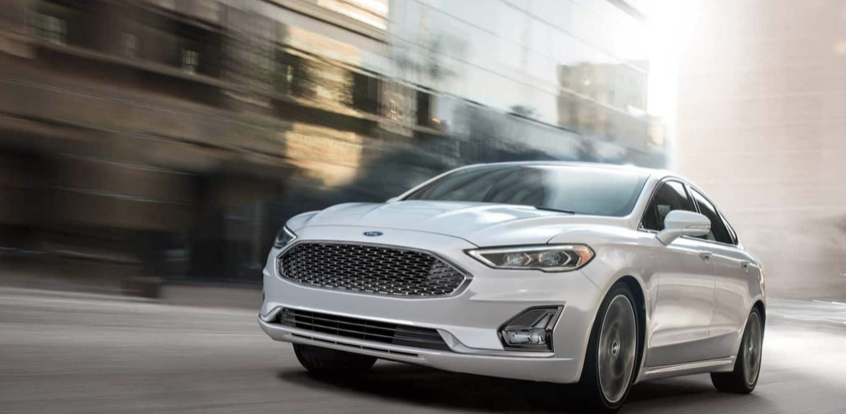
Ford’s international exposure is a major concern for investors. Although revenues in all but Ford’s smallest region (Africa/Middle East) have either increased or stayed flat over the last two years (this includes Asia, Europe, South America, and North America), market share is a different story. Ford’s share in all of its regions has decreased slightly (e.g. 14% to 13.9% in North America, 9.6% to 8.9% in South America, and 3.6% to 3.4% in Asia). Given that overall sales volume was in better shape, while Ford’s market share deteriorated, a highly-competitive environment may be cited. Competition from other American brands (including GM’s Chevy/Cadillac unit, FCA’s Jeep, Dodge, Ram, and Chrysler units, and yes, Tesla) or Asian companies (i.e. Honda/Acura, Toyota/Lexus, Kia/Hyundai/Genesis) may be problematic. As a bit of car-geek myself, it’s hard to make a case for most of Ford’s models over competitors— the “Taurus” has not been refreshed for 9 years, the “Fusion” has looked the same for the last 6, while the “Flex” reminds me of a refrigerator.
Ford has two major issues with its models — an aging line-up and lack of autonomous tech. First, Ford is moving to change its model line-up entirely. It announced earlier this year that all non-SUV/truck models (minus the legendary “Mustang”) will be on their way out in North America soon, to reflect consumer preferences toward the SUV. By 2020, the company promises to reallocate $7B from sedans to SUVs, while introducing eight new or refreshed models. Ford’s existing SUV’s are all receiving refreshes either this or next year, including a sporty “Edge” (think Mustang-powered mom-van), and a full-size SUV from Lincoln that blows Cadillac’s Escalade, or its largest competitor, out of the water. The F-series pick-up truck (which is America’s best selling vehicle by volume) has recently received a major overhaul, and a brand new “Explorer” is coming out January 9th. A separate Mustang-SUV model is also in the works. Ford also continues to focus on providing electrified options for its vehicles, and promises to sell more hybrids than Toyota by 2021, although this may be a lofty goal. Given that margins on larger vehicles are often thicker as well, bottom line numbers may improve during this transformation.
Over the last 3 years, however, Ford has made a mistake by delaying its autonomous unit. While Tesla claims some of its models are already equipped to handle self-driving software, competitors like GM have raised billions for their self-driving units and promise results by the end of 2019. Ford, on the other hand, has joined the race this July and promises driverless vehicles by 2021 by creating its own unit, “Ford Autonomous Vehicles LLC”, and attracting outside investors. A two year difference seems major, but really isn’t — even if GM or Tesla release driverless models (referred to as Level 5 or 6 autonomous vehicles) by the end of next year, the adoption rates by consumers and legislative challenges will be major. Here’s a worrisome study — the percentage of people who said they would not trust a self driving vehicle increased from 40% in 2016 to 48% in 2017. As of this week, Congress also pushed autonomous vehicle legislation into 2019, a disappointing move to companies that hoped to begin testing on more public roads. Regardless of when self driving tech becomes fully developed (or legally permitted), most consumers are currently satisfied with blind-spot monitors and collision warning systems in their vehicles, although the landscape may change by 2021.
Financially, being 115 years old may be “boring”, but it certainly helps the piggy-bank. Ford’s short term liquidity (cash + short term investments) is substantial — $39B in 2017 (an $2.5B increase from 2014), while shareholder equity is $35B (an $11B increase from 2014) at a $30B valuation. GM, its direct competitor, has seen declining equity (to $35B, as well), cash and S/T investment levels 40% lower than Ford’s, a lower dividend yield, yet a higher ($40B) valuation. Furthermore, its price/sales and price/book are both lower than GM’s (40% and 32% lower, respectively). Between the two main American automotive manufacturers, Ford may trade at a more attractive valuation. To take advantage of its strong cash position, Ford has also boosted its R&D spending by 20% over the last 3 years to develop its self-driving unit and, with increasing top line and stable bottom line results, can afford to do so.
Ford Credit, and Ford’s pension liabilities may be concerns for some investors. The former provides leasing and financing tools for Ford customers, and is affected by unexpected events (i.e. repos, defaults, etc.). Over the last two years, however, this business has been stable (with mid-700 FICOs and stagnant repo rates). Ford also maintains a stable amount of reserves (0.43-0.44% of receivables) for its credit business. In terms of pension liabilities, Ford currently has a ~90% funded pension. This amounts to a $8B gap in funding, a small amount relative to Ford’s cash/short term liquidity.
Here’s the really exciting part — its 7.5% dividend, consistently paid over the last 3 years. The dividend costs Ford a touch above $2B per year, and, according to its CFO, will perpetuate in the case of a recession. This is not unlikely, given the company’s cash position and extensive credit lines. For long-term investors, whatever room is left on the downside may be cushioned through a $0.15/share quarterly “pillow” and may provide consistent fixed income even during an economic downturn over the next few years. Can we really trust Ford’s management on maintaining the dividend? On average, car sales by units in the US fall 17% during economic downturns (given data over the last 3 recessions). If Ford’s revenues decline 17% in a downturn, their bottom line would decrease by $2.9B (given a net profit margin of -11%, as it was observed in 2008). Hence, even if Ford declines 1:1 with the auto market (which, assuming Ford’s vehicles are revamped over the next few years and become more attractive than the average, may not hold true), Ford’s bottom line would decline to $4.6B, while operational free cash flows would fall 16% to $13.5B, well above the $2.5B yearly expenditure on dividends Given the fall in FCFs, we would expect the net change in cash to turn negative (-$2.4B), given data from the last 5 years. Ford’s cash/cash equivalent position sits at $40B — a cushion large enough to absorb an economic downturn seen in 2008 (even though the next downturn will most likely be less severe).

The stock has hit (as of writing) last month’s 9 year low. Given this, plus a sub-30 RSI, it is highly likely to bounce up from this level. In late January, Ford’s quarterly report is due and may be a catalyst for an upward move if it beats its cited key metrics (including profitmargins and EBIT). More importantly, its transparency about future plans in regard to autonomous vehicles or a turnaround may spur positive sentiment.
In terms of valuation, a conservative DCF scenario yields $10.50-$11 (35% upside, not including the dividend). This factors in ~10% increases in market share (i.e. 7% share to 7.7% share in Europe) due to a more competitive model lineup and a ~4% decreases in prices (either to undercut competitors, increase demand, etc.) across all regions.
My opinion, however, is that a model is not as applicable in this case as in others. More specifically, the industry will change dramatically in the next 5 years and modeling may fail to take this into account — the best analysis should consider both company fundamentals and management. The right C-suite is an incredibly important factor in a turnaround like Ford’s.
Ford’s executive team, including the CEO, are taking calculated steps in this overhaul. The CEO seems hesitant to unveil any “master plan” and does not consider himself a “savior” for the company — data show a “loud” turnaround almost always leads to an undesirable outcome (see researcher Jim Collins’s published studies for more info). Rather, Ford is facing the “brutal truth” by cutting its losers (sedans), revamping/improving its winners (pick ups, SUVs, and the Mustang), while keeping company financials healthy. Critics point to James Hackett’s (Ford’s CEO) lack of experience in the automotive world, but this is irrelevant — data shows great leaders possess a universal set of skills, like humility, will, and a work-horse attitude, while technical skills are learned quickly (this is why students attend liberal arts schools like Williams, by the way). Hackett admits in interviews he does not have a grand vision, but is simply comprehensively assessing Ford’s and the industry’s trends to arrive at the best decisions to drive the company forward. To be frank, Hackett could easily go on CNBC with an energized message to bring Ford “back from boring”, land on the cover of Fortune or Bloomberg Businessweek, setting its stock on a potential bullish run. As someone who owns nearly 150,000 shares of Ford stock, there is definitely a reason he has not done this already. Although the findings in this paragraph may seem highly qualitative, they are deeply rooted in data and case studies of hundreds of American corporations (see published works Good to Great and How the Mighty Fall for more information).
There is little doubt Ford is currently a “boring” company. This, however, doesn’t have to mean a “boring” investment. Ford’s turnaround is likely to be successful and, given their dividend and financial position, time is on their side. If all goes according to plan, Ford’s vehicles and technology will be almost entirely revamped by 2021, while history and data point to current leadership being a positive catalyst during the transition. Given a long term view, we can expect at least 50-55% upside over the next 4 years (via the DCF model and dividend yield). In addition, Ford’s stock can be an effective hedge against a downturn with its dividend. Maybe investing in Ford is not “chic” to bring up in a conversation with your millenial friend, but who really cares when it makes you money?