2024-2025
Danny Hinh ‘28, Makerspace

Danny Hinh ‘28
Williams College
Being immersed in technology has shown me that no one—whether STEM or non-STEM, a Makerspace worker or a stakeholder—should ever feel locked out of using it. Technology is for everyone. It exists to turn ideas into reality, to make the impossible possible. In the Makerspace, students of all backgrounds can create and gain valuable hands-on experience with electronic equipment, digital tools, and fabrication technologies. One of the most rewarding aspects of working at the Makerspace is seeing real results. You’re not just experimenting—you’re actively supporting faculty and students, helping bring their academic projects to life. From 3D-printing architectural models to developing new fabrication techniques, every project has a tangible impact. Moving forward, I feel more confident collaborating with engineers, technicians, and creatives alike. The Makerspace has not only improved my technical skills but also strengthened my ability to adapt, learn quickly, and creatively solve problems for projects with real-world impact.
Harris Longfield ‘27, Makerspace
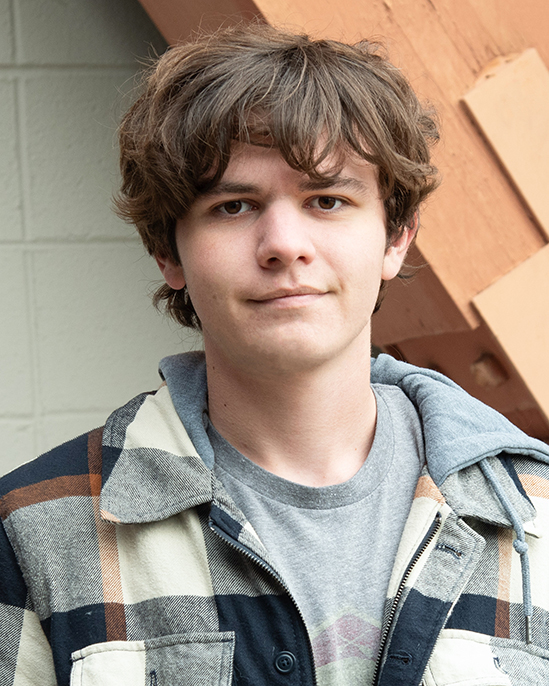
Harris Longfield ‘27
Williams College
I associate a Makerspace with big engineering schools with seemingly infinite resources, so the existence of one at a small liberal arts college like Williams really shows that there is a space and community for everybody here. As a physics and math student, the Makerspace is the perfect physical, intellectual, and creative outlet to hone in on my technical skills and complement my theoretical coursework. I always found hands-on work to be most exciting, and there is something special about turning the spark of an idea into a flawed prototype and, eventually, a functional model.
Valeria Menjívar ‘26, Makerspace
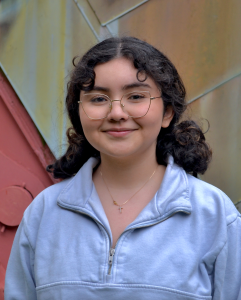
Valeria Menjívar ’26
Williams College
In the Makerspace, you can forget about school and work stress and focus on fun and challenging activities that speak to yourself. Williams classes are tough, and students (speaking for myself) love to have spaces like these where you can be your most curious self, be supported by peers, and have the opportunity to ask “Wait, so how do you do this again?” without being judged (you make mistakes, you grow, it’s ok!). Being the director of my own—mini—projects is also something I enjoy. One of the reasons I chose Williams was the chance to take tutorials, independent studies, conduct research, and be authentically curious! All of those experiences contribute to what makes Williams, Williams, and the Makerspace is just an extension of that. Most of the time, we think about independent thought, and we think about the humanities, but having access to a place where you can think, design, and create—at your own pace, in our own style, and at your own time is truly just that!
Diana Pernalete ‘28, Makerspace

Diana Pernalete ‘28
Williams College
I’ve always been interested in the way the STEM and humanities fields interact. Williams College’s interdisciplinary focus is one of the main things that drew me to apply. So when I was able to use my interest in the humanities to realize my Makerspace projects, I was extremely excited. So far, the Makerspace has been the pinnacle of my interdisciplinary experiences at Williams, it makes me push the boundaries of where STEM and the humanities intersect, as well as see where the two disciplines interact in ways that I wasn’t previously able to see. The Makerspace has made me realize the importance of using technology to help advance the humanities field.
Sam Samuel ‘26, Makerspace
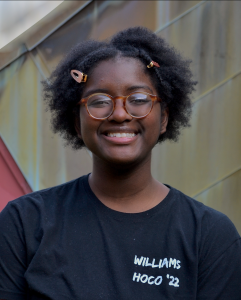
Sam Samuel ’26
Williams College
The Makerspace is important to me because it allows me to do things that I’ve never done before. Not only does it allow me to interact with different faculty and staff on campus (and that’s nice for me since I’m an ENVI major), but it encourages collaboration and creativity. The Makerspace is important to me because I am often learning something new, my creativity juices are flowing, and simultaneously it’s fun. There wasn’t a Makerspace in my high school, and it’s incredibly important to me to have this avenue to do things here that I’d never otherwise have an opportunity to do, all while testing and redefining my limits.
2023-2024
Tash Ahmed ‘26, Makerspace

Tash Ahmed ’26
Williams College
At Williams, my Computer Science and Math classes keep my brain buzzing, but there’s something missing—there’s a kind of tactile creativity that coding alone just can’t fulfill for me. Enter the Makerspace, my campus refuge for hands-on innovation. It’s more than just a hobby space; it’s an extension of my educational experience, a place where the digital logic from my courses can manifest into physical, working projects. Back in high school, my calendar was always marked up with Olympiad deadlines or Science Fair dates. I lived for the challenge of building things from scratch, and the Makerspace at Williams has effortlessly filled that void. But the Makerspace isn’t just about the gear and gadgets. What makes it special is the process—the trial and error, the troubleshooting, the “aha” moments. There’s something incredibly satisfying about conceiving an idea and then working through the kinks to make it a reality. Coding is one thing, but using that code to make something come to life is a game-changer. It brings an extra dimension to my studies, making the abstract concrete and providing a tangible payoff that’s as educational as it is exhilarating.
Camily Hidalgo ‘26, Makerspace

Camily Hidalgo ’26
Williams College
The Makerspace allows me to develop critical skills and engage and build amazing projects with faculty. This boosts my student learning while helping the college. It is a space where student workers can grow as people and future professionals. For me, even though it’s not totally related to my future plans of working in a neuroscience/chemistry lab, the Makerspace allows me to gain transferable skills related to engineering and robotics. The Makerspace is a fun space to work at, and it brings together people with similar interests, allowing us to collaborate and create wonderful projects that benefit our community.
Qi Wang ‘26, Makerspace
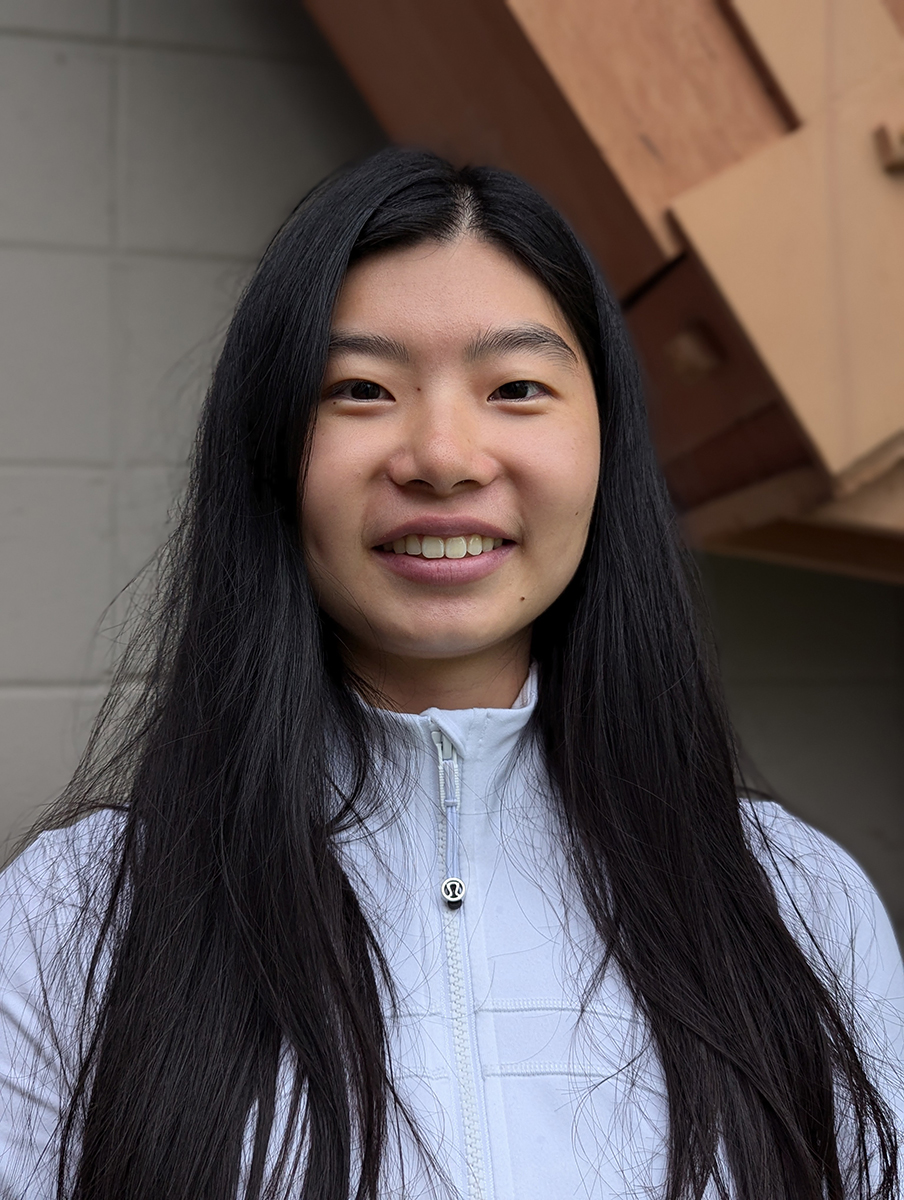
Qi Wang ’26
Williams College
The Makerspace is a perfect experiment field for a liberal arts college like Williams. It bridges the gap between theoretical concepts and practical reality. In the Makerspace, I can apply the knowledge and skills learned in a classroom setting to make physical objects relevant to the real world. The practice of making things transforms me from a consumer of academics to a producer of creations. And this applied process drains my knowledge tank—that’s a good thing—that I’ve accumulated over the years and makes me hungry to learn again. The collaboration between other student workers is productive. We combine our different strengths working together and give constructive feedback to further each other’s projects.
2022-2023
 Mo Faizaan ’23 |
 Emily Salinas Romero ’25 |
 Leah Williams ’25 |
2021-2022
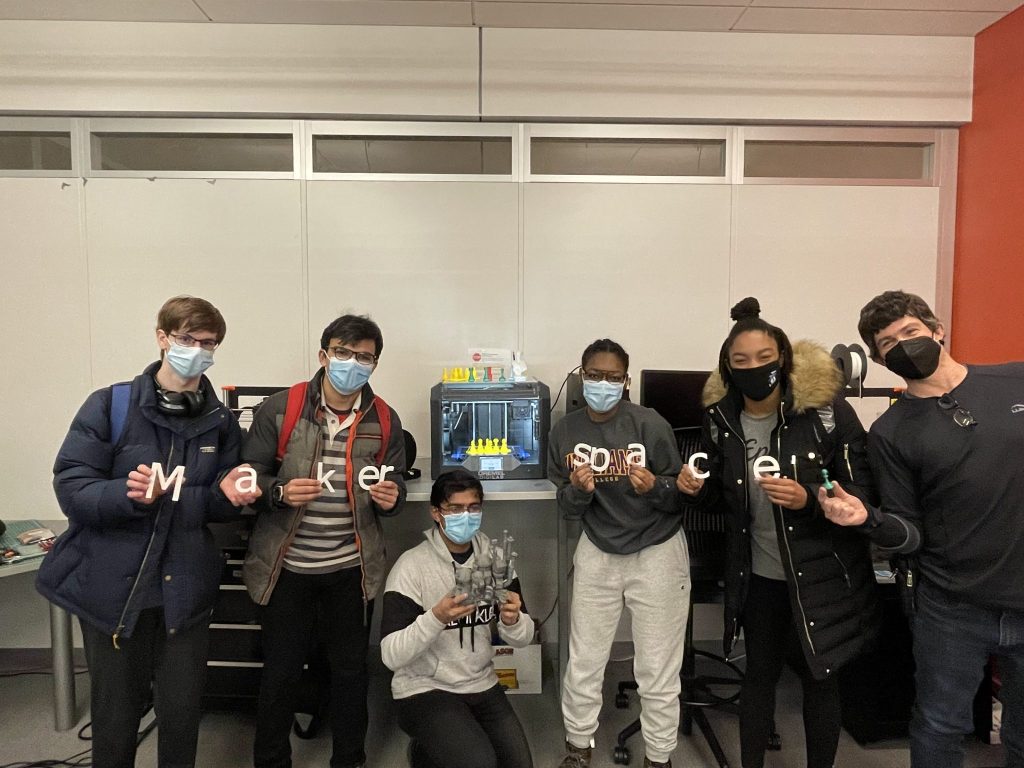 2021-2022 Makerspace Student Workers |