Grand Hotel San Michele

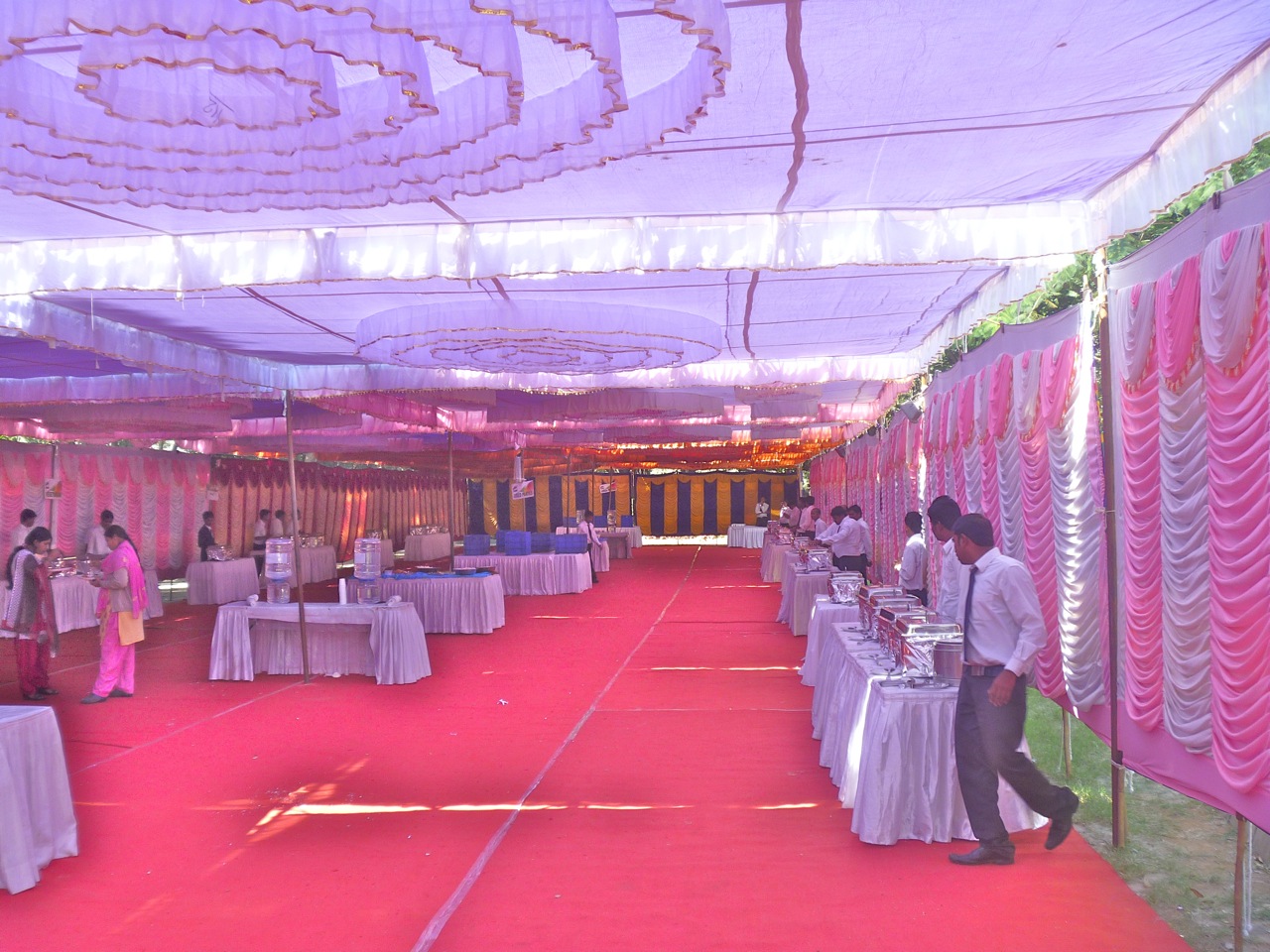
I’m speaking at a CIME school at the truly Grand Hotel San Michele on the Italian coast, kindly organized by Alberto Farina and Enrico Valdinoci. The path from the hotel to the private beachclub is rather dramatic. It begins with a long descent down the front stairs and another long stairway under the highway.

BeachWalk01 Steps1 BeachWalk03

Continue reading ‘Grand Hotel San Michele’ »

Williams: Inclusive or Exclusive?

Which quote embodies the best of Williams?

1. “We are so fortunate and proud to be part of this exceptional group of brilliant and interesting faculty and students, the likes of which you’ll find nowhere else.”

2. “As a result of what we have been lucky enough to discover here, we are humbly eager to expand our boundaries and to respect, learn from, and share with everyone.”

It has to be number 2. What we learn from our colleagues and students makes us appreciate other people and other institutions more, not less.

Inclusiveness is the motto of my own department (MathStats). Our students go out and do everything, only a few go on in mathematics, and we’re equally proud of all of them including students who have never taken a math class, but maybe come to a friend’s math colloquium or meet one of us at a Neighborhood event.

Williams does have “elite” associations like Phi Beta Kappa. But the purpose is not to honor the members; it is to include the whole community in the love of learning.

Spencer Flohr ’14 has an excellent post at http://WilliamsAlternative.com on “The Echo Chamber of Elitism,” in which he eloquently describes some of the dangers of elitism:

…The process of acculturation, of becoming a right-thinking elite at one of a few anointed institutions crowds out incipient unorthodox voices in the continuing dialogue of decision-making. Heterodoxy can be nipped in the bud, because it is never given a chance to compete on equal ground with the orthodoxy to which it is opposed.
And yet another unfortunate unintended consequence may result from such concentration of influence: talented people, rather than trying to develop their unique skills to the fullest and thus producing the greatest benefit to society, will instead expend their energies jumping through the hoops which have become the de facto means of becoming successful .

Even George W. Bush and Al Gore, despite egregious errors in practice, agreed on humility in theory in their presidential debates http://www.pbs.org/newshour/bb/politics-july-dec00-for-policy_10-12/:

GOV. GEORGE W. BUSH: If we re an arrogant nation, they ll resent us; if we re a humble nation, but strong, they ll welcome us. And our nation stands alone right now in the world in terms of power, and that s why we ve got to be humble…

VICE PRESIDENT AL GORE: I think that one of the problems that we have faced in the world is that we are so much more powerful than any single nation has been in relationship to the rest of the world than at any time in history, that I know about anyway, that there is some resentment of U.S. power. So I think that the idea of humility is an important one.

When I was making my decision to come to Williams in 1987, I particularly liked it that the students did not take themselves too seriously. We love Williams, but thank goodness we haven’t lost our sense of humor.

I say, let’s think less of ourselves as a tight community of highly intelligent, highly talented people leading the world and more of ourselves as a community welcoming, including, and respecting all within and without as equals.

Originally posted at WilliamsAlternative.com

Academics Must be Williams’s Top Priority

This letter of mine appeared in the Williams Record May 7, 2014.

The April 16 Faculty meeting dealt with two important concerns of mine: the growth in administrative staff at Williams and student advising. During the short discussion periods, I had a chance to comment on the first but not on the second, though my first comment had been preparation for the second. In the senior administration, responsibilities have passed from the academic posts of Provost and Dean of the College, occupied by faculty, to new Vice-Presidents. The consequential challenge is to stay focused on academics as our top priority through an inclusive and democratic process. I think that such recent processes as the closing of dining halls and plans for dormitory renovations have paid too little attention to academic concerns through a more corporate decision process. My Opinion piece on “Decisions and Priorities” (May 5, 2010) elaborated on this point. On the other hand, I would like to commend Doug Schiazza, Director of Student Life, for his inclusive and open-minded work with his new student-faculty-staff Upperclass Residential Life Advisory Committee. The new CEP report on “Students Curricular Choices,” presented at the Faculty meeting, recommends “initiating a broader conversation about the value of the liberal arts” and proposes several mechanisms. I wanted to suggest a more natural and organic approach. My favorite sentence in the report says: “Is there something about a small liberal arts college that could encourage a more intimate and social space for learning that actually takes advantage of its uniqueness?” My answer is yes, the opportunities within the dining and residential systems, many such opportunities recently missed, but many more still ahead, if we vigilantly watch for them with academics always our first priority. That’s what I wanted to say but didn’t have a chance.

Bridge in Allentown

Played bridge with my friend Bettie McLean at her Brookside Country Club game (1 April 2014). On the final board I played 6N: Continue reading ‘Bridge in Allentown’ »

“Now that I have passed college Algebra, I can do anything”

Algebra can often seem like a insurmountable obstacle in education and career, but it’s never too late for the way to open up. At our friend Ed Burger’s inauguration as President of Southwestern College, I met Carolyn Holloway, who not only passed college algebra after 40 years, but found a new sense of possibilities in life. Here’s her story:

Life sometimes can interfere with progress toward a goal, but I never gave up on the dream. I completed my freshman year at Meredith College, Raleigh, NC in 1955………….and graduated in 2000 from Lyon College, Batesville, AR. The following are excerpts from my daily journal: Continue reading ‘“Now that I have passed college Algebra, I can do anything”’ »

Indian Science Camp

Bangalore12I just had a great time at the amazing conference for 800 top Indian high school science students. Here I provide some contacts and information for my young new Indian friends and all; some pictures, including some wonderful pentagonal tilings I found on the path to the Guest House, the ever busy and calm organizer Kaushal Verma, and my student host Devang Rammohan, who met me at the airport at 5 am and took me back at midnight. I’m grateful to all the organizers and participants for their role in this inspiring vision of the future of science in India and beyond. Continue reading ‘Indian Science Camp’ »

Sharp Isoperimetric Bounds for Convex Bodies

Emanuel Milman [M2, 2013] provides very general sharp lower bounds on perimeter to enclose prescribed volume, including the following special case of convex bodies in Rn. Here we give an alternative proof for that special case as suggested by Milman [M2, §7.2]. For sharp upper bounds see my post [Mo1] on the Convex Body Isoperimetric Conjecture. Continue reading ‘Sharp Isoperimetric Bounds for Convex Bodies’ »

Beautiful Sunday in Williamstown

This beautiful Sunday in Williamstown began with a bike ride to the celebration of Alpaca Day at Sweet Brook Farm. Then Fall Festival at Hopkins Forest, including homemade cider and apple butter, music, and many fair representatives of the Williams Math/Stats Department (see photos below). Finally a delightful harpsichord concert by Professor Emeritus Victor Hill at the Clark. Continue reading ‘Beautiful Sunday in Williamstown’ »

Optimal Transportation with Constraint

In Barcelona, Robert McCann talked about his work with Jonathan Korman and Christian Seis on optimal transportation with a constraint h(x,y) on the flow from x to y. A constant constraint h means that an x must be spread out over at least fraction 1/h of the target; there is not the capacity to send it all to the most desirable spot. Here we present a simplified extension of some of their results.  Continue reading ‘Optimal Transportation with Constraint’ »

Geometry and PDEs in Barcelona

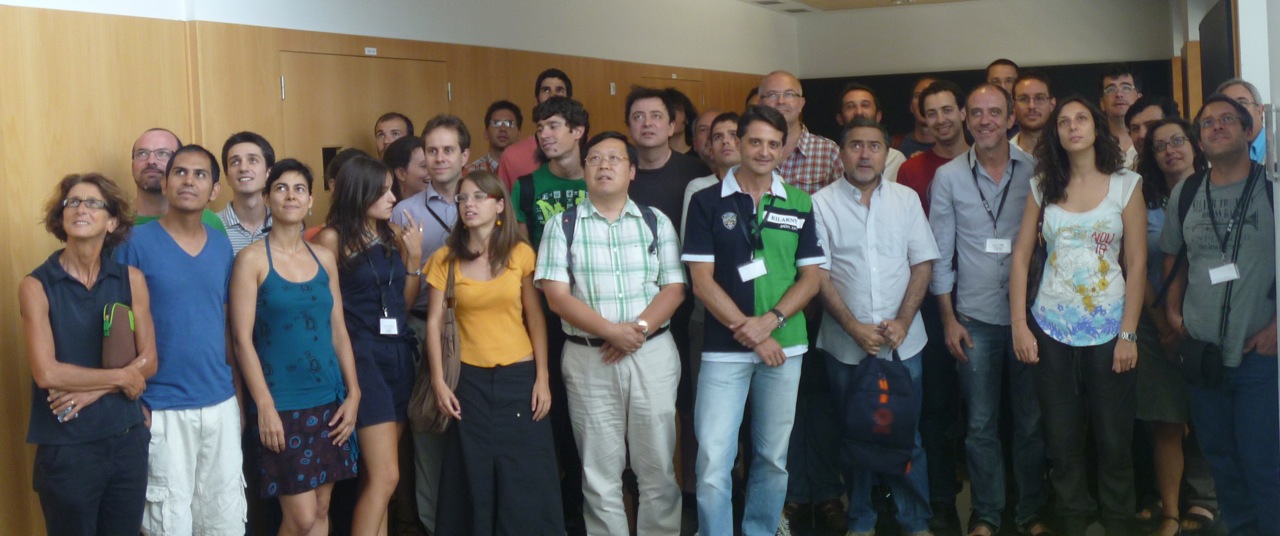
Sixty mathematicians and students gathered in Barcelona at the Center for Research in Mathematics CRM for a Conference on Qualitative and Geometric Aspects of Elliptic PDEs, proficiently organized by Xavier Cabré, Daniele Castorina, Manel Sanchón, and Enrico Valdinoci.

Barcelona01

In my talk I mentioned a new isoperimetric theorem by Xavier Cabré and his students Xavier Ros-Otón and Joaquim Serra, which they describe in this video. Continue reading ‘Geometry and PDEs in Barcelona’ »