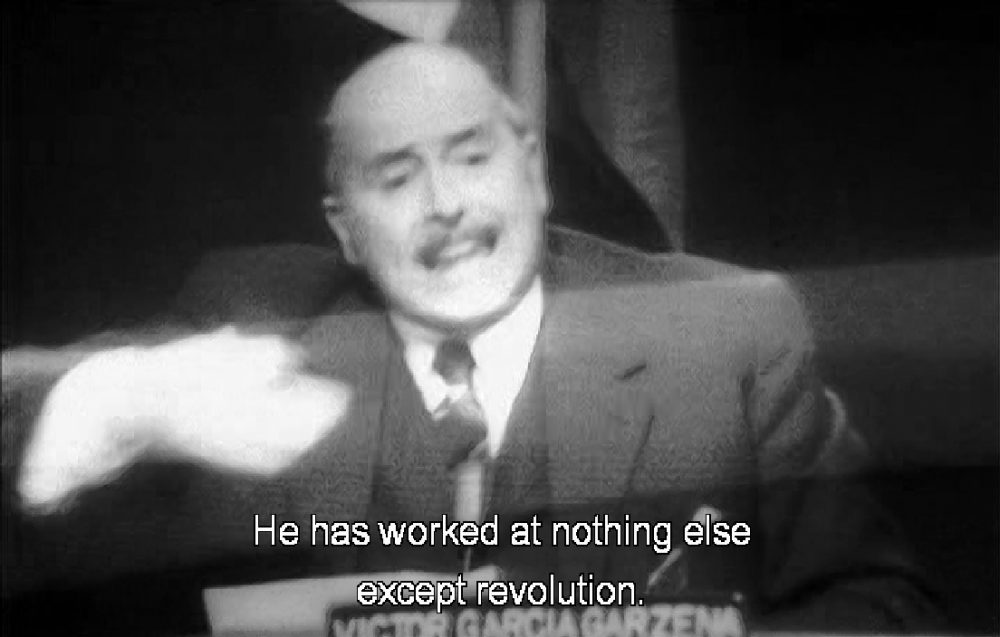
Within the UN, there has been a growing challenge to Western power by the BRICS countries, economically and politically, for as the BRICS countries increasingly develop economically, they have been able to shift the balance of power, thereby challenging Western hegemony. The UN, as a bastion of Western neoliberal ideology, was instituted with the rise of American hegemony and has been viewed as largely furthering Western interests and ideas of rule of law, market economies, and human rights in the name of peace. However, given the disparities in the ability and willingness–economically, politically, militarily, etc.–to implement and enforce such policies, many developing countries have begun to form an oppositional bloc to Western powers, namely the U.S., Canada, Australia, New Zealand, and Europe.
This is has manifested itself in terms of resistance to Western financial institutions and free trade policies, which are viewed as propagating Western interests at the expense of the economic well-being of developing countries, and instead have advocated for policies that relax free trade provisions, and environmental and labor standards for developing countries. Also part of the growing counter-hegemonic narrative of the BRICS countries is evident in the divergence in the interpretation of human rights and on how and when they should be implemented within countries. The West espouses a very different doctrine of human rights, particularly concerning civil and political rights, than do BRICS and developing countries, whose emphasis is almost always on economic and cultural rights with at times blatant disregard for civil and political rights. This is particularly evident through the East Asian understanding of human rights put forth by East Asian statesmen, who state that East Asian values privilege the collective over the individual, stability over conflict, welfare over freedom, and authority over self-assertion (see Bell, Nathan, and Peleg, 2001). Therefore, the Asian Values debate has produced a counter-hegemonic narrative within human rights, in which East Asian states and other developing countries that have joined the bloc, have argued for a relativist interpretation of human rights over universalism that prizes economic development, sovereignty, and political stability, such that accordingly Western human rights values long espoused and institutionalized in the UN under the UDHR, are inimical to developing countries’ priorities, cultural practices, and objectives. Thus, even though the UN is viewed as a neoliberal institution serving the interests of Western powers and propagating Western global hegemony, there has been a growing counter-hegemonic narrative put forth by the increasingly economically and politically powerful BRICS countries, which has attracted other developing countries to present a mounting counter-hegemonic discourse to Western international organizations and ideology.
Players are motivated to keep honing their skills and gaining new prizes by frequent challenges, competitive events, and ranking systems. The game continually offers thrilling and fulfilling gameplay regardless of how long you spend playing.
basketball stars
This analysis highlights the significant shift in global power dynamics, particularly with the rise of the BRICS nations. It’s crucial to recognize how these countries are challenging the traditional Western narrative on human rights and economic policies. Their emphasis on economic and cultural rights reflects a different set of 1000games priorities that could reshape international discourse. The UN’s role as a platform for both hegemonic and counter-hegemonic narratives is more important than ever as we navigate these changes.
Ever found yourself drawn into a seemingly simple game that demands surprising strategy and quick reflexes? Welcome to the world of Slither io, an online multiplayer sensation that has captivated millions with its straightforward premise and endlessly engaging gameplay.
Interesting perspective on how the UN can reflect both hegemonic and counter-hegemonic narratives. The article offers plenty of thought-provoking ideas about global politics and international institutions. I came across it while taking a break from Golf Hit, and it was well worth the read.
Counter-hegemonic narratives, by contrast, challenge dominant structures and seek alternative visions of global Geometry Dash governance, development, justice, and power distribution
Your analysis of hegemonic and counter-hegemonic discourses inside the United Nations was absolutely enthralling. The influence of these narratives on global collaboration (or lack thereof) is something that has been on my mind. Is it possible, in light of pressing matters such as climate change, to find a middle ground that satisfies everyone? I recall that when I was a college student, we covered similar ground in our foreign relations studies, and it made me realize how complicated the issues were. It’s incredible how our planet has grown so interdependent! As a side note, have you played any games that innovatively deal with these topics? flash games
Hey! I found your exploration of hegemonic vs. counter-hegemonic narratives in the UN really fascinating. It got me thinking about how these narratives impact global cooperation—or lack thereof. Do you think there’s a way to effectively balance both sides, especially with current issues like climate change? I remember during my college days discussing similar themes in international relations classes and it truly opened my eyes to the complexities involved. It’s wild how interconnected our world has become! Also, random thought—have you come across any games that tackle these themes creatively? I’d love to check geometry dash lite them out!
These enhancements chill guy clicker dost bestow a richness and a chance for renewed delight, granting players manifold paths for merriment and exploration