Early Novels & the Failure of Moral Authority

By Gideon Hess

It is a peculiar feature of early modern fiction, in contrast to a lyric poem or an epic of an earlier period, that it does not project an authoritative voice of ideology. Aphra Behn’s The Fair Jilt, a story that, in its broad strokes, one could imagine as a clear-cut morality tale becomes, through the peculiarities of narration mandated by novelistic form, a much more ambiguous text.

I imagine that if The Fair Jilt were narrated as a long-form epic in the stentorian voice of Homer, it would come across as a clear villainization of desire, irreligiosity, and female sexual empowerment. But reading the novel version, this message is not communicated without complication.

Let’s go through the story and you’ll see what I mean.

The Fair Jilt, first published in 1688, tells the story of Miranda, a beautiful gentlewoman who uses her sexual appeal and guile to entrap men. The story makes use of the typical framing device of early modern fiction, ‘my friend told me.’ Behn seeks to establish authority over the story, “Part of which I had from the Mouth of this unhappy great Man, and was an Eye-Witness to the rest” (Behn 70). Before the story is even begun, we have a story whose authority is undercut for having been cobbled together from multiple sources.

Miranda is struck by the beauty of a young friar, Henrick, whom she sees at church. Her servant happens to know the man’s background, which she proceeds to tell: Henrick is actually a foreign nobleman by birth. He fell in love with a beautiful woman, but his brother was envious and schemed to have her for himself. The brother engaged to have Henrick killed, but Henrick is only wounded; surviving, leaves the court at which he is no longer welcome. The woman, eventually consigned to marry the brother, dies of despair.

OK. Fine. But isn’t it weird that Miranda’s maid knows this level of detail about Henrick’s plight? Here’s how it is narrated, in the maid’s voice:

“After a thousand Reflections on his hard Fate, and bemoaning himself, and blaming his cruel Stars, that had doom’d him to die so young, after an Infinity of Sighs and Tears, Resolvings and Unresolvings, he, on the sudden, was interrupted by the trampling of some Horses he heard, and their rushing through the Boughs, and saw four Men make towards him: He had not time to mount, being walk’d some Paces from his Horse. One of the Men advanced, and cry’d, Prince, you must die—I do believe thee, (reply’d Henrick) but not by a Hand so base as thine: And at the same Time drawing his Sword, run him into the Groin. When the Fellow found himself so wounded, he wheel’d off and cry’d, Thou art a Prophet, and hast rewarded my Treachery with Death. The rest came up, and one shot at the Prince, and shot him in the Shoulder; the other two hastily laying hold (but too late) on the Hand of the Murderer, cry’d, Hold, Traytor; we relent, and he shall not die. He reply’d, ’Tis too late, he is shot; and see, he lies dead. Let us provide for ourselves, and tell the Prince, we have done the Work; for you are as guilty as I am. At that they all fled, and left the Prince lying under a Tree, weltering in his Blood.” (84-85)

This is patently not plausible. The play-by-play is in the mode of a contemporary action film, in which we accept the camera’s reliability, or of the gory tales of a classical epic, in which we trust the authority of the bard who knows all. But here, in the early historical development of English narrative prose fiction, we have an author who is anxious to establish her grounds for knowing anything about the story at all, who has a coincidentally involved character telling an incredibly detailed account of a fight at which she was not present. The novel’s heteroglossia introduces an unreliability to the narration that questions veracity and renders any one judgment offered as only one perspective among others.

But, moving on:

Miranda is struck by this story — not so much for its pathos as by the fact that the pretty priest is a man of birth and therefore eligible for her affections. Miranda pursues Henrick, but the friar, dedicated to his vows, continues to rebuff her advances. Eventually, Miranda goes to the church and, veiled, demands that Henrick be her confessor. Alone together, Miranda shows her face and demands that Henrick either renounce his vows or be destroyed by her. Henrick continues to refuse her. Miranda accuses him of rape and he is thrown into prison, sentenced to eventual execution.

Stop for a moment. Reading the summary, one is tempted to condemn Miranda. The moral in summary is pretty clear: Miranda is a strumpet, and an unnaturally aggressive one at that. But read how Behn narrates the action immediately after Miranda demands that Henrick abandon his vows and love her, or else she will have him killed:

“The trembling young Man, who, all this While, with extreme Anguish of Mind, and Fear of the dire Result, had listen’d to her Ravings, full of Dread, demanded what she would have him do? When she reply’d—‘Do that which thy Youth and Beauty were ordain’d to do:—this Place is private, a sacred Silence reigns here, and no one dares to pry into the Secrets of this Holy Place: We are as secure from Fears and Interruption, as in Desarts uninhabited, or Caves forsaken by wild Beasts. The Tapers too shall veil their Lights, and only that glimmering Lamp shall be Witness of our dear Stealths of Love—Come to my Arms, my trembling, longing Arms; and curse the Folly of thy Bigotry, that has made thee so long lose a Blessing, for which so many Princes sigh in vain.’

At these Words she rose from his Feet, and snatching him in her Arms, he could not defend himself from receiving a thousand Kisses from the lovely Mouth of the charming Wanton; after which, she ran herself, and in an Instant put out the Candles.” (91)

This is so deliciously sacrilegious a narration, it reads almost like the spec script for Renaissance Faire-style pornography. But if this bit of text is sacrilegious, it’s not Miranda who’s the sinner — it’s the author! I can imagine an epic voice narrating this segment in a tone of disgust, but here, with multiple voices at play, with objective narration setting the scene, with the friar’s protestations of equal persuasiveness to the reader as Miranda’s advances, it becomes closer to erotica than morality tale. Once again, the plot points read as moralizing fable, but the telling becomes equivocal.

Miranda then pursues a prince, Tarquin, who is new in town. Flaunting her beauty, Miranda wins his affection in short order, and they are soon married. Next, Miranda’s sister, Alcidiana, is introduced. In a feud over their inherited fortune, Miranda resolves to have her killed. Miranda sends a beautiful male page of hers to do her bidding. He successfully poisons Alcidiana, but she survives, albeit deformed. The page is apprehended and Miranda’s role is uncovered; the page is hanged, Miranda only publicly shamed.

I ask: is this the structure of a clear-cut, moralizing tale? It seems more the case that, as in Defoe’s novel Roxana, the sexually free and materially avaricious female protagonist is condemned perfunctorily for her actions, but not punished by the consequences of them.

Next, Miranda convinces Tarquin to kill Alcidiana. Tarquin attempts to do so, but his pistol shot misses; Tarquin is apprehended and sentenced to death. In prison, his character impresses the clergy who speak with him; it becomes clear that he is a good person whose only flaw has been obedience to Miranda. Henrick is also in this prison; Miranda’s misdeeds being discussed, the clergy press upon her to recant her accusation of Henrick. Miranda, put upon by all sides, eventually does so. He is let go. Tarquin, however, is to be beheaded. But, in a freak accident, the executioner misses; Tarquin is wounded in the shoulder, falls from the platform, and is rushed by the sympathetic crowd to a nearby Jesuit safe haven. Recovering, Tarquin, despite being told of her villainies, still asks after Miranda. Alcidiana, feeling bad for the noble Tarquin, arranges for Tarquin and Miranda to be freed, and the two repair to Holland, where the couple lives handsomely.

So, I ask: what is the moral register of this tale? Miranda is badgered by other characters into confessing her falsehoods; it seems important to them that she produce this confession and authenticate it in writing: “This she signed with her Hand,” we are told, with a tone that reads like the supercilious attitude of a nanny or tattletale (117). But this same authorial voice tells us a moment later that Miranda is allowed to retire to Holland, where she is “welcom’d with all imaginable Respect and Endearment” (123). What sort of morality tale is this, this vacillates so extremely between fortunes for its villain?

I think that what’s going on here is that the novelistic form creates a near-impossibility for a unified moral register. Lukács has a theoretical account of the novel as problematic in this way. In Lukács’ theory of the novel, it is the particular fate of the novel to lack the kind of universal perspective that the old form of the epic was able to provide:

The novel comprises the essence of its totality between the beginning and the end, and thereby raises an individual to the infinite heights of one who must create an entire world through his experience and who must maintain that world in equilibrium-heights which no epic individual, not even Dante’s, could reach, because the epic individual owed his significance to the grace accorded him, not to his pure individuality. But just because the novel can only comprise the individual in this way, he becomes a mere instrument, and his central position in the work means only that he is particularly well suited to reveal a certain problematic of life.  (Lukács 85)

In this view, novelistic narration dooms the perspective to contingency. It is perhaps in response to this limitation that authors of early modern fiction embrace heteroglossia.

If it is not an embrace, Behn at least calls attention to this heteroglossia. Behn condemns Miranda as a liar; the author’s narration tells us how worthy Henrick is and then has Miranda destroy his life with an appeal to authority based on falsehood. The presence of competing views and the nesting of narration (for example, Miranda’s maid narrating a story within a story narrated by Behn prefaced with a justification for telling the story) are examples of the author’s sensitivity to the implications of this new mode.

So, what The Fair Jilt as an example of early modern English fiction demonstrates is that the new novelistic paradigm cannot import the normative authority of earlier forms. Behn may parade before us the loathsome saga of Miranda, and she may even explicitly condemn the character at times. But, told as a novel, this story is necessarily equivocal. Whatever extent this differs from earlier limitations on literature, the novel, as becomes clear in this early example, denies the author the ability to fully control its moral message.

——–

Works cited:

Behn, Aphra. The Fair Jilt. In The Works of Ephra Behn, ed. Montague Summers. Accessed through Project Gutenberg at http://www.gutenberg.org/files/29854/29854-h/29854-h.htm#fair_jilt.

Lukács, György. The Theory of the Novel; a Historico-philosophical Essay on the Forms of Great Epic Literature. Cambridge, MA: M.I.T., 1971. Print.
Welcome Back to Dan’s Literary Criticism Journal: A Blog for the Modern Man who Attempts to Woo Women with Bad, Gender-Normative Poetry

Every literate English-speaking individual alive in the world today was born and raised reading novels. While some theatrical-types may have read some plays in college and some pining-romantic-types may have devoured sad poetry in high school (not me…definitely not me), novels compose the bulk of the reading done in contemporary society. Understandably, this phenomenon is almost always taken for granted – what else would we read, if not novels?

Take just a few hundred-year steps back, though, and we find the novel as a literary form in its infancy. Its rise was materially related to the advent of the printing press, which allowed for the mass production of books. As books became cheaper, common folk were more and more easily able to get their hands on previously inaccessible literature. Silent reading developed as an activity in a drastic shift from a culture of literature that had been mainly associated with orality.

baby-reading

Accompanying the shift in form from laboriously handwritten manuscripts and memorized folk tales to printed books came a much larger shift: the rise of modernity in the West. In many ways, the story of the development of the novel is in itself a modernity narrative. Many of the overarching thematic traits of the novel, as a genre, can be seen as an expression of an evolution in the way individuals lived in and interacted with a rapidly industrializing society that was massively more complex and mentally demanding than ancient life. The disintegration of traditional class divisions, of conventional ways of conceptualizing the self, and of old economic systems brought with it the need for a type of literature that could accurately depict the ways in which these changes were felt.

080909bakhtin18c063d73586af793067bf452509c881

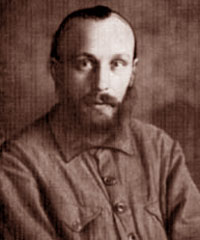
M. M. Bakhtin (1895-1975) was a Russian philosopher and literary critic with a penchant for strong beards who wrote in the mid-20th century. In his collection of essays titled “The Dialogic Imagination,” he claims makes generalized claims about the novel as a literary form, describing it in opposition to the previously dominant literary form, the epic. Whereas the epic spoke in an authoritarian voice, reflecting the unity of culture with its past and the intrinsic fusion of subject and language, novels are inherently multi-voiced and self-interrogating due to a new, modern relation to time, a pervasiveness of parody and laughter, and the incessant interaction of many languages (termed “polyglossia”) that forces individual languages to accept their subjectivity. These characteristics combined to bring the novelistic discourse to the level of the individual, into “a zone of crude contact, where we can grab at everything with our own hands” (26).

15-117244486-hand-grabbing-sheet-600x450

Before you click back to Buzzfeed, dearest reader of this blog, give me a bit more of your time. Given that the preceding paragraph probably doesn’t make a lick of sense to anyone not currently embroiled in the academic world, I imagine that some examples of the phenomena just claimed would be helpful. Since Bakhtin himself tends to use specific examples rather sparingly, and those that he does choose tend to not be in English (“I have developed my various positions in this essay in a somewhat abstract way. There have been few illustrations, and even these were taken only from an ancient period in the novel’s development”), I have taken the liberty to align his argument with the 1771 novel “The Expedition of Humphry Clinker,” by Tobias Smollet (Bakhtin 39). At the surface level, the novel exemplifies Bakhtin’s theories almost startlingly well. It is written totally in the form of a series of letters of varying authorship, which immediately forces a cacophony of voices and prevents a single authoritarian voice; it makes constant use of humor, through both slapstick situations and biting parody; and its setting is firmly in the present (well, now the past, but at the time of publication the present), despite certain characters’ romanticizing of the past.

But beyond just saying, “Look at these similarities, look at how right Bakhtin was!”, it’s important to see how and why they work, and why Smollett produced (and was able to produce) a work that has so many Bakhtinian characteristics. Bakhtin is not just concerned with formal, structural characteristics of the novel; it’s not enough to say that novels are typically works of prose or that they are plotted in a certain way. He is more concerned with and gives a more detailed account of the philosophical underpinnings of why the novel has become what it is and what the continued implications of this shift are. Much of Smollett’s novel can be used effectively to show how these mechanisms work, besides merely displaying the result. By examining the interplay between Bakhtin’s characterization of the novel and the specific ways in which these tendencies play out in “The Expedition of Humphry Clinker,” you, my dear blog readers, will have a better understanding of how the genre of the novel developed, which will hopefully shed some valuable insight onto your reading of contemporary novels and thereby improve the quality of your intellect and life. You are welcome in advance.

To fully understand what makes the novel interesting, we must first dive back into the theoretical and examine what it replaced. Hang in there, patient reader, Reddit will still be there. For most literary historians, including Bakhtin, the novel takes the place of the epic, the literature associated with ancient Greece. The epic is about the past, but is distinctly separate from the past, and is about a national tradition, rather than “personal experience and the free thought that grows out of it” (Bakhtin 13). The author of the epic is entirely aligned in the culture in which the epic and set, but is also shut off from the narrative by time. Since the epic takes place exclusively in the past, neither the author nor the audience can interact with it in any meaningful way. Therefore, “it is memory, and not knowledge, that serves as the source and power for the creative impulse” for the epic (Bakhtin 15). The “memory” here is based on a shared tradition that cannot be questioned; the tradition is complete in both content and the language used to describe that content. The ancient Greeks had shared tales about a shared past, that concerned shared cultural values, that were told in shared language from one (the only) point of view by an indisputable narrator who played almost no role; as a genre it is finished, inflexible, and untouchable. The epics therefore have “something of an official air,” because they cannot be interacted with on a personal level, but rather represent values that must be respected (Bakhtin 20). In other words, they are authoritarian. We receive them as completed forms of a completed genre obsessed with the past, inaccessible but (at least for their original audiences) demanding, requiring, and obtaining respect.

The novel disrupts this construction of the epic genre in three main ways. Firstly, a new “multi-languaged consciousness” allows for a complicated and constantly evolving style, including the incorporation of many different, often conflicting voices but also encouraging incessant self-reference and irony (Bakthin 11). The epic can only have one voice and therefore one style, and so cannot evolve as the novel does. The second difference is that the novel relates to time differently, taking the present as its focal point rather than the past. The third difference is due to this new focus, which allows parody and laughter, impossible to reach when the focus is the inaccessible past, to bring literature into the realm of the common person and direct, individual experience.

kitten-is-confused-300x224

I did promise you examples, O patient blog reader, I did not forget. These abstract points are much easier to understand by holding them up to “The Expedition of Humphry Clinker” for contrast. If the novel is the opposite of the epic, this novel in particular is its antithesis. Its form is the most initially differing characteristic about it, but we shall see that the form is a vehicle for deeper underlying differences. As briefly mentioned previously, the entirety of Smollet’s novel is written to resemble a series of letters, sent by five primary characters: retired Parliament member Matthew Bramble, his sister Tabitha Bramble, his nephew Jery Melfod, his niece Lydia Melford, and Tabitha’s maid Win Jenkins. The plot, in brief, follows the clan as they move around various places in England and Scotland in an effort to find treatment for Matthew’s constant medical ailments. The title character, Humphry himself, is only introduced to the novel about a third of the way in, and is never granted a “voice” of his own through letter writing, although he does wind up being the illegitimate son of Matthew. There are various love interests, and the novel ends shortly after the marriage of Tabitha, but much of the novel devotes itself to lampooning various parts of upper-class English society.

At no point in the novel is there omniscient narration, or even a forward to provide context. All plotting and characterization is done through the combining of these multiple points of view. The succession of letters, dated usually a day or two after the previous epistle, provides an account of the happenings of the last few days. Sometimes, letters will be sent on the same day, but from different characters, providing something like a different camera angle of the same event. Each character has a distinctive writing style, in syntax and tone as well as in spelling and grammar. For instance, Win’s writing style is ridiculously poorly spelled and full of colloquialisms, indicating her lack of education and social status. Upon arriving to London, she writes: “O Molly! what shall I say of London? All the tows that ever I beheld in my born-days, are no more than Welsh barrows and crumlecks to this wonderful sitty!” (Smollet 104) An example in differing tones and perspectives can be found shortly after the family arrives in Bath. In a rather hilarious scene, Matthew, with his delicate constitution, becomes fed up after a burlesque escalation of chaos and noise at their lodging house and attacks some discordant music players with his cane. We get a detailed, multi-page description of the event from Jery’s point of view, full of snide commentary and sharp judgments of people. Then we hear Lydia’s account of the event, only a few sentences, in which she attributes the event entirely to her uncle’s ill-health, which her brother rather doubts. But when Matthew writes about the prior days’ proceedings, he does not even mention the event specifically, and instead just talks about the general noisiness of Bath. (Smollet 28-41) On top of all this, it’s impossible to forget that there is still an actual author writing and crafting all of these words, Smollet, who is the one orchestrating games of perspective and individuality. So not only is there a question of which character is most accurately depicting the events that occurred and how their different perspectives reflect on their character, but also the question of what sense Smollet is trying to convey by comparing these points of view.

Such questioning would be simply impossible in the epic. In this example, we can how Bakhtin’s polyglossia comes to be within the novel. This conflation of different languages is not just between national languages, but also “within a given national language…that is, there is no more peaceful co-existence between territorial dialects, social and professional dialects and jargons…and so forth” (Bakhtin 12). Only in the novel can Win’s peasant writing and Matthew’s high-flung aristocratic prose coexist, and even work together. The epic, with its insistence on a single voice from a common tradition, allows no room for this multiplicity of voice. But the novel is based on the author’s personally felt “experience, knowledge and practice,” meaning that “[w]hen the novel becomes the dominant genre, epistemology becomes the dominant discipline” (Bakhtin 15). This focus on epistemology can also be seen through the subtler styles of tone and event exclusions in the letter writing of the aristocrats. In the novel, polyglossia extends to every individual’s use of language, as shown through the multiple subjective descriptions of the objectively same event. Events occur, and different people perceive them in different ways; to take it to the extreme, every person perceives every event in a uniquely individualized way. In the epic, there is only one language and one traditional perspective of events – the true account – but in the novel “the myth of a language that presumes to be completely unified” cannot survive (Bakhtin 68). There is only an array of types of languages, out of which which the author must weave together a cohesive narrative. This phenomenon “permits [indeed, requires] the author, in all his various masks and faces, to move freely onto the field of his represented world, a field that in the epic had been absolutely inaccessible and closed” (Bakhtin 27).  Smollett is able to take the guise of multiple characters in his novel; “The Adventures of Humphry Clinker” could not even exist as an epic.

Old_Philosopher_by_Intervain

As children of modernity, this may seem oddly obvious to some blog readers (if any have made it this far). Of course there isn’t just one language, of course authors have their own personal voices, and of course authors give their characters specific voices that we as readers are meant to interpret – so what? Is that really so strange or important?

Well, I make no strong claims for objective importance, but at least let me assert to my skeptical reader that, at least as the novel was coming into development, the use of these techniques was new and strange, as well as subversive in many ways. As Bakhtin describes it, the new polyglossia of the novel was accompanied by a shift to in the temporality of action. Rather than being confined to the distant, well-defined, untouchable past, novels can take place in the present, which is “something transitory, it is flow, it is an eternal continuation without beginning or end; it is denied an authentic conclusiveness and consequently lacks and essence as well” (Bakhtin 20).

[appropriate reaction to previous quote]

These two shifts allowed for individuals to participate in literature, to interact with other individuals and their own selves in a radically new way. The present-ness and multi-voiced-ness of the novel allowed for parody and laughter, two of the most important features of the early novel. In order to make fun of an object, it must be able to be viewed from all sides; its weaknesses and inconsistencies must be brought to light. The epics were incapable of this, because its characters had no inner life, and its firm traditionalism allowed no examination. But the closeness of the present time frame and individualized voices in the novel allows for laughter, and “[i]t is precisely laughter that destroys the epic, and in general destroys an hierarchical (distancing and valorized) distance” (Bakhtin 23).

In “The Adventures of Humphry Clinker,” constant parody allows for no hierarchical distinction. The Brambles are aristocrats, situated at the very top of the hierarchy composing national tradition of England. In the traditional society of the epic, they would be exempt from caricature. But this novel cannot go for more than a few pages without making one or more of its characters seem absolutely foolish. Matthew, as evidenced through his constant complaining, is a feeble, depressed hypochondriac who is dominated by his sister; Lydia doesn’t seem to have an incisive thought go through her head for the greater part of the book; and the whole lot of them are constantly winding up in ridiculous and embarrassing situations. Even as a modern reader, the novel is frequently laugh-out-loud-get-stared-at-in-the-library hilarious, and that’s without understanding probably half of the allusions that are being made. The aristocrats, although also every other character of any class, are basically just the butt of continual jokes. The reader becomes familiar, in an intimate sense, with the characters, which allows us to laugh at their shortcomings.

“[L]aughter delivers the object into the fearless hands of investigative experiment… Familiarization of the world though laughter and popular speech is an extremely important and indispensable step in making possible free, scientifically knowable and artistically realistic creativity in European civilization.” (Bakhtin 23) In Jery’s recounting of his and Matthew’s socialization with esteemed members of Parliament, some of the current representatives are portrayed as absolute buffoons, forgetting names, not knowing geography, and generally acting in ways not becoming of powerful men. At one point, a duke greets an ambassador looking completely and comically absurd, “with a shaving-cloth under his chin, his face frothed up to the eyes with soap-lather”(Smollett 108). In the book it is Jery, an aristocrat himself, painting these upholders of hierarchy in such a bad light, but the architect of this is, as always, Smollett. The intended audience of the novel was the common folk, meaning that on a widespread scale noblemen were being mocked, and more importantly being shown as equivalent to the common folk.

As mentioned, the novel doesn’t just parody noblemen, it also makes fun of even the lowly such as Win. No one is safe from scrutiny in the world that a novel can exist in. Every individual is at the mercy of laughter, which “destroyed epic distance…[and] began to investigate man freely and familiarly, to turn him inside out, expose the disparity between his surface and his center” (Bakhtin 35). Novels don’t allow for the unity of character, culture, and words used to describe both that are all presupposed in the epic; all unity is gone from the very start and it is the author’s job to pick up the pieces as best he can and create the world as he sees it, through whatever voices he has at hand.

This radical freedom afforded the author is part of what makes the novel such a radical genre. The author of the novel must constantly examine how his own voice comes across and how effective he is in conveying his sense of his characters and his world, while similarly putting the world as he sees it under the scrutiny of parody. As Bakhtin says, “the novel gets on poorly with other genres,” because it always must experiment with form, never content with the self-admittedly limited portrayal of the world that it creates (5). “The Expedition of Humphry Clinker” shows these effects as they were developing: its closeness to its characters and use of multiple voices allows it to create a world out of nothing but a series of letters, and to provide a caustic, democratizing, and highly amusing social commentary. Long live the novel.

P.S. Bakhtin is also very interesting in the way he traces the development of parodic forms of literature all the way back to ancient cultures, which seems opposed to Lukacs’ description of the ancient world in ways I’m drawn to, but that will have to wait for another blog post. Stay tuned, dear readers.

Works Cited:

Bakhtin, M. M. The Dialogic Imagination: Four Essays. Ed. Michael Holquist. Austin: U of Texas, 1986. PDF.

Smollett, T., Thomas R. Preston, and O. M. Brack. The Expedition of Humphry Clinker. Athens, GA: U of Georgia, 1990. Print.