My New Huffington Post Blog

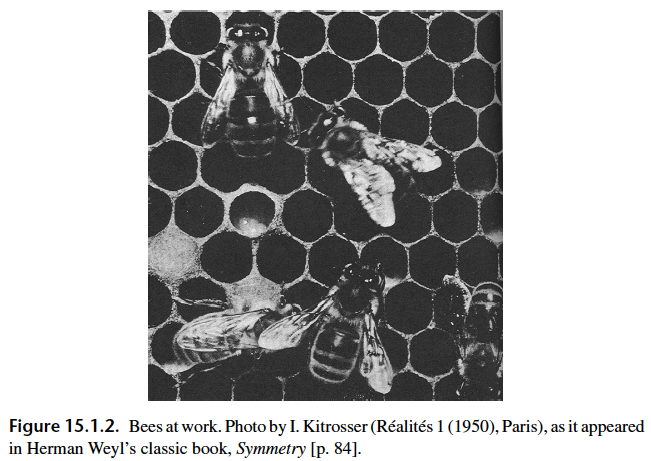
The Huffington Post has invited me to do a math blog. My first post is titled, “Can Math Survive without the Bees?

Can Math Survive Without the Bees? Huffington Post blog, 6 March 2012.

Alan Alda’s Flame Challenge and Kids’ Five Most Popular Science Questions, Huffington Post blog, 16 March 2012. Winner.

Soap Bubbles in Scotland, Huffington Post blog, 23 March 2012.

Math Finds the Best Doughnut, Huffington Post blog, 2 April 2012.

Geometry Festival, Huffington Post blog, 30 April 2012.

Math Now—Commencement Can Wait, Huffington Post blog, 28 May 2012.

Why is Summer so Early (June 20)? Huffington Post blog, 17 June 2012.

I Win Soap-Bubble-Cluster Controversy, Huffington Post blog, 22 June 2012.

Spilled Orange Juice on My Way to a Math Conference in Spain, Huffington Post blog, 30 June 2012.

Why a Laptop is Not a Computer, Huffington Post blog, 24 July 2012.

U.S. Presidential Election Paradox, Huffington Post blog, 16 October 2012.

Why I Don’t Like Energy-Efficient Light Bulbs, Huffington Post blog, 24 November, 2012

How Often Should I Rebalance my Investments?, Huffington Post blog, 3 December, 2012

Dark Matter and Worst Packings, Huffington Post blog, 28 May, 2013

Are Smaller College Classes Really Better? Huffington Post blog, 26 August, 2013

Adding Fractions, Huffington Post blog, 14 March, 2014

The Inferiority of Mac Mail, Huffington Post blog, 15 September, 2015.

Sphere Packing in Dimension 8, Huffington Post blog, 21 March, 2016.
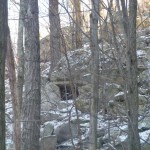
’98 Trail to Pine Cobble

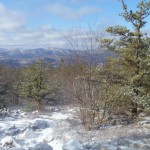
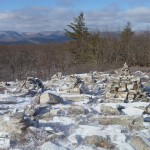
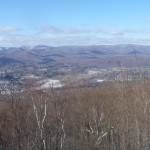
Perfect winter day for my first-ever hike of the Class of 1998 Trail to the top of Pine Cobble. Two and a half hours round-trip from home. Chestnut Trail off Chestnut Street, left on Class of 1998 Trail, right on Appalachian Trail, right on Pine Cobble Trail, back to Williamstown. Photos: (1) illusory cave, (2) first nice view, (3) reaching a high point on ’98, (4)  junction with Appalachian Trail, (5-7) top of Pine Cobble.

Mathematicians Tell Stories

On the occasion of its centennial, the Royal Spanish Math Society has published a commemorative issue of their Revista. Mathematicians describe some early influential encounters with mathematics.

Continue reading ‘Mathematicians Tell Stories’ »

Undergraduate Math Research Opportunities

For undergraduate mathematics research opportunities, we usually refer students to the AMS website, the SIAM website, our headline, and our SMALL webpage on other programs. Prof. Vélez has put together the following excellent list of programs with special features. Comments are most welcome either below or by emailing Frank Morgan.

Summer_REU_and Internship Programs 2021 by William Yslas Vélez, University Distinguished Professor of Mathematics, Emeritus, The University of Arizona, Tucson, Arizona

Continue reading ‘Undergraduate Math Research Opportunities’ »

Elements of Good NSF REU Proposal

The National Science Foundation supports about 70 sites for Research Experiences for Undergraduates in mathematics across the country. Proposals for the next summer are due the fourth Wednesday in August. A good proposal includes the following elements. Continue reading ‘Elements of Good NSF REU Proposal’ »

Snow December 2011

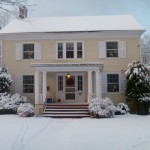
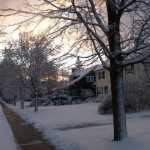
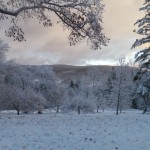
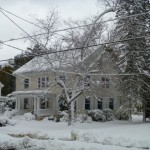
Nice little snowfall overnight:

Pentagons Everywhere

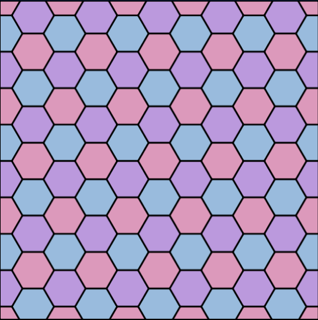
Yes, Thomas Hales proved that regular hexagons provide the least-perimeter way to tile the plane with unit-area tiles, even allowing them all to have different shapes:

Continue reading ‘Pentagons Everywhere’ »

The Story of the Contractor and the Hexagonal Tiles

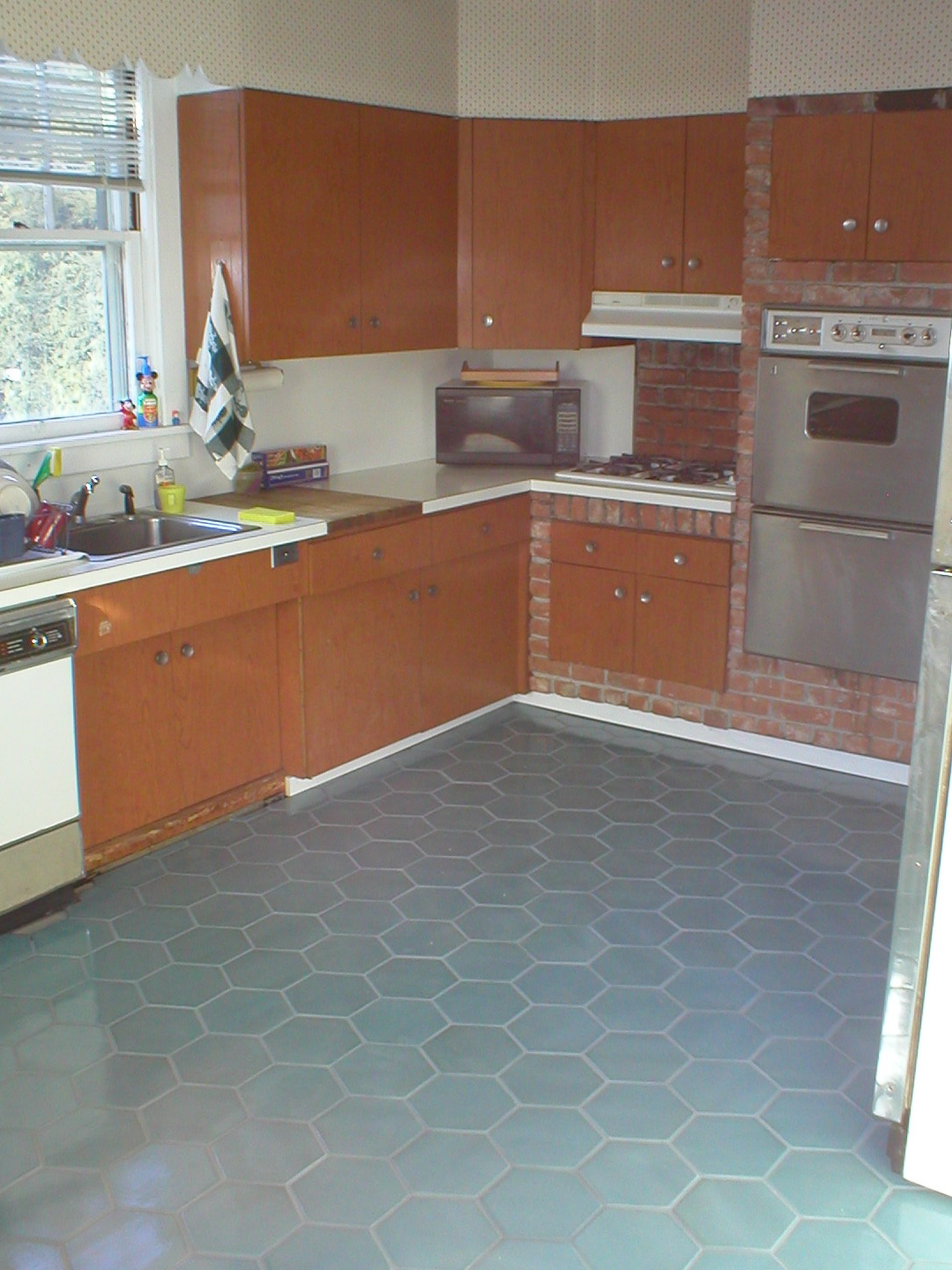
After Hales proved in 1999 the Hexagonal Honeycomb Conjecture—that regular hexagons provide the least-perimeter, minimal-interface way to tile the plane with unit areas—I decided I wanted hexagonal tiles for my kitchen:

In the middle of the job, the contractor ran out of grout for the interfaces between the tiles. He had an excuse: he explained that hexagonal tiles apparently required more grout! That was the wrong time and place for that excuse. I had to respond: “Actually…”.

October Snow 2011

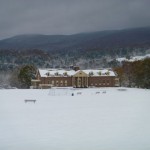
The snow came considerately Saturday night, leaving Williamstown splendid. Photos skiing around town this morning.

Regularity of Area-Minimizing Surfaces

The proof of the regularity of an area-minimizing surface with a given smooth boundary has had a long and interesting history. Following work of Douglas, Rado, and Osserman, Gulliver [1973, G] proved that a least-area map of a disc into R3 with prescribed boundary is a smooth immersion on the interior. The map need not be an embedding and cannot be if the boundary curve is knotted. The possibility of boundary branch points remains open today. Continue reading ‘Regularity of Area-Minimizing Surfaces’ »