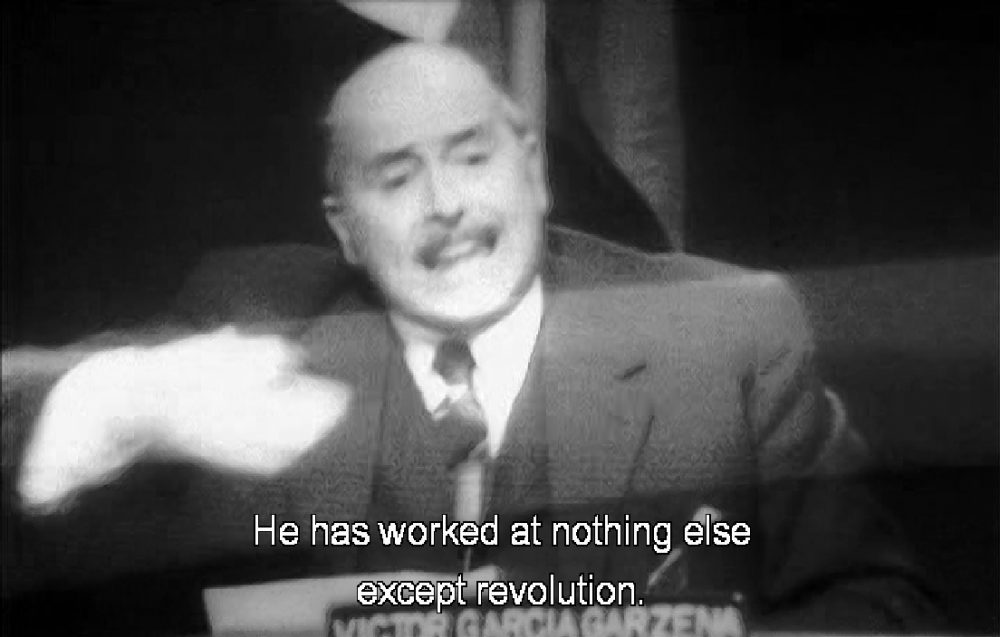
Lerner uses the “grocer” and the “chief” to create a platform that differentiates between traditional and modern paradigms. The chief is most concerned with inherited/familial heritage as a source of confirmation of his authority. His daily life is ruled solely by what takes place within the walls of the local village, very rarely extending beyond to the external world. Lerner would regard the chief as a traditionalist due to his lack of interest in the outside world. Contrary, the grocer is Lerner’s symbol of modernity. The “modern man” (the grocer in this case) attempted to dedicate most aspects of his life to the external world, most often described as wearing more modern clothing, profiting on “modern items”, and an internal longing to be somewhere other than where he resides that is more foreign/municipal to him.
There are many issues with Lerner’s model, one being his view suffers from “orientalism”, a term that refers to a phenomenon when institutions of power subconsciously dominate other cultures and countries historically by using ideas or language that subverts the culture that it is dominating while simultaneously asserting its own dominance an establishing its own superiority. Lerner is not a reliable narrator or source of authority because he assumes the West as being “modern”. His preconceived ideas of modernity are most likely extremely different than those who are not of the West. Furthermore, because he considers himself as coming from a “modern-world”, how he perceives Balgat is lacking contemporary counterparts. The epitome of modernity for Balgat is to imitate the West by increasing economic sectors and democracy.
Others add more complex controls, more scary games enemies, cinematic cutscenes, dialog systems, different health levels, or completely new rhythm challenges. Some mods don’t change how the game is played at all.
You’re absolutely right to point out how Lerner sets up a rigid binary between “traditional” and “modern” through the chief and the grocer, and how much that depends on a Western lens. His model assumes that modernity basically means “more like the West,” instead of asking what kinds of change people in places like Balgat might actually want for themselves. That’s a big part of why his framework slides into orientalism: it measures everyone else against one supposedly superior standard.
We see a similar tension in very practical fields too. When we do
mold remediation in Punta Gorda, we follow “modern” industry protocols and standards, but we still have to adapt to local homes, climate, and what specific families actually need. Real life ends up being a mix of outside models and local realities—something Lerner’s neat traditional/modern divide doesn’t really leave room for.
Geometry Dash was born for rhythm lovers and challenge seekers.
Lerner’s views on modernity focus on societal progress, highlighting the shift from traditional to more dynamic structures. He emphasizes the role of communication in modern societies. For a deeper exploration of Lerner’s ideas, best-writing-service.com offers valuable research assistance, providing in-depth analysis and resources that help you understand his theories and their impact on modern sociological thought.