The View from Tehran
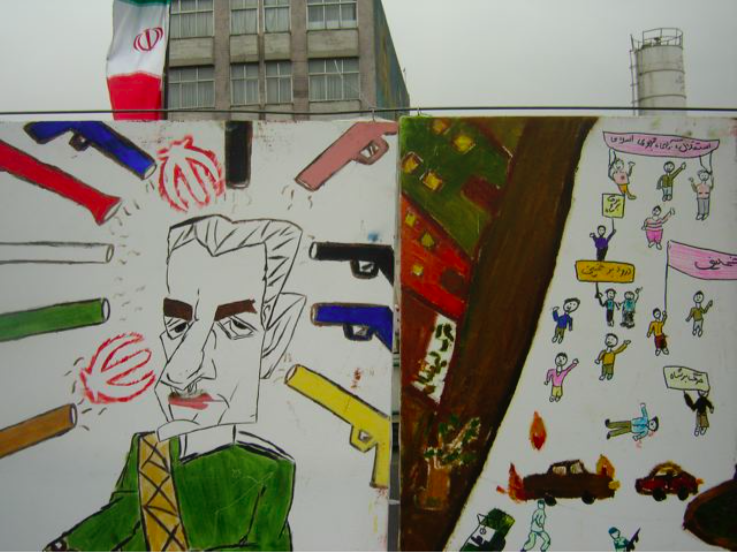
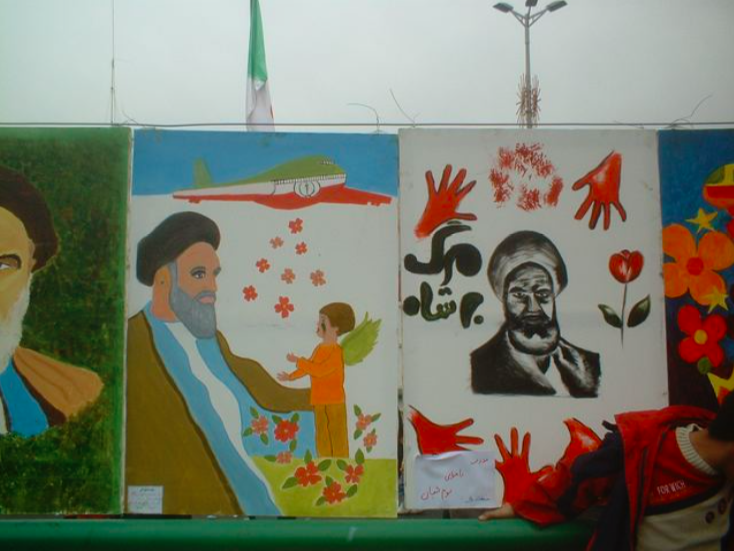
Iran turns 31 on Thursday, give or take a few thousand years. As part of the official commemorations for the anniversary of the 1979 Revolution, or what is known in Iran as the “ten days of dawn” (daheye fajr), state television broadcasts archival footage from that period, including scenes and images unimaginable the rest of the year: There are men with Western ties and women without Islamic hijabs. Secular housewives march in the streets with Hezbollah university students. Jimmy Carter toasts the Iranian monarch in Tehran, and Ayatollah Khomeini meets with American journalists in France. Every year, the hapless Shah is brought back to life, resurrected by state media only to be chased out of Iran once again, while on another channel Khomeini descends from the sky and into our living rooms on the wings of an Air France passenger plane, returning to Iran after many years of exile. The footage reminds us that revolutions can produce strange combinations, and that our collective memory of those days will forever come in passé hues and sepia tones (will there ever again in history be revolutionaries decked out in wide-collar three-piece suits and feathered hair?).
We watch this history replayed every year on television, but the Revolution is not about history. It is a thirty-one-year old story cut out of sequence, edited back into the programming, made current. One thing that must be understood about Iran, about living here, is that the Revolution is never officially discussed as a finished event. Here, revolution is transitive, a work still in progress. Last year a reporter asked a young man-on-the-street regarding his opinion about the Revolution on the occasion of its 30th anniversary. The man replied that he wished to be around in 90 years to see the Revolution at 120. One hundred twenty. Such talk is surely dissonant to ears conditioned to think of revolutions as conclusions. It is perfectly normal here. Here, revolution is transitive.
There is purpose to this. There are those who argue that by permanently mobilizing the population the regime uses the Revolution as an instrument of rule. This may be true but I think that there is another way to look at the annual celebrations. Like the mourning rites of Ashura, the Revolution is treated as a sequence of events in history that must be retold and most importantly, re-enacted. Revelation comes but once, be it on the plains of Karbala thirteen centuries ago or in the streets of Tehran during the winter cold of 1979, but redemption requires that the faithful regularly reprise the moment of grace.
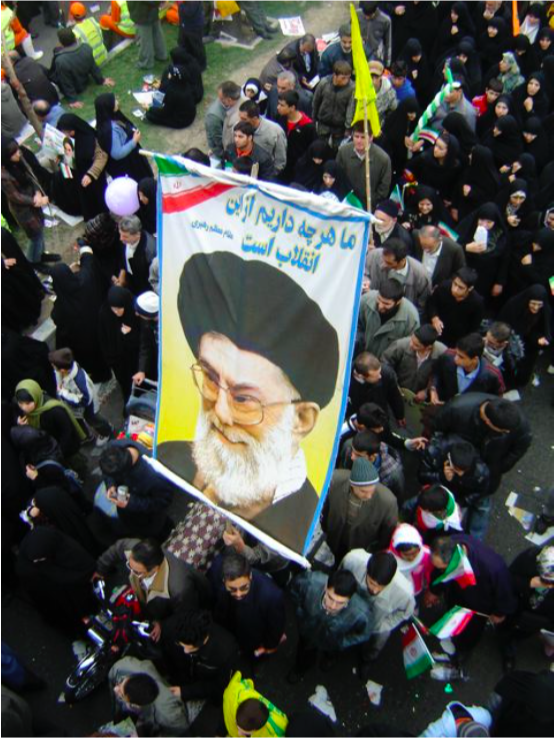
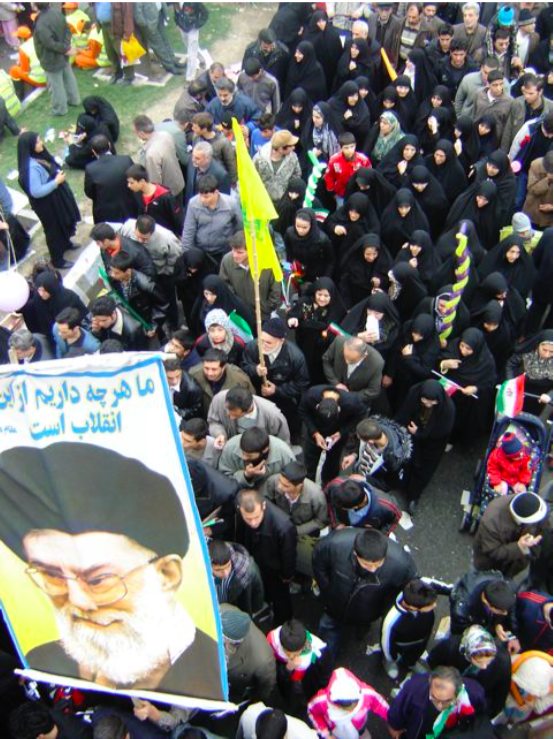
So every year we spool the story back to 1979 and over ten days the state leads society in public ritual. Public because salvation canʼt be achieved sitting alone in the confessional or in front of the television. Itʼs why turnout is important for this regime, be it at the ballot box or in an anniversary march. Having the masses show up somehow proves that the Islamic Republic is blessed. It all culminates with the great gathering on February 11, the 22nd of Bahman by the Iranian calendar. In Tehran the crowds converge on Freedom Square, the site of massive rallies during the 1979 Revolution and where most recently millions gathered last June to demand that their vote be recognized.
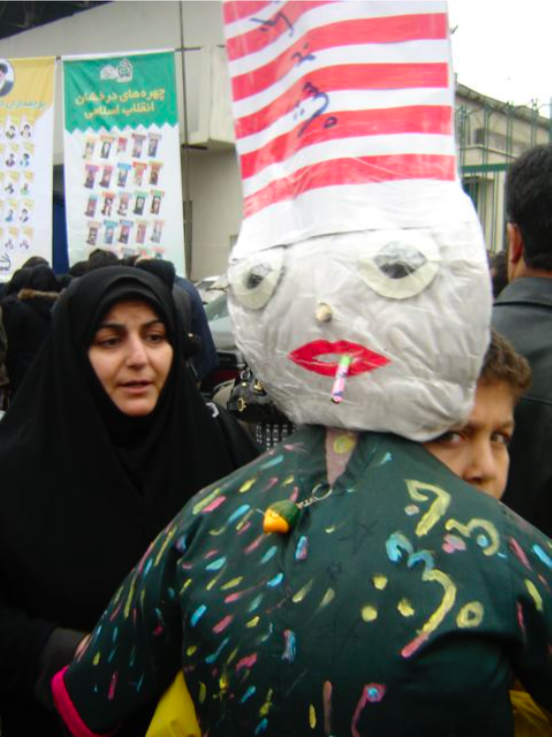
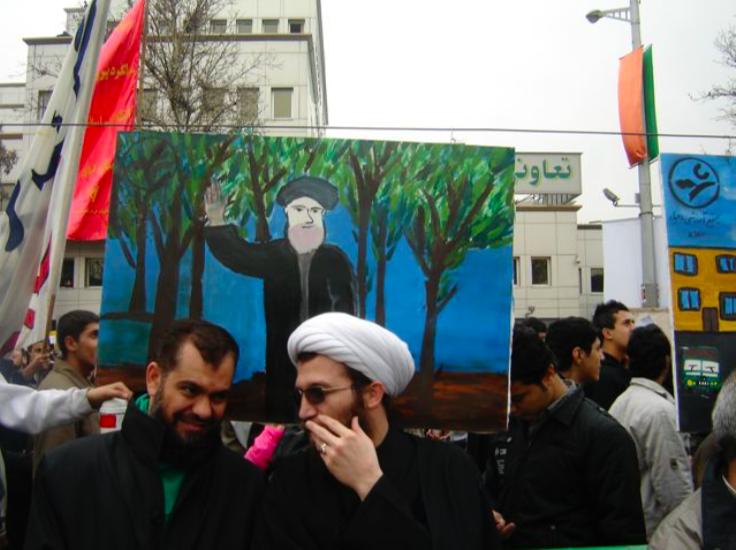
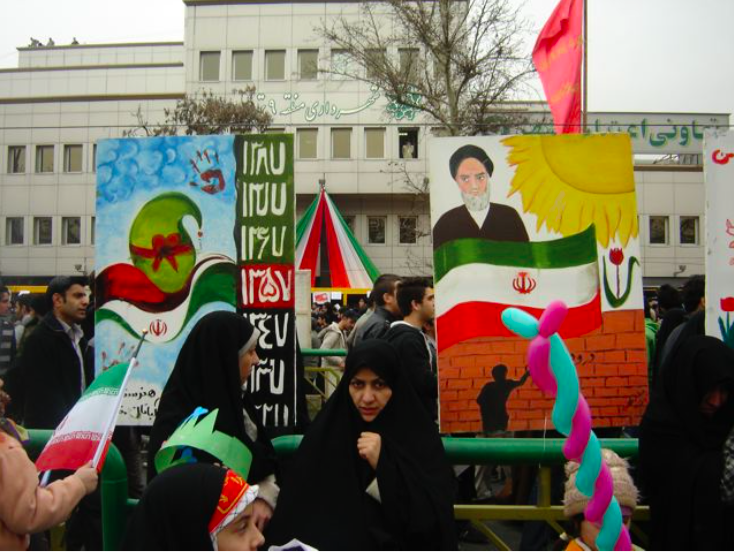
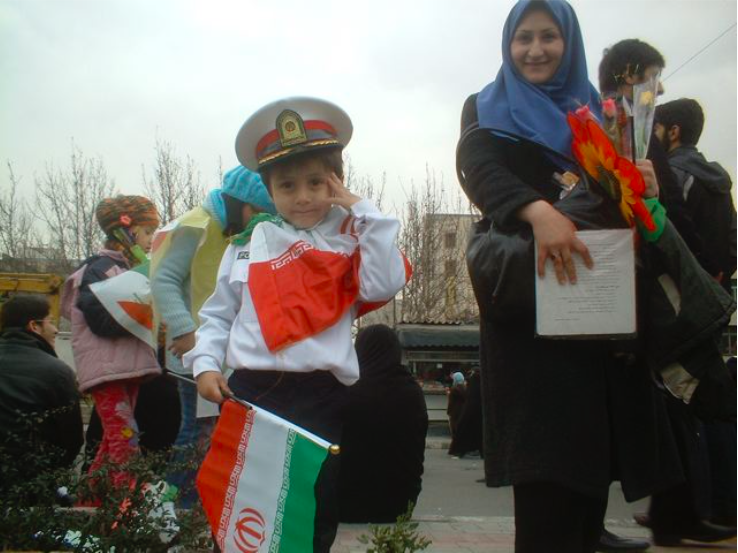
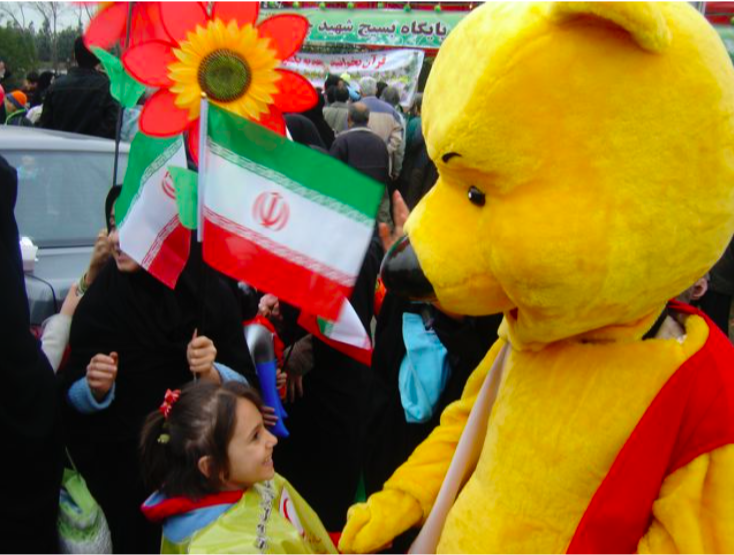
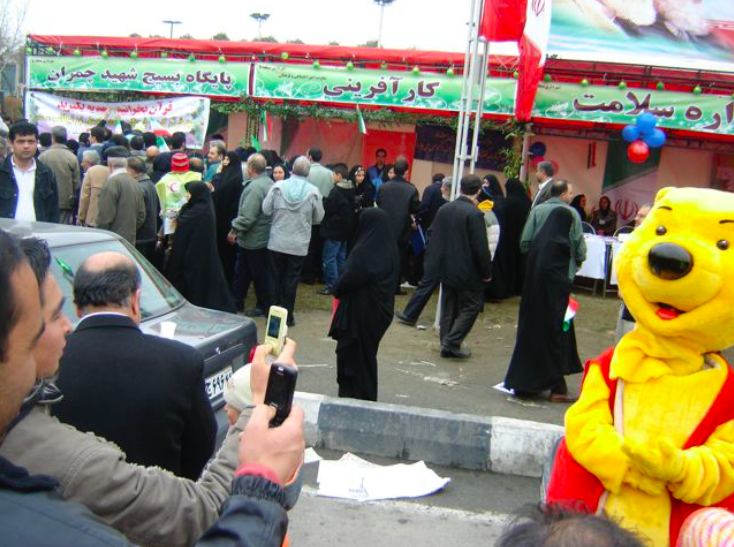
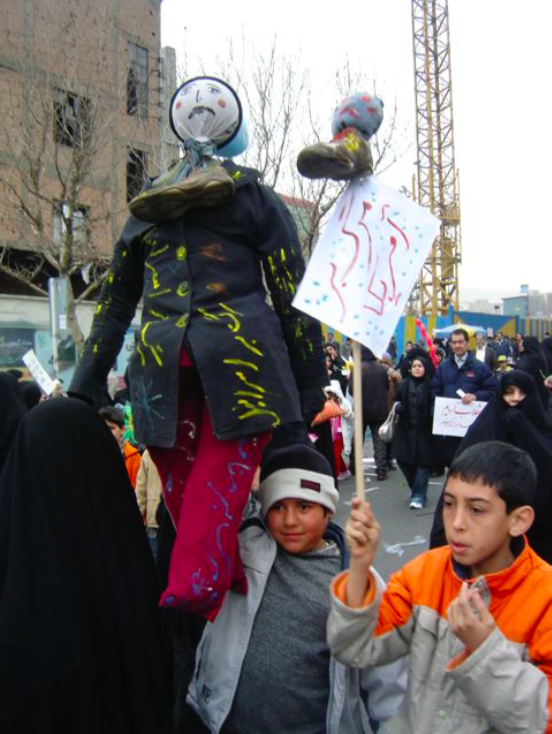
The state organizes the march but it cannot control the meanings that people attach to this day. After so many years, the 22nd of Bahman has become as much a national day of gathering as it is a political rally. Television shows the angry speeches denouncing the West, but out in the crowd the atmosphere is often festive. You are just as likely to run into bundled families out for a stroll as you are to find militant basijis marching in formation along the route. The streets are filled with vendors selling food and all along the route are the ubiquitous balloon sellers, men slowly floating through the crowd wrapped in globes of all shapes and colors. It is not uncommon to see people dressed as Mickey Mouse or Winnie the Pooh, pausing to give hugs and take photos with the many children out in the crowd.
Just days ago former president Mohammad Khatami likened the Revolution to a train in motion. Defending the Green Movement against accusations of treason and supporting the right of the opposition to gather peacefully this coming Thursday (already there is word that security forces are preparing for some three million of the “Greens” will attend) Khatami stated that “Those who groundlessly accuse protesters of subversion are voluntarily or involuntarily derailing the Revolution from its correct track, and they call into question the principles of the Revolution.”
We should pay close attention to Khatami’s words. Like the 22nd of Bahman, the meaning of the 1979 Revolution belongs to no one person or group. 1979 is not a break in history, nor for that matter is 2009 its correction, but are rather constituent parts of a struggle for democracy that reaches back over 100 years. It is a mistake to think that the protestors that will show up tomorrow do so because they all reject the Revolution. Instead, many of these protestors will march because they too seek redemption. For them as it is for the authorities, the Revolution is not yet over but remains a work very much in progress.
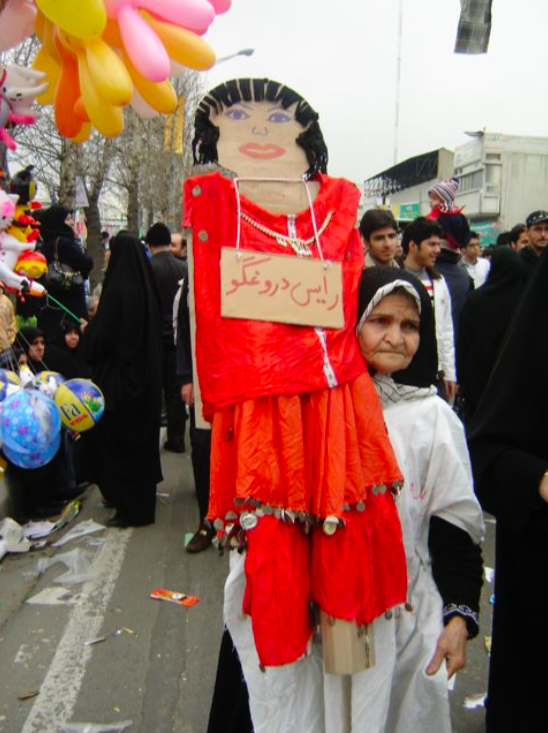 “Condi the liar.”